
Your scale's accuracy is dropping, and you worry about costly errors. Inaccurate measurements can ruin product quality and customer trust, directly impacting your bottom line.
The best way to maintain a commercial scale is through a consistent routine. This includes daily cleaning, weekly calibration checks, and controlling the operational environment. You must also schedule professional servicing at least annually to ensure long-term accuracy and reliability.

Keeping a commercial scale1 in top condition is easier than you think. It's not about complex technical skills. It's about having a simple, repeatable process. A few minutes each day can save you from big headaches and expensive repairs down the road. We’ve helped hundreds of clients protect their investment with a clear maintenance plan. Let's walk through the exact steps you need to take to ensure your scales are always accurate and reliable.
How do you properly clean a commercial scale without affecting its calibration?
You need to clean your scale, but you're afraid of messing it up. Using the wrong chemical or applying too much pressure could damage sensitive sensors and ruin your calibration.
To clean a scale safely, use a soft cloth lightly dampened with isopropyl alcohol. Gently wipe the weighing pan and external surfaces. Never spray liquids directly onto the scale or submerge any parts. After cleaning, always perform a zero test to ensure accuracy.

Over my 18 years in this industry, I've seen clients make costly mistakes. One client used a high-pressure water hose on an IP65-rated scale, thinking it was fully waterproof. The pressure forced water past the seals and destroyed the internal electronics. This is why following a precise method is so important. Your goal is to remove debris, not to flood the machine. A gentle approach is always the best approach.
Correct Cleaning Steps and Frequency
We recommend a two-part cleaning schedule. After each day of use, perform a quick wipe-down. This simple habit prevents dust and material buildup. Once a week, you should do a more thorough cleaning. Power down the scale, remove the weighing pan, and gently clean underneath and around the load cell area2. Use a soft brush or compressed air to remove any trapped particles.
Cleaning Do's and Don'ts
A simple table can make this crystal clear. Following these rules will protect your equipment.
| Do | Don't |
|---|---|
| Use a soft, lint-free cloth. | Use abrasive scouring pads or brushes. |
| Use isopropyl alcohol3 or mild detergent. | Use harsh chemicals like bleach or acetone. |
| Wipe gently. | Apply excessive force or pressure. |
| Power off the scale before cleaning. | Spray liquids directly onto the display or ports. |
By following this simple guide, you remove the guesswork and ensure your cleaning routine helps, rather than harms, your equipment.
What should a daily or weekly maintenance checklist for a commercial scale include?
You know you should check your scales, but what do you even look for? Missing one small detail can cause measurement errors that build up over time, affecting your production quality.
A daily checklist should include checking the scale's level, cleaning the pan, and running a zero test. The weekly checklist adds a quick calibration check using a known, standard weight to verify accuracy.
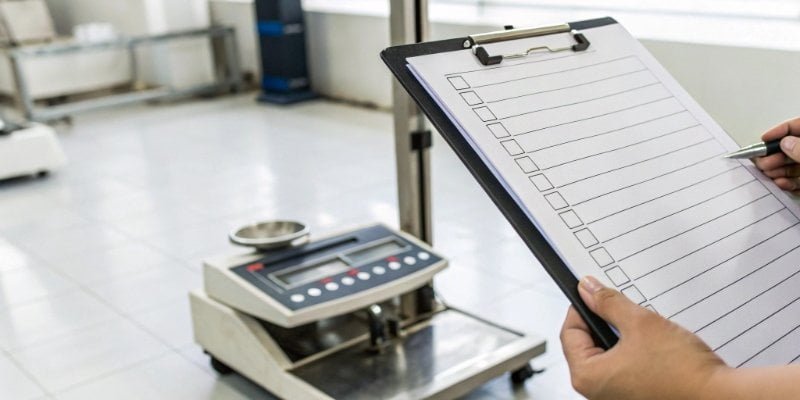
A checklist creates consistency. It ensures that no matter who is operating the equipment, the essential checks are always done. We provide all our clients with a basic checklist because we know it is the single most effective tool for preventing unplanned downtime. It turns maintenance from a guess into a process. The key is to make it simple enough that it gets done every single day.
Your Essential Maintenance Checklist
Think of this as your scale’s daily health check. It only takes a few minutes but provides immense value by catching problems early. Keep a logbook next to the scale to track these checks. It creates accountability and helps identify patterns if an issue arises.
Here is a simple checklist you can adopt right away:
| Frequency | Task | Purpose |
|---|---|---|
| Daily | Check Bubble Level | Ensures the scale is perfectly flat for accurate readings. |
| Daily | Clean Pan & Surface | Removes debris that can add weight or interfere with sensors. |
| Daily | Zero Tare Test | Confirms the scale starts from a true zero point. |
| Weekly | Calibration Check | Use a standard weight (e.g., 50% of max capacity) to spot any drift. |
| Weekly | Inspect Cables & Power | Look for damage or loose connections that can cause instability. |
This process ensures your scale operates in the right environment, free from factors that cause errors. Vibration from nearby machinery, extreme temperature swings, and unstable power can all affect accuracy. Placing the scale on a sturdy, dedicated table and using a voltage stabilizer4 are simple fixes that make a huge difference.
Why is routine maintenance crucial for the longevity and accuracy of a commercial scale?
Maintenance often feels like an extra chore with no immediate payoff. But an unmaintained scale can fail unexpectedly, halting production and leading to costly product recalls or waste.
Routine maintenance is crucial because it prevents small issues, like dirt or minor calibration drift, from becoming major failures. This extends the scale's lifespan, ensures consistent accuracy, and saves you significant money on emergency repairs and operational downtime.

Maintenance is an investment, not a cost. I remember a client in the food processing industry who skipped maintenance for a year to "save money." Their main batching scale started making small errors, adding just 0.5% too much of an expensive ingredient to each batch. They didn't notice for six months. The cost of the wasted material was ten times what a full year of professional maintenance would have been. Regular checks would have caught that drift in the first week.
Preventing Failures Before they Happen
Most catastrophic scale failures don't happen overnight. They are the result of wear and tear that goes unchecked. Routine maintenance is about being proactive instead of reactive. It allows you to spot and fix common issues before they stop your operations.
Here are common problems that maintenance prevents:
| Fault Type | Potential Cause | Preventive Action |
|---|---|---|
| Weighing Error | Sensor drift, debris buildup. | Regular calibration checks & daily cleaning. |
| Display Flickering | Loose connection, power fluctuation. | Weekly cable inspection & use of a voltage stabilizer. |
| Inconsistent Readings | Worn mechanical parts, unstable surface. | Professional servicing & daily level checks. |
By addressing these potential causes through a simple checklist, you drastically reduce the chance of a sudden breakdown. A well-maintained scale from a quality manufacturer like us can provide accurate service for over a decade. An ignored one might not last two years. The difference is the simple, consistent care it receives.
How often should a commercial scale be professionally serviced and calibrated?
You perform your daily checks, but you wonder if it's enough. Internal wear is invisible, and you worry that your scale's accuracy might be slowly drifting without you even knowing it.
For most commercial scales, professional service and certified calibration should happen every 6 to 12 months. For scales in high-use environments or those requiring high precision for compliance, we recommend a quarterly service schedule.

Think of professional servicing like taking your car to a mechanic. You can check the oil and tires yourself, but you rely on a pro for a full engine diagnostic. A qualified technician does more than just calibrate. They open the unit, inspect internal components for wear, clean hard-to-reach areas, and perform diagnostics that your team can't. This is especially important for our clients who need to meet strict quality standards like ISO 90015.
What to Expect from Professional Service
A professional service is a deep dive into the health of your weighing equipment. It provides a level of assurance that daily checks alone cannot. At Weigherps, our after-sales service is comprehensive because we know that’s what protects your investment and our reputation.
During a professional visit, a technician will typically:
- Conduct a Full Diagnostic: They test all electronic components and software functions to ensure they are performing within specifications.
- Perform a Deep Cleaning: The scale is disassembled for a thorough cleaning of internal mechanics and sensors, areas that are inaccessible during daily cleaning.
- Inspect for Wear and Tear: They check for worn parts, like load cell mounts or internal wiring, and recommend replacements before they fail.
- Perform Certified Calibration: They use traceable, certified weights to calibrate the scale across its entire weighing range and provide an official calibration certificate for your records.
This service is the ultimate guarantee of performance and compliance. It bridges the gap between your daily efforts and the long-term, certified reliability your business depends on.
Conclusion
Consistent cleaning, daily checks, and regular professional service are key. Following this guide will protect your scale's accuracy and longevity, saving you money and securing your business's reputation.
-
Explore this resource to learn effective maintenance strategies that ensure your commercial scale remains accurate and reliable. ↩
-
Get tips on safely cleaning the load cell area to prevent debris buildup and ensure accuracy. ↩
-
Explore the safety and effectiveness of using isopropyl alcohol for cleaning your scale. ↩
-
Discover how a voltage stabilizer can enhance the accuracy and reliability of your scale. ↩
-
Explore the importance of ISO 9001 standards in ensuring scale accuracy and compliance. ↩



[…] Isopropyl Alcohol: For more stubborn dirt or leakage from an old battery, dip a cotton swab in isopropyl alcohol8 and carefully scrub the contacts. Make sure the alcohol has completely evaporated before putting […]