
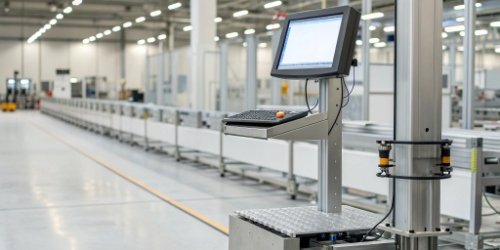
Struggling with complex system integration? Manual data entry is slow and error-prone, disrupting your operations. Programmable scales offer a simple, seamless solution for connecting to your business systems.
Programmable scales simplify integration through open APIs, standard protocols like TCP/IP, and customizable software. This direct communication eliminates middleware, allowing seamless data exchange with MES, WMS, and ERP systems for automated, real-time information flow.
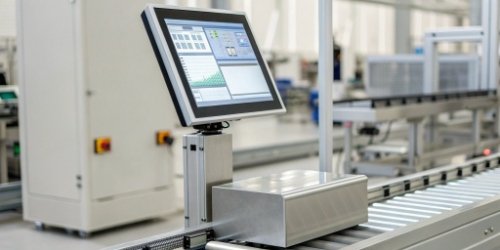
The idea of a plug-and-play connection sounds great, but how does it work behind the scenes? It's not just about having the right cables. The real power is in the scale's built-in software and flexible connection options. This ability to "talk" directly to your main business systems is a game-changer. Let's dig into the specific features that make this integration work so well. I'll share what I've learned over my 19 years in this business.
What features enable programmable scales to integrate with MES, WMS, and ERP systems?
Confused by all the technical details for integration? Choosing the wrong scale can lead to big compatibility problems and project delays. The right features, like open APIs and multiple ports, are key to success.
The most important features are versatile communication interfaces like Ethernet and Wi-Fi, support for common protocols such as TCP/IP, and an open API or SDK. These tools give your developers the power to build direct connections to your enterprise software.
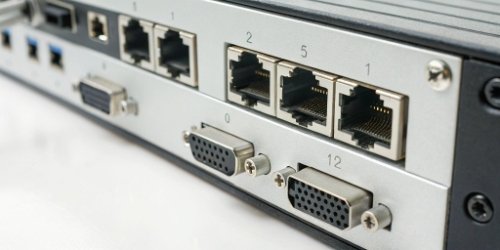
To make integration happen, a few core features must work together. Think of it like a conversation between your scale and your software. You need a physical link, a common language, and the right script to follow. From my experience, the software part is usually the easy bit. Software vendors can handle API integration without much trouble. The bigger challenge is often the hardware. If you need a special part for a small order, the costs can go up fast. That's the real hurdle, not the software.
Diverse Communication Ports
This is the physical connection. A scale needs a way to plug into your network or a computer. Modern scales come with several options like Ethernet1 for a stable wired network connection, Wi-Fi2 for wireless flexibility, and older standards like RS-2323 for connecting to specific industrial equipment. Having these options makes the initial setup much simpler.
Standardized Data Protocols
This is the common language. Once the scale is connected, it needs to speak in a way your systems can understand. Protocols like TCP/IP4 (the language of the internet) and Modbus are standard in the industrial world. They set the rules for how data is formatted and sent, ensuring the numbers from the scale arrive correctly in your software.
The Power of APIs and SDKs
This is the script. An Application Programming Interface5 (API) or a Software Development Kit6 (SDK) gives your programmers a toolkit. It allows them to write simple code to tell the scale exactly what to do, like "send the weight now" or "get the tare value from the ERP". This custom control is what makes the integration truly seamless and powerful.
| Feature | Function in Integration | Common Examples |
|---|---|---|
| Communication Ports | Provides the physical link between the scale and the network. | Ethernet, Wi-Fi, RS-232 |
| Data Protocols | Defines the rules for data exchange7 so systems can understand each other. | TCP/IP, Modbus, OPC UA |
| API/SDK | Allows developers to create custom apps to read/write data from the scale. | REST APIs, C# or Java SDKs |
How do programmable scales streamline connectivity with business management systems?
Tired of clunky, manual data entry from your scales? This process wastes a lot of time and is a major source of errors. Programmable scales create a direct, automated data pipeline, simplifying everything.
Programmable scales streamline connectivity by acting as smart data hubs. They can be set up to filter, format, and send weight data directly to the right database or application in your enterprise systems, automating the process and eliminating manual work.
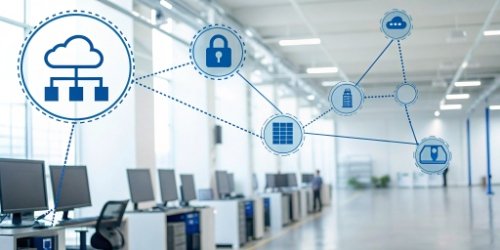
Programmable scales8 change the game by getting rid of the middleman. In the past, you often needed a dedicated PC running special software just to translate what the scale said into something your ERP system could understand. This was slow and added another point of failure. A modern programmable scale has that translation logic built right in. It can connect to your network and communicate directly with your core systems. The workflow becomes much cleaner and more efficient as a result.
Eliminating Middleware
Middleware is extra software that sits between your scale and your business system to translate data. Programmable scales make this obsolete. They can be programmed to format the data correctly and send it in the right structure on their own. This simplifies your IT setup, reduces costs, and removes a potential bottleneck.
Direct Data-to-Database Workflow
Imagine a shipping station. A worker weighs a package, then has to type that weight into your WMS. With a programmable scale, the process is different. The worker places the box on the scale, scans a barcode, and the scale instantly sends the weight and order number directly to the WMS database. There is no typing and no chance of a mistake.
Event-Driven Communication
These scales can also be programmed to send data based on specific events. For example, it can send a weight reading automatically only when the weight has been stable for two seconds. This ensures you only get good, accurate data. It can also trigger other actions in your system, like printing a label or updating inventory status in real-time.
How can programmable scales enhance integration with MES, WMS, and ERP?
Do you think integration is just about sending weight data one way? This really limits your operational intelligence and efficiency. Programmable scales unlock two-way communication, improving control and creating smarter workflows.
By enabling two-way communication. A programmable scale can receive instructions, tare weights, or formulas from an ERP. It then guides the operator with on-screen prompts, checks their work, and sends back only confirmed, accurate data.
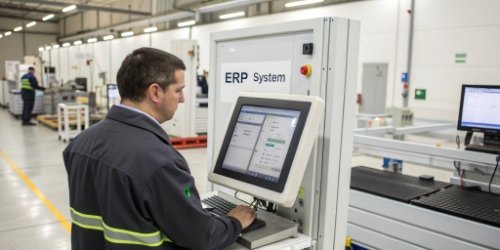
This two-way street transforms the scale from a simple measuring tool into an active part of your production process. It becomes a smart terminal that helps your team get the job done right the first time. We've built many custom applications for our clients that do exactly this. The software is very flexible. We can create complex step-by-step guides right on the scale's screen. The real challenge comes up when a customer wants a special type of built-in scanner or a unique platform size for a small order of 50 scales. Customizing the hardware for small volumes is where the costs really add up. The software part is almost always the easy part.
Operator Guidance and Process Control
A scale can pull a work order from your MES and show instructions on its screen. For example, it can say "Step 1: Add 500g of Component A." It then watches as the operator adds the ingredient and shows a progress bar. It won't let the operator move to the next step until the weight is within the tolerance pulled from the MES. This prevents mistakes before they happen.
Remote Configuration and Monitoring
Your technical team can manage the scales from a central location. They can push software updates, change recipes, or troubleshoot issues without having to walk out to the factory floor. This saves a lot of time and ensures all your scales are running on the same, correct software.
Data Validation at the Source
The scale can perform checks on the data before it's even sent. It can make sure a lot number has been scanned, a weight is within a reasonable range, or an operator has entered their ID. This ensures the data going into your ERP or WMS is clean, complete, and accurate from the very start.
What are the benefits of using programmable scales for integrating with enterprise systems?
Are you unsure if a programmable scale is worth the cost? Sticking with old, manual methods is probably costing you more than you realize. The benefits in accuracy, speed, and data visibility deliver a quick return on your investment.
The main benefits are eliminating human error, boosting productivity, and gaining real-time operational visibility. This accurate data improves decision-making, ensures quality control, reduces labor costs, and provides a clear record for every transaction.
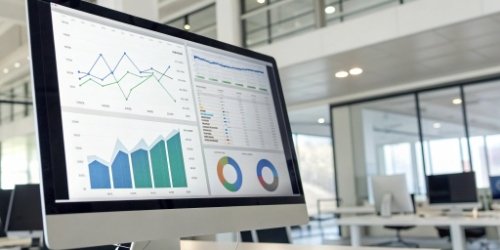
The return on investment from integrating programmable scales is easy to see. It’s not just about saving a few seconds here and there. It's about building a more reliable and transparent operation from the ground up. When the data from your physical operations is 100% accurate and available instantly, you can make smarter, faster decisions across the entire business. This direct link between production and planning is where you get a real competitive advantage.
Unmatched Data Accuracy
Manual data entry always leads to errors. People type in the wrong numbers or mix them up. A programmable scale sends the exact weight automatically, every time. This eliminates typos and ensures your inventory, billing, and production records are always perfect. This is the foundation of quality control and operational excellence.
Enhanced Productivity
Think about the time your team spends weighing something, writing it down, and then entering it into a computer. An integrated scale combines all those steps into one. The workflow is faster and smoother, which allows your employees to get more done. They can focus on production, not on being data entry clerks.
Real-Time Business Intelligence
With a direct data feed, your managers get an instant and accurate view of what’s happening. They can see how much raw material is being used, what the production output is, and what the exact shipping weights are, all in real-time. This live data helps with better forecasting, tighter inventory control, and more agile planning.
| Benefit | Before Programmable Scale | After Programmable Scale |
|---|---|---|
| Accuracy | High risk of manual error | ~100% data integrity |
| Efficiency | Slow, multi-step process | Fast, automated workflow |
| Traceability | Paper trails or delayed data | Instant, electronic records |
| Decision-Making | Based on old, incomplete data | Based on live, accurate data |
Conclusion
In short, programmable scales easily connect with your systems because the software is flexible. The real challenge is making custom hardware for specific needs at a low cost, which is where we excel.
-
Understand the benefits of using Ethernet for stable network connections. ↩
-
Discover how Wi-Fi can provide flexibility and ease of use in operations. ↩
-
Learn about the role of RS-232 in connecting legacy systems. ↩
-
Discover how TCP/IP enables reliable communication in industrial settings. ↩
-
Explore how APIs can simplify integration and enhance functionality. ↩
-
Find out how SDKs empower developers to create custom applications. ↩
-
Explore effective strategies for ensuring smooth data exchange between systems. ↩
-
Explore how programmable scales can enhance efficiency and accuracy in your operations. ↩

Comments (0)