
Tired of data entry errors in your lab? These mistakes waste time and compromise results, putting your entire process at risk. Automated data transfer is the simple solution.
You maximize lab efficiency by integrating scales directly with your Laboratory Information Management System (LIMS) using USB, Ethernet, or cloud connections. This automates data capture, eliminates manual errors, and ensures your records are always accurate and compliant.
For over 18 years, we've helped businesses streamline their weighing processes. We've seen firsthand how moving from manual notes to automated systems can completely change a laboratory's output. The goal is always the same: get accurate data from the scale to your system with zero mistakes. This isn't just about convenience; it's about building a reliable foundation for all your scientific work. Let's explore how you can achieve this level of efficiency and accuracy in your own lab.
What is a LIMS integration?
Manually typing weighing results into your LIMS is slow. It's also a major source of errors that can invalidate your research or production batches.
A LIMS integration is a direct digital connection between your weighing scale and your Laboratory Information Management System. It allows weight data to be sent automatically, eliminating manual entry and ensuring perfect data accuracy and traceability for every measurement.
A Laboratory Information Management System (LIMS)1 acts as the central brain for all your lab's data. It manages samples, tests, results, and reports. But if you are manually feeding information into this brain, you are creating a weak link in your process. I once visited a client's pharmaceutical lab where technicians spent hours each day just cross-checking handwritten logs against the LIMS entries. The risk of a typo was a constant worry for them.
When your scale is integrated, it "talks" directly to the LIMS. The moment a measurement is stable, the data—along with a timestamp and scale ID—is sent and recorded automatically. This does more than just save time. It builds a chain of custody for your data that is unbreakable and error-free, which is critical for quality control and audits. As an OEM/ODM provider, we design our scales with simple, robust communication protocols to make this integration as seamless as possible for software vendors and end-users.
| Feature | Manual Data Entry | LIMS Integrated Entry |
|---|---|---|
| Speed | Slow, requires manual typing | Instant, automated transfer |
| Accuracy | Prone to human error (typos) | 100% accurate transfer |
| Traceability | Relies on manual logs | Automatic capture of timestamp, user, scale ID |
| Efficiency | High labor cost, tedious for staff | Frees up staff for value-added tasks |
What guidelines must you follow when keeping lab data and records?
Worried about failing a lab audit? Strict regulations demand perfect record-keeping, and one small mistake can lead to big fines and reputational damage for your company.
Labs must follow standards like GLP (Good Laboratory Practice) and GMP (Good Manufacturing Practice). These guidelines require all data to be accurate, complete, and traceable. Integrated weighing systems are essential tools to meet these strict compliance demands automatically.

In regulated industries like pharmaceuticals and food production, data is not just data; it's proof. It proves you followed the correct procedures and that your product is safe and effective. Guidelines like GMP and GLP are built around a set of principles, often referred to as ALCOA+2. This framework is the gold standard for data integrity3. It demands that your data be Attributable, Legible, Contemporaneous, Original, and Accurate. The "+" adds attributes like Complete, Consistent, Enduring, and Available.
Trying to meet these standards with a pen and paper is a huge challenge. How can you prove a handwritten entry was contemporaneous (recorded at the time it happened)? A LIMS-integrated scale solves this problem. Because the data transfer is automatic and instantaneous, it is by its very nature contemporaneous and original. Our systems are designed to help you meet these requirements effortlessly. We build our scales so they can output the necessary data to make your records complete and attributable.
| ALCOA+ Principle | How an Integrated Scale Helps |
|---|---|
| Attributable | Captures User ID and Scale ID automatically. |
| Legible | Digital data is always clear, no messy handwriting. |
| Contemporaneous | Records are created the instant the measurement is taken. |
| Original | The first digital record is the primary, original record. |
| Accurate | Eliminates transcription errors completely. |
What type of computer system is best for specialized tasks in a laboratory?
Is your standard office PC crashing during critical lab processes? General-purpose computers often lack the stability and connections needed for scientific instruments, risking data loss.
For specialized tasks, labs use dedicated computer systems like industrial PCs, workstations, or embedded controllers. These systems are designed for high reliability and direct instrument connection, running software like LIMS to ensure stable data acquisition from devices like scales.
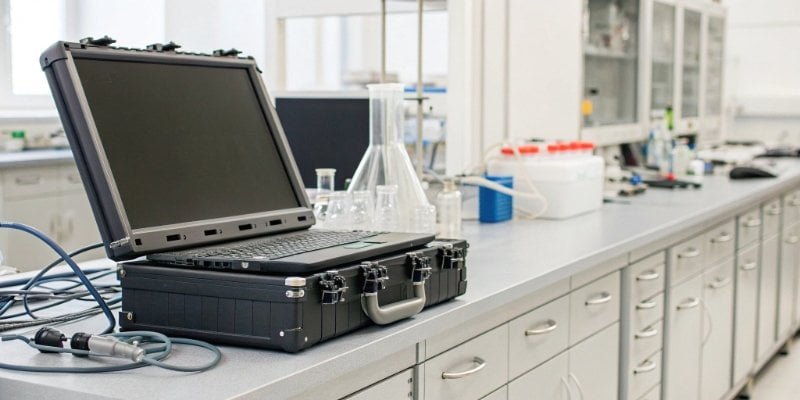
A standard desktop computer is designed for tasks like sending emails and browsing the web. It is not built to run 24/7 in a potentially demanding lab environment while connected to sensitive scientific equipment. We've seen situations where a random Windows update forced a restart in the middle of a multi-hour experiment, ruining the entire batch. This is why specialized computer systems are the norm in professional laboratories. These can be rugged industrial PCs4 that resist dust and vibration or dedicated workstations optimized for a single application, like controlling a LIMS.
As a hardware manufacturer, we know our equipment is just one part of this ecosystem. That's why we ensure our scales can communicate with any system you choose. We provide standard interfaces like USB, RS-232, and Ethernet. Our scales are tested for compatibility with both Windows and Linux operating systems, which are common in lab environments. For our software vendor partners, this means you can be confident that our hardware will integrate smoothly into the solutions you are building for your customers. It's this focus on reliable communication that makes for a truly robust system.
How does a lab record and process large datasets of scientific information?
Drowning in a sea of data from your lab experiments? Manually managing thousands of data points is impossible and makes meaningful analysis a huge challenge for anyone.
A modern lab uses a connected ecosystem. Scales and other instruments automatically send data to a central LIMS or cloud platform. This system records weight, sample IDs, and timestamps instantly, processing large datasets for immediate analysis and secure storage.
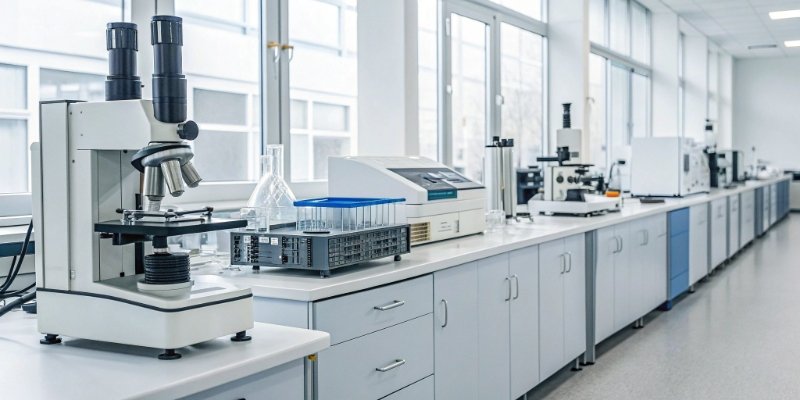
When you think about the sheer volume of data a single quality control lab produces in a day, it's easy to see why manual systems fail. A modern lab operates like a well-oiled machine, and it's all built on a foundation of automated data flow5. This is the complete solution we help our clients build. It starts with a precise measurement from one of our CE-certified scales. That data point is more than just a weight; it’s a piece of a larger story.
The scale captures the weight and, using its built-in connectivity, sends it to the LIMS. The LIMS then adds context: which sample is it, which technician performed the test, and what are the acceptable tolerance levels? All this information becomes a single, complete, and secure record. For even greater security and accessibility, this entire dataset can be pushed to the cloud. This means the data is safe from local hardware failure and can be accessed for analysis by authorized personnel from anywhere in the world. This is how you turn raw data into valuable business intelligence.
| Data Type Collected | Its Purpose in the System |
|---|---|
| Weight Value | The core quantitative measurement for the test. |
| Unit of Measure | Provides context (g, kg, mg, etc.). |
| Timestamp | Ensures data is contemporaneous for traceability (ALCOA+). |
| Scale ID/Serial No. | Proves which instrument was used for the measurement. |
| User ID | Assigns accountability for the action (Attributable). |
| Sample ID | Links the weight to the specific sample being tested. |
Conclusion
In short, integrating scales with LIMS and the cloud transforms lab work. It boosts efficiency, guarantees data integrity, and simplifies compliance, empowering your business for significant growth and success.
-
Learn about LIMS and how it can streamline your lab's data management processes. ↩
-
Discover the ALCOA+ principles that ensure data integrity in laboratory environments. ↩
-
Find out effective strategies for maintaining data integrity in lab operations. ↩
-
Learn how industrial PCs enhance reliability and performance in lab settings. ↩
-
Learn how automated data flow can optimize lab operations and data management. ↩



[…] data output9 […]