

Confused by weighing terms like accuracy, precision, and readability? Choosing the wrong scale based on this confusion can waste money and give you unreliable data for your software-integrated systems.
Accuracy is how close a measurement is to the true value. Precision is how consistent repeated measurements are. Readability is just the smallest unit the scale's display shows. They are not the same, and understanding the difference is crucial for reliable weighing.

I've been in the industrial scale business for 18 years, and I've seen countless clients mix up these terms. This confusion is completely understandable because the words seem similar. But in the world of industrial weighing, they mean very different things. Getting them wrong can lead to failed quality control, incorrect inventory, and ultimately, unhappy clients. Let’s break them down one by one, so you can see exactly what matters for your projects and choose the right equipment every time.
What is the actual difference between scale accuracy and precision?
Are your measurements all over the place, even when weighing the same item? This inconsistency could point to a misunderstanding between what accuracy and precision really are in practice.
Accuracy is hitting the bullseye on a dartboard. Precision is hitting the same spot over and over, even if it's not the bullseye. One measures correctness, while the other measures consistency. Your ideal scale has both.

Let's dive deeper into that dartboard analogy. Imagine you are throwing darts.
- High Accuracy1, Low Precision2: Your darts land all around the bullseye. Some are to the left, some to the right, some high, some low. The average position of your darts is the center, so you are accurate on the whole, but any single throw is unpredictable.
- Low Accuracy, High Precision: All your darts land in a tight little cluster in the top-left corner of the board. You are very consistent and repeatable (precise), but you are consistently wrong (inaccurate).
- High Accuracy, High Precision: All your darts are clustered right in the bullseye. This is the goal.
In our world of weighing, accuracy is determined by calibrating the scale against a known, certified weight. If a 100g standard weight is placed on the scale and it reads 100.0g, it is accurate. Precision, on the other hand, is tested by repeatability. If you weigh that same 100g object ten times and get readings like 95.1g, 95.2g, and 95.0g, the scale is precise, but it's clearly not accurate.
| Feature | Accuracy | Precision |
|---|---|---|
| Definition | Closeness to the true value | Closeness of multiple measurements to each other |
| Measures | Correctness | Consistency / Repeatability3 |
| How to Fix | Calibration | Better mechanics, stable environment |
| Analogy | Hitting the bullseye | Hitting the same spot every time |
Can a scale be precise without being accurate?
You've bought a scale that gives you the exact same reading every time. You think it's perfect for your process, but your final product weights are still off.
Yes, a scale can absolutely be precise without being accurate. This is a common and dangerous trap. It means the scale consistently gives you the same wrong answer, often due to a calibration error.
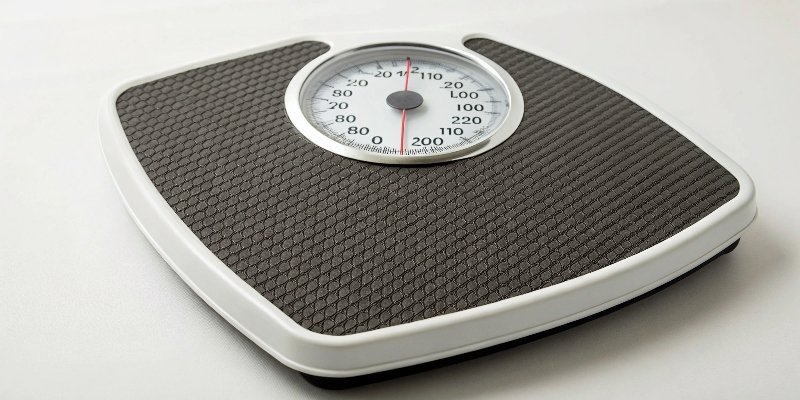
This is one of the most critical points I stress to our clients, especially those in software integration who rely on consistent data streams. A precise but inaccurate scale feeds you data that looks stable and trustworthy, but it’s fundamentally flawed. This happens because of something called a systematic error. Perhaps the scale wasn't zeroed properly before use, or maybe it sustained a minor knock during transport that offset its internal mechanism. The scale's components are still working consistently, which gives you high precision, but the starting point of the measurement is wrong.
I remember a case with a client who packaged coffee beans. Their system was designed to put 500g of beans in each bag. Their scale was incredibly precise, reading 495g, 495.1g, and 495g for bag after bag. The consistency was perfect for their automated process. The problem was, they were giving away 5g of coffee with every single bag. It wasn't until a manual audit that they discovered the scale's inaccuracy. The only way to prevent this is through regular calibration using certified weights. This process adjusts the scale to ensure its precise measurements are also accurate ones. At Weigherps, this is a non-negotiable step; every scale we ship undergoes comprehensive testing to ensure both are correct.
Why is readability not a reliable measure of a scale's performance?
You see a scale with many decimal places on its display and assume it must be highly accurate. You make a purchase based on this single flashy specification from the product sheet.
Readability is just the number of decimal places on the display. It tells you the smallest change a scale can show, not how correctly it measures. A scale can have high readability but poor accuracy and precision.
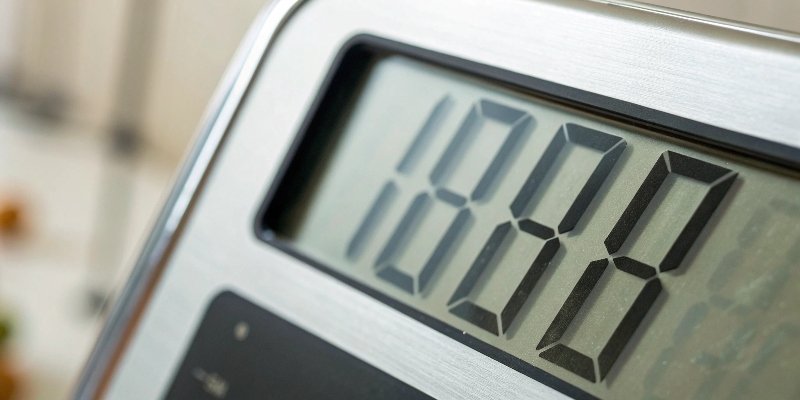
Think of readability like the speedometer in your car. Imagine a speedometer that reads your speed as 55.125 MPH. The readability is very high—down to a thousandth of a mile per hour. But if the car is actually traveling at 60 MPH, that extra detail is not only useless, it's misleading. You have high readability, but low accuracy. This is exactly what happens with weighing scales. A manufacturer can easily use a display that shows many decimal places, but that doesn't mean the scale's internal load cell and electronics can actually measure that finely or correctly.
Furthermore, in many industrial environments, a scale with extremely high readability can be a disadvantage. Tiny vibrations from nearby machinery, air currents, or even electrical noise can cause the last digit on the display to fluctuate constantly. This makes it impossible to get a stable reading. You end up with what we call "unusable resolution." It’s far better to have a scale with readability that matches its actual performance.
| Scale Model | Readability4 | Accuracy | Better Choice For... |
|---|---|---|---|
| Scale A | 0.1g | ±0.1g | General industrial use where reliability is key. |
| Scale B | 0.01g | ±0.5g | Marketing, but not for reliable professional work. |
In this table, Scale A is the superior choice. Its performance is honest. Scale B looks better on paper but will deliver less reliable results.
How do you choose a scale based on your need for accuracy versus precision?
You're tasked with buying dozens of scales for your new production line. Choosing the wrong one could be a costly mistake that impacts your entire operation for years.
Focus on your specific application. For quality control or labs, you need both high accuracy and precision. For tasks like batching, where consistency is most important, precision might be the top priority. Always check the manufacturer's accuracy specifications.

The right choice always comes down to what you are trying to achieve. There is no "one-size-fits-all" answer. As a manufacturer, we guide our clients through this decision by asking about their process. Here are a few common scenarios we encounter:
- Pharmaceuticals or Chemical Labs: In this field, you need the absolute best of both. Accuracy is critical because the wrong dose of a chemical could be dangerous. Precision is equally critical to ensure that every single dose is identical. For these clients, we recommend high-performance scales that are regularly and professionally calibrated.
- Industrial Batching5 (Mixing Paint or Food Ingredients): Here, precision is often more important than absolute accuracy. If you are mixing ingredients for a recipe, ensuring the ratio of those ingredients is the same every time is what guarantees a consistent final product. A scale that is highly precise will ensure that every batch of paint is the same color, or every batch of dough has the same texture.
- Shipping and Logistics6: When you're weighing boxes for shipment, you need good accuracy to avoid overpaying couriers or incurring fines for underweight declarations. High precision is less critical. If one box reads 15.1 kg and the next reads 15.2 kg, it likely won't affect your costs, as long as the average weight is accurate.
The key is to analyze your tolerance for error and what kind of error is more costly to your business. Is it more damaging to be consistently wrong (low accuracy) or unpredictably wrong (low precision)? Answering that question will lead you to the right scale.
Conclusion
Understanding that accuracy, precision, and readability are different is key. This knowledge helps you choose the right scale, trust your data, and improve your entire operation.
-
Understanding accuracy is essential for reliable measurements in various applications. ↩
-
Grasping precision helps ensure consistency in repeated measurements, crucial for quality control. ↩
-
Understanding repeatability is crucial for ensuring consistent results in your measurements. ↩
-
Learn why readability alone doesn't guarantee accurate measurements and can be misleading. ↩
-
Learn about batching and its significance in maintaining consistency in production. ↩
-
Discover how accurate measurements can save costs and improve logistics efficiency. ↩



[…] decades, I've developed a simple rule of thumb to make this easy. These two specs, capacity6 and readability7, are the most critical factors in your decision after you've chosen the general type of […]