
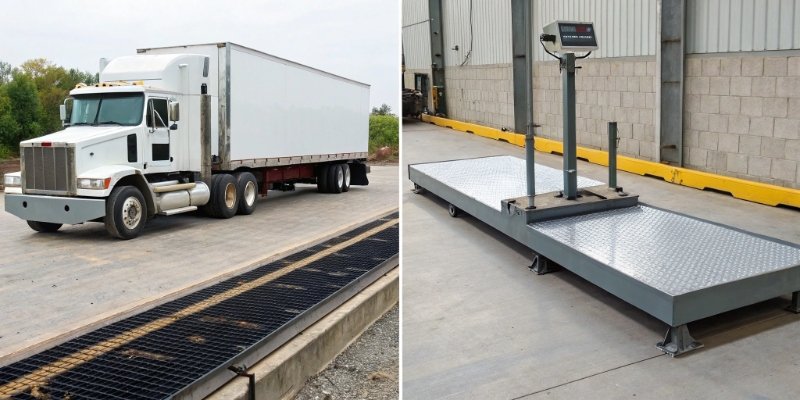
Confused about industrial scales? The wrong choice wastes money and ruins workflows. Understanding the key difference between a weighbridge and a bench scale is your first step to success.
The fundamental difference is scale and application. A weighbridge is a massive, permanent installation for weighing vehicles like trucks. A bench scale is a small, portable device for weighing items on a tabletop. Their purpose, size, and capacity are completely different.
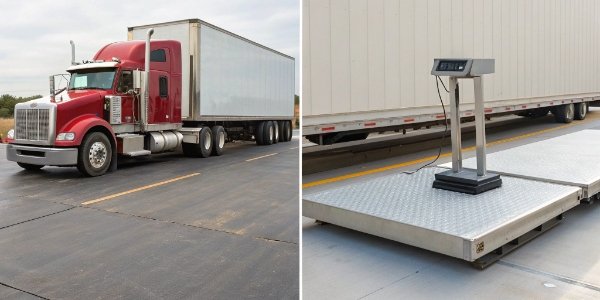
That simple answer is just the start. In our 18 years of experience as Weigherps, we have seen that the details are everything. This is especially true for our partners in software, who depend on precise data from our hardware. The reasons behind these differences have a big impact on system integration and how well your software performs. Let's look closer at these differences so you can make your choice with complete confidence and find the right solution for your needs.
What is the difference between a scale and a weighbridge?
Thinking a weighbridge is just a "big scale"? This common mix-up can lead to major planning errors. Let's clear up this simple but crucial distinction right now.
A "scale" is a general term for any device that measures weight. A "weighbridge" is a specific type of scale made for very large loads, like vehicles. So, all weighbridges are scales, but most scales are not weighbridges. It is about general versus specific use.

In our business, "scale1" is a broad term. It could mean a small lab scale or a large industrial one. A weighbridge2, however, is a complete engineered system. I remember a client, a software developer, who thought they could just "connect to the scale" at a new logistics hub. They pictured a simple API call like you would have for a bench scale. Their whole project scope changed when they saw the reality. It involved civil engineering for the pit, connecting multiple load cell3s, and integrating with traffic control software. For your work, this difference is vital. It changes the entire integration plan from a simple task to a major project.
Key Technical Distinctions
| Feature | General Scale (e.g., Bench Scale) | Weighbridge |
|---|---|---|
| Application | Weighing smaller parcels, parts, or ingredients. | Weighing entire trucks, shipping containers, or heavy machinery. |
| Installation | Place on a table and plug it in. | Requires a concrete foundation, often in a pit. |
| Data Complexity | Typically provides a single weight value. | Provides gross/tare/net weight, axle weights, timestamps, and vehicle IDs. |
Understanding this helps you scope projects correctly from the start.
What is the difference between a weight balance and a weight scale?
Are "balance" and "scale" just interchangeable words? Using the wrong term can make you sound inexperienced and lead to incorrect specifications. Let's fix this common point of confusion.
The key difference is how they work. A scale measures weight, which is the force of gravity on an object. A balance compares an object's mass to a known mass. Balances are usually more precise and are used in labs for scientific work where mass measurement is critical.

At its core, the science is a little different. A scale uses a sensor, what we call a load cell, to measure the downward force (weight). A balance, on the other hand, uses a lever and fulcrum to compare an unknown item against a set of known masses until they are equal. In the industrial world, we almost exclusively use scales. Balances are for laboratories where someone might need to measure chemicals to the microgram. This detail matters for your software. The data you are receiving from our equipment is weight data measured by a load cell. This data is fast, reliable, and perfectly suited for commercial and industrial environments. Our quality control department tests every single scale for weight accuracy before it ships, ensuring the electronic data you receive is dependable.
Technology and Use Case
- Measuring Principle: Scales use electronic load cells to measure force directly. Balances use a mechanical system to compare an unknown mass against a known mass.
- Precision vs. Practicality: Balances are for extreme precision, often in controlled environments. Scales are built for practicality and durability in industrial settings like factories and warehouses.
- Your Integration Point: As a software provider, your systems will interface with electronic scales. The output is a digital signal representing weight, ready to be used by your applications.
What is the difference between a platform scale and a bench scale?
They both look like a flat surface for weighing, so what is the real difference? Confusing a platform scale with a bench scale can easily lead to buying the wrong equipment for your space and workflow.
The main difference is placement and size. A bench scale is small and designed to sit on a workbench or table. A platform scale is larger and sits on the floor. While their function is similar, their capacity and physical footprint dictate their best use case.
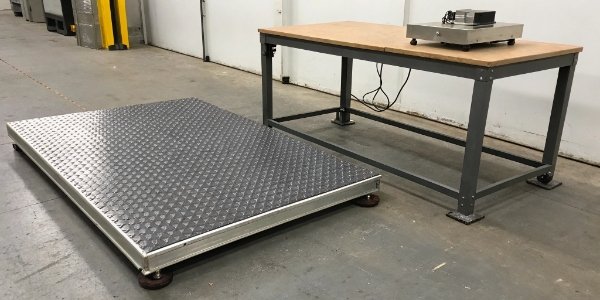
We worked with a customer to set up an automated shipping station. At first, they asked for a "bench scale" to integrate with their software. However, they planned to weigh packages up to 150 kg. Lifting boxes that heavy onto a bench all day is inefficient and a serious safety hazard for employees. We showed them how a low-profile platform scale, placed on the floor, was a much better solution. Workers could slide or roll heavy items on easily. This simple change improved their workflow speed and employee safety. It's a perfect example of how choosing the right scale type makes a huge difference in day-to-day operations.
Choosing Based on Workflow
| Feature | Bench Scale | Platform Scale |
|---|---|---|
| Placement | On a workbench, table, or counter. | On the floor. |
| Typical Capacity | Up to 300 kg (approx. 660 lbs). | 300 kg to over 5,000 kg (approx. 660 lbs to 11,000 lbs). |
| Common Use | Weighing small parcels, food ingredients, or manufacturing parts. | Weighing large boxes, pallets, carts, or drums. |
| Ergonomics | Best for items that can be lifted to waist height easily. | Best for heavy items that can be rolled or slid on at ground level. |
What are the two types of weight scales?
Can all scales be boiled down to just two types? This oversimplification often trips people up. Knowing the fundamental categories helps you navigate the entire weighing industry with confidence.
The two primary types of weight scales are mechanical and electronic, also known as digital. Mechanical scales use springs and levers to move a dial. Electronic scales use sensors to create a digital reading. Today, electronic scales dominate industry because of their accuracy and connectivity.
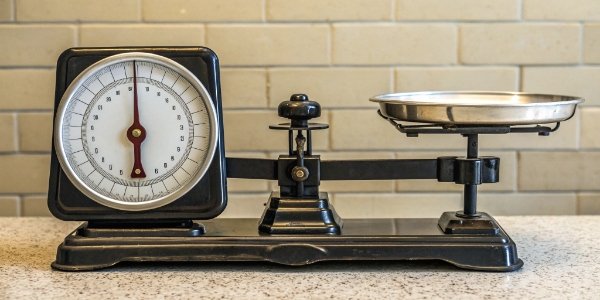
When I first started in this business 18 years ago, mechanical scales4](https://www.britannica.com/dictionary/scale)[^1]s were still common. They were tough, but they were not smart. You had to look at a swinging needle and write the weight down by hand. There was no way to connect them to a computer. Electronic scales changed everything. They are the foundation of modern weighing.
Mechanical vs. Electronic
- Mechanical Scales: These use a complex system of levers and springs. They don't need electricity, which is one small advantage. However, they are less accurate, can be hard to read, and wear out over time. Most importantly, they cannot communicate with your software.
- Electronic Scales: These are at the core of all our products at Weigherps. They use a device called a load cell, which converts the force of the weight into an electrical signal. A microprocessor then turns this signal into a number on a digital display. For a software company, the electronic scale is the only type that matters. That electrical signal is the data your system needs. It's why we focus on building scales for the IoT, so you can help your customers achieve a quantum leap in their business.
Conclusion
Weighbridges are for vehicles, bench scales for items. Knowing the right terminology and type, like electronic platform scales, ensures you choose the perfect weighing solution for your project's needs.
-
Discover the broad definition of scales and their various types to better understand your weighing needs. ↩
-
Explore this link to understand the significance of weighbridges in industrial applications and their impact on logistics. ↩
-
Learn about load cells, the technology behind modern scales, and their importance in accurate weight measurement. ↩
-
This link provides insights into mechanical scales, their limitations, and why electronic scales are preferred today. ↩



[…] helped countless facilities streamline this. First, a truck arrives and positions itself on the weighbridge3. The driver communicates with the scale house operator. The operator uses specialized weighing […]