
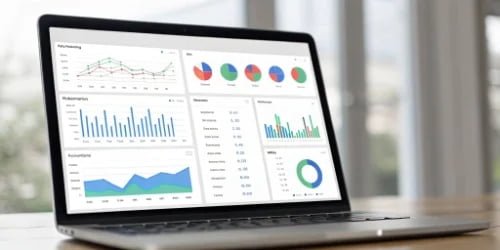
Are you drowning in raw data but thirsty for real insights? Manual weighing leaves you guessing. Intelligent software delivers the clear, actionable analytics you need to make smarter business decisions.
Intelligent weighing software provides analytics on production output, inventory levels, and material usage. It transforms raw numbers like weight, quantity, and volume into visual dashboards, trend reports, and real-time alerts, helping you optimize operations and boost profitability from day one.

You now know that these systems offer more than just numbers on a screen. But how exactly do these analytics translate into tangible benefits for your specific operations? Let's break down the specific data insights you can expect and how they empower better, faster decision-making across your business. The details might just surprise you.
What Types of Data Insights Are Provided by Intelligent Weighing Software?
Is your data just a confusing jumble of numbers? Without structure, it's impossible to see trends. Smart weighing software organizes this data into clear, actionable insights for your business.
Intelligent weighing software provides detailed insights into production yields, material consumption rates, quality control compliance, and operator performance. It can track data points from weight and volume to QR codes, creating a comprehensive digital record for every step of your process.
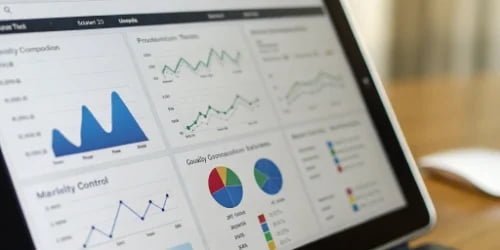
The real power of intelligent weighing software is its ability to capture and contextualize data beyond a simple weight reading. In my 19 years of experience building these systems, I've learned that weight is just one piece of the puzzle. The software we design integrates with hardware like barcode or QR code scanners. This allows us to link every single weighment to specific contextual data. For example, when an operator scans a QR code on a batch of raw materials, the system immediately knows the supplier, the lot number, and the date it arrived. This creates a rich, interconnected data stream, not just isolated numbers. We then process this information to provide very specific insights.
Core Data Categories
| Data Type | Description | Business Application |
|---|---|---|
| Quantitative | Direct measurements like weight, piece count, and volume. | Inventory management, order fulfillment, production output tracking. |
| Qualitative | Data from QR codes1, RFID tags, or user input. | Batch traceability, operator performance2 monitoring, quality control. |
| Temporal | Timestamps for every operation. | Efficiency analysis, calculating throughput, identifying bottlenecks. |
This multi-layered approach ensures every piece of data is useful and contributes to a complete operational picture.
How Can Advanced Weighing Software Enhance Decision-Making Through Analytics?
Are gut-feel decisions holding your operations back? In today's market, that's a risky strategy. Advanced software turns weighing data into a strategic asset for confident, informed decision-making.
Advanced software enhances decision-making by providing real-time dashboards for monitoring KPIs, predictive analytics for forecasting, and historical trend analysis to find root causes of problems. This empowers managers to proactively address issues and optimize workflows instead of reacting to them.

Advanced software bridges the gap between seeing data and understanding what to do with it. One of the biggest shifts I've seen is moving from reactive to proactive management. In the past, a manager might get a report at the end of the month showing high material waste. By then, the loss has already occurred. Today, we customize software to provide real-time alerts3. For instance, if a filling machine consistently produces packages that are 2% overweight, the system can flag it immediately. The manager sees this on a dashboard and can dispatch a technician to recalibrate the machine before thousands of units are overfilled. This saves significant money.
Furthermore, we design our systems with integration in mind. As an OEM/ODM partner, we provide robust APIs that allow the weighing data to flow directly into your clients' existing Enterprise Resource Planning (ERP) or Manufacturing Execution Systems (MES). This integration is crucial. It means inventory levels4 update automatically, production counts are always accurate, and financial reporting is based on live data. Decisions across the entire company, from the production floor to the CFO's office, become sharper and more accurate.
What Analytical Capabilities Are Available in Modern Weight Management Systems?
Think your weighing system is modern because it's digital? That's just the start. Today's systems offer powerful analytical tools that go far beyond simple weight display and recording.
Modern systems offer capabilities like statistical process control (SPC) charting, overall equipment effectiveness (OEE) tracking, and full audit trails for traceability. They also feature customizable dashboards and secure API access for easy integration with other business intelligence tools.
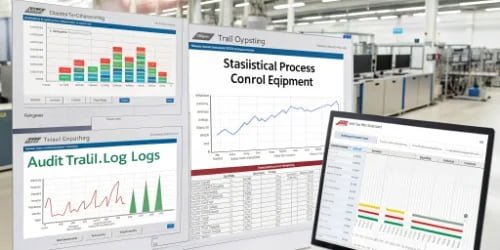
When we work with software vendors, we often focus on embedding high-value analytical functions directly into the system. These aren't just fancy features; they are essential tools for modern manufacturing and logistics. Let's look at three key examples.
Key Analytical Functions
-
Statistical Process Control (SPC): This is a method to monitor and control a process. Instead of just knowing a bag weighs 50 kg, SPC charts show if your filling process is consistent over time. It helps you see if your process is stable or if it's starting to drift, allowing you to fix small problems before they become big ones. This is critical for maintaining product quality and consistency.
-
Overall Equipment Effectiveness (OEE): This is a core metric for measuring manufacturing productivity. A smart scale provides the foundational data for it. It can track the speed of production (Performance), a log of when the line is running (Availability), and the number of accepted versus rejected products based on weight (Quality). Our software crunches these numbers to provide a clear OEE score.
-
Traceability and Audit Trails: This is non-negotiable in many industries. By combining weight data with scanned barcodes or QR codes, our systems create a complete digital history for every product. You can trace a finished good all the way back to its raw material batch. This is vital for managing recalls, proving compliance, and ensuring quality control.
How Do Smart Weighing Solutions Deliver Actionable Metrics for Businesses?
Do you get reports filled with data but have no idea what to do next? Information without action is useless. Smart weighing solutions are designed to deliver clear, actionable metrics.
Smart solutions deliver actionable metrics through customizable alerts, exception reporting, and performance dashboards. They can trigger an alert for an underweight package, report on material waste per shift, or visualize line efficiency against targets, prompting immediate corrective action.
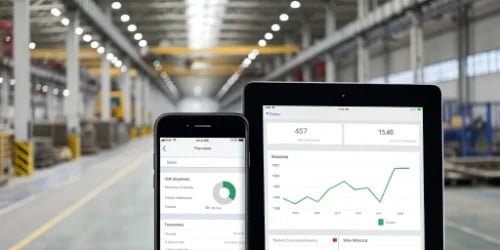
The secret to making data actionable is customization. A raw data point, like "Weight: 10.2 kg," doesn't tell a manager what to do. The magic happens when we, as the manufacturer, work with our clients to define the business rules that turn that data into an instruction. This is where our OEM/ODM expertise really shines. We build the logic directly into the software. The system then knows that a weight of 10.2 kg for a product with a 10 kg target and a 0.1 kg tolerance is an "overfill" event. Rather than just logging the number, the system translates it into an actionable metric.
This transforms how a business operates. Instead of managers hunting through data logs, the system brings the important information directly to them in a way they can immediately use. It's about delivering the right information to the right person at the right time.
From Data to Action
| Raw Data | Actionable Metric |
|---|---|
| Weight = 49.2 kg (Target: 50 kg) | Alert: "Package at Station 3 is 1.6% underweight. Action: Route to QC for inspection." |
| Weighment timestamps | Dashboard: "Line 2 throughput is 15% below target. Potential bottleneck detected." |
| Operator ID + rejected weights | Report: "Shift B operator shows a 5% higher-than-average rejection rate. Action: Schedule for retraining." |
This is how smart weighing solutions move beyond simple measurement to become an active part of process management and improvement.
Conclusion
Intelligent weighing software does more than measure; it informs. By turning raw data into actionable analytics, it empowers you to optimize processes, reduce costs, and drive your business forward.
-
Discover the role of QR codes in enhancing traceability and efficiency in manufacturing. ↩
-
Explore methods to track and improve operator performance for better productivity. ↩
-
Learn how real-time alerts can help you address issues proactively and enhance productivity. ↩
-
Discover tools that can optimize your inventory management and reduce costs. ↩



Comments (0)