

Choosing a food scale seems simple, but mistakes can be costly. Picking the wrong one risks compliance issues or hygiene nightmares. Focus on key certifications and features to stay safe.
A proper food scale must have certifications like NTEP or OIML for accuracy and NSF for hygiene. Key features include a washdown design (IP rating) for cleaning, error-proofing systems, and data traceability to meet food safety standards. These ensure compliance and operational efficiency.
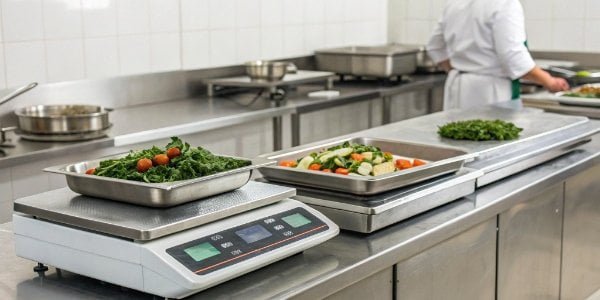
When your business relies on weighing food, the scale you choose is more than just a tool. It's a critical part of your quality control1, legal compliance, and food safety programs. Understanding the specific certifications and features isn't just about buying better equipment; it's about protecting your business and your customers. As someone who has been in the weighing industry for nearly two decades, I have seen firsthand how the right scale can prevent major headaches down the line. It's time to look beyond the price tag and dive into what really matters. Let's break down the essential elements you need to look for.
Why is an NTEP "Legal for Trade" certification essential for selling food by weight?
Selling food by weight requires absolute trust from your customers. If your scales are inaccurate, you could face hefty fines and lose customer loyalty forever. An NTEP-certified scale guarantees accuracy and legality.
NTEP "Legal for Trade" certification is a US standard that proves a scale is accurate and reliable for commercial sales. It protects both the business and consumer by ensuring that weight measurements are fair, preventing financial loss and legal penalties from regulatory officials.
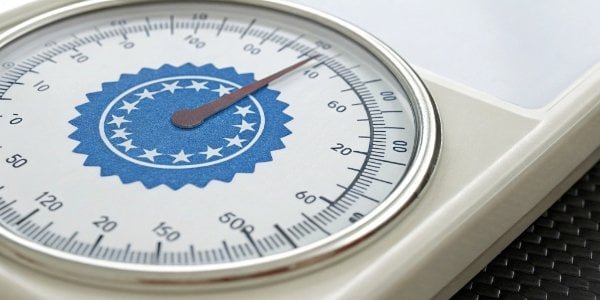
When you label a product with a weight and a price, you are entering a legal agreement with the customer. The National Type Evaluation Program (NTEP2) exists to make sure that agreement is fair. Think of it as a government-backed promise of accuracy. Scales without this certification cannot legally be used for transactions where the price is determined by weight. This applies to delis selling meat, supermarkets pricing produce, or candy stores selling bulk sweets. As a manufacturer, we see this as a baseline requirement for any client selling directly to consumers. It's non-negotiable.
International Equivalents and What They Mean
While NTEP is specific to the United States, similar "legal for trade" standards exist worldwide. The most common international standard is from the OIML3 (International Organization of Legal Metrology). A scale that is OIML Class III certified, for example, has passed rigorous testing for accuracy and reliability under various conditions.
Here’s a simple breakdown of what these certifications verify:
| Certification | Region | Key Focus | Why It Matters for You |
|---|---|---|---|
| NTEP | United States | Accuracy, reliability, and performance for commercial use. | Required by law in the U.S. for selling goods by weight. |
| OIML | International | Sets international standards for legal metrology. | Ensures your scale meets a globally recognized benchmark for accuracy. |
| Measurement Canada | Canada | Canadian equivalent of NTEP. | Required by law in Canada for selling goods by weight. |
Choosing a scale with the correct legal certification for your region isn't just about following rules. It's about building a foundation of trust and integrity with your customers.
What does it mean if a food scale is NSF-certified?
A busy kitchen can be a breeding ground for bacteria. Your equipment could be the weak link that contaminates food, causing illness and destroying your reputation. NSF certification ensures your scale is designed for safety.
An NSF-certified food scale means it meets strict standards for public health protection. The materials used are non-toxic and corrosion-resistant, and the entire design is easy to clean. This certification confirms the scale is safe for direct contact with food.
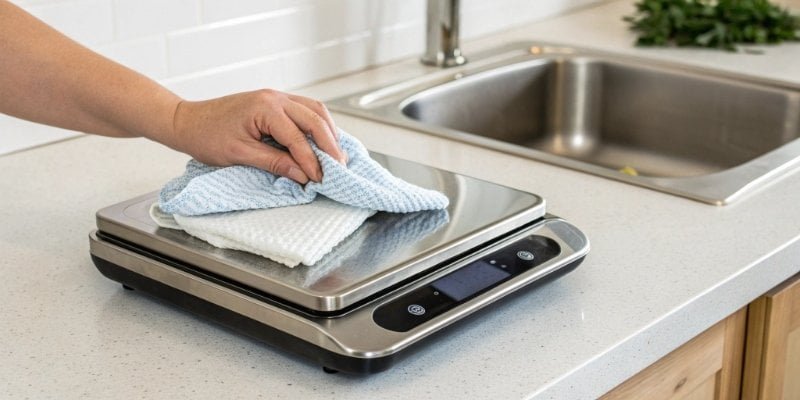
The NSF4 International mark is one of the most important things to look for on any piece of equipment that will touch food. It goes far beyond just being "food grade." It's a holistic certification that examines the scale's entire design from a food safety perspective. When we develop scales for the food industry, achieving NSF certification is a major milestone. It means our design and material choices have been independently verified to be safe and sanitary. This supports food safety management systems like HACCP5 (Hazard Analysis Critical Control Point) by ensuring the equipment itself won't be a source of contamination.
Pillars of NSF Certification
The certification process focuses on preventing food contamination in three main ways:
-
Material Safety: The scale's surfaces that touch food must be non-toxic, non-absorbent, and resistant to corrosion from food acids and harsh cleaning chemicals. This is why you often see 304 stainless steel used in NSF-certified equipment. It's durable and does not harbor bacteria.
-
Cleanability: A scale must be designed to be easily and completely cleaned. This means no sharp internal corners, cracks, or crevices where food particles and microbes can hide. Many of our NSF-certified scales feature a modular structure, where platforms can be removed for deep cleaning.
-
Durability: The scale must withstand the rigors of a commercial kitchen, including repeated washing, without breaking down or creating physical hazards like chipping paint or metal shavings.
In short, an NSF logo is your assurance that the scale was built from the ground up with food safety as the top priority.
What is a washdown scale and why do I need one for a commercial kitchen6?
Food preparation is inherently messy and demands constant, thorough cleaning. Using a standard office scale in this environment is a recipe for disaster, as water and sanitizers will quickly destroy it. A washdown scale is built to survive.
A washdown scale is a sealed scale with a high IP (Ingress Protection) rating, like IP67 or IP68. This means it is protected from dust and can withstand being sprayed with high-pressure water or even submerged, making it essential for sanitation in commercial kitchens.
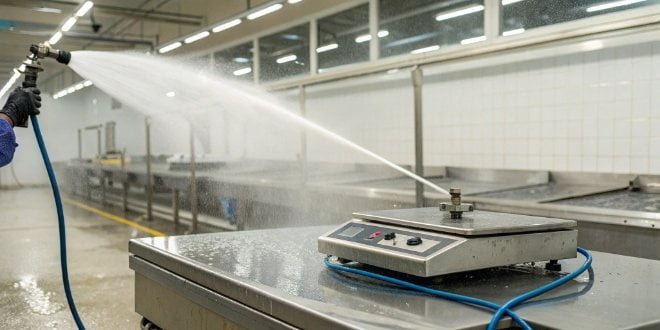
In any environment where raw meat, fish, produce, or powders are handled, cleaning is not optional—it's a critical control point. A washdown scale7 is designed specifically for this reality. The key to its durability is its IP rating8. At Weigherps, we design many of our food industry scales to meet IP68 standards. This ensures the sensitive electronic components, like the load cell and indicator, are completely sealed off from the outside world. This allows your team to follow strict sanitation protocols, using hoses and cleaning agents to eliminate contaminants without fear of damaging the equipment. This is fundamental to preventing cross-contamination and complying with food safety regulations.
Understanding IP Ratings
The IP rating system consists of two numbers. The first digit relates to protection against solids (like dust), and the second digit relates to protection against liquids (water).
| IP Rating | Solids Protection (First Digit) | Liquids Protection (Second Digit) | Practical Meaning |
|---|---|---|---|
| IP65 | 6: Dust Tight | 5: Protected against low-pressure water jets. | Good for general cleaning, but not high-pressure sprays. |
| IP67 | 6: Dust Tight | 7: Protected against immersion up to 1 meter. | Excellent for wet environments and can be submerged briefly. |
| IP68 | 6: Dust Tight | 8: Protected against long-term immersion. | The highest level of protection; ideal for the harshest washdown environments. |
A full stainless steel body combined with a high IP rating is the gold standard for hygienic design. It ensures the scale is not only durable against physical damage but also resilient against the daily chemical and water assaults required to keep a food processing area safe.
How does a checkweighing feature improve portion control in a restaurant?
Inconsistent portions damage both your profits and your reputation. Over-portioning wastes expensive ingredients, while under-portioning leads to unhappy customers. Checkweighing provides instant feedback for perfect portions every time.
A checkweighing feature allows you to preset a target weight with acceptable upper and lower limits. The scale then uses a visual or audible alarm to quickly signal if a portion is underweight, overweight, or correct. This ensures consistency, reduces waste, and controls costs.
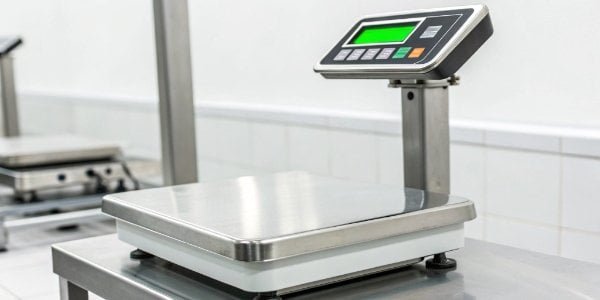
Think of checkweighing as a simple form of automated quality control. In a fast-paced restaurant kitchen or food production line, there's no time to read exact weights for every portion of fries, slice of cheese, or scoop of protein. A checkweighing function simplifies this to a quick go/no-go decision. Many of our scales use a color-changing LCD backlight (yellow for underweight, green for correct, red for overweight) to provide instant, unmissable feedback. This simple feature is surprisingly powerful. It empowers your staff to be accurate and efficient, directly impacting your bottom line by turning what was once a guess into a precise measurement.
The Tangible Benefits of Checkweighing
Integrating scales with this feature into your workflow offers clear advantages beyond just getting the weight right. It's a tool for process improvement.
| Benefit | How Checkweighing Helps |
|---|---|
| Cost Control | Drastically reduces waste from over-portioning expensive ingredients. |
| Quality Consistency | Ensures every customer receives the same experience, dish after dish. |
| Increased Speed | Staff can portion much faster with simple visual cues versus reading numbers. |
| Data for Training | When connected, some systems can track portioning data to identify training needs. |
This feature is also vital for traceability. Our more advanced IoT scales can log every checkweighing event—including time, operator, and result—creating an electronic record. This data helps you meet audit requirements and provides valuable insights into production efficiency and waste reduction.
Conclusion
Selecting the right food scale is about more than weight. It's a strategic decision to protect your business, your customers, and your bottom line by investing in accuracy, safety, and efficiency.
-
Discover how quality control measures can enhance customer satisfaction and operational efficiency. ↩
-
Understanding NTEP certification is crucial for ensuring your food scale meets legal standards for accuracy and reliability. ↩
-
Explore OIML certification to learn about international standards that ensure your scale's accuracy and reliability. ↩
-
Discover why NSF certification is vital for food safety and how it protects public health in commercial kitchens. ↩
-
Understanding HACCP is essential for implementing effective food safety management systems in your kitchen. ↩
-
Explore the must-have equipment for a commercial kitchen to ensure efficiency and compliance with safety standards. ↩
-
Learn about washdown scales and how they ensure hygiene and durability in messy food preparation environments. ↩
-
Understanding IP ratings helps you choose scales that can withstand harsh cleaning and sanitation processes. ↩

[…] easier, international standards organizations have created accuracy classes. For example, the OIML2 (International Organization of Legal Metrology) classifies scales, with Class III being a common […]
[…] a seal of approval. It comes from a governing body, such as the National Type Evaluation Program (NTEP2) in the United States or similar bodies worldwide. This certification confirms that a specific […]
[…] step-by-step, showing you how a single piece of equipment can become the foundation of your entire traceability system1. Let's dive […]