
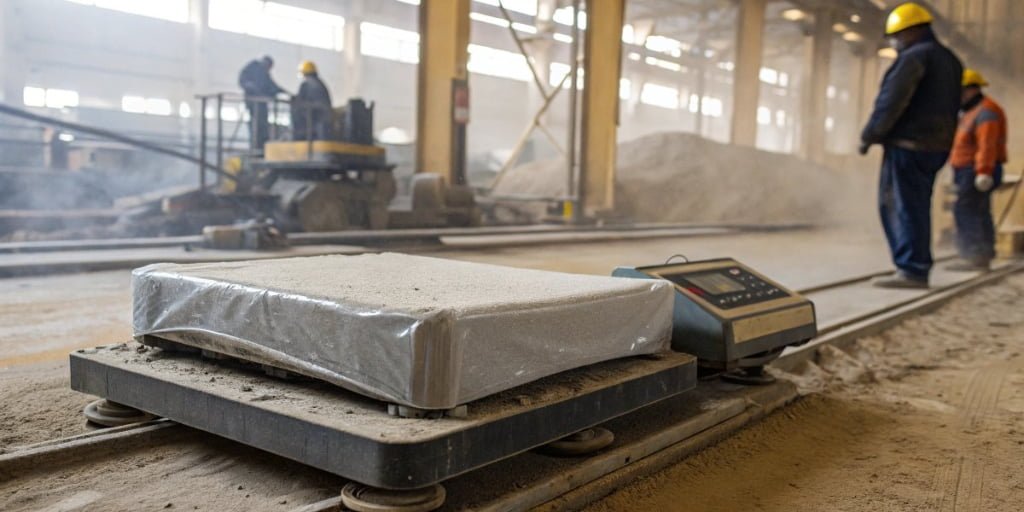
Struggling with scales failing in dusty or wet areas? Inaccurate readings disrupt your workflow and cost money. The solution is choosing a scale with certified environmental protection.
The most suitable scale for humid or dusty environments is a waterproof and dustproof industrial electronic scale. Look for models with a high IP (Ingress Protection) rating, like IP67 or IP68. These scales are specifically sealed to protect internal components from moisture and particle damage, ensuring long-term accuracy.
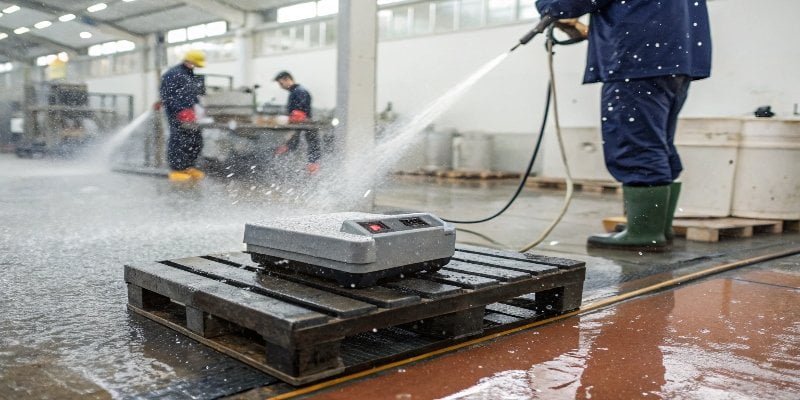
You now know that IP-rated scales are the answer. But this is just the beginning. To truly protect your investment and ensure flawless operation, you need to understand why these environments are so damaging and what specific features to look for. Let’s dive deeper into how these elements affect your equipment.
Does humidity affect digital scales?
Ever wonder why your scale's readings fluctuate in humid conditions? This subtle drift can cause major production errors. Understanding the impact of moisture is key to maintaining consistent accuracy.
Yes, humidity absolutely affects digital scales. Moisture can corrode sensitive electronic components and load cells, leading to inaccurate readings and eventual failure. This is why scales used in damp environments must have sealed enclosures and waterproof components to protect their internal systems from condensation and direct water contact.
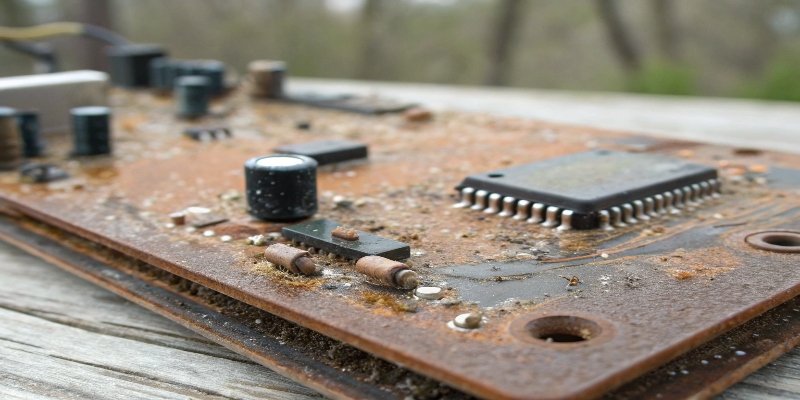
I have seen the damage firsthand. A client in the seafood processing industry contacted us because their standard bench scales were failing every few months. The combination of water, salt, and constant humidity was destroying the internal electronics. The problem is that moisture gets inside the scale housing and condenses on the circuit boards and the load cell. This leads to rust and corrosion, which disrupts the delicate electrical signals needed for accurate measurement. Eventually, the components fail completely. We provided them with our IP681-rated stainless steel scales. These units are fully sealed against water ingress. They have been running without a single issue for over two years now. This shows that investing in the right protection is not an expense, it's a way to guarantee uptime and reliability in your operations.
Key Differences in Humid Environments
| Feature | Standard Scale | IP-Rated Waterproof Scale |
|---|---|---|
| Housing | Unsealed or partially sealed plastic | Fully sealed, often stainless steel |
| Load Cell | Exposed or minimally protected | Hermetically sealed, waterproof |
| Cabling | Standard connectors | Waterproof, sealed cable glands |
| Lifespan | Very short (months) | Very long (years) |
| Accuracy | Becomes unreliable quickly | Stays consistent and accurate |
Which type of scale helps in finest measurement?
Need pinpoint accuracy for your lab or production line? Even tiny measurement errors can compromise quality and cost you money. The key is choosing a scale with high resolution.
For the finest measurements, you need an analytical or precision balance. These scales have very high readability, often to several decimal places (e.g., 0.001g or 0.0001g). They use advanced load cell technology and are designed to minimize environmental interference for maximum accuracy in sensitive applications.

"Finest measurement" really depends on your specific needs. It's about matching the tool to the task. For a laboratory developing new chemical compounds, an analytical balance2 measuring to 0.0001g is essential. But for a food manufacturer portioning ingredients in 50kg batches, a platform scale with a readability of 5g is perfectly precise. The most important terms to understand are capacity and readability3. Capacity is the maximum weight the scale can measure. Readability is the smallest increment it can display. A common mistake is buying a scale with a much higher readability than needed. This often means the scale is more sensitive and less durable in an industrial setting. At my company, we work with clients to find that perfect balance. For a client in the plastics industry, we provided a custom bench scale that measures additives with 0.1g readability, but it was built into a tough, industrial frame to withstand the factory floor.
Matching Scale Type to Your Needs
| Scale Type | Typical Readability | Common Application |
|---|---|---|
| Analytical Balance | 0.0001g | Scientific research, pharmaceutical labs |
| Precision Scale | 0.1g - 0.001g | Quality control, formula mixing |
| Bench Scale | 10g - 1g | Shipping, portion control, general use |
| Floor Scale | 100g - 10g | Pallet weighing, inventory management |
What is a traditional weighing scale called?
Remember those old scales with hanging pans and weights? It's fascinating how we measured things before electronics. Understanding this history helps us appreciate the technology we have today.
A traditional weighing scale is most commonly called a balance scale or a mechanical scale. It operates on the principle of balancing two masses against each other. Common types include the Roberval balance (with two pans) and the spring scale, which measures weight by spring tension.
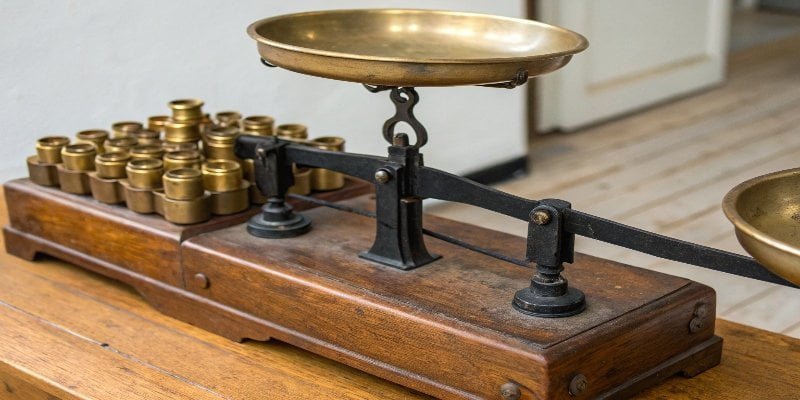
In my 18 years in this industry, I have seen the complete shift from mechanical to digital. Early in my career, we still serviced some very old mechanical floor scales. They were incredibly robust, made of heavy cast iron, but they had their problems. They were slow to use, requiring the operator to manually slide counterweights along a beam. They were also prone to wear and tear on the knife-edges and bearings, which would cause them to lose accuracy over time. A simple knock could throw off the calibration4. Now, everything is digital. A modern electronic floor scale uses a load cell. You place a pallet on the platform, and you get an instant, precise reading on a digital display. Even better, our IoT scales5 can send that weight data directly to a company's inventory system. This leap from a simple mechanical lever to an integrated electronic system is what has revolutionized industrial weighing.
Mechanical vs. Digital Scales
| Feature | Mechanical Scale | Digital Scale |
|---|---|---|
| Principle | Levers and counterweights | Electronic load cell sensor |
| Speed | Slow, manual operation | Instant reading |
| Accuracy | Good, but can drift with wear | High and very consistent |
| Features | Weighing only | Data output, unit switching, counting |
| Maintenance | Frequent mechanical adjustments | Occasional electronic calibration |
What is the name of the tool used to measure weight?
Are you using the right words for your weighing equipment? Confusing 'scale' and 'balance' can lead to misunderstandings. Using the correct terms ensures everyone is on the same page.
The tool used to measure weight is generally called a weighing scale. While 'balance' is also used, it technically measures mass by comparing an unknown mass to a known one. A scale, on the other hand, measures force (weight) which is dependent on gravity.
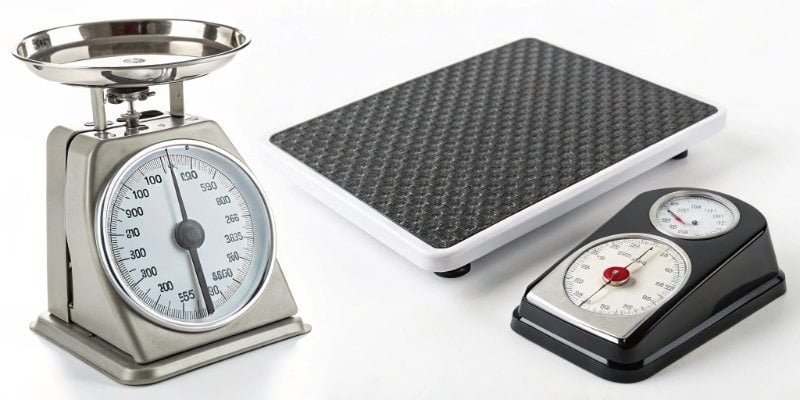
This technical difference is more important than many people think. A balance directly compares one mass to another. Because gravity acts on both sides equally, a true balance will give the same mass reading anywhere in the world, or even on the moon. A scale measures the downward force of an object, which is its mass multiplied by the local force of gravity. This is why most modern electronic weighing instruments are technically scales. This really matters in high-precision industries. We have global clients, and the force of gravity is slightly different in different parts of the world. When we provide a high-precision scale to a customer, we make sure it is calibrated for their specific geographic location. It's a small but critical step that our technical team always follows. This ensures our clients get the accuracy they need, no matter where their facility is located. It is part of our commitment to delivering a truly professional and reliable weighing solution.
Scale vs. Balance at a Glance
| Aspect | Weighing Scale | Balance |
|---|---|---|
| Measures | Weight (Force) | Mass |
| Principle | Measures force (e.g., via spring or load cell) | Compares an unknown mass to a known mass |
| Gravity Dependent? | Yes | No |
| Example | Floor scale, bench scale, kitchen scale | Roberval balance6, analytical balance |
Conclusion
For humid or dusty areas, always choose an IP-rated scale. Matching the right precision and technology to your needs ensures accuracy, durability, and a great return on your investment.
-
Explore the significance of IP68 ratings to ensure your scale withstands moisture and dust, enhancing operational reliability. ↩
-
Explore the applications of analytical balances for high-precision measurements in laboratories and industries. ↩
-
Learn about capacity and readability to choose scales that fit your specific measurement needs. ↩
-
Learn about the importance of regular calibration to maintain scale accuracy and reliability. ↩
-
Explore the innovative technology behind IoT scales and their benefits for modern inventory management. ↩
-
Explore the Roberval balance's unique design and its historical importance in weighing technology. ↩


[…] to clean. Second is protection from the elements. Look for an IP (Ingress Protection) rating. An IP67 rating2, for example, means the scale is fully protected from dust and can be submerged in water. This is […]