

Are you tired of slow manual counts and costly inventory errors? These mistakes disrupt your operations and hurt your bottom line. Industrial counting scales offer a simple, powerful solution.
Industrial counting scales are vital because they dramatically boost efficiency and accuracy. By weighing items to calculate quantity, they replace slow manual counting, reduce labor costs, and ensure precise inventory records, which is essential for smooth production and logistics operations in any modern business.
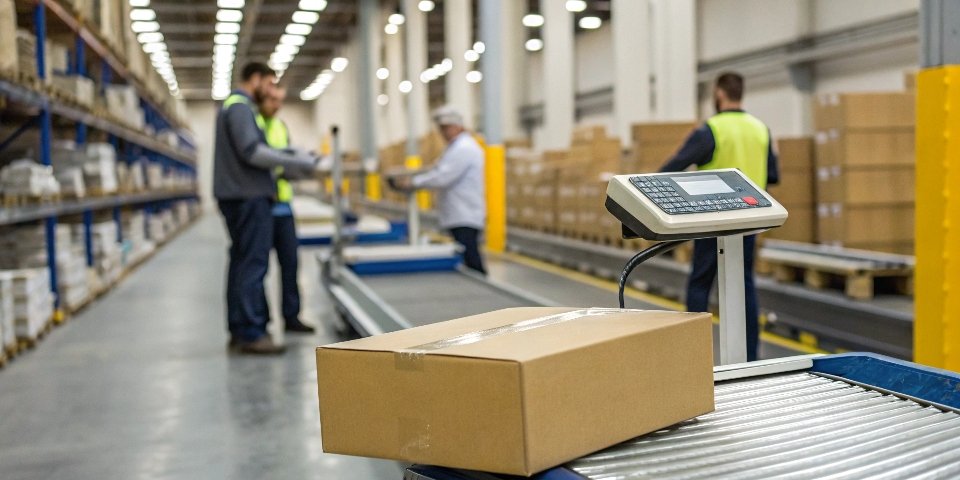
It’s clear these scales are valuable, but you might be wondering exactly how they fit into your daily operations. Over my 18 years in this industry, I've seen firsthand how a simple change in tools can lead to huge improvements for our clients. Let's break down the specific benefits and see how they can transform your workflow.
How can industrial counting scales improve warehouse efficiency and accuracy?
Is your warehouse team bogged down by manual counts? This constant, tedious work creates bottlenecks and increases the risk of shipping errors. Counting scales can instantly streamline this entire process.
They improve efficiency with rapid counting—some models, like our RC2000, give results in just one second. Accuracy is ensured by high-precision sensors that calculate quantities based on weight, eliminating human error from visual fatigue. This combination makes warehouse operations significantly faster and more reliable.

Let's dive deeper into how this works on the ground. For efficiency, speed is everything. When your team can get a precise count of thousands of small components in a second, the whole production line moves faster. There's no more waiting. We've also designed our scales to be mobile. Models like the ICS241 and RC2000 are battery-powered, so your team can take the scale directly to the inventory, saving countless steps and time. For accuracy, it's all about the technology. Our scales use sensitive strain-gauge sensors that detect tiny differences in weight. The scale then uses this data to calculate a very accurate average piece weight (APW)1. Some advanced models even automatically optimize this APW during counting to account for slight variations between individual parts, which further reduces errors.
| Feature | Manual Counting | Industrial Counting Scale |
|---|---|---|
| Speed | Slow, dependent on item complexity | Extremely fast (e.g., 1 second) |
| Accuracy | Prone to human error, fatigue | Highly accurate, up to 99.9% |
| Labor | Labor-intensive, high cost | Minimal labor required |
| Consistency | Varies between employees | Consistently reliable results |
What is the business case for investing in an industrial parts counting scale?
Worried about justifying another equipment purchase to your finance team? It's tough to get budget approval without proving a clear return. Let’s build the strong business case together.
The business case is built on direct cost savings and operational gains. You reduce labor costs by automating counting, prevent financial losses from over-shipping or material waste, and improve cash flow by maintaining leaner, more accurate inventory. The investment pays for itself quickly through these efficiencies.

From my experience working with hundreds of businesses, the return on investment is often much faster than managers expect. The most obvious saving is in labor. In areas with high labor costs, replacing manual counting with a scale can be a game-changer. I recall a client in the electronics sector who reduced their parts-kitting labor by over 70% after implementing our counting scales. Beyond labor, you stop invisible profit leaks. Precise counts prevent you from accidentally shipping extra parts with an order, which is a direct loss. It also ensures you don't order more raw materials than you need, freeing up cash that would otherwise be tied up in excess stock. Even maintenance costs can be lower. For example, our ICS241 model can log data to an SD card, meaning you can print labels or transfer data without a constant PC connection, simplifying your setup and reducing IT support needs.
What role do counting scales play in modern inventory management?
Is your inventory management system only as good as your last manual data entry? Bad data leads to bad decisions and system chaos. Counting scales act as the crucial, accurate bridge.
In modern inventory management, counting scales are critical data capture devices. They provide accurate, real-time quantity data that feeds directly into ERP or WMS systems via interfaces like RS232 or USB. This automates data entry, ensures system accuracy, and enables reliable inventory tracking and traceability.

You should think of a modern counting scale as a smart data terminal, not just a weighing device. This is especially important for our clients in the software and tech space who value data integrity. The ability to connect a scale directly to your systems is a core function. With standard RS232, USB, or Ethernet ports, the scale can send count data straight to a PC or even a PLC on an automated line. This eliminates the risk of someone mistyping a number, which is a common source of inventory discrepancies. Furthermore, the scales themselves become a source of truth. A model like our ICS241 can store up to 30,000 weighing records internally. This creates a powerful audit trail. If a customer reports an issue with a specific batch, you can quickly pull up the weighing logs to trace its journey through your facility, ensuring full traceability and supporting your quality control efforts2.
How can a counting scale help reduce inventory errors and associated costs?
Do you know how much money inventory errors are silently costing you? They lead to stockouts, rush shipping fees, and obsolete stock write-offs. A counting scale directly tackles these hidden costs.
Counting scales reduce errors by replacing error-prone manual counting with precise, weight-based calculations. This prevents discrepancies in receiving, shipping, and cycle counts. The associated costs—like rush shipping for stockouts, lost sales, and capital tied up in "ghost" inventory—are drastically minimized.

Let's break down the specific errors that counting scales prevent. They stop receiving errors by letting you instantly verify that a supplier sent the correct quantity. They eliminate kitting errors, ensuring every product package has the right number of components. And crucially, they stop shipping errors, so you don't lose money on overages or anger customers with shortages. This accuracy has a direct impact on your bottom line by cutting associated costs. When your inventory data is right, you don't have to pay for expensive rush freight to cover an unexpected stockout. Many of our scales also have a checkweighing function3. You can set a target quantity with a tolerance, and the scale will use a light or sound to alert the operator if a box is over or under. This is active error prevention, which is fundamental to quality assurance.
| Inventory Error Cost | How a Counting Scale Solves It |
|---|---|
| Rush Freight | Prevents stockouts by ensuring accurate inventory levels. |
| Lost Sales | Keeps products in stock so you can fulfill customer orders. |
| Excess Labor | Reduces time spent on recounts and searching for "lost" stock. |
| Inventory Write-offs | Prevents over-stocking that leads to obsolete inventory. |
Conclusion
In short, industrial counting scales are essential tools. They boost efficiency, guarantee accuracy, cut costs, and integrate seamlessly, making them a cornerstone of modern, profitable industrial operations.



[…] Real-time data integration9 […]
Great comment.