
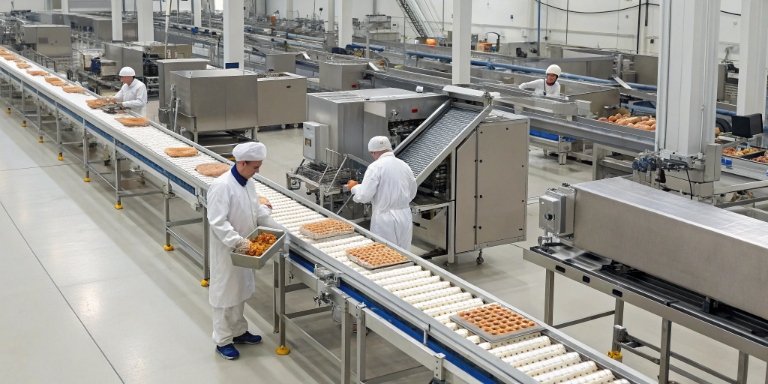
Are you tired of disconnected data in your food factory? Production reports don't align with what's actually happening on the floor. We offer a path to complete, real-time transparency.
The most effective solution is to integrate smart PC scales that synchronize frontline and backend data in real time. This allows management to instantly view crucial metrics like output, waste, and efficiency directly from their office, creating a transparent and unified operational view.
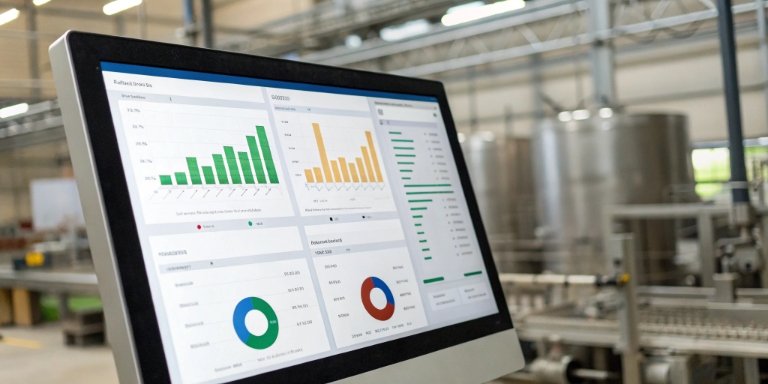
That feeling of making decisions based on old, conflicting data is more than just frustrating—it's a direct hit to your bottom line. Different departments, from receiving to packaging, often operate in their own bubbles, creating data silos that prevent a clear view of your operations1. [12, 21] This fragmentation leads to hidden inefficiencies, unaccounted waste, and missed opportunities2. But what if you could connect every data point into one cohesive, real-time picture? This isn't just about better reports; it's about transforming your factory into a smarter, more agile, and profitable operation. Let's break down how we can bridge this gap and achieve unified control.
How can food factories integrate data from different production processes effectively?
Is manual data entry causing errors and delays? This slow, unreliable process masks the true state of your production and prevents effective decision-making. Let's connect the data dots automatically.
Effective integration begins by capturing data automatically at its source. [8] Using IoT-enabled devices, such as smart PC scales, ensures that critical information from weighing, processing, and packaging flows directly into a central system without manual intervention, eliminating human error.
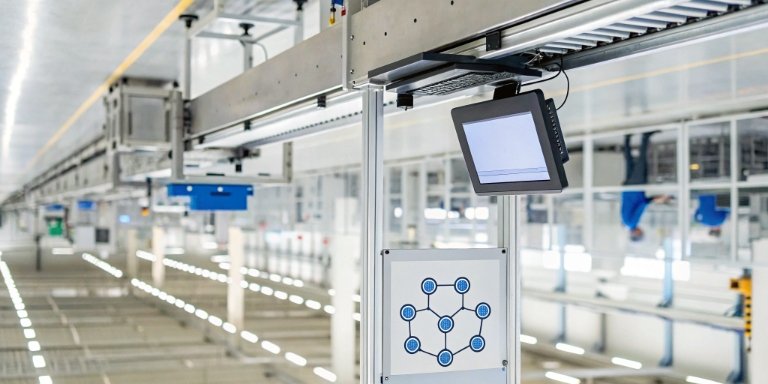
In my 19 years of experience, the biggest hurdle to efficiency has always been a lack of reliable data. Data silos, where each department uses its own separate system, are a primary cause of this problem. [19] The production floor might use one system, while the quality assurance team uses another. [12] When these systems don't talk to each other, you're left trying to piece together the truth from conflicting spreadsheets. Manual data entry only makes this worse, introducing delays and human error. [7]
As a software vendor, I know you understand the importance of a single source of truth3. The solution lies in a unified approach that combines smart hardware with flexible software. Our smart PC scales act as intelligent data collection terminals right on the factory floor. They don't just weigh products; they capture timestamps, operator IDs, and product codes, then send this clean, structured data directly to your ERP or MES via an API.
Here’s a simple breakdown of the benefits:
| Feature | Manual Data Entry | Automated with Smart Scales |
|---|---|---|
| Data Accuracy | Low (Prone to human error) | High (Direct digital capture) [2] |
| Timeliness | Delayed (End-of-shift reports) | Real-Time (Instant data transfer) [4] |
| Labor Cost | High (Requires dedicated staff) | Low (Fully automated process) [8] |
| Traceability | Difficult and slow | Instant and accurate [18] |
By integrating our hardware with your software, you can offer your clients a seamless solution that eliminates data silos and provides the clear, real-time insights needed for modern manufacturing.
What systems can help monitor real-time frontline data in food manufacturing?
Are you managing your production floor by looking in the rearview mirror? Relying on end-of-shift reports means you're always reacting to old news, leading to preventable waste and downtime.
The most powerful setup combines smart PC scales with a Manufacturing Execution System (MES). [26, 28] The scales serve as the frontline data source, capturing weight, yield, and throughput in real time, while the MES visualizes this data, providing live dashboards and actionable insights.
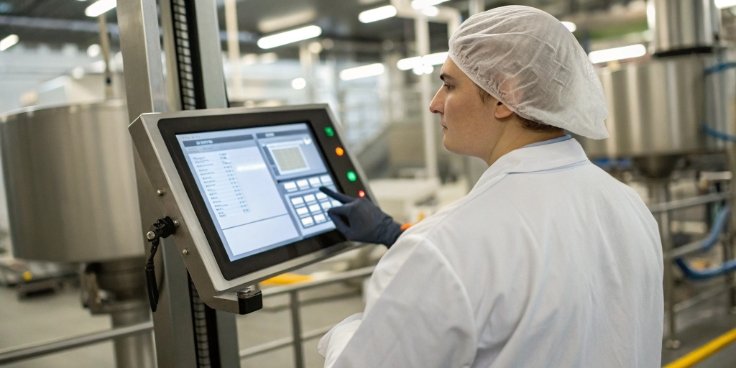
To achieve true real-time monitoring, you need three key components working together: intelligent hardware, powerful software, and a reliable network. I've seen firsthand how this combination transforms a factory's operations.
First is the hardware—the source of your data. This is where our smart PC scales come in. These are not just scales; they are industrial-grade computers designed for the harsh environment of a food factory. They are built to be washed down, handle temperature fluctuations, and endure constant use. More importantly, they run software and are equipped with network connectivity (Wi-Fi or Ethernet), turning every weighing station into a smart data terminal. [10]
Next is the software, which is your area of expertise. Our scales are designed to be the perfect hardware partner for your software solutions, whether it's an MES, ERP, or a custom analytics platform. [6] By feeding your system with precise, real-time data from the factory floor, you can provide your clients with dashboards that show live OEE (Overall Equipment Effectiveness)4, track waste, and monitor line efficiency. [3, 4]
Finally, the network acts as the bridge. It securely transmits the data captured by the scales to the backend software. For you and your clients, security is paramount. That's why our systems support secure protocols to ensure data integrity and protect against unauthorized access, a critical requirement for any modern IT infrastructure. [7]
How can centralized data management improve transparency in food production operations?
Do you ever doubt the accuracy of your production reports? When data is scattered across different systems and spreadsheets, accountability is lost and true performance is hidden. Let’s bring it all together.
Centralized data management creates a "single source of truth" that provides everyone, from the floor operator to the CEO, with access to the same live, accurate information. This enhances transparency, eliminates guesswork, and fosters data-driven decisions to boost efficiency and cut waste.
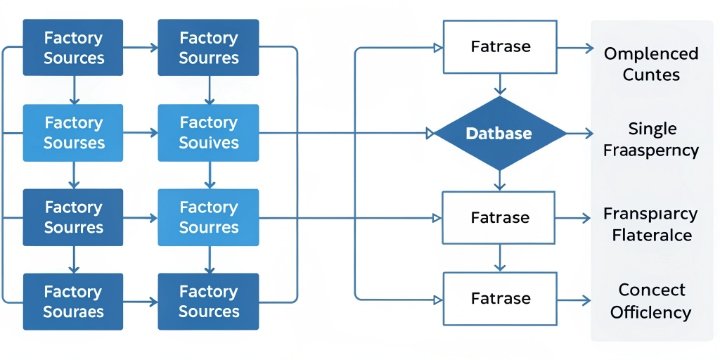
I remember working with a client in the food processing industry who was struggling with unexplained material losses. Their reports showed a consistent 5% variance, but no one could pinpoint the cause. After we installed smart scales that fed into a central dashboard, the problem became obvious within a day. A single station was consistently over-portioning by just a few grams on every package. On its own, it was minor, but scaled up, it was costing them thousands monthly. The fix was immediate, and their profitability improved overnight.
This is the power of transparency. When data is centralized, everyone is on the same page. It fosters a culture of accountability and continuous improvement.
Here’s how it benefits different roles:
| Department | Benefits of Centralized Data |
|---|---|
| Management | Real-time visibility into Overall Equipment Effectiveness (OEE), scrap rates, and downtime. [3] Make strategic decisions based on live data, not day-old reports. |
| Quality Control | Instantly track batches and ingredients for full traceability. [13] Receive alerts for any deviations from standards, enabling proactive quality assurance. [2] |
| Production Team | See clear, live performance targets and get immediate feedback. Empowers operators to take ownership of their output and efficiency. |
| Software Provider | Offer a more powerful, integrated solution. A centralized data system is easier to maintain, upgrade, and secure, delivering greater value to your clients. [19] |
By centralizing data, you move from a reactive management style to a proactive one, where problems are identified and solved in minutes, not weeks.
What are the best tools for bridging the gap between frontline and backend data in food factories?
Are you still relying on manual data transfers or complex middleware to connect your factory floor to your backend systems? These outdated methods are slow, error-prone, and a major operational bottleneck.
The single best tool is a smart, network-connected PC scale. It acts as the ultimate bridge by capturing physical data (weight) at the source and instantly converting it into digital information for seamless integration with ERP, MES, and other backend software.
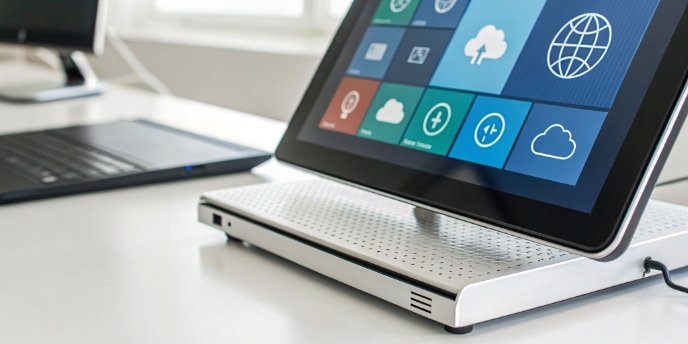
For over 19 years, my focus has been on creating industrial weighing solutions, and I can tell you that the evolution from simple digital scales to smart PC scales has been a game-changer. A standard scale tells you a weight. A smart PC scale, on the other hand, is an intelligent terminal that sits at the heart of your data collection process. It runs applications, features a user-friendly touchscreen, and connects directly to your network. [10]
As a software provider, you need hardware partners who understand the importance of seamless integration. That’s why our smart PC scales are designed with your needs in mind. Unlike closed systems, our scales are built on an open architecture. We provide comprehensive SDKs and API support, making it easy for your development team to connect your software and pull data in a structured, reliable format like JSON or XML. [7] Think of our scales as a robust, industrial-grade peripheral for your software ecosystem.
Let’s compare the options:
| Method | Integration Difficulty | Data Quality | Real-Time Capability |
|---|---|---|---|
| Manual Records | N/A (No integration) | Very Poor | No |
| Standard Scale + PC | Complex & Clunky | Moderate (multi-step process) | Delayed |
| Smart PC Scale | Simple (API/SDK) | Excellent (Direct) | Yes (Instant) |
Our smart PC scales are built to last in tough food production environments, with IP-rated stainless steel construction. We also offer customization to meet the specific needs of your projects. By partnering with us, you can deliver a complete, end-to-end solution that truly bridges the data gap for your clients.
Conclusion
Ultimately, integrating real-time data is no longer a luxury—it’s essential for survival and growth. Smart PC scales decisively bridge the gap between your factory floor and backend systems, delivering the transparency needed for a more profitable operation.
-
"Break Down Silos for Visibility Into Enterprise Risk", https://sloanreview.mit.edu/article/break-down-silos-for-visibility-into-enterprise-risk/. A neutral source on data management or smart manufacturing should support that organizational or system-level data silos limit cross-functional visibility and integrated decision-making; this would contextualize the claim rather than quantify its impact in food factories specifically. Evidence role: general_support; source type: research. Supports: Data silos prevent a clear operational view in food factories.. Scope note: Likely contextual unless the source studies food manufacturing operations directly. ↩
-
"Fragmentation of production amplifies systemic risks ... - PMC", https://pmc.ncbi.nlm.nih.gov/articles/PMC7769560/. A manufacturing systems or operations-management source should support that fragmented information flows can obscure process inefficiencies and delay corrective action; this would substantiate the mechanism but may not prove each listed business outcome in every factory. Evidence role: mechanism; source type: paper. Supports: Fragmented production data can hide inefficiencies, waste, and improvement opportunities.. Scope note: Support may be general to manufacturing rather than specific to food processing waste accounting. ↩
-
"Data Value and the Search for a Single Source of Truth", https://scholarspace.manoa.hawaii.edu/bitstreams/c3ff1a87-afa8-45d9-bc95-3103a01e849e/download. A data governance or information-systems source should explain that a single source of truth is a data-management principle in which authoritative data are maintained consistently for organizational use; this supports the transparency rationale but not specific efficiency gains. Evidence role: definition; source type: institution. Supports: Centralized data management can create a single source of truth for organizational decision-making.. Scope note: Supports the data-management concept, not the article's claimed operational outcomes by itself. ↩
-
"OEE Implementation Guide for Tennessee Manufacturers", https://tmep.cis.tennessee.edu/oee-implementation-guide. A manufacturing engineering source should define Overall Equipment Effectiveness as a composite measure commonly based on availability, performance, and quality, supporting its use as a live production-performance metric. Evidence role: definition; source type: education. Supports: OEE is a recognized manufacturing metric for monitoring equipment and line performance.. ↩

Comments (0)