
Are you worried about network outages causing chaos in your production line? In food manufacturing, unstable internet can stop operations, leading to lost data, wasted product, and compliance headaches.
The solution lies in smart devices with local caching. PC scales with built-in storage can save production data offline. When the network returns, the data automatically syncs to the cloud. This ensures zero data loss, regardless of internet stability, protecting your records and productivity.
As a manufacturer of industrial scales for 19 years, I've seen countless partners struggle with this. A network drop at the wrong moment can bring a multi-million dollar operation to a halt1. It's a constant source of stress for technical directors and purchasing managers. But what if the connection between your production floor and your data system didn't have to be a point of failure? We'll explore how to build a resilient system that keeps your data safe and your production moving, no matter what the internet is doing.
How Can Food Manufacturers Prevent Data Loss During Network Outages?
Worried your production data will vanish during a network outage? This can jeopardize compliance and halt operations. Food manufacturers need a way to protect critical information when connectivity fails.
The most effective way to prevent data loss is by using equipment with offline capabilities. Smart scales that store data locally during an outage and automatically sync later ensure every record is saved. This local-first approach guarantees data integrity without depending on a constant internet connection.
In my experience, the food industry's biggest data-related fear is a gap in traceability records. Even a short network outage can create a "data blind spot," making it impossible to prove compliance for a specific batch. [2] Modern plants rely on real-time data from scales and sensors for quality control2. [2] If that connection breaks, the data is often lost forever, forcing staff to use error-prone manual logs3. [2]
This is where the concept of "edge computing" becomes a game-changer for the factory floor. [1] Instead of sending every piece of data straight to a distant cloud server, we process and store it locally, right at the source.
The Power of Local Caching
The core technology that solves this problem is local data caching. Here’s how it works in a smart PC scale:
- Normal Operations: The scale records weight, timestamps, and batch numbers, sending data to your central server or cloud in real-time.
- Network Disconnects: The scale immediately detects the connection loss. Instead of stopping, it begins saving all new data to its internal memory. This could be a built-in flash drive or a dedicated storage module. [14]
- Network Restores: Once the connection is back, the scale automatically communicates with the server, uploading all the cached data in the correct order. [23]
This simple, automated process ensures a complete, unbroken chain of data. You avoid the risks of manual data entry and the compliance nightmare of missing records, which can lead to audit failures or forced recalls4. [5]
What Are Reliable Solutions for Managing Production Data with Unstable Internet Connections?
Struggling with an unreliable internet connection in your factory? This can disrupt data flow and impact production. You need a robust solution that keeps your operations running smoothly despite connectivity issues.
Reliable solutions center on creating a system that doesn't depend on the cloud 24/7. Smart PC scales with built-in offline storage are a primary fix. This, combined with local network redundancy and edge computing gateways, ensures data is always captured and processed right on the factory floor.
A few years ago, a client running a large-scale bakery was having major issues. Their plant was in a remote area with spotty internet, causing their cloud-connected scales to drop offline several times a day. Production would halt because they couldn't generate new labels or record batch weights, leading to significant downtime.
Their problem wasn't the scales themselves, but their complete reliance on a stable, external connection. The solution we developed for them was a multi-layered approach to data resilience, which I now recommend to all clients in similar situations.
Building a Resilient Data Infrastructure
A truly reliable system combines several layers of protection. While a smart scale with local caching is the first line of defense, you can build even more resilience.
| Solution Component | How It Works | Key Benefit |
|---|---|---|
| Smart PC Scales with Local Cache | The scale itself stores data when the network is down and syncs it automatically when reconnected. | Prevents any data loss at the point of capture, ensuring 100% record integrity without stopping work. |
| Local Edge Server/Gateway | A small server on-site acts as an intermediary. It collects data from all devices on the floor and manages the upload to the cloud. [1] | If the internet goes out, data is safe on the local server. It also allows for real-time processing without cloud latency. [6, 8] |
| Redundant Network Hardware | Using multiple Wi-Fi access points or having a backup cellular router provides an alternative connection if the primary one fails. [19] | Minimizes the frequency and duration of network outages that affect your devices. [20] |
This strategy moves your plant from a fragile, cloud-dependent model to a robust, "edge-first" model. Processing and storing data locally keeps operations running smoothly, even when remote connections are unreliable. It ensures high availability and lets you keep manufacturing without interruption. [22]
How Do You Ensure Data Continuity in Food Production When the Network is Unstable?
Is the fear of broken data trails from network drops slowing you down? In food production, data continuity is essential for safety and compliance. Unstable networks threaten this continuity every day.
You ensure data continuity with automated "store and forward" technology. Devices like smart scales capture and timestamp data locally. Once connectivity is restored, an automatic synchronization process uploads this stored data to the central system, filling in any gaps without manual intervention.

For a purchasing manager or technical director, the key isn't just surviving an outage—it's ensuring that when the system comes back online, the data makes sense. The nightmare scenario is dealing with data conflicts, duplicate entries, or out-of-sequence records after an outage. [2]
I remember a conversation with a technical lead at a meat processing plant. He told me, "It’s not the outage that kills us, it's the recovery." His team spent hours after each network failure trying to manually piece together what happened, cross-referencing paper logs with partial digital records. This is where seamless, automatic data continuity becomes so critical.
The "Self-Healing" Data Process
True data continuity isn't just about storage; it's about intelligent synchronization. Modern systems are designed to "self-heal5" after a disruption. [22] This process focuses on maintaining data integrity from the production floor to your final database.
Key Steps in Automated Data Synchronization:
- Immediate Caching with Timestamps: The moment a network connection is lost, the smart scale begins storing every reading locally. Crucially, each record gets a precise timestamp. This is vital for maintaining the correct sequence of events.
- Connection Monitoring: The device actively monitors the network status. [23] As soon as it detects a stable connection, it initiates the sync process.
- Automatic Data Handshake: The scale communicates with the server, identifying the last successfully received data point. This prevents duplicating records that were already sent before the outage.
- Sequential Upload: The scale uploads the stored data in chronological order, ensuring the production timeline remains accurate. The server validates the consistency of this new data against its existing records. [23]
- Error Handling and Retry: If an error occurs during synchronization (e.g., the network drops again), the system is designed to pause and retry, ensuring a complete and successful transfer once the connection is stable. [23]
This automated process guarantees a single, unified source of truth. It eliminates the operational chaos and compliance risks that come from fragmented production data, allowing your team to trust the records without question. [17]
What Technologies Can Safeguard Manufacturing Data Against Network Disruptions?
Are you looking for the right technology to make your data immune to network problems? Simple cloud storage isn't enough. You need specific technologies on the factory floor to protect your critical manufacturing data.
The key is a combination of Edge Computing and the Industrial Internet of Things (IIoT). [1, 8] Smart devices, like PC scales, act as edge nodes that process and store data locally. This decentralized approach, supported by robust local databases and sync protocols, safeguards data right at its source.
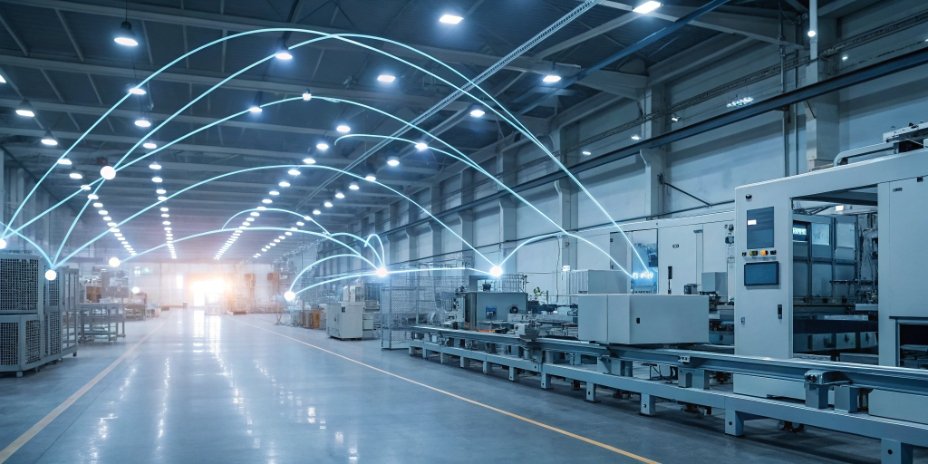
As someone who designs and builds these systems, I get excited about how these technologies work together. It's not just about having a scale with a USB port anymore. [14] We're talking about embedding real intelligence directly into the hardware on the production line. This is the core of what we call Industry 4.0.
For a software vendor's technical director, understanding this stack is crucial for integration. You need to know that the hardware you're connecting to is more than just a sensor—it's a smart, reliable partner in your data ecosystem.
Key Technologies for Data Resilience
Let's break down the technical components that make a system truly resilient to network disruptions. These technologies work together within a smart PC scale to ensure your data is always safe.
- Edge Computing: This is the most important concept. Instead of relying on a central cloud for every transaction, processing happens locally on the device itself. [6] This eliminates latency and, more importantly, allows the device to function autonomously during network outages. [3, 8]
- Local Storage (On-Device Database): This isn't just a simple file. Smart scales use efficient, embedded databases (like SQLite or time-series databases) designed for high-volume, high-speed data logging from IoT sensors. [21, 30] This ensures that data is stored in a structured, queryable format, even when offline.
- IoT (Internet of Things) Sensors: The scale itself is an IoT device, equipped with sensors for more than just weight. These devices are designed for automated communication and can generate rich data streams about production. [8]
- Automatic Sync Protocols: This is the software logic that ensures seamless data recovery. It uses protocols that can detect connection status, handle data handshakes to avoid duplication, and manage retry attempts for failed transfers. [23]
- Hybrid Cloud Architecture: The best systems use a hybrid model. The edge device handles immediate tasks and short-term data storage, while the cloud is used for long-term storage, advanced analytics, and enterprise-wide visibility. [3] This gives you the best of both worlds: real-time reliability on the floor and powerful data analysis in the cloud.
By integrating these technologies, we create a system where the factory floor can operate independently of network stability, ensuring production data is always captured accurately and securely.
Conclusion
In conclusion, network instability doesn't have to mean data loss. By using smart PC scales with local caching and automated sync, you guarantee complete data continuity for your food production line.
-
"Maintenance Costs and Advanced ...", https://www.nist.gov/publications/maintenance-costs-and-advanced-maintenance-techniques-manufacturing-machinery-survey. An industry or government report on manufacturing downtime should support that unplanned outages can halt production and create substantial economic losses; it may not attribute downtime specifically to internet connectivity in every case. Evidence role: statistic; source type: institution. Supports: A network drop can halt high-value manufacturing operations and cause significant financial impact.. Scope note: Most downtime studies aggregate multiple causes, so the evidence may be indirect for network-specific failures. ↩
-
"Sensor Based Monitoring for Real-Time Quality Control in ...", https://www.academia.edu/58590249/Sensor_Based_Monitoring_for_Real_Time_Quality_Control_in_Manufacturing. A scholarly or institutional source on smart manufacturing should support that sensors and real-time data acquisition are commonly used for process monitoring and quality control in modern manufacturing; applicability to food plants may vary by facility maturity. Evidence role: expert_consensus; source type: paper. Supports: Modern plants use real-time data from scales and sensors for quality control.. Scope note: The source may discuss manufacturing broadly rather than food manufacturing specifically. ↩
-
"Measuring the rate of manual transcription error in outpatient ...", https://pmc.ncbi.nlm.nih.gov/articles/PMC6351970/. A human factors or food safety recordkeeping source should support that manual data entry can introduce transcription errors and inconsistencies; this does not mean all manual logs are unreliable when properly controlled. Evidence role: general_support; source type: paper. Supports: Using manual logs as a fallback can increase the risk of recordkeeping errors.. Scope note: The citation would support increased error risk, not that manual logging always causes incorrect records. ↩
-
"THE 20 BEST Restaurants in Dallas (Updated September 2026)", https://www.tripadvisor.com/Restaurants-g55711-Dallas_Texas.html. A food safety authority source should support that incomplete or inaccurate traceability and production records can complicate audits and recalls; it does not establish that every missing record triggers an audit failure or recall. Evidence role: general_support; source type: government. Supports: Missing or incomplete production records can increase food safety audit and recall risks.. Scope note: Regulatory outcomes depend on jurisdiction, product risk, and the nature of the record gap. ↩
-
"Self-Healing Component in Robust Software Architecture ...", https://www.utdallas.edu/~chung/ftp/ShinJSCP.pdf. A distributed systems or networking source should support that resilient systems can detect failures, retry operations, and recover service automatically; this supports the analogy of self-healing but not any specific synchronization implementation. Evidence role: mechanism; source type: paper. Supports: Modern data systems can be designed to recover automatically after disruptions through failure detection, retries, and synchronization.. Scope note: The term is broad, so evidence will likely support the general design pattern rather than the exact system described. ↩



Comments (0)