
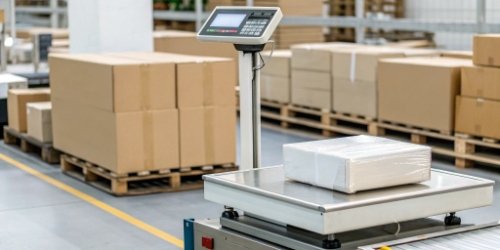
Manual packaging lines are slow and create costly bottlenecks. Trying to weigh and then label separately wastes valuable time. An integrated scale combines these tasks, dramatically increasing your speed.
An integrated label printing scale cuts time by combining weighing, price calculation, and label printing into one single action. Instead of multiple steps and devices, an operator simply places an item on the scale, and a complete, ready-to-apply label is printed instantly. This consolidation eliminates wasted movement and time.
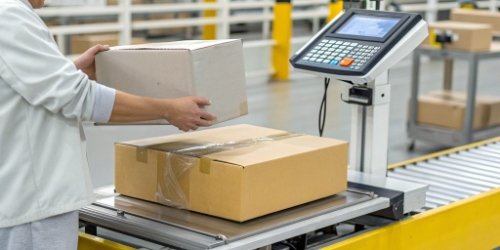
You've seen the big promise: cutting time in half. It sounds great, but how does this actually work in a real-world setting? For 19 years, I've seen countless operations struggle with inefficient workflows. The change isn't just about a new machine; it's about rethinking the process from the ground up. Let's break down exactly where those efficiency gains come from and how they can impact your bottom line. This isn't just theory. It's a practical shift that we help our clients achieve every day. Let's dive deeper.
What Are the Efficiency Gains from Using an Integrated Label Printing Scale in Packaging?
You can't pinpoint where time is lost in your packaging process. This makes it impossible to improve efficiency and reduce labor costs. Integrated scales provide clear, measurable time savings by eliminating redundant steps.
The primary efficiency gain is time reduction. By merging weighing and label printing, you eliminate the separate step of moving an item from a scale to a printing station. This simple change can reduce the time per package by 5 to 10 seconds, quickly adding up to significant labor savings.
From Multiple Steps to a Single Action
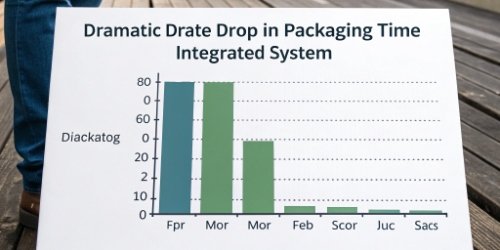
The most significant gain comes from consolidating tasks1. In a traditional setup, an employee performs several distinct actions. They weigh the item, note the weight, walk to a computer, input the weight, print a label, and then return to apply it. Each action takes only seconds, but they add up. Our integrated scale turns this multi-step sequence into a single, fluid motion. The operator places the product on the scale, and the label prints out right there. This simple change has a massive impact. We've seen clients reduce their per-item processing time by over 50%. This frees up your team to handle more volume or focus on other important tasks.
The Financial Impact of Time Saved
This time saving translates directly into cost savings2. Let's look at a simple comparison.
| Workflow Step | Traditional Process (Time) | Integrated Scale Process (Time) |
|---|---|---|
| Place item on scale | 2 seconds | 2 seconds |
| Read and record weight | 3 seconds | 0 seconds (automated) |
| Move to printer station | 4 seconds | 0 seconds (no movement) |
| Print label | 2 seconds | 1 second (instant) |
| Apply label | 2 seconds | 2 seconds |
| Total Time per Item | 13 seconds | 5 seconds |
As you can see, the integrated process is far more efficient. Over a full shift, this saves hours of labor, which directly improves your profitability.
How Does an Integrated Label Printing Scale Speed Up the Packaging Process?
Your team moves between stations just to pack one item. This physical movement is wasted effort and slows down the entire line. An integrated scale creates a single, streamlined workstation for weighing and labeling.
It speeds up the process by creating a "one-touch" workflow. An operator places a variable-weight item, like a cut of meat, on the scale. The scale instantly weighs it, calculates the price, and prints a barcode label. The operator takes the label and the item, completing the task in one spot.
A Real-World Example: Meat Portioning
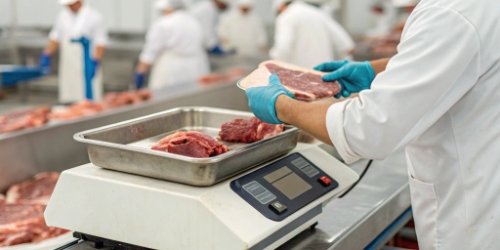
Some products cannot be handled by fully automatic packaging machines. I was visiting a client's meat processing facility. They had a team manually cutting and portioning high-value steaks. Their process was slow. A worker would cut a piece of meat, place it on a scale, then walk it over to a shared printing station. This created a line of people waiting to print labels. It was a huge bottleneck. We introduced our integrated IoT scale, which is also waterproof and designed for these harsh, wet environments. The change was immediate. Now, each butcher has their own station. They weigh a portion, and the label prints instantly. There is no more walking or waiting.
Eliminating Motion and Waiting
The core principle at play is the elimination of waste3. In production, wasted motion and waiting time are two of the biggest drains on efficiency. An integrated scale addresses both. It creates a compact, all-in-one workstation, so the operator stays in one place. Because the weighing and printing are instantaneous, waiting time is reduced to almost zero. This not only makes the process faster but also less physically tiring for your staff. The workflow becomes a smooth, continuous rhythm instead of a series of disjointed starts and stops. This consistent pace allows for better production planning and more predictable output.
How Can Packaging Time Be Reduced with Label Printing Scale Technology?
Your current scales are just "dumb" hardware. They don't connect to your other systems, causing data silos and manual entry. Our IoT-enabled scales integrate directly with your software for seamless data flow.
The technology reduces time through software integration and automation. Our IoT scales can connect to your central database via an API. This pulls product information and pricing automatically. It also sends weight data back to your inventory or ERP system in real-time, eliminating manual record-keeping.
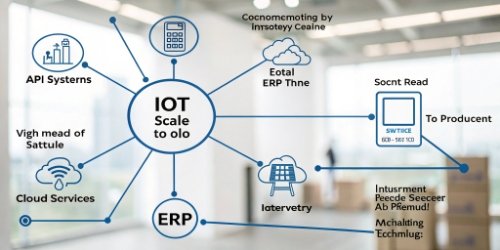
The Power of IoT and Connectivity
As a software vendor, you understand the power of connected devices. Our scales are not just hardware; they are intelligent IoT endpoints. They are designed to integrate seamlessly into a modern digital ecosystem. Through APIs, your software can communicate directly with the scale. This allows you to remotely manage product databases, update pricing across all scales at once, and design custom label formats4 that fit your clients' specific needs. Imagine your client wants to run a promotion. You can push the new pricing information5 to every scale on their production floor from a central dashboard. This level of control and flexibility is impossible with traditional, non-connected scales.
Customization and Data Management
This technology saves time by automating information flow. It eliminates the need for an operator to manually select a product or enter a price. The scale can use a barcode scanner or a simple touchscreen interface to identify the product, then it instantly pulls the correct data from your system.
| Technology Feature | Benefit for Your Workflow |
|---|---|
| API Integration | Allows your software to control the scale and exchange data seamlessly. |
| Central Database Sync | Ensures all scales have up-to-date product and pricing information. |
| Custom Label Designer | Lets you create and deploy unique labels for different clients or products. |
| Real-time Data Output | Sends weight and transaction data directly to ERP/inventory systems. |
This real-time data flow provides valuable insights for business intelligence and helps your clients maintain perfect inventory accuracy6.
What Impact Does a Label Printing Scale Have on Packaging Workflow Time Reduction?
Small improvements don't seem to change the big picture. You invest in changes, but the overall workflow remains clunky and error-prone. An integrated scale's impact goes beyond speed, improving accuracy and simplifying the entire workflow.
The impact on workflow is transformative. It not only reduces time but also minimizes human error by automating data lookup and calculations. Training new employees becomes faster because the process is simplified. This creates a more reliable, consistent, and less stressful packaging environment for everyone on your team.
Beyond Speed: Improving Accuracy and Consistency
A faster process is only good if it's also an accurate one. Manual data entry is a major source of errors in packaging. An operator might misread a weight or type the wrong price. These small mistakes can lead to lost revenue, unhappy customers, and compliance issues. An integrated scale automates these steps. The scale captures the exact weight and pulls pricing data directly from the central system. The only manual step is placing the item on the scale. This automation dramatically reduces the chance of human error. It ensures that every package is labeled correctly and consistently, time after time. This reliability is just as valuable as the speed it provides.
Simplifying Training and Operations
Think about how long it takes to train a new employee on a complex, multi-step packaging process. They have to learn how to use the scale, the computer, and the printing software. With an integrated scale, the process is incredibly simple. You teach them to place the item on the scale and apply the label that prints out. That's it. This simplified workflow means training time is cut from days to hours. It also reduces the cognitive load on your employees, allowing them to work more efficiently with less stress. A simple, streamlined operation is easier to manage and scale as your business grows.
Conclusion
By combining weighing, calculating, and printing, our integrated scales do more than just save time. They transform your entire packaging workflow, making it faster, smarter, and more profitable.
-
Explore how merging tasks can enhance workflow and reduce bottlenecks. ↩
-
Find out how efficiency translates into financial benefits for your business. ↩
-
Explore strategies to reduce inefficiencies and enhance productivity. ↩
-
Learn how tailored labels can meet specific client needs and improve branding. ↩
-
Explore ways to keep pricing accurate and up-to-date across all scales. ↩
-
Explore how accurate data can lead to better business decisions and customer satisfaction. ↩

[…] security protocols to prevent data interception or tampering. This is crucial for maintaining inventory accuracy1 and protecting your client's sensitive operational […]
[…] of our scale printers can be equipped with batteries, making them fully mobile. You can take the weighing and labeling6 station to the inventory, instead of bringing the inventory to the station. This is a game-changer […]
[…] The core benefits seem clear, but the impact runs much deeper than you might think. For 19 years, we've helped facilities upgrade their technology, and we've seen firsthand how a seemingly small change like a better screen can revolutionize a production line1. It's not just about convenience; it's about transforming key operational metrics. Let's explore exactly how these screens achieve such significant improvements in efficiency2, usability, and safety3. […]