

Struggling with complex food regulations? New traceability rules demand detailed data, creating major compliance headaches for factories that still rely on manual tracking. This pressure can feel overwhelming.
The most effective way to address stricter food traceability regulations without a large initial investment is to adopt smart scales with data upload capabilities. Start with a simple, standalone statistical software package to begin collecting and organizing critical data, then gradually transition to a networked system as your needs and budget grow.
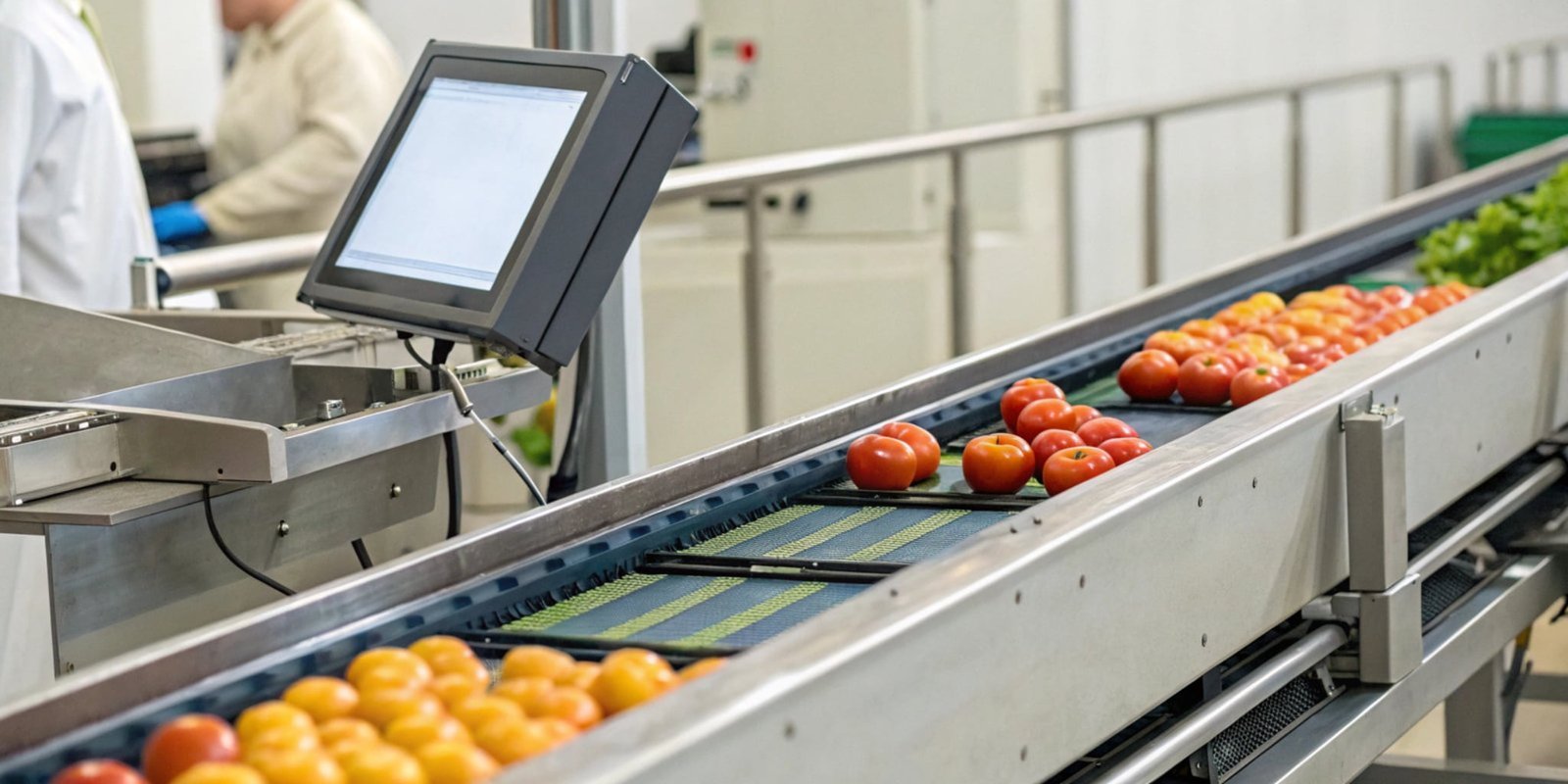
As a partner to global brands and wholesalers for 19 years, I've seen firsthand how daunting new regulations like the FDA's Food Safety Modernization Act (FSMA) can seem. The compliance deadline is approaching1, and many factory managers are worried about the cost and complexity of a full-scale digital overhaul. But you don't have to boil the ocean. A small, strategic change can make a massive difference. The key isn't to implement a massive, expensive Manufacturing Execution System (MES) overnight. It's about taking a smart first step. That’s what I'm here to talk about today—a practical path forward that protects your business without breaking the bank.
What Are the Challenges of Meeting Food Traceability Standards Without Automation?
Feeling buried in paperwork? Trying to meet modern traceability rules with manual logs is inefficient and risky, leading to errors and slow responses during audits or recalls.
Manual systems are a significant compliance risk because they are slow, prone to human error, and create disconnected data silos. During a recall, manually searching for batch records, shipping logs, and supplier information can take hours or days, delaying your response and increasing business risk.

In my experience, the biggest problems with manual traceability aren't just about slow data retrieval. They are about the hidden costs and risks that build up over time. When your team relies on paper, spreadsheets, and disconnected files, every piece of data is a potential point of failure. A single misplaced decimal, a misread lot code2, or. an incomplete entry can break the entire traceability chain. These small mistakes can have massive consequences, forcing a broad, expensive recall when a more targeted one would have been possible with better data. Automation isn't just about speed; it's about building accuracy and reliability directly into your daily operations. Let's break down the core differences.
Manual vs. Automated Traceability
| Challenge | Manual System (Paper/Spreadsheets) | Automated System (e.g., Smart Scales) |
|---|---|---|
| Data Accuracy | High risk of human error from typos, inconsistent formats, and missed entries. | Data is captured automatically at the source, drastically reducing errors.3 |
| Speed of Retrieval | Extremely slow; requires physically searching through binders and files, taking hours or days. | Near-instant; digital records can be searched and reported on in minutes. |
| Labor Cost | High hidden costs from time spent on data entry, cross-referencing, and retrieval during audits. | Frees up team members from manual data tasks to focus on higher-value activities. |
| Data Integrity | Records can be lost, damaged, or altered; data is often fragmented across departments. | Data is centralized, secure, and provides a clear, unalterable audit trail. |
| Compliance Risk | Difficult to prove compliance quickly; slow response times can lead to regulatory penalties. | Simplifies compliance by generating reports easily and ensuring records are always ready for an audit. |
How Can Small Factories Improve Traceability Without a Full Digital System?
Worried about the huge cost of a full traceability system? The thought of a massive software project is paralyzing, leaving you stuck with outdated and risky manual methods.
Start with a single, powerful tool: a smart weighing scale. This allows you to begin digitizing your most critical data—weights, batch numbers, and timestamps—with a modest investment. It's the first step toward building a robust traceability system without the immediate need for a comprehensive MES.
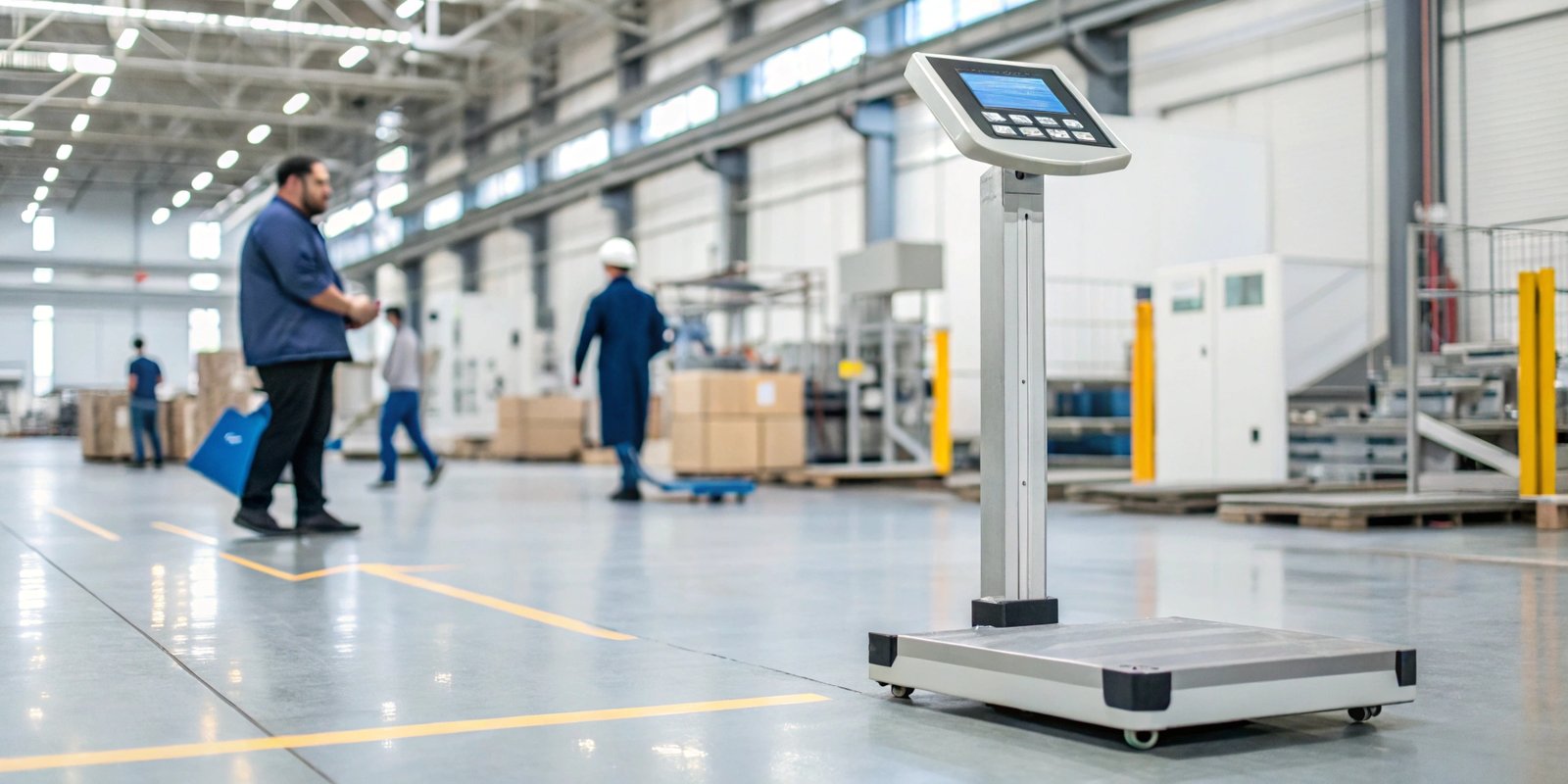
Many of the factory managers I speak with feel trapped. They know they need to modernize to comply with regulations like FSMA 204, but they can't afford a six-figure software overhaul. This is where we reframe the problem. Instead of thinking of digitalization as one giant leap, we see it as a series of manageable steps. The journey doesn't start in the server room; it starts on the factory floor, right at the point where your product is handled and measured. My company, Weigherps, has helped countless clients navigate this path by focusing on a realistic, phased approach that delivers immediate value.
A Phased Approach to Digital Traceability
The goal is to move from manual chaos to digital clarity, one step at a time. This method minimizes upfront cost and risk while building a solid foundation for future growth.
Step 1: Start with a Smart Scale
The first move is to replace a traditional scale at a critical point in your process with a smart industrial scale. These devices do more than just weigh; they are designed to capture and transmit data. Equipped with interfaces like RS232, USB, or Ethernet, they can automatically log weight, product codes, batch numbers, and timestamps. This single change eliminates the most common source of error: manual data entry. Your operator simply places the item on the scale, scans a barcode, and the critical data is recorded perfectly every time.
Step 2: Use Standalone Statistical Software
You don't need a complex network to start seeing benefits. Many smart scales come with or can easily connect to standalone PC software. This allows you to collect all the data from that one station onto a single computer. Even this simple setup is a huge leap forward. You now have a searchable, digital log of production data. If an auditor asks for records from a specific day, you can generate a report in minutes instead of hours. This builds your first "island" of digital data.
Step 3: Expand and Connect
Once you're comfortable with the first station, you can add more smart scales at other key points—receiving, batching, and shipping. As you collect more data, you can graduate from standalone software to a networked version. This connects all your "islands" into a cohesive system, giving you real-time visibility across your entire operation without ever having to take on a massive, high-risk project. This gradual process lets you manage costs and train your team one step at a time.
What Alternatives Exist for Factories Lacking Technology to Handle Food Traceability Laws?
Are smart scales the only option? Perhaps you're not ready for any new technology and are wondering if simply improving your paper-based methods is enough to stay compliant.
While improving manual systems is better than nothing, low-cost technologies like basic barcode scanners and QR codes offer a more robust solution than paper alone. However, an intelligent scale with data output provides the most reliable foundation for accurate and scalable traceability, directly addressing weight-based data crucial for food production.

I understand the hesitation to invest in new technology. For 19 years, my business has focused on providing solutions that are not just effective but also cost-effective and practical. Sometimes, the budget just isn't there, or the team isn't yet ready for a change. While my professional recommendation is always to start with a smart scale as the most direct path to compliance, let's explore the other alternatives. It's important to understand both their benefits and their limitations. Improving your current system, even without new hardware, is a valid first step, but it's crucial to recognize where these methods fall short.
Comparing Low-Tech Traceability Options
For factories on a very tight budget, any improvement is a good improvement. But it's important to choose a path that will scale for the future rather than one that just solves today's problem.
-
Optimized Paper-Based Systems
This is the most basic approach. It involves creating standardized forms, implementing double-check procedures, and improving filing systems.
Pros: No technology cost. Easy to implement with existing staff.
Cons: Still highly prone to human error, slow to search, and vulnerable to being lost or damaged. It will likely struggle to meet the 24-hour data retrieval requirement from regulators.4 -
Basic Barcode Scanners and Spreadsheets
This level introduces simple barcode scanners to input lot numbers or product codes into a spreadsheet like Excel.
Pros: Reduces some data entry errors and is faster than handwriting everything.
Cons: It doesn't solve the problem of fragmented data—you still have disconnected spreadsheets. It also doesn't automatically capture crucial data like weight or timestamps, which must still be entered manually. -
Starting with Smart Scales (The Recommended First Step)
This approach focuses on capturing the most accurate data at the source.
Pros: It directly captures foundational data (like weight) automatically, eliminating human error. The data is instantly digitized and time-stamped, creating a reliable audit trail from day one. It builds a scalable foundation that can grow into a fully networked system later.
Cons: Requires a modest initial investment in hardware.
While optimizing paper trails can feel productive, it doesn't solve the core problems of speed and accuracy. The step-by-step approach, starting with a connected scale, directly addresses these issues and sets you up for long-term success.
Conclusion
Facing strict food traceability laws doesn't require a massive, immediate overhaul. Start small with smart scales to digitize key data, build a foundation for compliance, and scale your system over time.
-
"FSMA Final Rule on Requirements for Additional ...", https://www.fda.gov/food/food-safety-modernization-act-fsma/fsma-final-rule-requirements-additional-traceability-records-certain-foods. FDA compliance-date guidance for the FSMA Section 204 traceability rule identifies the official date by which covered entities must comply, supporting the article’s timing claim. Evidence role: historical_context; source type: government. Supports: Covered entities face an official compliance deadline for FSMA traceability requirements.. Scope note: The phrase “approaching” is subjective and depends on the publication date; the source should be used for the official deadline rather than the article’s sense of urgency. ↩
-
"Categorization Errors for Data Entry in Maintenance Work ...", https://tsapps.nist.gov/publication/get_pdf.cfm?pub_id=928437. Research on manual data entry and transcription errors documents that numeric transcription and code-entry mistakes are common sources of data-quality problems, supporting the mechanism described in the article. Evidence role: mechanism; source type: paper. Supports: Small manual entry errors such as incorrect decimals or misread codes can compromise traceability records.. Scope note: General data-entry studies support the error mechanism but may not be specific to food manufacturing lot-code records. ↩
-
"The State and Trends of Barcode, RFID, Biometric and ... - PMC", https://pmc.ncbi.nlm.nih.gov/articles/PMC4765644/. Studies of automatic identification and data capture technologies, such as barcodes and RFID, report reductions in manual transcription errors, supporting the claim that source-level automated capture can improve data accuracy. Evidence role: mechanism; source type: paper. Supports: Automated source data capture reduces errors compared with manual entry.. Scope note: The evidence may concern AIDC systems generally rather than smart weighing scales specifically, so it supports the mechanism rather than a precise error-reduction percentage for this application. ↩
-
"FSMA Final Rule on Requirements for Additional ...", https://www.fda.gov/food/food-safety-modernization-act-fsma/fsma-final-rule-requirements-additional-traceability-records-certain-foods. The FSMA Section 204 final rule requires covered entities to provide requested traceability records to FDA within 24 hours, directly supporting the article’s reference to a 24-hour retrieval requirement. Evidence role: definition; source type: government. Supports: Covered food businesses must be able to provide certain traceability records to regulators within 24 hours.. Scope note: The requirement applies to covered records and covered entities under the rule, with exemptions and modified requirements for some businesses. ↩






Comments (0)