
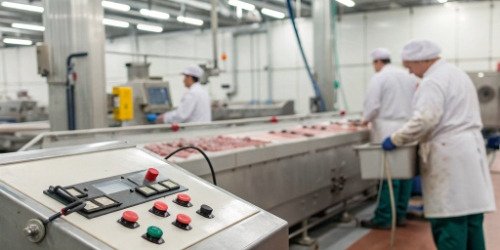
Setting up cost accounting badly can wreck your profits. You think you're making money, but the wrong numbers are hiding big losses. You need a system that gives you the truth.
To configure cost accounting parameters, you must define by-product costing methods, set price rules for different cuts, and establish how to allocate shared expenses. The key is choosing a flexible system and aligning these settings with your specific operational needs for accurate data.

Configuring these parameters correctly seems very technical. And it is. This is the heart of your entire cost management system. If you get this wrong, every report and business decision that follows will be based on bad information. I've seen businesses struggle with this for years. They use a one-size-fits-all approach that just doesn't work for the complex reality of a slaughterhouse. But don't worry. We are going to break it down step-by-step. I'll show you how to build a reliable system that gives you a true picture of your costs and profitability.
What Are the Steps to Set Up Cost Accounting Parameters for Slaughterhouse Operations?
You know you need a system, but where do you even start? It feels overwhelming, and a wrong first move could mess up everything down the line, costing you time and money.
The main steps are: first, analyze your business goals. Second, choose your costing methods. Third, configure the parameters in the software. Finally, test and review the results. This structured approach prevents errors and ensures the system works for you.

Setting up cost accounting isn't just about flipping switches in a software program. It's about translating your real-world operations into a digital model that gives you accurate data. At Weigherps, we have guided dozens of clients through this process. It always follows a clear path. Think of it like building a house. You don't start by painting the walls; you start with a solid foundation. The same applies here. We break the process into distinct phases to make it manageable and ensure a perfect result.
Phase 1: Analysis and Strategy
Before we touch any software, we sit down with our clients. I remember one client who was losing money but their old system said they were profitable. The problem was their strategy didn't match their system's settings. So, the first step is always to ask questions. What are your main products? What are your by-products? How do you handle special cases like imported animals? We need to understand your business completely. This initial consultation is the most important step. It defines the blueprint for the entire configuration.
Phase 2: Configuration and Testing
Once we have the blueprint, we can start configuring the parameters in our Weigherps system. This involves selecting the right methods for your operation. After we set everything up, the most crucial part begins: testing. We run simulations with your actual data. Does the cost of a prime cut look right? Does the value of by-products make sense? We check everything. We don't move forward until you are 100% confident that the numbers the system produces reflect reality.
How Can Slaughterhouses Customize Cost Calculation Parameters Effectively?
Your operation is unique, but your software is rigid. It treats a high-value organic hog the same as a standard one, mixing up your costs and hiding your true profit centers.
Effective customization means using a system that can handle different costing methods for different situations. It lets you set specific rules for special products, like imported meat, and flexibly allocate expenses to ensure every product's cost is calculated accurately.
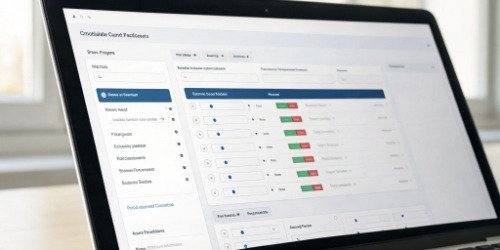
A "one-size-fits-all" approach to cost accounting is a recipe for disaster in a slaughterhouse. The value and cost structure can change from one animal to the next. I once worked with a processor who handled both standard and premium "eco-pigs." Their old system averaged the costs, so they never realized they were losing money on their standard line and making a huge margin on the premium one. They were flying blind. Effective customization fixes this. It gives you the clear vision you need. Our Weigherps system was designed for this kind of flexibility from day one. You can set specific rules for almost any scenario you can think of.
Choosing Your By-Product Costing Method
Your main cuts are easy to price. But what about all the other parts? The method you use to assign cost to by-products dramatically impacts your main product's final cost. You need to choose the right one for you.
| Method | How It Works | Best For |
|---|---|---|
| Sales Price Method | Assigns cost to by-products based on their market selling price. | When by-products have a stable, known market value. |
| Value Allocation Method | Distributes the total cost across all products (main and by-products) based on their relative value. | Complex operations with many valuable cuts and by-products. |
| Quota Method | Assigns a fixed, predetermined cost (a quota) to each by-product. | When by-product values are very low or inconsistent, and you want to simplify accounting. |
Our system lets you use different methods for different product lines, giving you maximum accuracy.
What Is the Best Practice for Configuring Cost Accounting Systems in Slaughter Facilities?
You bought new software, but the results are still wrong. The technology alone is not a magic bullet, leaving you frustrated with a costly system that doesn't deliver on its promise.
The best practice is combining flexible technology with expert human guidance. Start with a deep analysis of your operations, configure the system to match your business goals, and plan for regular reviews and adjustments. It’s a continuous partnership, not a one-time setup.

Over my 19 years in this industry, I've learned that the best technology is useless without the right process and people. The "best practice" isn't a single setting or a secret formula. It's a holistic approach. It’s about building a system that can grow and adapt with your business. Many companies sell you software and a manual. We believe in providing a complete solution. This means our powerful WeigherPS system, which is backed by our full support and expertise. We don't just sell you a scale or a program; we partner with you to ensure your success. This philosophy is built on three pillars.
The Success Triangle: Technology, Process, and People
- Technology: You need a capable system. Our Weigherps platform is built with IoT technology, allowing real-time data capture from the production floor1. It’s flexible enough to handle the complex customizations we've discussed and powerful enough to process data for large-scale operations.
- Process: This is the "how." It starts with the initial consultation and setup we covered earlier. But it doesn't stop there. Best practice includes regular performance reviews2. We help you analyze your reports quarterly or semi-annually. Are your costs changing? Has a new product line been introduced? The system must be updated to reflect changes in your business.
- People: This is the most important part. You need experts to guide you. Our team of engineers and consultants becomes your team. We provide the initial training, offer ongoing after-sales support for 12 months, and are always ready to help you solve a new challenge. You're not just buying a product; you're gaining a partner who is an expert in industrial weighing.
Conclusion
Configuring cost parameters is the key to accurate data. A flexible system combined with expert guidance ensures your slaughterhouse can achieve true profitability, growth, and a major leap in business development.
-
"What Is Industrial Internet of Things (IIoT)?", https://www.ptc.com/en/technologies/iiot?srsltid=AfmBOoqcY4pwrrfn0NhGStEHmdWlDM6du-a89JVousIXwVRRpFHlZtAi. This source discusses the role of IoT technology in enabling real-time data capture for industrial operations. Evidence role: mechanism; source type: research. Supports: IoT technology enables real-time data capture in industrial operations.. Scope note: The source may focus on general IoT applications rather than slaughterhouses specifically. ↩
-
"Cost Analysis Guide", https://nepis.epa.gov/Exe/ZyPURL.cgi?Dockey=90070400.TXT. This source highlights the importance of regular performance reviews in maintaining effective cost accounting systems. Evidence role: expert_consensus; source type: education. Supports: Regular performance reviews are essential for maintaining effective cost accounting systems.. Scope note: The source may not specifically address slaughterhouse operations. ↩



Comments (0)