

Struggling with by-product costs distorting your profits? This confusion can lead to poor pricing. We'll show you how to choose the right accounting method for clear financial insights.
The selling price method assigns costs to by-products based on their market price. The value allocation method splits total costs among all products based on their relative value. Your choice depends on your financial reporting needs and product structure. WeigherPS systems support both for easy comparison.
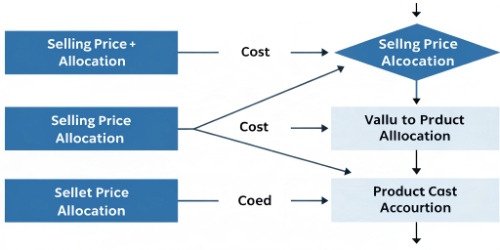
Choosing the right method is more than just an accounting task. It directly impacts your business strategy, from pricing your main products to evaluating the profitability of your entire operation.1 During my 19 years in this industry, I've seen how a small change here can make a big difference. Let's break down these two methods further so you can see which one fits your needs.
How Does the Selling Price Method Compare to the Value Allocation Method in By-Product Cost Accounting?
Confused by the practical differences between cost accounting methods? This uncertainty can skew your product cost data. Let's compare them side-by-side to clarify their distinct impacts on your finances.
The selling price method treats by-products as less important, deducting their sales value from the main product's cost. The value allocation method treats all products as significant, distributing total production costs among them based on their proportional market value. It's a fundamental difference in perspective.
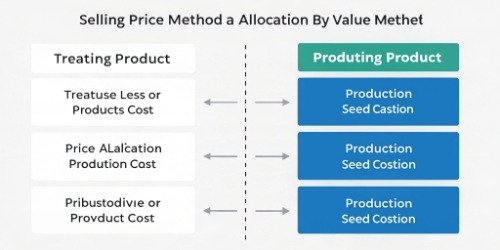
Let’s get into the details. The core difference lies in how they view the by-product itself.
The Selling Price Method in Action
I often explain this method as the "credit" approach. Imagine you're in the pork processing business. Your main goal is to produce cuts of meat. However, you also get by-products like pigskin and organs. With the selling price method, you treat the revenue from selling these by-products as a reduction of your total production cost. If your total cost is $5,000 and you sell by-products for $200, your net cost for the main products becomes $4,800. It's simple and great when by-products have very low, unstable market values.
The Value Allocation Method Explained
This method is more balanced. It doesn't see by-products as just a credit. Instead, it views them as part of the total output. We first determine the market value of all products—main and by-products. Then, we allocate the total production cost based on each product's share of the total market value. It provides a more accurate cost for every item produced.
Here’s a simple breakdown:
| Feature | Selling Price Method | Value Allocation Method |
|---|---|---|
| Focus | Reducing main product cost | Distributing cost fairly |
| Complexity | Very simple to calculate | Requires more data and calculation |
| Best For | By-products with low or unstable value | By-products with significant value |
What Are the Pros and Cons of Using the Selling Price Method vs. the Value Allocation Method for By-Product Costing?
Choosing a costing method without knowing its flaws can create hidden problems. This can lead to inaccurate inventory values and distorted profits. Let's weigh the pros and cons now.
The selling price method is simple but can distort main product costs if by-product prices fluctuate. The value allocation method is more accurate for profitability analysis but requires more complex calculations. Your choice is a trade-off between simplicity and accuracy.

Every method has its trade-offs. As a manufacturer myself, I know that what works for one production line might not work for another. It’s about balance.
Pros and Cons of the Selling Price Method
The biggest advantage here is simplicity. It's incredibly easy to implement. You just take the sales value of the by-product and subtract it from your total cost. This is perfect for operations where the by-product value is minimal and not worth the effort of complex tracking. However, the main disadvantage is that it can distort your main product's cost. If the market price for your by-product suddenly jumps, your main product's cost artificially drops, which can mislead your pricing and profitability analysis. It ties your main product's financial performance to the volatile by-product market.
Pros and Cons of the Value Allocation Method
The primary benefit of this method is accuracy. It provides a much fairer and more logical distribution of costs. This leads to more stable and reliable unit costs for all products, which is crucial for accurate inventory valuation and making smart business decisions. The downside is complexity. It requires you to consistently track the market values of all products and perform more detailed calculations. If market values for some products are hard to find, this method becomes challenging to implement correctly.
| Method | Advantages | Disadvantages |
|---|---|---|
| Selling Price | - Simple to use - Good for low-value by-products |
- Distorts main product cost - Unstable costing |
| Value Allocation | - Accurate cost allocation - Stable and reliable costs |
- Complex to implement - Needs constant market data |
Which Is Better for By-Product Cost Accounting: Selling Price Approach or Value Allocation Strategy?
Unsure which accounting method is right for your unique business needs? This indecision can delay crucial financial clarity. Let's explore key factors to help you make the best choice.
Neither method is universally "better." The best choice depends on your by-product's value, your need for inventory costing accuracy, and your accounting system's capabilities. If by-products are significant, lean towards value allocation. If they are negligible, the selling price method is often sufficient.

The "better" method really means the "right" method for your situation. In my 19 years of working with industrial clients, I've seen that the decision boils down to a few practical questions you need to ask yourself.
Key Factors for Your Decision
First, consider the value of your by-product. Is it significant? If you're in an industry like oil refining, where by-products can have substantial market value, the value allocation method is almost always superior. It gives a true picture of profitability for each product stream. However, if you are a lumber mill and your by-product is sawdust, its value is likely low. In that case, the simple selling price method is more practical and efficient.
Second, think about your inventory management. Do you store by-products for a period before selling them? If so, the value allocation method is better for accounting compliance, as it assigns a cost to the by-product inventory. The selling price method typically values by-product inventory at zero until it's sold, which can be an issue for financial audits.
Finally, evaluate your system's capabilities. Your accounting or production software must support your chosen method. This is where modern systems like ours at Weigherps provide a huge advantage. Our solutions are designed to flexibly handle both methods. You can easily switch between them or run comparative analysis reports, empowering you to use the right approach without being limited by technology. This adaptability is key for growing businesses.
How Do the Selling Price and Value Allocation Methods Impact By-Product Cost Calculation?
Wondering how your choice of costing method truly affects your P&L? This choice can directly influence reported profits and strategic decisions. Let's examine the bottom-line financial impact.
The selling price method makes the main product's cost and margin volatile, tied to by-product market prices. The value allocation method provides stable, predictable costs for all products, leading to more reliable profitability analysis and better long-term strategic planning. Your choice shapes financial reporting.

The impact of these methods goes straight to your bottom line and balance sheet. It influences how you, your stakeholders, and even tax authorities see your company's performance.
Impact on Profitability Analysis
With the selling price method, the profitability of your main product is directly tied to the often-volatile market for your by-products. If by-product prices are high, your main product looks more profitable than it might actually be. If they crash, your main product's margin suffers, even if its own sales and costs haven't changed. This makes it difficult to assess the true performance of your core business. The value allocation method avoids this by assigning a stable, logical cost base to all products, giving you a clearer view of each one's profitability.
Impact on the Balance Sheet
Your balance sheet is also affected. When using the selling price method, any by-products you have in stock are typically valued at zero. They don't appear as an asset until they are sold. The value allocation method, however, assigns a cost basis to these by-products, so they are carried on your balance sheet as inventory. This presents a more accurate picture of your company's total assets.
| Financial Metric | Selling Price Method Impact | Value Allocation Method Impact |
|---|---|---|
| Gross Margin | Volatile and can be misleading | Stable and more reliable |
| Inventory on Balance Sheet | By-products valued at zero | By-products valued at cost |
| Strategic Decisions | Can be skewed by market noise | Based on clearer performance data |
Conclusion
Choosing between the selling price and value allocation methods depends on your by-product's value and your need for accuracy. A flexible system is key to making the right choice.
-
"Product Costing: Understanding the Financials of Your Product", https://online.stanford.edu/courses/xprod120-product-costing-understanding-financials-your-product. This source discusses the strategic implications of choosing different cost accounting methods, including their impact on pricing and profitability. Evidence role: expert_consensus; source type: education. Supports: Choosing the right method is more than just an accounting task. It directly impacts your business strategy, from pricing your main products to evaluating the profitability of your entire operation.. Scope note: The source may focus on specific industries rather than general applicability. ↩



Comments (0)