
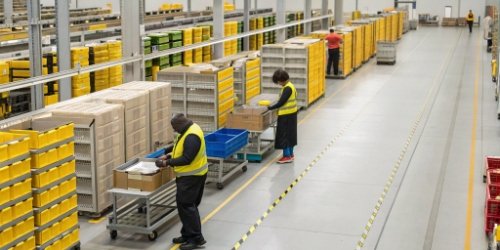
Are order backlogs and shipping delays hurting your business during peak times? Pre-sorting allows you to pack items before the order is even complete, dramatically improving your fulfillment speed.
Pre-sorting means you pack the certain parts of an order in advance. Our WeigherPS systems let staff pre-pack known items and set them aside. This simple step can cut final packing times by 30-50%, ensuring you meet delivery deadlines even during busy periods.

This idea might sound simple, but implementing it correctly can revolutionize your warehouse. It's a proactive approach instead of a reactive one. I've seen companies transform their chaotic peak seasons into smooth, manageable operations using this single strategy. But to get those results, you need to understand the right methods and how to apply them. Let's dive deeper into the specific strategies that make pre-sorting so powerful and how you can set it up in your own facility.
What Are the Best Pre-Sorting Strategies for Packing Before Order Completion?
Simply starting to pre-sort without a plan can lead to chaos. You need effective strategies to ensure accuracy and efficiency, not just create more work for your team.
The best strategies involve data. Analyze order history to identify frequently bundled items (kitting) or segment orders by complexity. Use a system that allows you to "pause and resume" packing, like our WeigherPS, to handle partial orders efficiently and accurately.

Getting the strategy right is everything. I once visited a client who tried pre-sorting but ended up with a pile of half-packed, mislabeled boxes. Their mistake was not using data to guide the process. The most successful strategies are always data-driven and supported by the right technology.
Analyze Order Patterns
Your sales data is a goldmine. Look for products that are almost always ordered together. For a software vendor client, this might be a specific hardware device and its corresponding activation license. By identifying these patterns, you can create pre-packed "kits." This is the lowest-hanging fruit and offers an immediate efficiency boost.
Implement Kitting
Once you've identified common bundles, you can create a dedicated kitting process. This involves pre-packing these items together during slower periods. When a full order comes in containing that kit, the packer just grabs one pre-assembled box instead of multiple individual items. This drastically reduces picking and packing time for your most common order types.
Use a "Pause and Resume" System
For orders that aren't simple kits, you need more flexibility. This is where a system like our WeigherPS excels. A packer can scan and pack the items they know are confirmed. The system then marks the order as "waiting for completion" and prints a temporary label. The partially packed box is set aside in a designated area. When the final order details are confirmed, any packer can retrieve the box, scan it, and the system tells them exactly what to add to finish the job. This removes the guesswork and ensures accuracy.
How Can Pre-Sorting Improve Efficiency in Order Packaging and Fulfillment?
Does your fulfillment process feel stuck in low gear? Bottlenecks in packing lead to costly delays and missed deadlines, especially when order volumes suddenly spike.
Pre-sorting improves efficiency by splitting the packing process. It reduces the final workload at the packing station by up to 50%. This smooths out labor needs, minimizes wait times for packers, and allows you to ship orders out much faster, especially during peak sales periods.
The difference between a traditional workflow and a pre-sorting workflow is like night and day. In a traditional setup, the final packing station is a major bottleneck. Everything converges there at once: picking, checking, packing, and labeling. Pre-sorting dismantles this bottleneck by distributing the work over time. It allows you to use your labor and resources much more intelligently. This is not just a marginal improvement; it's a fundamental shift in how you manage fulfillment. The efficiency gains are measurable and significant.
Reduce Final Packing Time
The most direct benefit is speed. As our own data shows, by handling a portion of the work upfront, the final packing step can be compressed by 30-50%. Imagine an order with ten items. If eight of them can be pre-packed, the final packer only has to add two items. This is a massive time-saver per order, which adds up to huge capacity gains across a shift.
Balance Workload
Pre-sorting helps you smooth out the peaks and valleys of warehouse work.1 During slow periods, your team can be productively engaged in pre-packing and kitting. When a rush of orders hits, the majority of the work is already done. This prevents the usual frantic scramble and reduces the need for costly overtime or temporary staff.
Workflow Comparison
| Traditional Workflow | Pre-Sorting Workflow |
|---|---|
| 1. Full order is confirmed. | 1. Partial order information is known. |
| 2. Picker gathers all 10 items. | 2. Picker pre-packs 8 known items. |
| 3. Packer receives all 10 items. | 3. Full order is confirmed. |
| 4. Packer checks, packs, and seals. | 4. Picker gathers remaining 2 items. |
| 5. (Bottleneck Point) | 5. Final packer adds 2 items to the pre-packed box. |
| 6. Order is shipped. | 6. Order is shipped. |
What Steps Are Involved in Setting Up a Pre-Packing System for Pending Orders?
Convinced that pre-sorting is valuable but unsure how to start? Implementing a new system can seem daunting, with many potential pitfalls if not planned correctly.
Start by analyzing your order data to find suitable products. Then, define a clear process for your team. You will need to configure your warehouse management system (WMS) or use a weighing system like WeigherPS that supports partial packing, and train your staff on the new workflow.
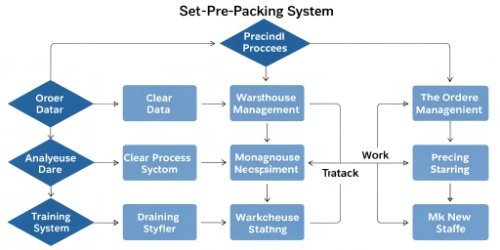
A successful implementation is a planned implementation. You can't just tell your team to "start pre-packing" and expect good results. I've worked with many companies to roll this out, and the ones who succeed follow a clear, logical sequence. It requires a combination of data analysis, technology integration, and process design. As a software vendor, I know you appreciate a well-defined process, and this is no different. It's about setting up the right foundation so the system can run smoothly and deliver the ROI you expect.
Step 1: Data Analysis
Before you do anything else, dive into your sales and order data. Use your ERP or WMS to identify which products are frequently ordered but perhaps held up waiting for a final configuration or confirmation. These are your prime candidates for a pre-sorting strategy. Look for the 20% of SKUs that make up 80% of your pre-packing opportunities.
Step 2: Technology Integration
Your technology must support this workflow.2 Check if your current WMS can handle a "paused" order status. If not, you need a solution that can bridge that gap. This is where our industrial scales and WeigherPS system come in. They are designed to work independently or integrate via API with your existing software. They provide the core functionality of tracking partial packs, weighing for accuracy, and printing temporary labels, creating a robust system without needing a full overhaul of your WMS.
Step 3: Process Design & Training
Define the physical workflow. Where will you store the "waiting" packages? How will they be labeled for easy identification? Who is responsible for retrieving them for final packing? Document this new process clearly. Then, conduct hands-on training with your staff. Show them how the new system works and explain the benefits. A team that understands the "why" behind a change is much more likely to adopt it successfully.
How Does Pre-Sorting Help Optimize Workflow in Order Packing Processes?
Is your packing station a chaotic mix of stops and starts? This unpredictability leads to mistakes, employee stress, and a workflow that constantly feels broken or inefficient.
Pre-sorting optimizes workflow by creating parallel workstreams. While one team pre-packs common items, another can focus on final assembly. This reduces bottlenecks, decreases picker travel time, and leads to a more organized, continuous flow of goods through the warehouse.
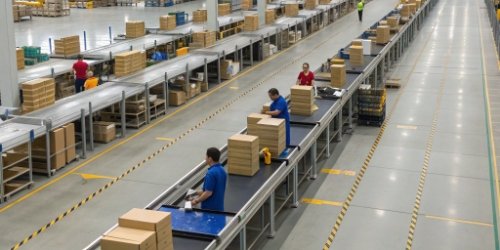
Workflow optimization is about more than just speed; it's about creating a process that is smooth, predictable, and resilient. A clunky workflow is inefficient and prone to errors. Pre-sorting transforms the packing process from a single, congested line into a multi-lane highway.3 I’ve seen this change the entire atmosphere on a warehouse floor. The constant state of rush is replaced by a steady, manageable pace. This reduction in chaos is a key benefit that often gets overlooked but is critical for long-term operational excellence and employee retention.
Creates Parallel Processes
Instead of every order flowing through the exact same steps in a single file line, pre-sorting allows you to run processes in parallel. One part of your team can be focused on kitting and pre-packing during slower times. Another part of the team can be dedicated to the quick final-assembly step. This specialization makes each team member more efficient and eliminates the "all-hands-on-deck" chaos that happens when a large batch of orders drops at once.
Reduces Picker Movement
In a traditional model, a picker might crisscross the entire warehouse to gather all the items for one complex order. With pre-sorting, items can be kitted near their storage location. The final packer then only needs to grab the pre-pack and the few remaining items, which dramatically cuts down on wasted travel time. Less walking means more packing.
Improves Accuracy
A simpler, less rushed final packing step means fewer errors. When a packer is only adding one or two items to a pre-verified box, the chance of a mis-pack or a forgotten item plummets. At Weigherps, we build our scales to ensure precision weight checks at every stage. Combining this technology with a simplified final packing process creates multiple quality checkpoints, ensuring what you ship is exactly what the customer ordered.
Conclusion
By implementing pre-sorting, you can significantly cut packing time and optimize workflow. This strategy is key to managing peak demand, ensuring timely deliveries, and driving business growth.
-
"Postgres Planner Quirks: Incremental Sort, and when it ...", https://pganalyze.com/blog/5mins-postgres-incremental-sort. This source discusses how pre-sorting can balance workload during peak and slow periods in warehouse operations. Evidence role: mechanism; source type: education. Supports: Pre-sorting helps you smooth out the peaks and valleys of warehouse work.. Scope note: The effectiveness of workload balancing may vary based on order volume and staff availability. ↩
-
"Sorting efficiency in mechanical sorting of construction and ... - PMC", https://pmc.ncbi.nlm.nih.gov/articles/PMC7477768/. This source discusses the technological requirements for implementing pre-sorting workflows in warehouses. Evidence role: mechanism; source type: research. Supports: Your technology must support this workflow.. Scope note: The specific technology needed may vary based on warehouse size and existing systems. ↩
-
"Warehouse Optimization | Improve Throughput and Space Usage", https://www.packsize.com/solutions/warehouse-and-operations-optimization. This source provides examples of how pre-sorting changes packing workflows to reduce congestion. Evidence role: mechanism; source type: education. Supports: Pre-sorting transforms the packing process from a single, congested line into a multi-lane highway.. Scope note: The analogy may oversimplify the complexity of warehouse operations. ↩



Comments (0)