
Are you struggling with slow and inefficient fresh produce sorting? The wrong method can lead to costly errors and delays, directly impacting your profits and customer satisfaction.
The best sorting method depends entirely on your specific operational needs. Sorting by item is highly efficient for large quantities of a few products. Sorting by merchant offers better accuracy for complex orders with many different items, but it can be slower.
Choosing your sorting strategy isn't a small decision. Over my 19 years in the industrial weighing industry, I've seen companies gain huge advantages by picking the right method. I've also seen others get stuck with inefficient workflows because they copied a competitor without analyzing their own needs. The good news is that understanding the core differences between these two approaches can make your decision much easier. Let's explore this further to find the perfect fit for your business.
What Are the Pros and Cons of Sorting Fresh Goods by Product versus by Supplier?
Are you weighing the pros and cons of different sorting methods? A wrong choice can disrupt your entire workflow and hurt your bottom line. Let's break down each method clearly.
Sorting by product offers superior speed for bulk items but adds a secondary distribution step. Sorting by supplier ensures high order accuracy for diverse orders but is generally less efficient overall.
I once worked with a client who managed a large distribution center for a grocery chain. They insisted on sorting by merchant because they prioritized order accuracy. However, their orders were mostly large batches of the same few items, like potatoes and onions. Their process was accurate but painfully slow. After we looked at their operation, we realized sorting by product would be much better. By gathering all the potatoes first, weighing them in bulk, and then distributing them, they cut their sorting time by almost 40%. This shows how important it is to match the method to the job.
Sorting by Product (Item)
This method involves grouping all units of the same product (SKU) together from various suppliers. For example, you collect all the tomatoes, weigh them, and then allocate the required amounts to each merchant or store order.
Sorting by Supplier (Merchant)
Here, you handle each merchant's order one by one. You pick all the different items—tomatoes, lettuce, cucumbers—for a single merchant's order, weigh them, and complete that order before moving to the next.
Here is a simple breakdown:
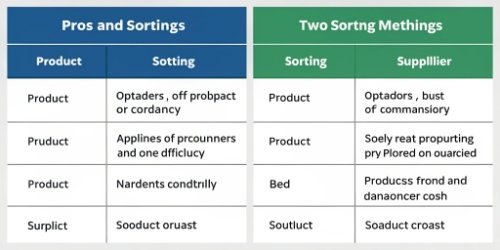
| Feature | Sorting by Product | Sorting by Supplier |
|---|---|---|
| Efficiency | High, especially for large volumes of a single SKU. | Lower, as it requires handling each order individually. |
| Accuracy | Risk of errors during the secondary distribution step. | High, as each order is completed in one go. |
| Labor | Requires a two-step process: initial sort and final distribution. | Simpler, one-step process for workers to follow. |
| Best For | Operations with many SKUs but large quantities per SKU. | Businesses with many small, diverse orders. |
How Does Sorting Fresh Food by Merchant Compare to Sorting by Item in Efficiency?
Is your team's efficiency being held back by your sorting process? Slowdowns mean higher labor costs and can impact the freshness of your products. Let's look at which method is truly faster.
In terms of raw speed, sorting by item is generally more efficient, especially for bulk operations. It streamlines the initial collection. However, sorting by merchant can be more efficient overall if it eliminates errors that cause rework.

Efficiency is not just about speed. It's a combination of speed, labor cost, and accuracy. A fast process that creates a lot of mistakes is not efficient. At Weigherps, we help our clients measure true efficiency. For example, a software provider we partner with was using a "sort by item" method. It looked fast on the surface. But their workers were making frequent mistakes during the second step of distributing the sorted items to individual orders. These errors led to costly returns and unhappy customers. We helped them implement our system to track error rates. The data showed that for their specific mix of complex orders, switching to a "sort by merchant" model, supported by our smart scales, actually improved overall throughput by reducing time-consuming corrections.
Breaking Down Efficiency
To understand which method is more efficient for you, we need to look at a few key areas.
- Processing Speed: Sorting by item is faster for the initial phase. You are handling one type of product repeatedly, which creates a rhythm and reduces movement. Sorting by merchant requires workers to move between different product areas for each order.
- Labor Utilization: Sorting by item can sometimes be done with fewer skilled workers for the initial bulk sort. However, the secondary distribution phase requires careful attention to detail. Sorting by merchant requires workers who can accurately pick a variety of items for a complete order.1
- Error Rate: This is where sorting by merchant often wins. Since an order is fulfilled from start to finish in one process, there's less room for mix-ups. The two-step nature of item-based sorting introduces a higher risk of sending the wrong quantity or item to a merchant.
What Factors Determine Whether to Sort Fresh Produce by Product or by Vendor?
Are you wondering how to choose the right sorting method? Simply copying another company's setup might not work for you. Several key factors must guide your decision.
The main factors are your SKU structure, average order size, warehouse layout, and your team's capabilities. There is no one-size-fits-all answer; the optimal choice depends on your specific operational context.
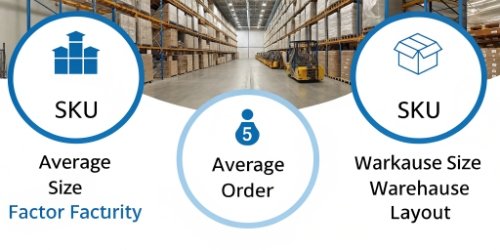
As a manufacturer of weighing systems for 19 years, we have seen it all. The most successful businesses are those that deeply understand their own operations. You need to analyze your data. What does a typical order look like? How many different products (SKUs) do you handle? How are they stored in your facility? Answering these questions is the first step. For instance, if you handle thousands of SKUs but each merchant order only contains a few, sorting by merchant is almost always the better choice. Conversely, if you are a specialty distributor that only deals with 20 types of apples in massive quantities, sorting by product will be far more efficient.
Key Factors to Consider
SKU Structure
This refers to the variety and volume of your products.
- High Volume, Low SKU Count: If you sell a lot of just a few items, sorting by product is ideal. It's much faster to process all your tomatoes at once.
- Low Volume, High SKU Count: If you sell a little bit of many different items, sorting by merchant is more practical. It avoids a chaotic and error-prone secondary distribution phase.
Average Order Profile
Look at what your customers typically buy.
- Simple, Bulk Orders: If customers usually buy large quantities of one or two items, sort by product.
- Complex, Mixed Orders: If customers buy many different items in small quantities, sort by merchant to ensure accuracy.
Warehouse Layout and Team Habits
Your physical space and your team's experience matter.
- Zoned Warehouse: If products are stored in specific zones, sorting by merchant might involve too much travel time for workers. In this case, a 'wave picking' or product-based approach might be better.
- Team Skills: Does your team work better with simple, repetitive tasks (sorting by product) or with more complex, order-focused tasks (sorting by merchant)? Choose the method that plays to their strengths to reduce training time and errors.
How Can You Choose the Right Sorting Strategy for Your Business?
Are you ready to make a decision but feel uncertain about committing to one method? Making the choice can feel permanent, but it doesn't have to be.
The best way to choose is to analyze your data and remain flexible. A modern weighing system should allow you to support both methods, test them, and even switch between them based on daily needs.

This is where having the right technology partner becomes crucial. As a software provider, you understand the power of flexible solutions. Your customers need systems that adapt to them, not the other way around. This is the philosophy we build into our Weigherps systems. We designed our software and hardware to support both sorting by item and sorting by merchant. You don't have to be locked into one method forever. We empower our clients to make data-driven decisions. For example, you can sort all your root vegetables by product in the morning and then switch to sorting delicate fruits by merchant in the afternoon, all within the same system.
Making a Flexible Choice with WeigherPS
True operational excellence comes from adaptability. A rigid process that works today may become inefficient tomorrow as your business grows or your product mix changes.
Support for Both Modes
Our systems are not built around a single workflow. We provide the tools for you to configure the sorting logic that works best. You can assign different sorting methods to different product categories. This flexibility is key for businesses with a diverse range of products.
Data Collection for Smart Decisions
How do you know which method is better? You measure it. Our IoT-enabled scales collect performance data on speed, accuracy, and weight per hour for each operator and method. This helps you move beyond guesswork and provides clear evidence of which strategy delivers the best results for your specific situation.
Empowering Your Team
The best system is one your team will actually use. Our intuitive interfaces make it easy for workers to switch between sorting modes with minimal training. By providing them with tools that make their job easier and more efficient, you increase buy-in and overall productivity. You can test one method with a small team, measure the results, and then decide whether to roll it out to the entire facility. This iterative approach minimizes risk and maximizes success.
Conclusion
Ultimately, the best sorting method depends on your unique business needs. By understanding your products and orders, you can choose the right strategy to boost efficiency and accuracy.
-
"Everything You Need to Know About Warehouse Sorting - ShipBob", https://www.shipbob.com/blog/warehouse-sorting/. This source discusses the labor skills required for sorting by merchant in diverse order operations. Evidence role: mechanism; source type: education. Supports: Sorting by merchant requires workers who can accurately pick a variety of items for a complete order.. Scope note: The skill requirements may depend on the complexity of the orders and the training provided. ↩



Comments (0)