

Struggling with suppliers seeing your customer list during sorting? This data exposure risks them bypassing you for direct sales, threatening your revenue and relationships. A secure system is essential.
The best way to manage supplier sorting is by using a system that automatically masks sensitive merchant information. This allows suppliers to see only the total quantity of the products they are responsible for, preventing them from identifying and contacting your individual customers directly.

This might sound simple, but implementing it correctly is the key to protecting your business. As a provider of weighing solutions for nearly two decades, we've seen how critical this single feature is for companies that rely on suppliers for direct-to-warehouse delivery and sorting. The risk is real, but thankfully, the solution is straightforward and highly effective. Let's explore how you can implement this protection for your own operations and secure your customer base from poaching.
How to Manage Supplier Sorting While Protecting Merchant Information?
Using suppliers who self-deliver and sort is efficient, but it's risky. You worry they will see your customer list and poach them. A secure system is the only answer.
To protect merchant information, use a sorting system that anonymizes customer data. Suppliers should only see their assigned product and the total quantity needed. This simple step secures your business relationships by removing temptation.

In my 19 years of helping businesses with weighing and logistics, this is a common fear I hear. Many businesses, especially in the fresh produce industry1, use a "supplier self-delivery" model. The supplier brings goods to the warehouse and then sorts them into bins for each merchant. The problem is that traditional paper-based or unprotected digital lists expose your entire delivery schedule and customer list to the supplier. They know exactly who is buying what, and how much.
The Power of Information Masking
Our WeigherPS system was designed to solve this exact problem. When a supplier logs into our sorting module, they don't see the individual orders. The system automatically aggregates the information.
| Traditional Sorting (High Risk) | WeigherPS Secure Sorting (No Risk) |
|---|---|
| Supplier sees: "Merchant A: 10kg potatoes" | Supplier sees: "Product: Potatoes" |
| Supplier sees: "Merchant B: 25kg potatoes" | Supplier sees: "Total Quantity: 35kg" |
This approach fundamentally changes the dynamic. The supplier’s task is simplified to "sort 35kg of potatoes." They have no way of knowing who the end customers are. This isn't about distrusting your suppliers; it's about building a secure process that protects your most valuable asset—your customer data.
What Strategies Can Prevent Order Skipping by Masking Supplier Details?
Are you worried about losing customers to your suppliers? This "order skipping" can damage your business. But what if you could make your customer data completely invisible to them?
The best strategy is technological control. Implement a system where the supplier's interface shows only a total task list—total items and weight—without any link to specific end-merchants. This is how you systematically remove the opportunity.
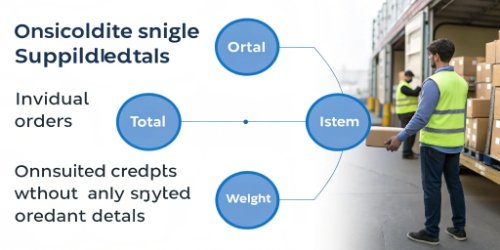
From our experience, relying on contracts or trust alone is not enough. The opportunity to make a direct sale can be too tempting. A proactive, system-based strategy is far more effective. It's not about being confrontational; it's about being smart with your operations and data.
Granular Access Control
This strategy is built on a principle called Granular Access Control. It means that every user in the system only has access to the precise information they need to do their job, and nothing more. When we designed the WeigherPS platform, this was a core requirement.
Let's walk through a real-world example from one of our clients:
- Orders In: The business receives orders from three different grocers for fresh tomatoes. Grocer X wants 50kg, Grocer Y wants 30kg, and Grocer Z wants 20kg.
- Supplier Login: The tomato supplier logs into the WeigherPS terminal at the warehouse.
- The Supplier's View: Instead of a list of grocers, the supplier's screen displays a single, simple task: "Product: Tomatoes. Total Quantity Required: 100kg."
The supplier can now efficiently sort the 100kg of tomatoes without ever learning who the final customers are. This one feature prevents order skipping at its source. It's a simple, elegant solution that protects your bottom line.
How Can Sorting Systems Improve Supplier Management and Ensure Data Privacy?
Managing suppliers is a challenge. Ensuring they don't see your sensitive customer data is even harder. What if your system could improve both management and security at once?
A smart sorting system boosts supplier management with clear, simple tasks while also guaranteeing data privacy. By anonymizing merchant data, it creates a secure environment where suppliers can work efficiently without accessing confidential information.
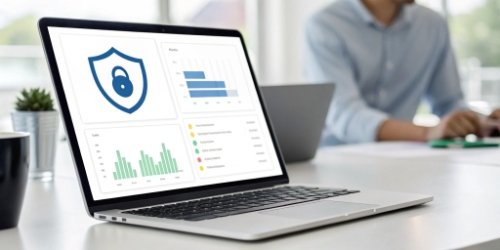
Many of our clients initially come to us for the security features, but they quickly realize the management benefits are just as valuable. When you remove ambiguity and create a clear, data-driven process, efficiency naturally follows. You are no longer just managing people; you are managing a streamlined, secure system.
Simplifying the Supplier's Workflow
A confused worker is an inefficient worker. By hiding unnecessary information like merchant names, you are not just protecting your data; you are also making the supplier's job easier. They have one clear number to hit. This reduces sorting errors and speeds up the entire process. Furthermore, the system creates a digital record. You know exactly when a supplier started and finished their sorting task. This objective data is incredibly useful for performance reviews2 and resolving any disputes about quantity or timing.
Building a Wall Around Your Data
Data privacy is not just a buzzword; it's a critical business requirement. Your customer list is one of your most important assets. Exposing it on a daily basis is a risk you cannot afford. Our system acts as a digital wall, separating the supplier's need-to-know (product and total quantity) from your private business data (who your customers are). As a manufacturer with an extensive quality control department, we apply this same rigorous mindset to software. We believe security should be built-in, not bolted on as an afterthought.
What Digital Solutions Help Prevent Order Fraud in Supplier Sorting Operations?
Order fraud is a quiet but serious threat. A supplier on your premises can easily see an order sheet. That one look could lead to a lost customer.
Digital solutions like our WeigherPS system prevent this fraud by creating a "digital blind." Suppliers log into a portal that only shows aggregated data, like total product quantities. This completely removes their access to sensitive merchant information.
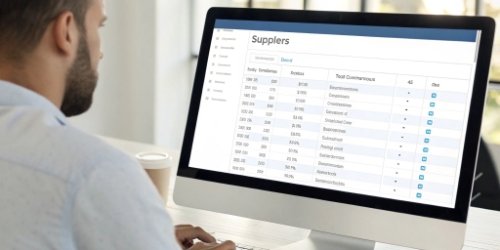
I've visited hundreds of warehouses in my career, and it's shocking how many still rely on paper printouts or open-access spreadsheets. This is a massive security hole. The simplest way for a supplier to poach a customer is to offer them the same product at a 5% discount. A digital solution is the only reliable way to close this gap and prevent this specific type of fraud.
The 'Digital Blind' Concept
Think of our system as giving the supplier blinders, like on a horse. They can see the path directly in front of them—their sorting task—but they can't get distracted by what's on the side—your customer list. This "digital blind" is created through role-based access. A supplier's login credentials grant them a very specific, limited view of the data. Your own warehouse manager, using different credentials, has a much more complete view of the entire operation.
Beyond Simple Masking
A complete digital solution goes even further. We empower our customers to revolutionize conventional weighing. For instance, our IoT-enabled weighing scales3 can be integrated directly into this sorting system. The supplier is instructed to sort 100kg of tomatoes. They place the sorted crate on one of our scales. The scale confirms the weight is correct and automatically marks the task as complete in the system. This connects the digital security of the software to the physical workflow of the warehouse, creating a seamless, secure, and highly efficient process from start to finish.
Conclusion
To stop suppliers from skipping you, use a system that masks merchant data. It shows them only the total quantities they need, securing your business and simplifying their work.
-
"Food Availability (Per Capita) Data System - Food Loss", http://www.ers.usda.gov/data-products/food-availability-per-capita-data-system/food-loss. This source examines the use of supplier self-delivery models in the fresh produce industry and their associated risks. Evidence role: case_reference; source type: research. Supports: The fresh produce industry commonly uses supplier self-delivery models, which pose risks of exposing customer lists.. Scope note: The findings may be specific to the fresh produce industry and not generalizable to other sectors. ↩
-
"Why Digital Transformation Starts with Supplier Management", https://www.dxpe.com/digital-supplier-management/. This source discusses the use of digital records in supplier sorting systems for performance reviews and dispute resolution. Evidence role: mechanism; source type: education. Supports: Digital records in sorting systems are useful for performance reviews and resolving disputes about quantity or timing.. ↩
-
"Review article IoT-based supply chain management", https://www.sciencedirect.com/science/article/pii/S2542660523003050. This source describes the integration of IoT-enabled weighing scales into sorting systems for enhanced accuracy and efficiency. Evidence role: mechanism; source type: research. Supports: IoT-enabled weighing scales can be integrated into sorting systems to confirm weights and streamline operations.. ↩



Comments (0)