

Product weight inconsistencies causing customer complaints and profit loss? By controlling positive and negative tolerances, you can guarantee product accuracy, boosting satisfaction and saving money.
To boost segmentation accuracy, use a weighing system that allows setting a specific tolerance range (e.g., ±10g) for your standard products. The system should automatically flag and block any items outside this range, forcing immediate correction by the operator before the data is saved.
We've seen how crucial tolerance control is for maintaining product quality. But this is just the beginning. To truly master this process, you need to understand the right strategies and tools. Let's explore how you can implement these controls effectively in your own production line. This will help you not only meet standards but also optimize your entire operation for better efficiency and profitability. Let's dive into the specifics.
How to Control Positive and Negative Tolerances to Improve Segmentation Accuracy?
Operators guessing portion weights? This causes high error rates, product waste, and inconsistent quality. Automated tolerance checks guide operators to achieve perfect portions every single time.
Control tolerances by setting a predefined weight range in your weighing system. When an item is weighed, the system compares it to the target weight. It will then approve items within the range and flag those outside, preventing them from proceeding until corrected.

The Core Mechanism of Tolerance Control
At my company, Weigherps, we've spent nearly two decades refining this process. The core idea is simple but powerful. You start by defining the "standard weight" for a product, let's say 2kg of ground meat. Then, you define the acceptable "tolerance," for example, ±10g. This means any package between 1.990kg and 2.010kg is acceptable. Our WeigherPS system internalizes these rules. When an operator places a portion on the scale, the system does the heavy lifting. It instantly compares the actual weight to the programmed standard. This real-time feedback is a game-changer. It removes the guesswork and empowers operators to make immediate adjustments, ensuring every single unit that leaves the line complies with your quality standards. This isn't just about avoiding errors; it's about building a systematic process for consistency.
| Step | Action | System Role | Operator Role |
|---|---|---|---|
| 1. Setup | Define standard weight & tolerance | Stores parameters | N/A |
| 2. Weighing | Place product on scale | Measures & compares | Portions the product |
| 3. Feedback | Display green (pass) or red (fail) | Provides instant alert | Adjusts weight if needed |
| 4. Data | Log compliant weights | Blocks non-compliant data | Confirms corrected weight |
What Are the Best Techniques for Managing Tolerance Deviations in Standardized Parts?
Is managing weight deviations a slow, manual process? This creates bottlenecks and requires constant supervision. The best techniques use technology to automate checks and provide instant operator feedback.
The best techniques involve using a smart weighing system with pre-set tolerance parameters, real-time visual alerts (e.g., color-coded screens), and data logging. This combination prevents errors, guides operators, and provides valuable production insights for continuous improvement.

Moving Beyond Basic Checks to Smart Management
Managing deviations isn't just about catching errors1. It's about creating a smarter production environment. The most effective technique we've implemented for our clients is combining real-time feedback with data intelligence. For example, our systems don't just say "pass" or "fail". They use clear visual cues, like changing the screen color to green for "in-spec" and red for "out-of-spec." This universal language cuts through noise on a busy production floor. More importantly, every single weighing event is logged. This data is invaluable. As a software provider, you understand the power of data. We can provide this raw data via an API, allowing you to integrate it into your own ERP or MES systems. You can then analyze trends, identify which operators or stations have higher deviation rates, and address the root cause, whether it's a training issue or a machine calibration problem.
| Technique | Description | Benefit for Software Vendors |
|---|---|---|
| Visual Alerts | Color-coded screen feedback (Red/Green) | Simple, language-independent UI element to integrate. |
| Data Logging | Every weigh-in is recorded with a timestamp. | Provides rich data for analytics, performance dashboards, and BI tools. |
| API Integration | Pushing weight data to external systems. | Enables seamless connection to your software, adding value for the end customer. |
How to Enhance Precision in Segmentation Processes Through Tolerance Optimization?
Giving away profit with wide weight tolerances? These generous margins add up to significant financial loss over time. Optimizing tolerances helps you tighten control and maximize material yield.
Enhance precision by analyzing historical weighing data to identify the actual process capability. Use this data to gradually tighten your positive and negative tolerances. This data-driven approach minimizes giveaway without increasing non-compliance, directly boosting profitability and efficiency.

A Data-Driven Approach to Tolerance Optimization
Precision isn't a fixed target; it's a continuous improvement journey2. "Tolerance optimization" sounds complex, but it's a very practical process we guide our partners through. You don't just guess the right tolerance. You find it. Start with a reasonable, safe tolerance range. Then, use the weighing system to collect data for a week or a month. Our WeigherPS system logs every measurement. With this dataset, you can see the actual distribution of your product weights. You might find that 99% of your products are already within a much tighter range than you specified. This insight is gold. It means you can confidently tighten the tolerance—for example, moving from ±10g to ±7g. This small change, multiplied by thousands of units per day, translates into substantial savings3 by reducing product giveaway. It’s a core principle of lean manufacturing, enabled by modern weighing technology.
| Optimization Phase | Action | Goal |
|---|---|---|
| 1. Baseline | Set initial, safe tolerances and collect data. | Establish a performance baseline. |
| 2. Analysis | Review weight distribution data (e.g., bell curve). | Identify the natural process variation. |
| 3. Adjustment | Tighten tolerances based on the data analysis. | Reduce product giveaway and improve consistency. |
| 4. Monitoring | Continue to monitor performance with new tolerances. | Ensure changes don't increase rework; repeat the cycle. |
What Tools and Methods Can Improve Deviation Control for Higher Cutting Accuracy?
Relying solely on operator skill for cutting accuracy? This method is prone to human error and inconsistent results. Specialized tools can integrate weighing directly into the cutting process.
To improve deviation control, use integrated weighing systems like checkweighers or specialized cutting/portioning scales. These tools provide real-time weight feedback as the operator cuts, often with target weight graphics, ensuring each piece meets the precise specification before the final cut is made.
The Right Tools for High-Precision Applications
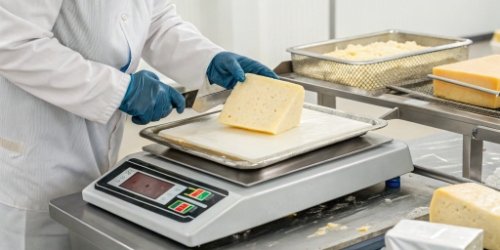
Improving deviation control often comes down to having the right tool for the job. While a standard bench scale with tolerance checks is great, some processes demand more integration. For high-speed production lines, an automated checkweigher is the best method. It weighs every single product in motion and can physically reject any item that is out of spec. For manual processes like cutting meat, fish, or cheese, a portioning control scale is the ideal tool. At Weigherps, we design these scales with specific workflows in mind. For example, our portioning scales feature a bright, intuitive graphical display. It shows the operator how close they are to the target weight as they add or remove product. This turns a task that required years of skill into a simple, guided process that a new employee can master in hours. This is how we empower our customers to use technology to revolutionize conventional weighing.
| Tool Type | Best Use Case | Method of Control |
|---|---|---|
| Portioning Scale | Manual cutting/portioning (e.g., butcher, deli) | Real-time graphical feedback for the operator. |
| Bench Scale with Tolerance | General purpose manual weighing | Pass/Fail indication after weighing. |
| Checkweigher | Automated, high-speed production lines | In-line weighing and automatic rejection of non-compliant items. |
Conclusion
Master tolerance control with smart weighing systems. This boosts accuracy, cuts waste, and ensures quality. You gain customer trust and increase profitability.
-
"[PDF] Giving Real Time Feedback", https://www.med.upenn.edu/uphscovid19education/assets/user-content/documents/leading/giving-real-time-feedback-pma.pdf. This source highlights the importance of combining real-time feedback with data intelligence to manage deviations effectively. Evidence role: mechanism; source type: institution. Supports: Combining real-time feedback with data intelligence is effective for managing deviations in production processes.. ↩
-
"Precision Machine & Manufacturing Improves Oversight, Production ...", https://www.nist.gov/blogs/manufacturing-innovation-blog/precision-machine-manufacturing-improves-oversight-production. This source discusses how precision in production processes can be improved through continuous data analysis and tolerance adjustments. Evidence role: expert_consensus; source type: education. Supports: Precision in production processes can be improved through continuous data analysis and tolerance adjustments.. ↩
-
"[PDF] Optimized Financial Systems Helps Customers Meet their Personal ...", https://www2.isye.gatech.edu/~atoriello3/opt_personal_finance_final.pdf. This source explains how tightening tolerances in production processes can lead to significant savings by reducing material giveaway. Evidence role: statistic; source type: research. Supports: Tightening tolerances in production processes can lead to significant savings by reducing material giveaway.. Scope note: The savings depend on production scale and initial tolerance settings. ↩



Comments (0)