

Your weighing data is valuable, but it's also vulnerable. A single data breach or loss can halt operations and cost you money, damaging your hard-earned reputation with clients.
A solid strategy combines strong encryption, strict access controls, regular backups, and timely software updates. This approach protects your data from threats while ensuring authorized personnel can access it easily when needed.

I've been in the industrial weighing business for nearly 20 years, and I've seen a major shift. In the past, security was an afterthought. Today, for our clients—especially those in the software and tech space—it's the first question they ask. They understand that their service is only as strong as the data it runs on. One of our clients, a software provider in Europe, was looking to integrate their logistics platform with various warehouse scales. Their biggest concern wasn't scale accuracy; it was how to guarantee their client's data would be safe from interception and easy for them to manage through their software. This is a common challenge, but it's one with clear solutions. Let's break down how you can build a system that is both a fortress for your data and a gateway for your team.
What Best Practices Ensure the Security of Weighing Data?
Unsecured data is a ticking time bomb for your business. Hackers and internal threats actively seek weak points, and outdated systems are often the easiest targets for them.
The best practices include implementing multi-level access control, keeping all system software and firmware updated with security patches, and training your team on essential security protocols to prevent human error.

To truly secure your weighing data1, you need to think in layers. A single wall is easy to break down, but multiple layers of defense make it much harder for unauthorized parties to get through. Two of the most critical layers are controlling who can do what and keeping your systems up to date. At Weigherps, we bake these principles into every IoT and system solution we design because we know they are not optional.
Strict Access Control
Not everyone on your team needs access to all data or system settings. By implementing role-based access control2, you give users permissions based only on what they need to do their job. This simple step dramatically reduces the risk of both accidental data changes and intentional misuse. An operator might only need to see the current weight, while a supervisor can view daily reports, and only an administrator can change system configurations.
| User Role | View Real-time Data | Generate Reports | Change System Settings | Delete Historical Data |
|---|---|---|---|---|
| Operator | Yes | No | No | No |
| Supervisor | Yes | Yes | No | No |
| Admin | Yes | Yes | Yes | Yes |
Timely System Updates
Hackers love old software. They exploit known vulnerabilities that have long been fixed in newer versions. We make sure our weighing systems and any associated software are easy to update. Regularly applying security patches3 and firmware updates is like locking your doors and windows at night. It’s a basic but essential habit that closes off easy entry points for attackers and ensures your system complies with modern security standards.
How Can You Make Weighing Data Both Secure and Accessible?
Data that is locked down so tightly that no one can use it is useless. When your team can't access data quickly, it slows down decisions, hurts productivity, and stalls growth.
You achieve this balance by using role-based access controls combined with user-friendly data visualization tools. This ensures only authorized users see the data, but they can view and understand it instantly.
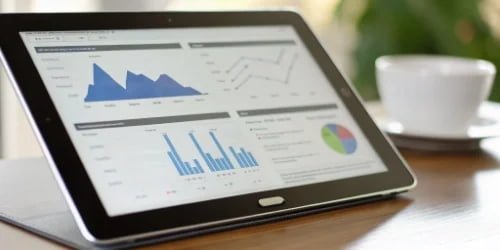
The goal isn't to hide your data; it's to control who sees it and make it incredibly useful for those who do. The modern workplace moves fast, and your team needs information at their fingertips to make smart, quick decisions. For our software vendor clients, this is a huge selling point. They can offer their customers a seamless experience where secure data from our scales appears instantly in their management software, presented in a clear and actionable way. This combination of security and usability is where real business value is created. We accomplish this by focusing on smart access and clear presentation.
Smart, Role-Based Access
As we touched on, role-based access is fundamental. It’s the "secure" part of the equation. But it's also part of the "accessible" solution. By defining roles properly, you ensure that team members aren't overwhelmed with irrelevant information. An operator sees only what they need, a manager gets the reports they need, and so on. This tailored access makes their workflow faster and more efficient because the data they see is directly relevant to their tasks.
Intuitive Data Visualization
This is the key to making data accessible. Raw numbers in a spreadsheet are hard to interpret quickly. We help our clients by ensuring our systems can feed data into dashboards and reporting tools that use graphs, charts, and key performance indicators (KPIs). This visual approach allows an authorized user to understand production trends, track inventory, or spot anomalies in seconds, not hours. It transforms complex data into actionable business intelligence.
What Technologies Protect and Streamline Access to Weighing Data?
Relying on just passwords and basic firewalls is not enough anymore. Sophisticated threats can bypass simple security measures, putting your valuable operational data at risk every single day.
Key technologies are end-to-end encryption and the Internet of Things (IoT). Encryption makes data unreadable to attackers, while IoT connects scales directly to your network, streamlining secure data transfer automatically.
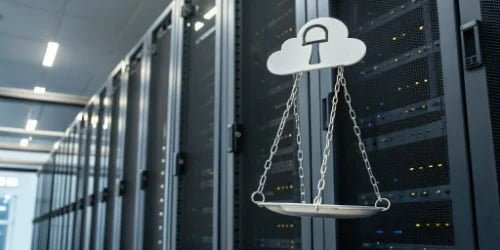
Technology is the engine that drives both security and efficiency. I recall a client who ran a large distribution center. Their staff had to manually write down weights and enter them into a central computer. This process was slow, filled with errors, and completely insecure. Anyone could see the numbers or enter them incorrectly. By helping them upgrade to our IoT-enabled scales, we solved all three problems at once. The data was encrypted from the scale to their system, transfer was instant, and the risk of human error4 disappeared.
End-to-End Encryption
Think of encryption as putting your data into a locked metal box before sending it. Even if someone intercepts the box, they can't open it without the key. We use encryption to protect data in two states: data "in transit" (as it moves from the scale to your network) and data "at rest" (when it's stored on a server or in the cloud). This ensures that even if a hacker gains access to your network or server, the weighing data itself remains a meaningless jumble of characters.
The Power of IoT Integration
The Internet of Things (IoT)5 is a game-changer for industrial weighing. Instead of manual entry, an IoT-enabled scale connects directly and securely to your network. This automates the entire data collection process, creating a seamless and secure flow of information.
| Feature | Manual Data Transfer | IoT-Enabled Data Transfer |
|---|---|---|
| Security | Low (visible, easily copied) | High (encrypted, automated) |
| Accuracy | Low (prone to human error) | High (machine-to-machine) |
| Speed | Slow (manual entry) | Instant (real-time) |
| Labor Cost | High (requires staff time) | Low (fully automated) |
How Do Data Management Systems Safeguard Weighing Information?
Hardware can fail, software can corrupt, and accidents happen. A system crash or physical damage to a server could wipe out months or even years of your crucial business records.
A robust data management system safeguards information through automated, regular data backups and established recovery procedures. By storing backups securely, you can quickly restore operations after any data loss event.

A complete data strategy must include a plan for the worst-case scenario. It’s not a matter of if you will face a data loss event6, but when. It could be a hard drive failure, a ransomware attack, or even a simple power surge. For technical directors and purchasing managers, a system's ability to recover quickly from disaster is a non-negotiable requirement. That's why we build our weighing systems with robust data management capabilities, ensuring your business can bounce back with minimal disruption. It’s about building resilience directly into your operations.
Automated Data Backups
The best backup strategy is one you don't have to think about. We configure our systems to perform automated backups on a regular schedule (e.g., daily or hourly). These backups can be stored locally, on a network drive, or in the cloud for added security. Automating the process removes the risk of someone forgetting to do it and ensures you always have a recent copy of your data ready to go. This consistency is the foundation of a reliable disaster recovery plan7.
Reliable Disaster Recovery
Having a backup is only half the battle; you also need a proven plan to restore it. A good disaster recovery plan outlines the exact steps to take to get your systems back online using your backups. We work with our clients to ensure this process is straightforward and tested. The goal is to minimize downtime. Whether you need to restore data to a new scale or a completely new server, the procedure should be clear and efficient, turning a potential catastrophe into a manageable inconvenience. This provides peace of mind and protects your bottom line.
Conclusion
Securing your weighing data while keeping it accessible isn't complex. It just requires the right mix of modern technology, best practices, and a reliable partner to guide you.
- Understand the specific challenges and solutions for securing weighing data. ↩
- Explore how role-based access control can streamline data access while enhancing security. ↩
- Find out how timely security patches can protect your systems from vulnerabilities. ↩
- Explore strategies to reduce human error and enhance data integrity in your operations. ↩
- Discover the role of IoT in enhancing data security and operational efficiency. ↩
- Learn about the potential risks that can lead to data loss and how to mitigate them. ↩
- Learn the key components of an effective disaster recovery plan to safeguard your data. ↩



Comments (0)