
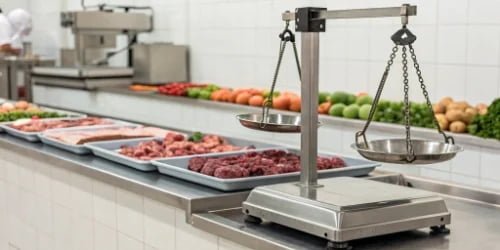
Your scales keep failing in wet and corrosive work areas? This downtime costs you money and interrupts your production. Choosing the right durable scale is the only way forward.
The best scales for meat and produce environments feature high IP ratings like IP68/IP69K, are built from corrosion-resistant 304 or 316 stainless steel, and have fully sealed load cells. These features ensure they survive moisture, corrosive products, and frequent high-pressure washdowns, guaranteeing accuracy and long life.
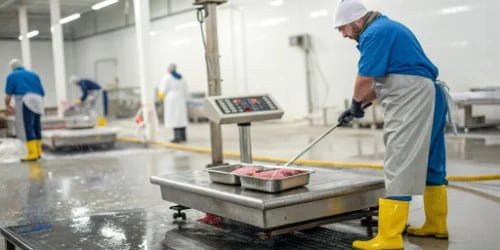
Over my 19 years in this industry, I've seen countless businesses struggle with scales that just aren't built for the job. A scale might perform perfectly in a dry warehouse, but the moment you put it in a meat-packing plant or a vegetable washing station, it starts to fail. The constant humidity, direct water exposure, and corrosive juices from the products themselves are a death sentence for standard equipment. This leads to inaccurate weights, frequent replacements, and frustrating operational delays. So, how can you be sure the next scale you invest in is truly up to the challenge? It's about knowing what to look for beyond the price tag. Let's dig deeper into what makes a scale genuinely tough.
How Can You Determine the Durability of Scales for Harsh Meat and Produce Settings?
Are you unsure if a scale will actually last in your facility? Buying the wrong one is a very costly mistake. I'll show you what to look for.
You determine a scale's durability by checking its key specifications. Look for the IP (Ingress Protection) rating, the grade of stainless steel, and the internal design of the load cells and indicators. Manufacturer testing data and certifications provide solid proof of a scale's real-world resilience.
Understanding IP Ratings
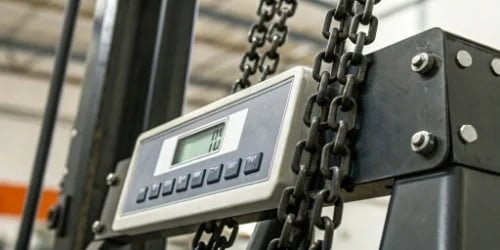
The IP rating is one of the most critical factors. It tells you exactly how well the scale is sealed against dust and water. For meat and produce environments, you should ignore anything less than IP67. An IP68 rating1 means the scale can be fully submerged in water without issue. An IP69K rating2 is the highest level of protection. It certifies that the scale can withstand cleaning with high-pressure, high-temperature water jets3. This is essential for maintaining hygiene in food processing, where thorough sanitation is not optional. We always advise clients in food processing to aim for IP68 or IP69K to guarantee their investment is safe from daily washdowns.
The Importance of Material
The material of the scale's body is just as important as its sealing. We almost exclusively use stainless steel for scales in these environments. But not all stainless steel is the same.
| Steel Grade | Corrosion Resistance | Best Use Case |
|---|---|---|
| 304 Stainless Steel | Good | General food processing, produce |
| 316 Stainless Steel | Excellent | Meat, seafood, high-saline environments |
304 stainless steel4 is a common, cost-effective choice. It works well in many food applications. However, if your process involves salt, aggressive cleaning agents, or acidic products like certain meats and sauces, you need to upgrade to 316 stainless steel5. It contains molybdenum, which gives it far superior resistance to chlorides and other corrosive elements. I recall a client in the fish processing industry whose scales were constantly failing due to saltwater exposure. We switched them to our IP68 scales made with 316 stainless steel, and their problem with equipment failure disappeared completely.
What Features Make Scales Suitable for Challenging Meat and Produce Environments?
Standard scales just can't handle the mess and moisture. This leads to constant breakdowns and inaccurate readings. Here are the must-have features for your scales.
Key features include a fully sealed, stainless steel construction and an IP68 or IP69K rating for total water and dust proofing. The scale should also have overload protection and a hygienic design with smooth surfaces and no crevices where bacteria can hide.
Sealed Electronics and Load Cells
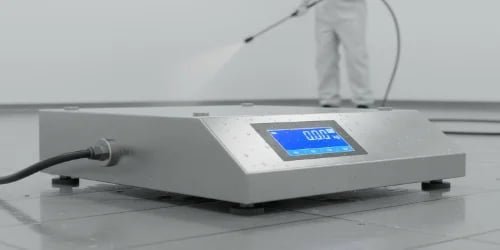
Moisture is the ultimate enemy of electronic components. A truly waterproof scale must protect its brain and nervous system. This means the load cell, which is the sensor that actually measures weight, must be hermetically sealed. This is a process where the sensitive parts are encased in a welded steel housing, making it impossible for water to get in. The same goes for the indicator display and any junction boxes. Be careful of cheaper "water-resistant" scales. They sometimes just have a thin coating or a simple rubber gasket that will degrade over time, especially with exposure to cleaning chemicals. A properly sealed scale is an investment that pays off by avoiding electronic failures6.
Design for Hygiene and Cleaning
A scale's physical design is critical for food safety. A poorly designed scale can become a breeding ground for bacteria. We design our scales with hygiene in mind, following principles that support food safety standards7 like HACCP. This means using smooth, polished surfaces instead of rough ones. It means rounding corners and eliminating gaps or crevices where food particles and water can get trapped. Some of our models feature liftable platforms or open-frame bases. We added these features because our clients in the food industry told us they need to clean every single part of the equipment, quickly and effectively. An easy-to-clean scale not only improves safety but also saves your team valuable time during sanitation shifts.
How Do You Assess the Resilience of Scales Used in Meat Production Areas?
Do you worry your new scale won't survive the daily grind of meat production? The constant moisture, heavy loads, and harsh cleaning are brutal on equipment.
Assess resilience by checking for 304 or 316 stainless steel construction and a high IP rating (IP68/IP69K). Also, verify it has robust internal overload stops to prevent damage from dropped loads. Ask the manufacturer about their specific testing protocols for shock and vibration.
Beyond Waterproofing: Physical Toughness
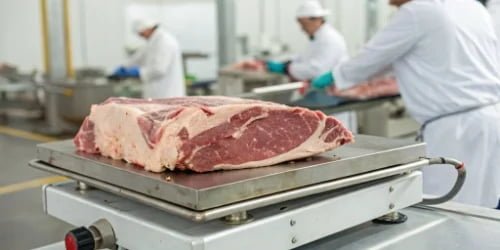
In a meat processing plant, scales face more than just water. They face physical impacts. Heavy cuts of meat are often dropped or placed forcefully onto the weighing platform. Without proper protection, this shock can permanently damage the highly sensitive load cell inside, leading to inaccurate readings or complete failure. That's why true industrial-grade scales have built-in overload protection8. These are physical stops within the scale's structure that prevent the weighing platform from moving beyond a certain point, shielding the load cell from excessive force. This simple-sounding feature is a crucial element that separates a durable scale from a disposable one in a heavy-duty environment.
Corrosion Resistance in Detail
We already talked about 316 stainless steel, but in meat production, the details matter even more. Meat by-products and cleaning solutions can be very corrosive. The quality of manufacturing plays a huge role here. Specifically, you need to look at the welds. A poor weld can be the first place that rust begins to form, compromising the structural integrity and hygiene of the scale. When we build our scales, we ensure the welds are smooth, polished, and fully penetrated. This leaves no place for bacteria to hide or rust to start. As a manufacturer with 19 years of experience, we know these small details make a big difference in the scale's long-term resilience.
What Testing Ensures Scales Can Withstand Tough Conditions in Produce Facilities?
A manufacturer's claims of "durability" can be misleading. How do you really know a scale has been tested for your wet and dirty produce facility?
Rigorous testing must include high-pressure water spray tests to certify an IP69K rating, full submersion tests for IP68, and temperature cycle tests. Salt spray tests are also vital to verify corrosion resistance against the chemicals and juices found in produce environments.
The Manufacturer's Quality Control Process
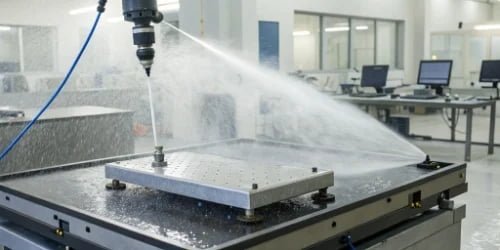
As a manufacturer, we believe that claims must be backed by proof. Our quality inspection department puts every product through a series of demanding tests before it can be shipped. This is how we ensure that the scale you receive will perform as promised in the real world. We don't just test one or two prototypes; we conduct these tests on units from our production batches to guarantee consistent quality. This commitment to testing is a core part of our philosophy as an OEM/ODM partner. It provides our clients with the confidence that they are buying a reliable and professional-grade tool.
Here is a look at some of the tests that a scale designed for a produce facility should pass:
| Test Type | Purpose | How it Relates to Produce Facilities |
|---|---|---|
| Water Jet Test (IP69K) | Simulates cleaning with high-pressure, hot water. | This is essential for sanitizing equipment after it has been covered in soil and organic matter from fresh produce. |
| Submersion Test (IP68) | Ensures no water gets in, even if fully underwater. | Protects the scale from facility flooding, deep cleaning in tanks, or being accidentally dropped in water. |
| Salt Spray Test | Checks long-term resistance to corrosion. | Simulates exposure to fertilizers, pesticides, and acidic juices from fruits and vegetables that can eat away at metal over time. |
| Load Cell Cycle Test | Verifies long-term accuracy and durability. | Mimics the repetitive weighing of heavy crates of produce, thousands of times, to ensure the sensor does not wear out prematurely. |
Conclusion
Choosing a durable scale requires checking its IP rating, material, and hygienic design. This ensures your scale survives washdowns and harsh conditions, protecting your investment and keeping your operation running smoothly.
-
Understand the significance of an IP68 rating for water and dust protection. ↩
-
Explore the importance of IP69K ratings for equipment in harsh cleaning environments. ↩
-
Understand the effects of high-temperature cleaning on scale durability. ↩
-
Learn about the applications and benefits of 304 stainless steel in food environments. ↩
-
Discover why 316 stainless steel offers superior corrosion resistance in harsh environments. ↩
-
Learn about common causes of electronic failures and how to prevent them. ↩
-
Learn about essential food safety standards that affect equipment design and use. ↩
-
Understand how overload protection prevents damage and ensures scale longevity. ↩

Comments (0)