
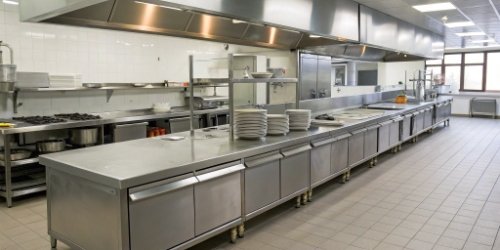
Are you struggling with long cleaning times and food safety risks? This downtime costs money and threatens your reputation. An easy-to-clean scale design can solve these problems.
An easy-to-clean design directly improves food safety by minimizing areas where bacteria can grow. It also increases uptime by drastically reducing the time and labor needed for sanitation, getting your production line running again faster.
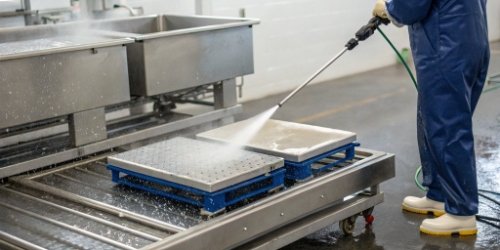
When we talk about equipment design1, it's easy to focus on just performance and features. But in the food industry, another factor is just as important: how easy the equipment is to clean. I've learned over 19 years that a scale's cleanability2 is not a minor feature; it's central to its value. It impacts everything from the safety of the food you produce to the efficiency of your entire operation. A design that looks simple and is easy to maintain often hides a lot of smart engineering. Let's explore how this critical design philosophy3 can transform your facility.
What Are the Food Safety Benefits of an Easy-to-Clean Scale Design?
Worried about hidden bacteria? Complex equipment has nooks and crannies where contaminants thrive, risking product recalls. A thoughtful design eliminates these hazardous hiding spots for good.
An easy-to-clean design reduces microbial growth by removing hard-to-reach areas. This ensures all surfaces can be fully sanitized, which directly lowers the risk of cross-contamination and protects your customers.
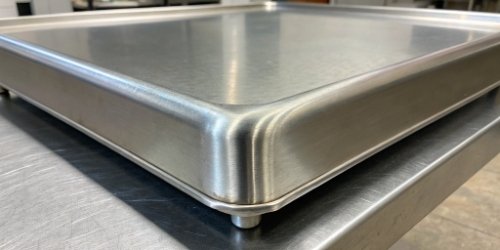
When we design a scale for the food industry, we think about more than just accurate weighing. We think about what happens after a long shift. My experience has shown me that the real test of a food scale is how well it stands up to a rigorous cleaning routine. An "easy-to-clean" design is a "safe" design.
Fewer Hiding Spots for Bacteria
The core principle is to leave no place for bacteria to hide. This means using smooth, polished surfaces, especially stainless steel4 like 304 or 316. We avoid sharp corners and instead create rounded, continuous welds. Exposed threads and bolts are a major red flag for me, as they are almost impossible to clean effectively. A well-designed scale will have these components enclosed or eliminated entirely, presenting a simple, unbroken surface to your cleaning team.
Material Reliability and Durability
Easy cleaning also means the scale's internal components are more reliable and durable. The materials must resist the harsh chemicals used for sanitation5 day after day. This is why high-grade stainless steel is essential. It doesn’t rust or degrade, ensuring the scale’s surface remains non-porous and easy to sanitize for its entire lifespan. This toughness means the scale is not delicate; it's a workhorse built for the tough environment of food processing.
| Design Feature | Food Safety Impact |
|---|---|
| Smooth, Polished Surfaces | Prevents biofilm and bacteria from adhering. |
| Rounded Corners & Welds | Eliminates hard-to-clean crevices. |
| No Exposed Threads/Bolts | Removes common contamination points. |
| High-Grade Stainless Steel | Resists corrosion from cleaning agents. |
| Sealed Enclosures (IP Rated) | Protects internal electronics from water and debris. |
How Does a Simple Cleaning Process Affect Equipment Uptime?
Is production stopping for too long just for cleaning? Every minute your line is down for sanitation is a minute you're not making money. A faster cleaning process gets you back online sooner.
A simple cleaning process significantly cuts down on the time required for sanitation. This minimizes production downtime, allowing for more operational hours and increasing output, directly boosting your plant's overall efficiency.
I once visited a client's poultry processing plant. They were losing nearly an hour per shift just cleaning their old weighing equipment. The scales were full of difficult angles and exposed parts. After we replaced them with our waterproof, easy-to-clean models, their cleaning time for each scale dropped to under 15 minutes. This story isn't unique. The link between cleanability and uptime is direct and measurable. When cleaning is faster and easier, your equipment spends more time doing its job: producing.
Calculating the Impact on Production
The math is simple but powerful. Saving time on cleaning translates directly into more production hours. If you can cut 30 minutes of cleaning time per production line per day, that adds up quickly over a year. It's not just about convenience; it's about reclaiming lost revenue. This extra capacity can be used to fulfill more orders and grow your business without needing to invest in a whole new production line.
| Time Saved per Cleaning Cycle | Daily Uptime Gained (1 cycle/day) | Annual Uptime Gained (250 days) |
|---|---|---|
| 15 minutes | 0.25 Hours | 62.5 Hours |
| 30 minutes | 0.50 Hours | 125 Hours |
| 45 minutes | 0.75 Hours | 187.5 Hours |
Reduced Labor Costs
A faster cleaning process also means you need less labor dedicated to sanitation. Your team can finish cleaning duties more quickly, freeing them up for other valuable tasks. This improves overall labor efficiency6 and can lead to significant cost savings over time.
How Can an Easy-to-Clean Design Improve Hygiene Standards in Food Processing?
Do you find it hard to maintain consistent hygiene standards across all shifts? Inconsistent cleaning leads to failed audits and safety risks. An intuitive design makes high standards the default.
An easy-to-clean design helps achieve and maintain high hygiene standards consistently. By simplifying the sanitation task, it reduces human error and ensures a more thorough clean every single time.
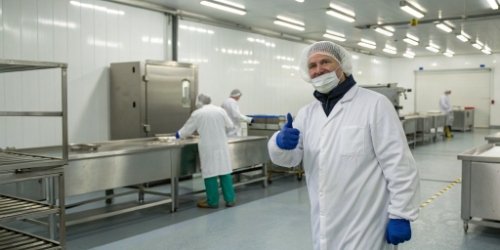
Achieving a high standard of hygiene once is one thing. Maintaining it every day, with every employee on every shift, is the real challenge. This is where equipment design plays a huge role. A complicated piece of machinery requires complex cleaning procedures, which opens the door for mistakes, missed spots, and shortcuts. In our 19 years of manufacturing, we've seen that the simplest designs are the most effective because they make the "right way" to clean the "easy way."
Consistency is the Foundation of Hygiene
When a scale is open, accessible, and has minimal parts, the cleaning process becomes straightforward and repeatable. There's no guesswork. Every operator can perform the same high-quality cleaning process with minimal training. This consistency is the foundation of a robust hygiene program. It ensures that your standards aren't just met on paper but are practiced on the factory floor every single day.
Empowering Your Team with a Durable Design
A user-friendly design7 empowers your team to take ownership of hygiene. They don't have to fight with the equipment to get it clean. Better yet, the tough and durable nature of these scales means they can withstand aggressive cleaning without damage. Staff can clean confidently, knowing the equipment is built to handle it. This creates a culture of cleanliness rather than a culture of compromise.
| Poor Design Feature | Hygiene Problem | Easy-to-Clean Solution |
|---|---|---|
| Sharp internal corners | Traps food particles and liquids | Smooth, rounded construction |
| Exposed wiring/cables | Difficult to clean around, traps debris | Internal wiring, IP-rated enclosures |
| Painted carbon steel | Paint can chip, exposing metal to rust | 304 or 316 stainless steel |
| Many small parts | Time-consuming disassembly/assembly | Simple, unified construction |
Why Is a User-Friendly Cleaning Design Important for Food Safety Compliance?
Are you preparing for an audit? Inspectors look for any sign of a compliance failure, and a hard-to-clean scale is a major red flag that can lead to citations and costly fixes.
A user-friendly cleaning design provides visible proof of sanitation, crucial for passing audits from bodies like the FDA or for HACCP plans. It simplifies documentation and shows a proactive approach to safety compliance.
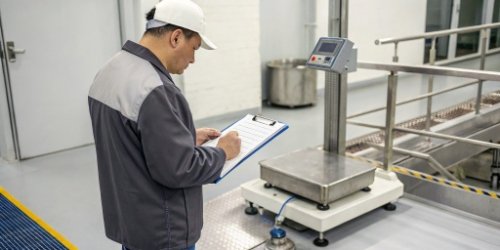
Complying with food safety8 regulations isn't optional. Standards like HACCP9 (Hazard Analysis and Critical Control Points) and those set by the GFSI10 (Global Food Safety Initiative) are strict for a reason. During an audit, inspectors don't just look at your records; they look at your equipment. A scale that is visibly easy to clean immediately sends a positive message. It shows that you've thought about hygiene from the ground up.
Meeting and Exceeding Regulatory Standards
Modern food safety standards demand equipment that is designed for sanitation. An IP6811 or IP69K rating, for example, is not just a feature; it's proof that a scale can withstand high-pressure, high-temperature washdowns. These are the kinds of verifiable specifications that auditors look for. An easy-to-clean design is an auditable design. It provides clear, physical evidence that you are meeting and often exceeding the requirements.
Simplifying Your Documentation and Audit Process
Compliance requires documentation. When your cleaning procedures are simple and effective, documenting them becomes simple, too. You can easily create a clear, repeatable, and verifiable cleaning log. During an audit, you can confidently demonstrate not just your procedures on paper, but also the physical design that makes them effective. This transparency and proactive approach to safety build trust with regulators and, most importantly, with your customers.
| Compliance Standard | Key Requirement | How Easy-to-Clean Design Helps |
|---|---|---|
| HACCP | Identify and control contamination hazards. | Eliminates physical crevices where hazards can hide. |
| GFSI Schemes (BRC, SQF) | Equipment must be suitable for use and cleaning. | Uses food-safe materials (stainless steel) and hygienic design. |
| FDA Regulations | Food-contact surfaces must be cleanable. | Smooth, non-porous surfaces ensure effective sanitation. |
| EHEDG Guidelines | Hygienic engineering and design principles. | Follows principles like no sharp angles and sealed parts. |
Conclusion
Ultimately, an easy-to-clean design is not a luxury. It is a core business strategy that directly enhances food safety, maximizes production uptime, and ensures you meet strict regulatory compliance.
-
Explore the impact of equipment design on overall food processing operations. ↩
-
Understand the significance of cleanability for maintaining hygiene and safety. ↩
-
Discover how design philosophy impacts efficiency and safety in food processing. ↩
-
Learn about the benefits of using stainless steel for hygiene and durability. ↩
-
Explore effective sanitation practices to maintain hygiene in food processing. ↩
-
Learn tips to enhance labor efficiency and reduce costs in your operations. ↩
-
Find out how user-friendly designs contribute to better food safety compliance. ↩
-
Learn about the critical role of design in ensuring food safety standards are met. ↩
-
Learn about HACCP principles and their importance in food safety management. ↩
-
Understand the role of GFSI in enhancing food safety standards globally. ↩
-
Discover the importance of IP ratings in ensuring equipment durability and safety. ↩



Comments (0)