

Are you tired of high labor costs and manual sorting errors? These problems can slow down your production line and directly impact your bottom line every single day.
A single automatic grading scale can replace three to five manual laborers. By processing thousands of items daily, it slashes labor costs and boosts throughput. You can often see a full return on your investment in just one year, making it a powerful tool for long-term growth.
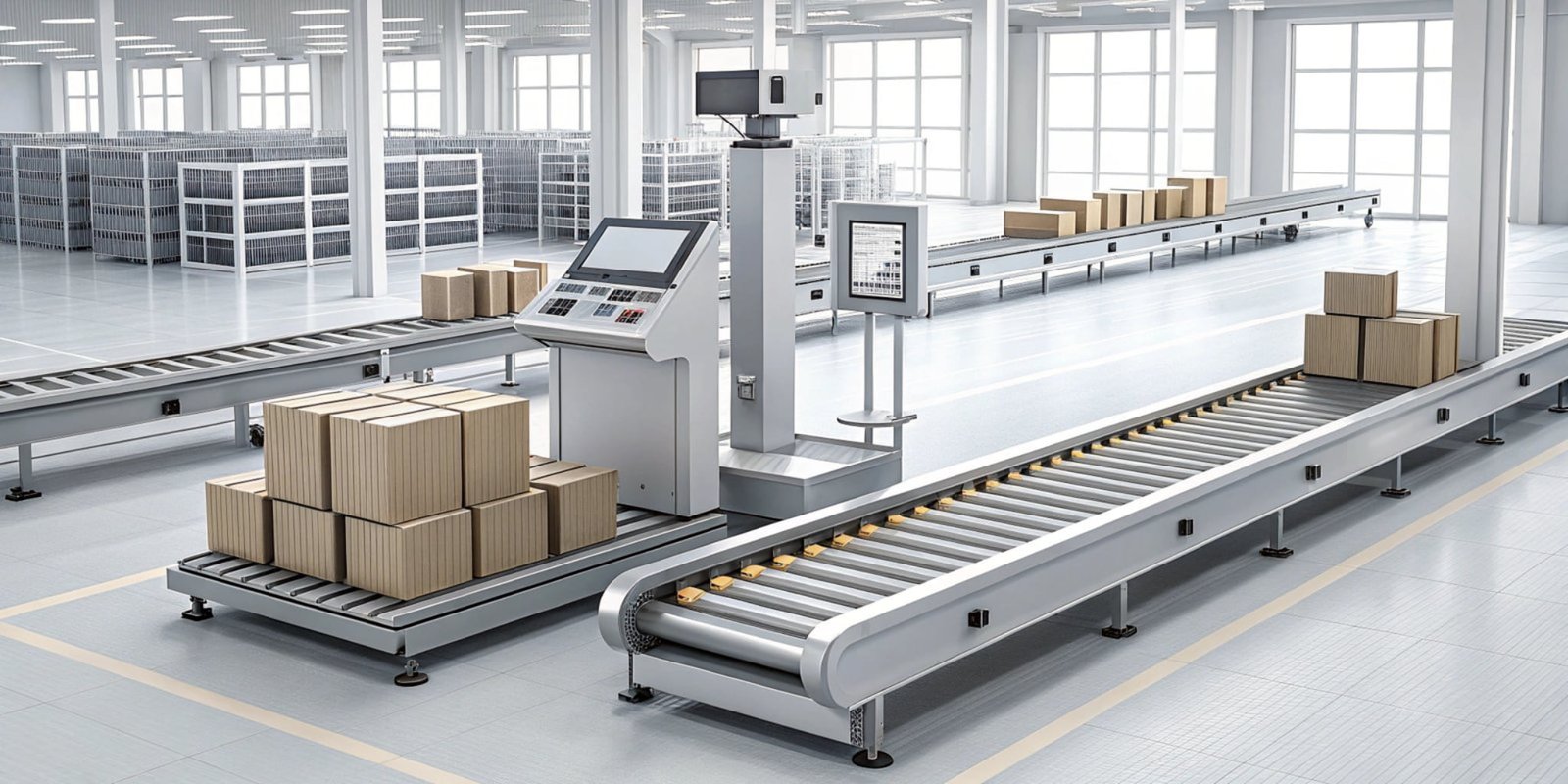
This might sound impressive, but as a technical professional, you need to see the data behind the claim. Over my 19 years in this industry, I have helped many clients make this exact calculation. Let's dig deeper into how these numbers work in the real world so you can see the potential for yourself.
How Many Workers Can a Grading Scale Replace in Production Processes?
Is your team struggling to keep up with production demands? Manual sorting creates bottlenecks that limit your output, no matter how hard everyone works, which hurts overall efficiency.
In most production environments, one automated grading scale can consistently perform the work of 3 to 5 manual sorters. This immediately frees up your skilled workers for more complex, high-value tasks and boosts your line's speed and accuracy.
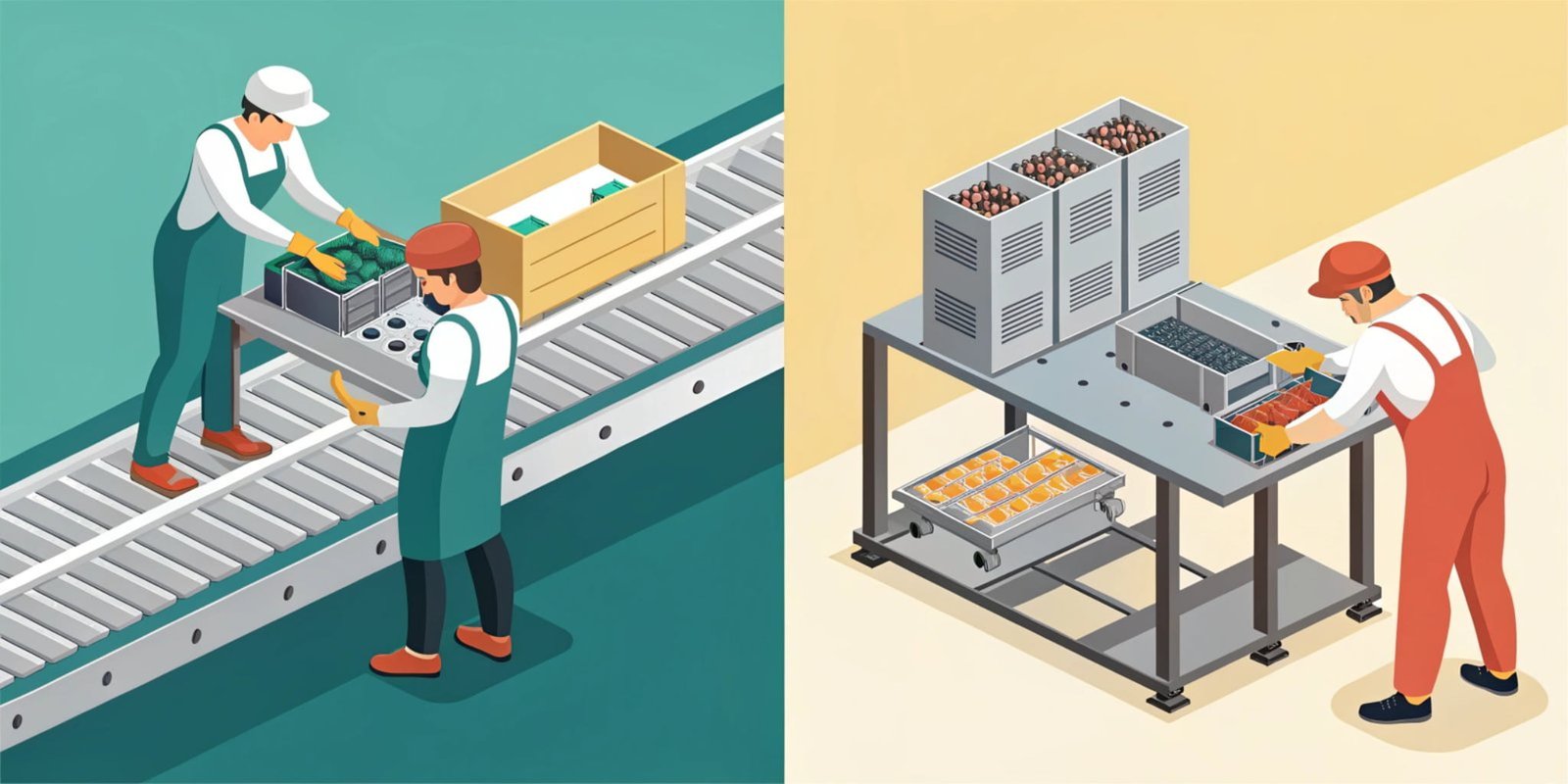
At Weigherps, my experience confirms this. A client in the food processing industry handled 3,000 packages a day with a team of five people dedicated to sorting and packing. After installing one of our grading scales, they reassigned four of those workers to other parts of the facility and dedicated just one person to oversee the automated process. This is a common story, but the exact number of replaced workers depends on a few things. An automated system doesn't just replace labor; it fundamentally changes how work gets done. It improves accuracy, speed, and data collection all at once.
Manual vs. Automated Sorting
The most direct way to see the impact is by comparing the two processes side-by-side. Manual sorting is limited by human factors like fatigue, breaks, and shift changes.1 An automated scale can run continuously with much higher precision.2
| Feature | Manual Sorting | Automated Grading Scale |
|---|---|---|
| Speed | Dependent on individual skill and fatigue | Consistent and high-speed (24/7 possible) |
| Accuracy | Prone to human error, leading to waste | Extremely high, reduces product giveaway. |
| Labor Cost | Requires multiple employees per shift | Requires minimal oversight |
| Data Tracking | Manual, often inconsistent logs | Automatic, real-time data capture. |
The Value of Redeploying Labor
The goal isn't just about reducing headcount; it's about optimizing your workforce. The employees who are no longer needed for repetitive sorting tasks can be retrained for roles in quality assurance, machine maintenance, or logistics. This move turns a labor cost into a more valuable, skilled asset for your company, improving overall operational strength.
How Do You Calculate the ROI of Investing in a Grading Scale?
Are you worried that a new grading scale is just another large, unjustifiable expense? It's difficult to approve a purchase without a clear and predictable path to getting your money back.
To calculate the Return on Investment (ROI), you divide the net profit generated by the scale by its total investment cost. The key is to include all savings, such as reduced labor, less product waste, and increased output, to understand the complete financial picture.

The basic formula is straightforward: ROI (%) = (Annual Savings - Annual Cost) / Annual Cost × 100. Let’s break down what goes into those numbers. This isn't just an academic exercise; it's the same process I walk my clients through to justify their investment to their leadership team. A well-chosen automated system can deliver an ROI of over 200% in the first year.
Step 1: Determine Your Total Investment Cost
This is more than just the sticker price of the machine. For a true calculation, you need to look at the Total Cost of Ownership (TCO). As a technical director or purchasing manager, you already know this is critical for any new asset.
- Equipment Cost: The purchase price of the grading scale.
- Installation & Integration: The cost of setting up the machine and, importantly, integrating it with your existing ERP or MES software.
- Training: The time and resources needed to train your staff to operate and maintain the new system.
Step 2: Calculate Your Annual Savings
This is where the benefits become clear. The savings come from multiple areas of your operation.
- Direct Labor Savings: This is the easiest to calculate.
(Number of Workers Replaced) x (Average Annual Salary + Benefits). - Reduced Product Waste: Automated scales are highly accurate, which minimizes product giveaway3. If you save just 1 gram per package on 1 million packages per year, the material savings add up quickly.
- Increased Throughput: If the scale allows you to process 20% more product per day4, you can calculate the added profit from that increased volume.
- Fewer Errors: Reduced errors mean fewer customer complaints and returns, which saves both money and your company's reputation.
Step 3: Put It All Together
Let's use a simple example. Suppose a grading scale has a total investment cost of $30,000.
- It replaces 3 workers, each with a fully-loaded annual cost of $25,000. Total Labor Savings = $75,000.
- It reduces product giveaway and errors, saving an additional $10,000 annually.
- Total Annual Savings = $75,000 + $10,000 = $85,000.
The payback period is less than five months ($30,000 / $85,000 * 12). The first-year ROI would be (($85,000 - $30,000) / $30,000) * 100 = 183%.
What Factors Determine the Workforce Reduction Potential of a Grading Scale?
Are you thinking that replacing 3-to-5 workers sounds like an aggressive estimate? You are right to be cautious, because the final result depends entirely on your specific production environment.
The number of workers a grading scale can replace is determined by your product's characteristics, the speed of your existing production line, and the level of system integration. Simple, uniform products that require basic weight checks will see the highest labor reduction rates.

It is not a one-size-fits-all solution. My job as a solutions provider is to help you analyze these factors to set a realistic expectation. For my clients who are software providers, the integration aspect is often the most critical piece. A standalone machine saves labor, but an integrated one transforms the workflow. Let's look at the key variables that I review with every client.
Product and Process Complexity
First, we must look at what you are weighing and sorting.
- Uniformity: Are the products similar in size, shape, and weight? Uniform items can be processed much faster than irregular ones.
- Number of Grades: Are you just doing a simple pass/fail check, or are you sorting products into 5, 10, or even 20 different weight categories? More complex sorting logic may require a more advanced system to maintain high speeds.
- Handling Requirements: Do the products need to be handled gently? Fragile items might require a slower speed or specialized conveying equipment, which can affect the overall throughput and, therefore, the number of workers it can replace.
Production Line Configuration
Next, we look at your current setup.
- Line Speed: An automated scale is only as effective as the line that feeds it. If your upstream process is slow, the scale will be underutilized. Conversely, a high-speed scale can highlight bottlenecks elsewhere in your line.
- Physical Space: Is there enough room to install the scale and any necessary conveyors without disrupting the existing flow of work?
- Downstream Processes: What happens after an item is graded? If sorted products must still be manually packed into boxes, the labor savings will be smaller than in a fully automated pack-out system.
Level of System Integration
For a company that provides software, this is the most important factor. The true power of automation is unlocked when machines communicate.
- Data Exchange: A fully integrated scale can send real-time weight data to your MES or ERP system. This eliminates the need for manual data entry, which itself is a form of labor savings.
- Automated Control: The scale can receive instructions from a central control system and automatically change sorting parameters for different product runs, reducing the need for operator intervention.
How to Assess the Cost-Benefit of a Grading Scale in Streamlining Operations?
Are you only focusing on reducing direct labor costs? The true value of an automated grading scale goes far beyond simply replacing workers who are performing manual sorting.
To properly assess the cost-benefit, you must analyze the total operational impact. This includes benefits like faster throughput, higher accuracy, reduced product waste, and access to valuable production data. These advantages streamline your entire process, not just a single station.

As an expert in this field, I always encourage my clients to look past the initial price tag and consider the total value. A weighing system should not be seen as a standalone tool but as a strategic investment in efficiency and quality. It connects material flow, billing, and quality control. The real question is not "What does a new system cost?" but rather "How much is our outdated system costing us in hidden ways every day?". Let's explore those hidden costs and benefits.
The 'Hidden' Costs to Consider
A transparent cost-benefit analysis also acknowledges potential new costs. Being upfront about these builds trust and avoids surprises.
- Maintenance: Like any industrial equipment, automated scales require regular maintenance and calibration to ensure accuracy.
- Software Updates: For integrated systems, there may be ongoing costs for software licenses or updates.
- Operator Training: While you save on manual labor, you will need to invest in training personnel to manage and troubleshoot the new technology.
The 'Hidden' Benefits That Drive Value
These are the benefits that often have the largest long-term impact on your profitability.
- Data-Driven Decision Making: Automated weighing systems collect precise data on every single item. You can use this information to analyze production trends, identify material yield issues, and optimize processes in ways that are impossible with manual spot-checks.
- Enhanced Quality Control: The system provides 100% inspection of your products for weight compliance5, dramatically improving quality and consistency.
- Improved Compliance and Traceability: For many industries, having a complete and accurate digital record of weights is essential for meeting regulatory requirements and for tracking products through the supply chain.
| Cost-Benefit Aspect | Negative Impact (Cost) | Positive Impact (Benefit) |
|---|---|---|
| Financial | Initial Purchase, Maintenance | Reduced Labor, Less Material Waste |
| Operational | Training Time, Downtime Risk | Increased Throughput, Higher Accuracy |
| Strategic | Software Fees | Real-Time Data, Better Compliance |
Conclusion
Ultimately, a grading scale is far more than a labor-saving machine. It is a strategic investment in efficiency, quality, and data that empowers you to make smarter business decisions.
-
"Fatigue and Work", https://www.cdc.gov/niosh/fatigue/about/index.html. Human-factors and occupational-health research documents that fatigue, work-rest cycles, and shift schedules can affect attention, error rates, and task performance; this supports the mechanism by which manual sorting capacity may vary over time. Evidence role: mechanism; source type: government. Supports: Manual sorting performance is constrained by fatigue, breaks, and shift-related human factors.. Scope note: The magnitude of performance loss depends on task design, shift duration, workload, and ergonomics. ↩
-
"Industrial Checkweighers | Prevent Overfill and Underfill", https://www.mt.com/us/en/home/products/Product-Inspection_1/checkweighing.html. Metrology standards and technical studies on automatic weighing instruments support that in-line weighing systems are designed for repeatable operation within specified accuracy classes; this supports precision and continuous operation in principle, not superiority in every installation. Evidence role: expert_consensus; source type: institution. Supports: Automated grading scales can operate continuously and with high weighing precision when properly specified and maintained.. Scope note: Precision depends on calibration, environmental conditions, product presentation, vibration, and compliance with the relevant accuracy class. ↩
-
"Product Giveaway in Food Manufacturing: What It Costs", https://matrixcontrols.com/product-giveaway-food-manufacturing/. Packaging and process-control research supports that accurate checkweighing and weight feedback can reduce overfill or product giveaway by controlling fill weights closer to target values; this supports the mechanism but not a specific savings amount. Evidence role: mechanism; source type: paper. Supports: Accurate automated weighing can reduce product giveaway.. Scope note: Giveaway reduction depends on filler variability, regulatory minimum-fill rules, product value, and whether feedback control is implemented. ↩
-
"17 Manufacturing Inventory Automation Stats 2025", https://www.anchorgroup.tech/blog/manufacturing-inventory-automation-statistics. Empirical studies of manufacturing automation support that automation can increase throughput by reducing cycle time and process variability; this offers contextual support for a throughput-improvement scenario but does not establish 20% as a typical result. Evidence role: statistic; source type: paper. Supports: Automation may enable a production line to process substantially more product per day.. Scope note: The 20% figure is illustrative unless supported by line-specific before-and-after measurements. ↩
-
"Checkweigher Machines l Inline Hi-Speed ...", https://www.all-fill.com/equipment/checkweigher-machines. Technical references on in-line checkweighers and automatic catchweighing instruments support that these systems are used to weigh items during production rather than relying solely on sampling; this supports the possibility of 100% weight inspection when every unit passes through the instrument. Evidence role: definition; source type: institution. Supports: An automated grading or checkweighing system can provide 100% inspection for product weight compliance.. Scope note: The claim applies only when all products are routed through the weighing system and the system is properly calibrated and maintained. ↩



Comments (0)