

Are your food processing operations drowning in paperwork? When a quality issue arises, the blame game begins because manual records make it impossible to trace the source. Digital systems provide a clear path to accountability.
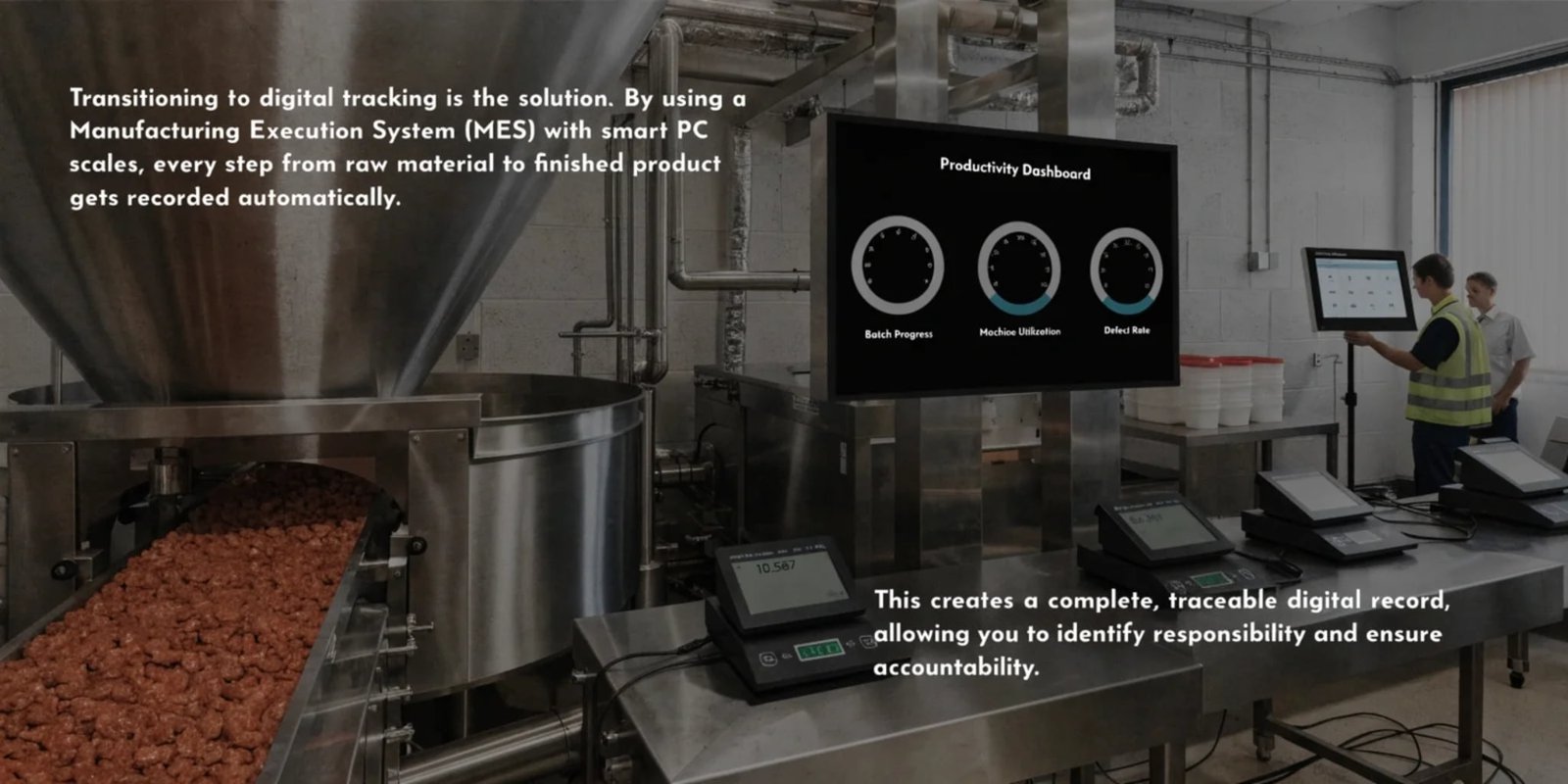
Transitioning to digital tracking is the solution. By using a Manufacturing Execution System (MES) with smart PC scales, every step from raw material to finished product gets recorded automatically. This creates a complete, traceable digital record, making it easy to identify responsibility and ensure accountability.
I've seen the chaos of paper-based systems firsthand. The frantic search for a specific batch record when a customer complains is stressful and incredibly inefficient. But moving to a digital workflow is much easier than you might think. As an industrial scale manufacturer with 19 years of experience, I've helped countless clients make this change smoothly. Let's break down how you can begin this transition and the technologies that will help you succeed.
How Can Food Processing Facilities Transition from Manual Recordkeeping to Digital Tracking?
Are you still using paper logs and spreadsheets to manage your production data? This old method is slow and invites costly errors, compliance failures, and delayed recalls. A phased digital transition is the answer.
You can move from paper to digital by starting small. First, pinpoint the most critical points in your process, like ingredient weighing. Then, introduce digital tools like smart scales and barcode scanners. Gradually, you can integrate these into a central system for complete visibility.

The journey from manual to digital doesn't have to be overwhelming. I always advise my clients to take it one step at a time. First, you need a solid plan. Assess your current workflow and identify the biggest bottlenecks. Is it at raw material receiving? Or perhaps during the complex batch mixing stage? Once you know your key problem areas, you can start the transition in phases.
Phase 1: Digitize Critical Control Points
You don't need to revolutionize your entire factory overnight. Start with the most crucial step where errors are common: weighing. Replacing your old analog scales with our smart PC scales is a great first move. These scales don’t just show a weight; they are designed to connect to your data systems. They can automatically record weights and link them to a specific batch, material, and operator, eliminating handwritten logs.
Phase 2: Introduce Barcode & RFID Systems
Next, use barcodes or RFID tags for everything. Raw materials, packaging, work-in-progress batches, and even employee IDs can be tagged. This makes tracking fast and eliminates typing errors.1 A simple scan connects the physical item to its digital record in your system. This is a fundamental step toward achieving real-time visibility.
Phase 3: Centralize Your Data
Finally, bring all this data together with a Manufacturing Execution System (MES). The MES acts as the central brain for your production floor, collecting data from your smart scales, scanners, and other equipment in real time. It provides a complete, live picture of your operations, moving you from isolated data points to an intelligent, connected factory.
What Systems Help Trace Accountability in Food Processing from Raw Material to Finished Product?
When a product fails a quality check, do you know why? Without the right system, you can't tell if it was a bad batch of ingredients or an operator mistake. Integrated digital systems give you the end-to-end traceability needed to find out.
The best solution is a Manufacturing Execution System (MES) integrated with your Enterprise Resource Planning (ERP) platform. An MES tracks every action on the shop floor as it happens. Paired with smart scales and scanners, it records who did what, with which materials, and when, ensuring full accountability.

To truly establish accountability, you need systems that talk to each other. It’s about creating a single source of truth from the receiving dock to the shipping bay. Here’s how different systems work together to achieve this.
-
MES: The Core of Shop Floor Accountability
The MES is like a digital supervisor for your factory floor. It doesn't just record what happened; it actively manages and monitors work in real time. It can enforce recipes, ensuring operators use the correct ingredients and follow standard operating procedures (SOPs).2 When an operator logs into a station, every action they take is tied to their profile, creating a clear line of responsibility. -
Smart PC Scales: The Source of Unquestionable Data
A regular scale just gives you a number. Our smart PC scales are data-collection terminals. They integrate directly with the MES. When an operator needs to weigh an ingredient, they scan the material's barcode. The scale screen can show them the target weight from the recipe. Once they add the ingredient, the exact weight, material ID, operator ID, and timestamp are sent to the MES automatically. This eliminates any chance of manual error or data manipulation. -
ERP Integration: Connecting the Big Picture
While the MES manages the 'how' of production, an ERP system manages the 'business' of it—orders, high-level inventory, and financials. Integrating your MES and ERP is the final step for total traceability. It means you can trace an issue from a customer complaint (in the ERP) directly to the specific batch, the raw materials used, and the person who weighed them (in the MES).3
| System | Role in Accountability |
|---|---|
| ERP | Manages business data like sales orders and high-level inventory. |
| MES | Manages real-time production, enforces workflows, and records operator actions. |
| Smart PC Scales | Capture accurate, automated weight data in real time, creating an unchangeable record. |
| Barcode/RFID | Links physical items to their digital records, eliminating manual entry errors. |
How Do You Implement Effective Data Tracking to Eliminate Manual Errors in Food Production?
Are simple human mistakes costing your business a fortune? A misplaced decimal point or a misread ingredient code can spoil an entire production batch, leading to waste and lost profits. The solution is to automate data capture at its source.
To eliminate manual errors, make data entry automatic. Use barcode scanners to identify materials, products, and operators. Use smart scales that transmit weight data directly into your MES or other software. This removes the need for paper logs and manual keying, which are the main sources of mistakes.

I once worked with a client who had to dispose of a massive batch of product because an operator wrote "1.5 kg" on a log sheet instead of the required "0.5 kg." It was an honest mistake, but a very expensive one. Manual tracking systems rely on human perfection, which is an unrealistic expectation in a fast-paced production environment. The most effective way to eliminate these costly errors is through what we call "source data automation." This means capturing data electronically at the exact point it is created.
This approach is simpler than it sounds. You implement it by making a few key changes to your process. Instead of asking operators to write things down, you give them tools that do it for them. For instance, instead of typing a lot number into a terminal, they simply scan a barcode. The system instantly pulls up all a material's information—supplier, expiration date, and more. This isn't just faster; it's virtually error-proof.
The most critical application of this is in weighing. By connecting our smart PC scales directly to your MES, the weighing process becomes foolproof. The scale can even be programmed with recipe tolerances. If an operator adds too much or too little of an ingredient, the system can stop them from proceeding to the next step, preventing a mistake before it happens.4 This guided, automated process is one of the biggest leaps forward in quality control.
What Technologies Enable Transparent Responsibility Tracking in Food Processing Workflows?
Do you need a system where every action is visible and everyone is held accountable? A lack of transparency allows people to pass the blame, which causes quality to decline. Modern technology can create a clear and undeniable audit trail for every step.
Key technologies like the Industrial Internet of Things (IIoT), smart scales, and MES software work together to build this transparency. IIoT sensors and devices connect your entire operation. Smart scales provide accurate, time-stamped data points. An MES weaves this all into a "digital thread" that links every action to a specific person, time, and material.

True transparency in food processing is built on creating an unbroken "digital thread" of data from raw material receiving to finished product shipping. Several technologies are crucial for making this happen.
First, there's the Industrial Internet of Things (IIoT). Think of this as the network that connects all your factory floor equipment. Smart devices, including scales, temperature sensors, and mixers, become IIoT-enabled. They continuously feed real-time performance and status data into your central system, giving you a live, granular view of everything that is happening.5
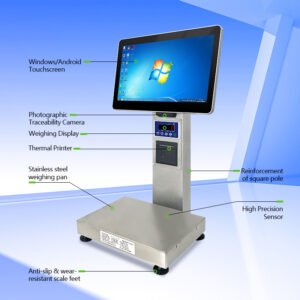
Our Smart PC Scales are a perfect example of an IIoT device. They are much more than simple weighing instruments; they are data terminals on your production floor. Often running on familiar operating systems like Windows or Android, they are designed for easy integration with MES and other software. Each time an operator logs in and performs a weighing task, that action is recorded with an unchangeable timestamp and user ID. This provides a concrete data point for who did what and when.
Finally, a robust Manufacturing Execution System (MES) is essential. A good MES is designed for regulated industries like food and beverage. It includes built-in audit trails that can help with compliance for standards like FSMA.6 This means every data entry, every process change, and every action is logged securely. This log cannot be altered, creating an undeniable, transparent record that makes tracking responsibility simple and accurate.7
Conclusion
Upgrading your facility with an MES and integrated smart scales is no longer an option—it's a necessity. This move replaces manual errors with digital accuracy and swaps ambiguity for clear accountability, protecting your brand and boosting your bottom line.
-
"The State and Trends of Barcode, RFID, Biometric and ... - PMC", https://pmc.ncbi.nlm.nih.gov/articles/PMC4765644/. Automatic-identification research describes barcode and RFID capture as methods for reducing manual identifier entry and accelerating traceability data collection. Evidence role: mechanism; source type: paper. Supports: Barcode and RFID identification speed up tracking and eliminate typing errors.. Scope note: Avoiding typing does not eliminate incorrect labels, missed reads, duplicate identifiers, or erroneous database associations. ↩
-
"Integrated Operations Management for Distributed ...", https://tsapps.nist.gov/publication/get_pdf.cfm?pub_id=927637. Manufacturing execution frameworks include recipe management, material verification, and workflow controls that can check recorded production actions against specified instructions. Evidence role: mechanism; source type: institution. Supports: MES software can enforce recipes and operating procedures to ensure correct ingredient use.. Scope note: Software enforcement depends on configuration and verified inputs and cannot by itself guarantee that physical ingredients or operator actions match recorded events. ↩
-
"MES Traceability and Genealogy for Regulated ...", https://www.gevernova.com/software/blog/mes-traceability-genealogy. Enterprise–manufacturing integration models link business transactions with production and material records, providing a basis for tracing shipped lots to their manufacturing history. Evidence role: mechanism; source type: research. Supports: ERP–MES integration can connect a customer complaint to the production batch, its raw materials, and the weighing operator.. Scope note: Complaint-to-operator tracing additionally requires lot-linked sales records, retained genealogy, and reliable operator identification; integration alone does not establish fault. ↩
-
"Evaluating An Automated Compounding Workflow Software ...", https://pmc.ncbi.nlm.nih.gov/articles/PMC8596227/. Tolerance-based process controls compare measured additions with recipe limits and can inhibit subsequent workflow steps when a recorded weight falls outside the permitted range. Evidence role: mechanism; source type: paper. Supports: Programmed weighing tolerances can block workflow progression when ingredient weight is outside the permitted range.. Scope note: A workflow block detects or contains an incorrect addition rather than necessarily preventing it, and its effectiveness depends on calibration, configuration, and bypass controls. ↩
-
"Cybersecurity and Industry 4.0 – What You Need to Know - NIST", https://www.nist.gov/blogs/manufacturing-innovation-blog/cybersecurity-and-industry-40-what-you-need-know. Industrial IoT research describes networked sensors and equipment as sources of operational measurements for centralized monitoring and analysis. Evidence role: mechanism; source type: research. Supports: IIoT-enabled equipment supplies continuous real-time performance and status data for comprehensive operational visibility.. Scope note: Visibility extends only to captured variables and connected processes, with timeliness constrained by sampling intervals, network latency, and outages. ↩
-
"Food Traceability Rule: Critical Tracking Events and Key Data ...", https://www.fda.gov/media/163132/download. FDA's FSMA food traceability rule specifies records for covered foods and tracking events; appropriately configured electronic systems can help retain and retrieve the required information. Evidence role: general_support; source type: government. Supports: Built-in MES audit trails can support compliance with FSMA requirements.. Scope note: Coverage, exemptions, and applicable requirements vary; an MES audit trail alone neither supplies every required data element nor demonstrates FSMA compliance. ↩
-
"[PDF] NIST.SP.800-53r5.pdf", https://nvlpubs.nist.gov/nistpubs/SpecialPublications/NIST.SP.800-53r5.pdf. NIST security controls treat protection against unauthorized modification or deletion of audit information as a separate requirement from generating audit records. Evidence role: general_support; source type: government. Supports: MES audit logs are unalterable and provide definitive evidence of individual responsibility.. Scope note: These controls do not establish that a particular MES log is immutable; a recorded account action also does not conclusively identify the physical actor or determine responsibility for a defect. ↩


Comments (0)