
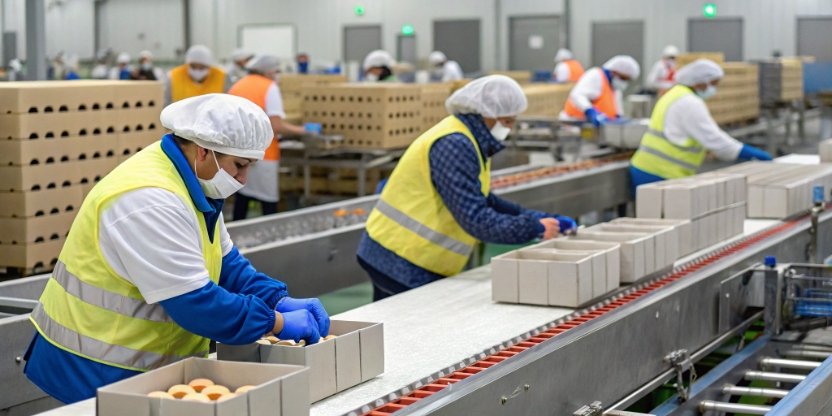
Tired of endless payroll disputes and handwritten records causing chaos? These arguments waste time, damage morale, and create a mountain of administrative work, preventing your factory from running smoothly.
The most effective solution is to implement an automated system. Smart PC scales equipped with an employee card-swiping function automatically link each weighing action to an operator's ID and their output data. This allows for direct export of performance reports, significantly reducing disputes arising from manual statistics.
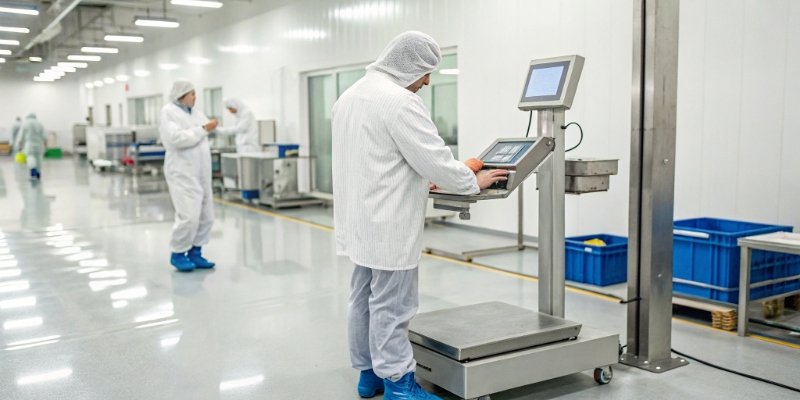
For many years, I've seen factory managers struggle with the same frustrating problem. They rely on piece-rate wages to motivate employees, but the manual tracking process is a constant source of conflict. Every week, it's the same story: supervisors spend hours trying to verify crumpled tally sheets while employees line up, convinced they've been underpaid. It's a system that creates suspicion, not productivity. But what if there was a way to bring complete transparency and accuracy to this process, ending the disputes for good? Continuing to use outdated methods is no longer a viable option in today's competitive landscape. Let's explore how technology offers a clear path forward.
How Can Food Factories Automate Wage Calculations to Avoid Disputes?
Are inaccurate wage calculations creating mistrust between your staff and management? This constant back-and-forth over pay drains energy and hurts your factory's productivity and overall environment.
Automation is the key to eliminating these issues. By using integrated systems where every product weighed is instantly tied to the employee responsible, you create a perfect, indisputable record. This technology makes payroll calculations fast, fair, and free from human error, rebuilding trust and focus.
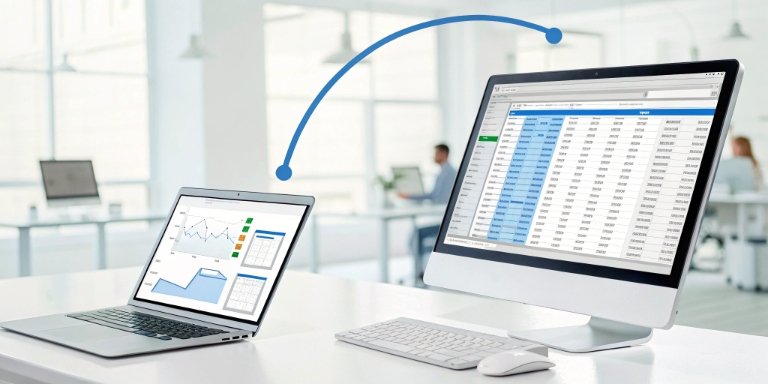
As a manufacturer of industrial scales for nearly two decades, we've helped countless clients transition from manual chaos to automated efficiency. The automation process is surprisingly simple to implement. It starts with a smart PC scale at each workstation. When an employee is ready to weigh a finished product, they simply tap their unique ID card or fob on a reader connected to the scale. [3, 9] The reader uses RFID or NFC technology to identify the employee instantly. The scale records the weight, and our system links that data—the weight, the product type, the time, and the employee ID—into a single digital record. This information is sent to a central database in real-time. At the end of a shift or pay period, your payroll software can automatically pull this clean data to generate accurate performance and wage reports. [1] This removes any possibility of manual error or biased record-keeping.
What Are Effective Methods for Managing Piecework Payroll Systems in Food Manufacturing?
Is your current piecework system more trouble than it's worth? While intended to boost output, manual systems often lead to the opposite, bogged down by errors and time-consuming verification. [6]
The most effective method is a hybrid approach combining technology with clear policies. Use automated tracking tools like smart scales for data accuracy, but also ensure your system can handle variations like minimum wage top-ups and different rates for different tasks, all transparently reported.
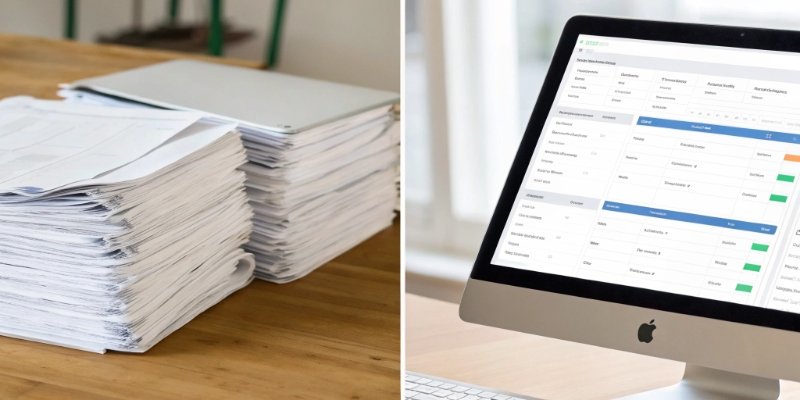
Over the years, I've observed that the best payroll management isn't just about the hardware; it's about the system's intelligence. Piece-rate systems in food manufacturing can be complex. [21] You might have different pay rates for different products or quality grades. An effective automated system must be flexible enough to handle this. For instance, our systems can be configured with graduated rates or different pay scales per task. [1, 21] The true power comes when this data is used for more than just payroll. Managers can access dashboards to see real-time productivity, identify top performers, and spot production bottlenecks instantly. This data-driven approach is far more effective than relying on supervisors' outdated reports. Let's compare the two methods directly:
| Feature | Manual Piecework System | Automated Piecework System |
|---|---|---|
| Accuracy | Prone to human error, lost records, and fraud. | High accuracy with digital, time-stamped records. |
| Efficiency | Extremely time-consuming for both workers and admin. | Instant data capture and automated report generation. |
| Transparency | Low. Leads to suspicion and disputes. [14] | High. All records are accessible and verifiable. |
| Dispute Rate | High, requiring lengthy investigations. [16] | Nearly zero, as data is objective and trusted. |
| Labor Cost | High hidden costs in administration and dispute resolution. [8] | Higher initial investment, but lower long-term operational cost. [22] |
How Do You Resolve Disputes in Manual Record-Keeping for Employee Wages?
Are you still resolving wage disputes the old-fashioned way? This involves digging through stacks of paper, holding meetings, and trying to piece together the truth from conflicting stories, a process that satisfies no one.
The only way to truly "resolve" disputes from manual records is to make them obsolete. With an automated tracking system, disputes rarely happen. When a question does arise, it's settled in minutes by pulling up the indisputable digital record, not by launching a full investigation.

I remember a client at a seafood processing plant who called me, completely fed up. He said his supervisors were spending almost a day a week acting as detectives, trying to figure out if an employee's claim of processing 50 boxes was accurate when the tally sheet said 45. They would review security footage and interview other workers. It was a nightmare that was poisoning the workplace culture. After they installed our smart scales with employee ID integration, the problem vanished. The first time a dispute came up, the manager simply entered the employee's ID and the date. In seconds, they had a complete log of every single weighing event for that employee, timestamped to the second. The employee saw the data and the issue was resolved immediately. This is the difference between arguing over opinions and agreeing on facts. The goal is to eliminate the source of the dispute, and that source is the ambiguity of manual records. Technology provides that single source of truth.
What Tools Help Ensure Accurate and Transparent Payroll Tracking in Food Production Facilities?
Are you searching for a reliable way to ensure every employee is paid fairly and accurately? Using the wrong tools, or no tools at all, undermines trust and leaves you vulnerable to costly errors and legal issues. [5]
The best tools are integrated hardware and software solutions. This includes smart PC scales for data capture, RFID/NFC card readers for employee identification, and a central software system that syncs this data for automated payroll processing, reporting, and analysis.
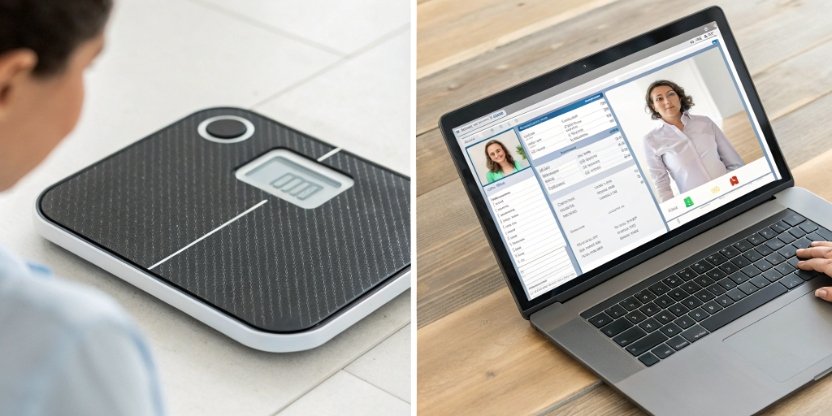
At Weigherps, we focus on creating a complete, seamless solution. The hero of this system is the Smart PC Scale. This isn't just a scale; it's a data terminal with a built-in computer. It can run software, connect to your network via Wi-Fi or Ethernet, and features a user-friendly touchscreen. Paired with it is the Employee Card System. We use reliable RFID technology, where each employee has a durable card or fob. [3] A quick tap on the reader is all it takes to log their activity. [10] This action is powered by the reader itself, so the cards don't need batteries. [9] Finally, all this data flows into the Backend Software. As a software vendor, this is where you come in. Our hardware provides clean, structured data that can be integrated with your payroll, ERP, or manufacturing execution systems. This creates a powerful, end-to-end solution that tracks productivity from the factory floor to the final payroll report, providing the accuracy and transparency that modern food facilities demand. [23, 25]
Conclusion
Ultimately, resolving piece-rate wage disputes comes down to one thing: trust. By replacing manual, error-prone logs with automated, transparent technology, you build a foundation of trust that boosts morale and efficiency.



Comments (0)