
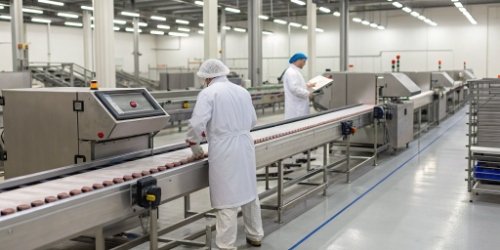
Are you losing money from untracked weight loss in your facility? This uncertainty can silently eat away at your profits, making it hard to pinpoint the source of loss.
Dual-metering management is a system of weighing products at two distinct points, typically at intake and dispatch. It is designed to precisely track weight changes throughout your process, identify discrepancies, and prevent profit loss by ensuring complete inventory accuracy.
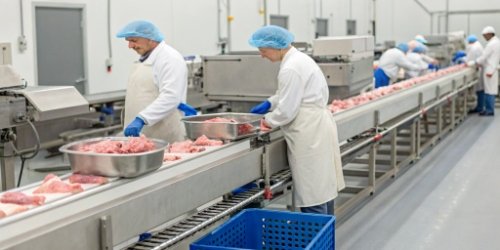
This may sound simple, just weighing something twice. But the real value is not in the act of weighing itself. It is in the data you get and what you do with it. This system transforms your operation from a series of disconnected steps into a fully transparent and controlled process. For 19 years, I've seen companies struggle with "disappearing" inventory. The ones that solve it are the ones who embrace this level of detailed tracking. It's about turning weighing into a powerful business intelligence tool. Let's explore how this works in practice.
How is dual-metering management applied in slaughterhouse operations?
Managing daily operations can feel chaotic and full of inefficiencies. Manual tracking often leads to frustrating errors, disputes with suppliers or customers, and hidden financial losses that are hard to trace.
In a slaughterhouse, dual-metering is applied at two critical stages: intake and dispatch. At intake, carcasses are weighed to get both a gross and a net weight. At dispatch, the system records the product weight and the container weight separately, ensuring precise billing.
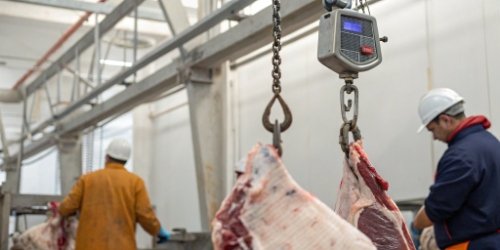
Let's dive deeper into how this works on the ground. We design our systems to fit into your existing workflow, making these crucial checks seamless and automatic. The goal is to collect accurate data without slowing down your production line.
How It Works at Each Stage
The process is broken down into two main phases, each with a specific purpose. Our WeigherPS system is designed to handle both with ease, linking the data automatically.
-
The Receiving Stage (Intake)
When a supplier delivers carcasses, the first weigh-in happens. This is the gross weight. The carcass might then go through an initial trim or preparation step. After that, it is weighed again to get the net weight. Our system tags each carcass with a unique ID and records both weights against it. This simple step is vital. It immediately tells you the initial processing yield and confirms you received the exact amount of raw material you paid for. Any significant difference between the supplier's declared weight and your net weight can be addressed right away. -
The Dispatch Stage (Outbound)
When you prepare an order for a customer, the second part of the dual-metering process kicks in. Products are often packed into reusable crates or boxes.1 Our system first weighs the empty crate to record its tare weight, or uses a pre-saved tare weight. Then, the crate is filled with the product and weighed again. The software automatically subtracts the crate's weight to calculate the exact net weight of the product being shipped. This ensures your invoice is 100% accurate and your customer only pays for the meat they receive, not the packaging.
| Stage | Key Action | Primary Goal |
|---|---|---|
| Intake | Weigh Gross Weight -> Process -> Weigh Net Weight | Calculate initial yield and verify raw material quantity. |
| Dispatch | Weigh Product + Container -> Subtract Tare Weight | Ensure accurate customer billing and track finished goods. |
What are the use cases and benefits of dual-metering management in slaughterhouses?
You know financial leaks exist in your operation, but can't find them. This constant uncertainty makes it difficult to improve profitability, as you're likely fighting symptoms instead of the root cause.
Key use cases are tracking weight loss from chilling, preventing employee theft, and ensuring fair trade with accurate billing. The main benefits are improved inventory accuracy, lower product loss, full traceability, and a direct increase in your facility's overall profitability.

The benefits go beyond just finding errors. Implementing a robust dual-metering system builds a foundation for a more efficient, transparent, and profitable business. It provides concrete data that you can use to make smarter decisions.
Turning Data Into Profit
I once visited a client who was losing thousands of dollars every month through what they called "shrink." They accepted it as a cost of doing business. After we helped them implement a dual-metering system, the data told a different story.
-
Pinpoint and Reduce Product Loss
The system flagged a consistent 2-3% weight discrepancy between the carcass intake weight and the weight after the 24-hour chilling process. This was higher than the industry average for natural moisture loss. An investigation revealed a faulty thermostat in one of their chillers, causing excessive dehydration.2 Fixing it saved them thousands per week. The data made this invisible problem visible. -
Enhance Security and Prevent Theft
The same client's system also started flagging a different kind of issue. Small but regular weight differences were appearing between the final packed weight and the dispatch weight at the loading dock. This data pattern was undeniable. It turned out a couple of employees were removing small amounts from each shipment. The automated alerts from the weighing system provided the evidence needed to stop the theft. -
Build Customer Trust and Ensure Fair Trade
Your customers are businesses too, and they need to trust their suppliers. With a dual-metering system, you can provide dispatch reports that show the exact net weight of every single box you ship. This proves you are billing them accurately. It eliminates disputes over short weights and builds a strong, long-lasting business relationship based on transparency. This isn't just good practice; it's a competitive advantage.
How to implement dual-metering management effectively in meat processing facilities?
Thinking about implementing a new technology system can feel overwhelming. You probably worry about the potential for disruption, the complexity of the project, and getting your team on board with the changes.
A successful implementation involves integrating smart scales at key points, using a central software system like ours to analyze the data, and training your staff properly. It all starts with a clear plan mapping your intake and dispatch workflows to identify the best approach.
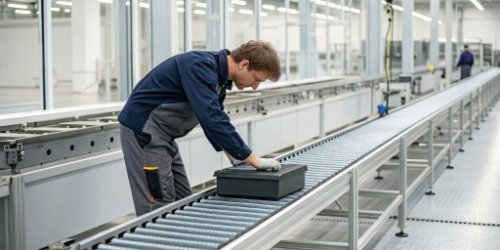
Bringing a new system online doesn't have to be a headache. As a manufacturer with 19 years of experience, we've developed a process that makes it smooth and effective. We see ourselves as your partner, not just a hardware supplier. Here is the approach we take with our clients.
A Step-by-Step Path to Success
We believe a successful project is built on careful planning, the right tools, and great support. We guide our clients through each phase to ensure the system delivers real value.
-
Workflow Analysis and Strategic Planning
The first thing we do is sit down with you to understand your facility. We don't start by talking about scales; we start by talking about your process. Where does product enter? How does it move through your plant? Where does it get packed and dispatched? By mapping this out, we can identify the most logical and impactful points to install weighing stations. This planning phase is crucial because it ensures the solution is tailored to your specific operational needs, not the other way around. -
Choosing the Right Hardware and Software
Once we have a plan, we select the tools for the job. Our industrial scales are built to withstand the tough, wet environment of a meat processing facility and are CE certified for international standards. But the hardware is only half the story. Our WeigherPS software is the brain of the operation. It connects all the scales, captures the weight data in real-time, automatically compares intake vs. outbound weights, and generates alerts for any discrepancies. This is the core of dual-metering management. -
Seamless Integration and Comprehensive Training
A new system must work with your existing infrastructure. Our technical team specializes in integrating our weighing solutions with your company's ERP or other management systems. This creates a single, unified data stream for better business oversight. Finally, we provide thorough training for your staff. We don't just show them which buttons to press. We explain why the system is important and how the data helps protect the company's profitability and their jobs. This gets everyone onboard and ensures the system is used effectively from day one.
Conclusion
Dual-metering management is your key to unlocking greater control. It moves your operation from guesswork to data-backed certainty, directly boosting accuracy, cutting losses, and driving sustainable profitability.
-
"Concentration in U.S. Meatpacking Industry and How It Affects ...", http://www.ers.usda.gov/amber-waves/2024/january/concentration-in-u-s-meatpacking-industry-and-how-it-affects-competition-and-cattle-prices. This source discusses the use of reusable crates or boxes in meat processing facilities and their role in accurate weight tracking. Evidence role: mechanism; source type: research. Supports: Reusable crates or boxes are commonly used in meat processing facilities for packing products and ensuring accurate weight tracking.. ↩
-
"Meatpacking - Hazards and Solutions | Occupational Safety ... - OSHA", http://www.osha.gov/meatpacking/hazards-solutions. This source discusses how equipment malfunctions, such as faulty thermostats, can lead to excessive dehydration in meat processing. Evidence role: mechanism; source type: research. Supports: Equipment malfunctions, such as faulty thermostats, can lead to excessive dehydration in meat processing facilities.. Scope note: The specific example may not apply universally, as equipment issues vary by facility. ↩



Comments (0)