
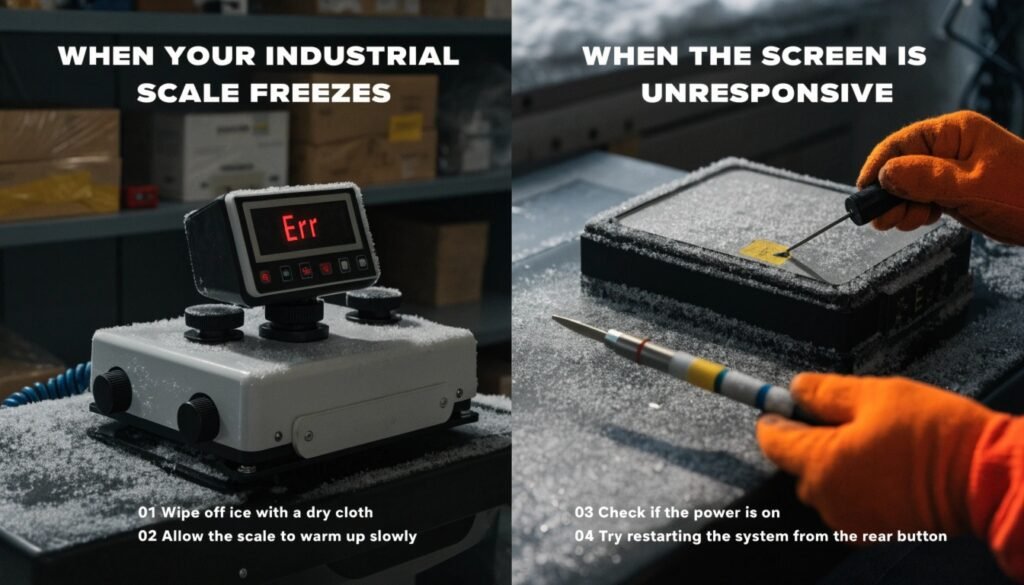
Are you tired of your workshop's industrial scales failing every time the temperature drops? Operations grind to a halt, productivity plummets, and it costs you valuable time and money.
When temperatures fall, especially below -10°C, a standard electronic scale's screen may freeze or become completely unresponsive. This isn't a fault but a physical limitation of its components. The solution is to choose scales with industrial-grade capacitive screens and internal parts specifically rated for temperatures as low as -30°C.
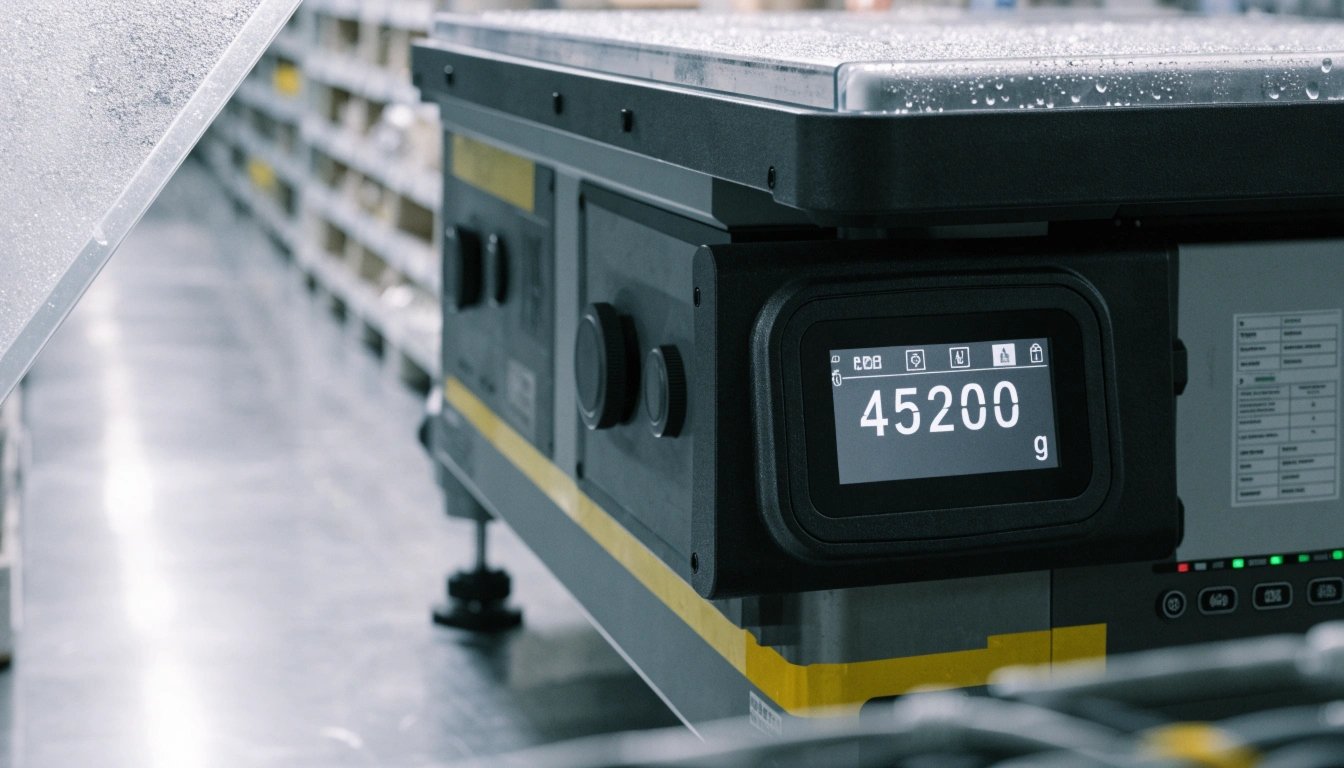
I remember a client in the frozen foods sector who faced this exact problem every winter. Their production line would stop because the scales just gave up in the cold. It’s a common issue that I've seen many times in my 19 years in this industry. But it's a problem with clear solutions. Let's look at how to protect your equipment and keep your operations running smoothly, no matter how cold it gets outside.
How can you prevent industrial scales from freezing or malfunctioning in sub-zero workshop temperatures?
Worried your scales will fail when the frost hits? This uncertainty can disrupt your entire production line, leading to major delays and order backlogs. There's a much better way to prepare.
The best prevention starts with choosing the right equipment from the beginning. You should select scales specifically designed for low temperatures, with all components certified for your working environment. Also, performing regular checks before the cold season ensures all seals and casings are intact.
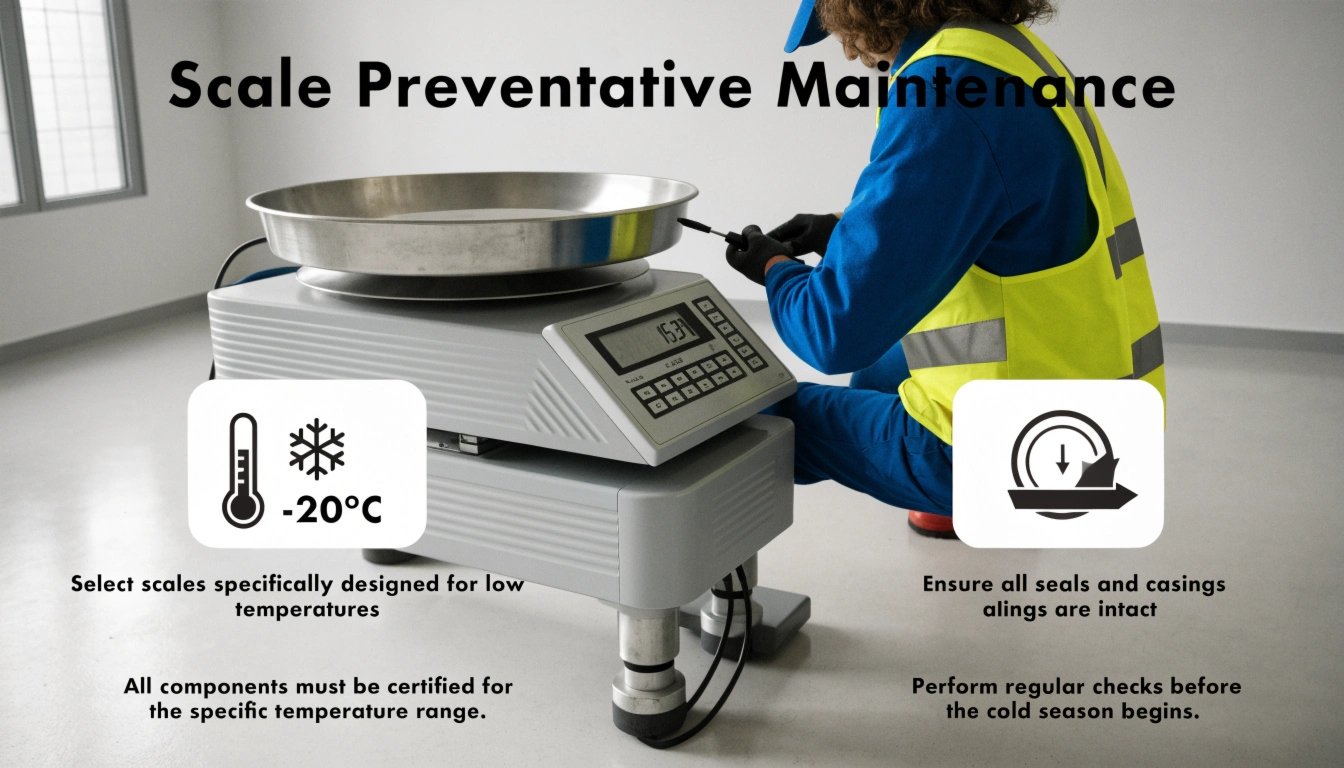
To prevent failures, you need to think ahead. Simply buying a standard scale for a sub-zero environment is not a sustainable plan. Based on my experience, I guide clients to consider the scale's entire lifecycle. Low temperatures make materials brittle and can cause lubricants to thicken, increasing wear on moving parts. Furthermore, batteries lose efficiency in the cold, discharging much faster than in normal conditions1. Therefore, prevention involves a three-part strategy: choosing the right hardware, performing timely maintenance, and training staff. Before winter, inspect all enclosures to make sure they are properly sealed to prevent moisture buildup from condensation. This moisture can lead to short circuits and complete system failure.
Here is a simple comparison:
| Feature | Standard Scale | Cold-Weather Scale |
|---|---|---|
| Operating Temp. | 0°C to 40°C | -30°C to +40°C |
| Screen Type | Standard LCD/Resistive | Industrial Low-Temp Capacitive |
| Battery | Standard Lithium-Ion | Low-Temperature Formula |
| Casing | Plastic or standard metal | Insulated, sealed stainless steel |
| Internal Components | Standard Grade | Industrial grade, rated for cold |
What are the best solutions for industrial scales struggling to operate in extremely cold environments?
Are your scales already failing in the cold and you need a solution now? Downtime is incredibly expensive, and waiting weeks for a brand-new replacement just isn't an option.
For immediate relief, you can retrofit existing scales with specialized components like low-temperature batteries and industrial touch screens. For long-term reliability, scales with built-in heaters or the use of heated enclosures are excellent solutions that provide a stable internal operating environment.
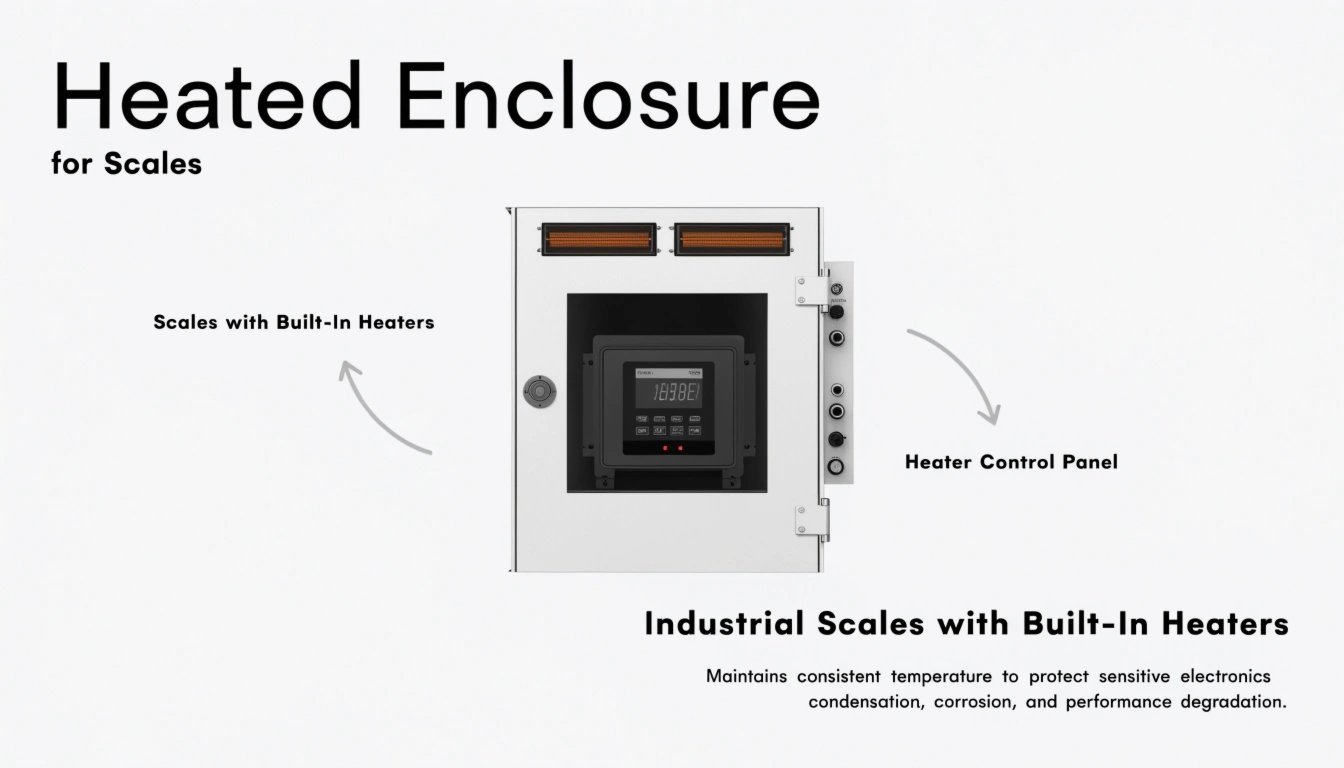
When a scale starts failing in the cold, you have two paths: upgrade it or replace it. As an OEM manufacturer, we provide both options. Upgrading can be faster and more cost-effective. The most common failure point is the display. Standard LCD screens slow down in the cold, causing ghosting or blackouts2. A standard capacitive screen's performance can also suffer because the sensor struggles to detect touch from less-moist skin in a cold environment3. Swapping it for an industrial-grade capacitive screen designed for low temperatures can solve this. Another critical point is the load cell, which can contract in the cold and give inaccurate readings4. Using a temperature-compensated load cell is vital. For battery-powered scales, a low-temperature battery is a must, as standard batteries lose their charge quickly in the cold.
Here’s a look at the pros and cons of your options:
| Solution | Pros | Cons |
|---|---|---|
| Retrofit/Upgrade | Lower initial cost, faster implementation. | May not solve all underlying issues, potential compatibility problems. |
| Heated Enclosure | Protects existing equipment, relatively easy to install. | Adds bulk, requires a power source for the heater. |
| Buy New | Fully integrated and warrantied solution, designed for the environment. | Higher upfront cost, longer lead time. |
How can you ensure an industrial scale works properly in temperatures below freezing?
You need complete confidence that your scales will perform accurately below freezing. Inaccurate measurements can compromise your quality control, leading to rejected batches and huge financial losses.
To guarantee proper function, select a scale with an appropriate Ingress Protection (IP) rating to prevent moisture from getting inside. This is crucial, as any trapped moisture will freeze and cause damage. Also, verify that all key components, from the load cell to the display, are certified by the manufacturer to work within your specific temperature range.
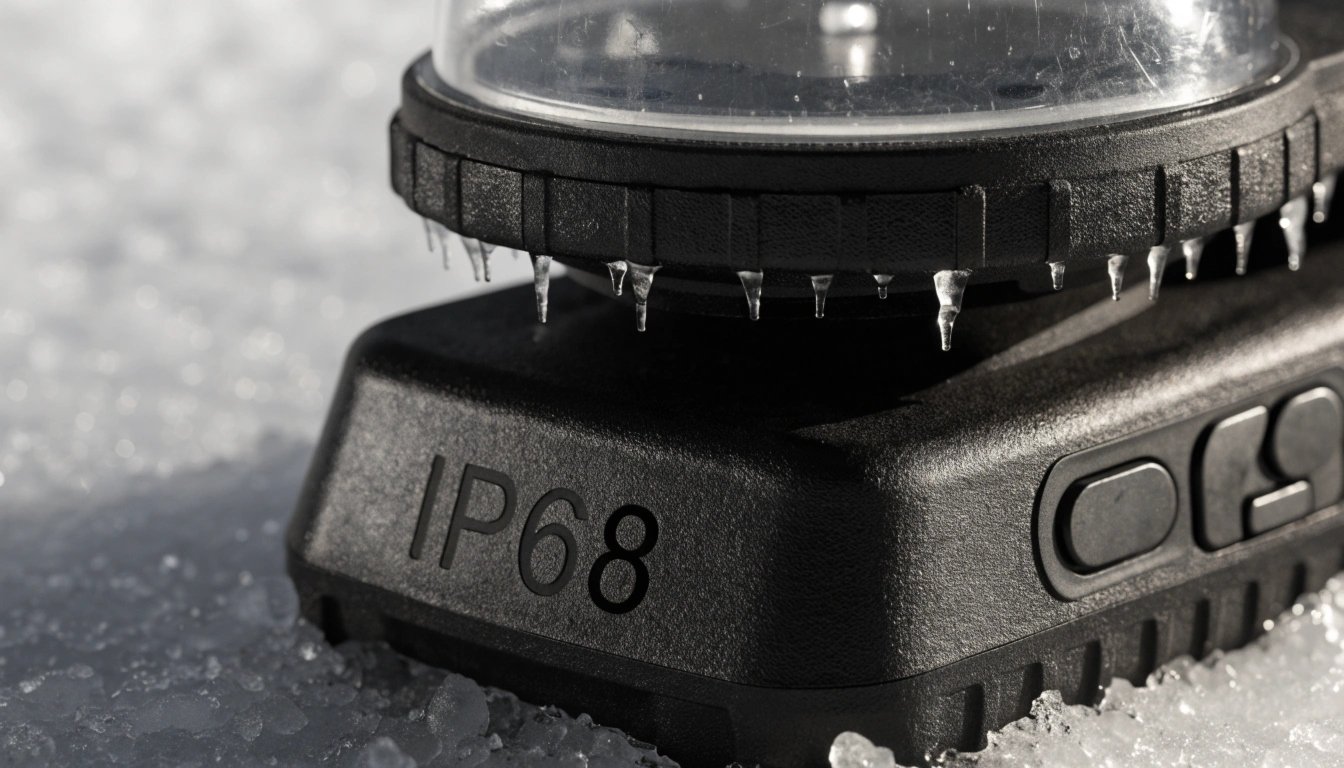
Ensuring accuracy in the cold is about more than just preventing screen freezes. It's about protecting the heart of the scale—the load cell. The metal and electronic parts inside a load cell contract in cold temperatures, which can alter its precision. This is known as "load cell drift". That's why scales must be calibrated at their normal operating temperature5. Calibrating a scale in a warm office before moving it to a freezer will lead to incorrect readings. Another major threat is condensation. When a cold scale is brought into a warmer area, or when temperature fluctuates, moisture can form on and inside the electronics, causing short circuits. This is where IP ratings become critical. An IP rating indicates how well a device is sealed against solids and liquids6. For cold, wet environments, a rating like IP67 (protection against temporary immersion) or IP68 (protection against continuous immersion) is essential to keep moisture out. Always choose a scale with a rating that matches your environment's challenges.
What features or modifications can keep industrial scales functional in icy conditions?
Are you searching for specific features to handle icy workshops? It's often hard to tell which options are marketing fluff and which ones will actually make a difference for your operations.
Key features include industrial-grade capacitive touchscreens that work even when operators wear gloves, and internal heaters that maintain a stable operating temperature. Durable, sealed stainless steel casings are also vital to prevent ice buildup and corrosion. For any cordless models, low-temperature batteries are non-negotiable.
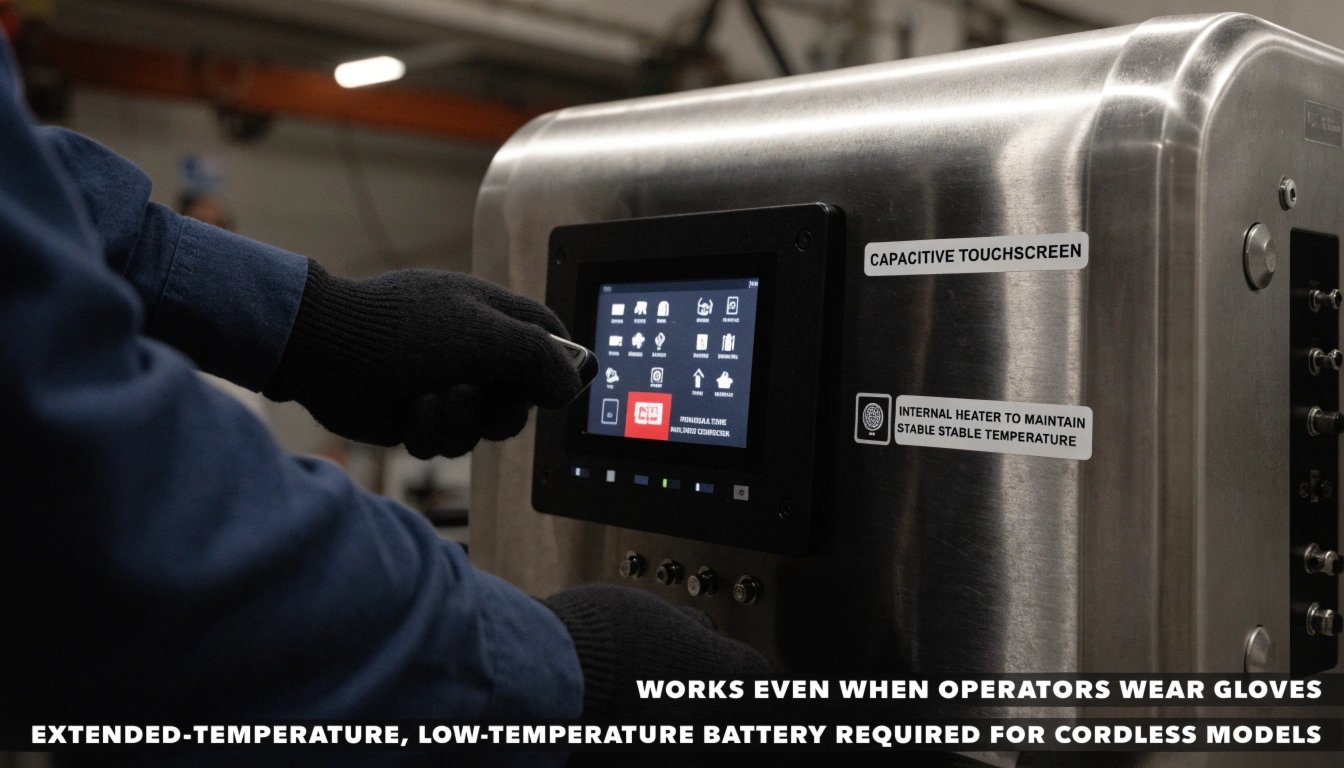
When we design custom weighing systems for clients in cold industries, we focus on a few core modifications. It's a combination of the right materials and the right technology. Standard plastic casings can become brittle and crack in the cold, so we use high-grade stainless steel. For the screen, a standard capacitive touchscreen that relies on detecting a finger's conductivity will fail when an operator is wearing thick, insulating gloves. We use modern industrial projected capacitive (PCAP) screens that are specifically tuned to detect touch through gloves. Some models even feature low-temperature compensation technology to automatically adjust sensor parameters. Internal heating elements are another great feature, as they gently warm the sensitive electronics to keep them within their ideal operating range, preventing both sluggish displays and inaccurate load cell readings.
Here is a breakdown of essential features for cold environments:
| Feature | Benefit | Why It's Important |
|---|---|---|
| Low-Temp Industrial Screen | Responsive touch, even with gloves. | Prevents operator frustration and slowdowns. Standard screens freeze or fail to register touch. |
| Internal Heater/Heated Enclosure | Maintains stable internal temperature. | Protects load cells, batteries, and LCDs from cold-induced failures and drift. |
| IP67/IP68 Rating | Prevents ingress of water/moisture. | Stops condensation from forming and freezing inside, which causes short circuits and mechanical damage. |
| Stainless Steel Casing | Durable, corrosion-resistant, easy to clean. | Resists physical damage from ice and impacts in a harsh environment. |
Conclusion
In freezing workshops, standard scales are destined to fail. Protect your productivity by choosing equipment with low-temperature screens, certified components, and proper sealing to ensure continuous and accurate operation.
-
"Lithium-Ion Batteries under Low-Temperature Environment", https://pmc.ncbi.nlm.nih.gov/articles/PMC9698970/. Battery research literature supports that low temperatures reduce electrochemical reaction rates, available capacity, and power output in common rechargeable batteries. Evidence role: mechanism; source type: paper. Supports: Batteries lose efficiency in cold conditions and may discharge faster or deliver less usable capacity.. Scope note: The magnitude of capacity loss varies by battery chemistry, state of charge, and discharge rate. ↩
-
"Low temperature effects on the response time of liquid ...", https://www.academia.edu/19188567/Low_temperature_effects_on_the_response_time_of_liquid_crystal_displays. Display engineering literature supports that LCD response slows at low temperatures because liquid-crystal viscosity and switching behavior are temperature dependent. Evidence role: mechanism; source type: paper. Supports: Standard LCD screens can slow down or malfunction in cold conditions.. Scope note: Blackout behavior depends on the LCD type, drive electronics, and specified operating range. ↩
-
"Touch, press and stroke: a soft capacitive sensor skin - PMC", https://pmc.ncbi.nlm.nih.gov/articles/PMC10600100/. Touchscreen and human-interface research supports that capacitive touch detection depends on electrical coupling between the finger and sensor, which can be affected by skin condition and insulating barriers. Evidence role: mechanism; source type: paper. Supports: Capacitive touchscreens may have reduced touch detection when skin conductivity or coupling is reduced in cold environments.. Scope note: Evidence on dry or cold skin is contextual; performance varies by touchscreen controller design and sensitivity settings. ↩
-
"Understanding Load Cell Temperature Compensation", https://www.interfaceforce.com/understanding-load-cell-temperature-compensation/. Metrology and load-cell references support that temperature changes can affect strain-gauge load cells through thermal expansion, zero shift, and span sensitivity changes. Evidence role: mechanism; source type: institution. Supports: Temperature changes can alter load-cell output and affect weighing accuracy.. Scope note: Well-designed compensated load cells reduce but may not eliminate temperature effects. ↩
-
"GMP 10 Understanding Factors Affecting Weighing ...", https://www.nist.gov/document/gmp-10-weighing-operation-factors-20190506pdf. Metrology guidance supports that calibration conditions, including ambient temperature and thermal stability, should match or be accounted for in the instrument's intended operating environment. Evidence role: expert_consensus; source type: government. Supports: Scales used in cold environments should be calibrated under representative operating conditions or with temperature effects accounted for.. Scope note: Specific calibration requirements depend on the scale class, regulations, and manufacturer instructions. ↩
-
"IP code", https://en.wikipedia.org/wiki/IP_code. IEC 60529 and related explanatory references define Ingress Protection ratings as classifications for enclosure protection against solid objects and water ingress. Evidence role: definition; source type: institution. Supports: IP ratings describe enclosure protection against solid-particle and liquid ingress.. Scope note: The rating describes standardized test conditions and does not guarantee resistance to all real-world cleaning, pressure, or chemical exposures. ↩



Comments (0)