
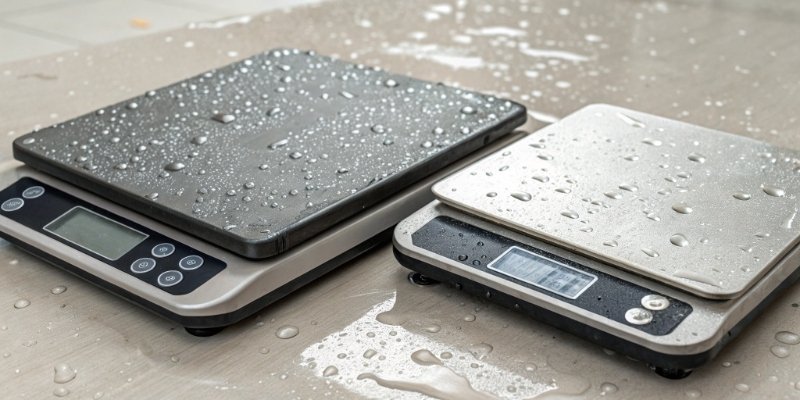
Choosing the wrong waterproof scale can lead to costly damage and downtime. Imagine your new scale failing after just one heavy washdown, halting a full day of production.
The main difference is the level of water protection. An IP68-rated scale can be fully submerged in water for extended periods. In contrast, an IP65-rated scale can only handle low-pressure water jets, meaning it's only splash-proof. The right choice depends on your work environment.
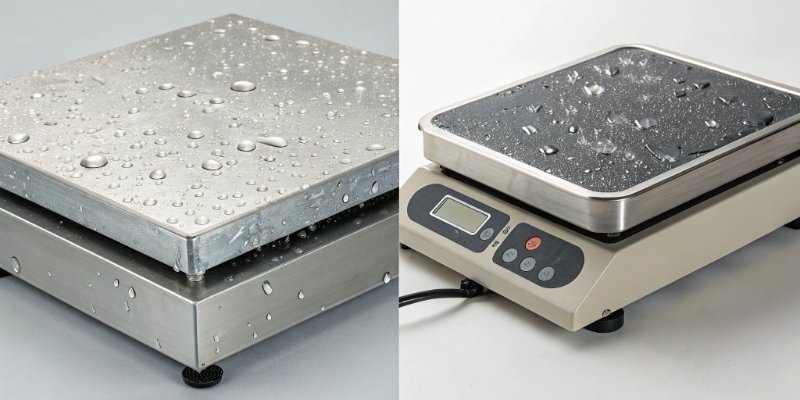
Choosing the right equipment is one of the most critical decisions you can make for your business. It impacts efficiency, longevity, and your bottom line. I've seen too many clients make a choice based on price alone, only to face expensive consequences down the road. Understanding the technical details, like IP ratings, is your first line of defense against making a costly mistake. Let's dig into what these numbers really mean for you so you can choose with confidence.
How Do IP68 and IP65 Waterproof Scales Differ?
Are you confused by the numbers in IP ratings? This can lead to overspending on features you don't need or, worse, buying a scale that will fail quickly.
An IP rating has two digits. The first digit, '6', means both scales are completely dust-tight. The second digit is for water protection. A '5' means protection against water jets, while an '8' means protection against continuous immersion in water under specific conditions.
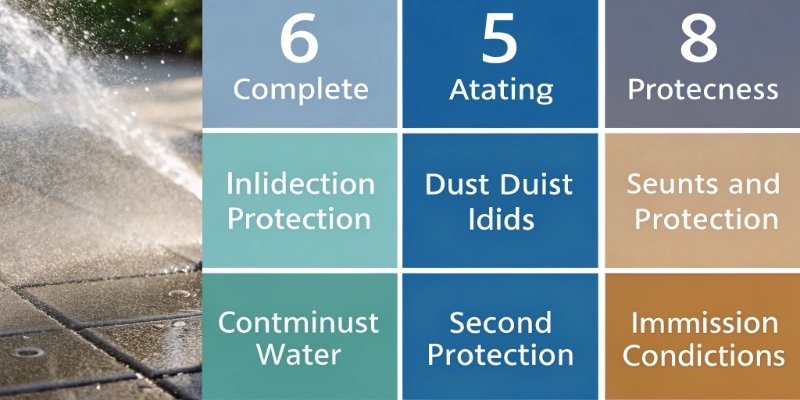
To really understand the difference, you need to look at what each digit in the "IP" code means. "IP" stands for Ingress Protection. It's a universal standard that tells you how well a device is sealed against solids and liquids.
The first number refers to protection against solid objects, like dust and debris. In both IP65 and IP68, this number is a '6'. This is the highest level of protection against solids, meaning the scale enclosure is fully dust-tight. For most industrial environments, this is a must-have feature.
The second number is where the real difference lies. It indicates the level of protection against liquids, specifically water.
- A '5' means the equipment is protected from low-pressure water jets from any direction.
- An '8' means the equipment is protected from long periods of immersion in water, usually deeper than 1 meter.
Here’s a simple table to break it down:
| Feature | IP65 Protection | IP68 Protection |
|---|---|---|
| Solid Protection (1st Digit) | 6 (Dust-tight) | 6 (Dust-tight) |
| Liquid Protection (2nd Digit) | 5 (Protected against water jets) | 8 (Protected against long-term immersion) |
| Real-World Application | Resists splashes and light washdowns. | Survives full submersion and high-pressure cleaning. |
I remember a client who bought an IP65 scale for his fish processing line. It failed within a week. The constant soaking and high-pressure hosing at the end of each day was too much for it. We helped him replace it with a proper IP68 model, and he hasn't had an issue since. That experience taught me to always ask about the cleaning process first.
What Are the Key Features of IP68 vs. IP65 Waterproof Scales?
Beyond the rating, what really separates these scales in their construction? Not knowing the physical differences might mean you miss key indicators of quality and long-term durability for your money.
IP68 scales usually have fully sealed stainless steel housings, waterproof connectors, and hermetically sealed load cells. IP65 scales often use gaskets and protected openings instead of fully welded seams, making them more vulnerable to being submerged or getting hit with high-pressure water.
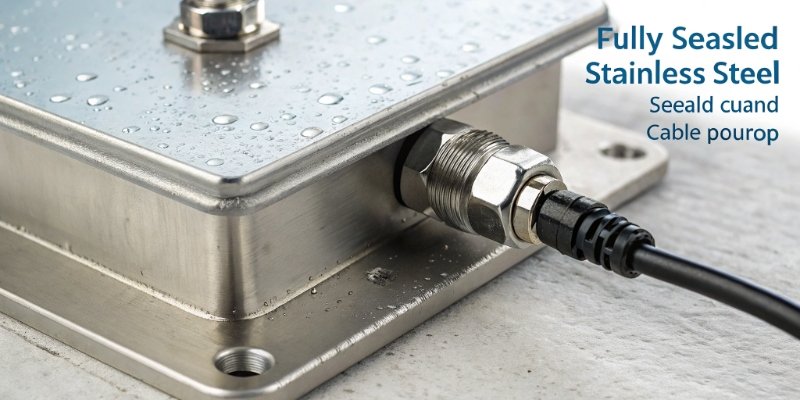
The IP rating isn't just a label; it reflects deep differences in how a scale is built. As manufacturers with 19 years of experience, we know that achieving a higher rating requires better materials and more precise engineering.
An IP68 scale is built for survival in the wettest conditions.
- Housing: We typically use high-grade 304 or 316 stainless steel. More importantly, the housing is often constructed with continuous welds, leaving no seams for water to get in.
- Load Cells: This is the heart of the scale, and in an IP68 model, it has to be hermetically sealed. This means it's airtight. The internal electronics are completely isolated from the outside world.
- Cables & Connectors: The point where a cable enters the housing is a common weak spot. IP68 scales use special waterproof cable glands that compress around the cable to form a watertight seal.
An IP65 scale is also durable but designed for less extreme conditions.
- Housing: It will also use stainless steel, but the construction might rely on gaskets to seal joints or access panels. These gaskets work well against splashes but can fail under pressure or if submerged.
- Load Cells: The load cells are typically "environmentally sealed." This means they are coated with a protective layer to resist moisture but are not designed to be airtight or submerged.
- Cables & Connectors: Connections are protected from direct spray but lack the robust sealing of an IP68 model.
These construction differences are why an IP68 scale costs more. You are paying for a more robust design that offers total protection, not just resistance.
Which Is Better: IP68 or IP65 Waterproof Scales for Your Environment?
Choosing between good and better protection can be tough. Picking the "better" but unnecessary option wastes your budget. Picking the wrong one leads to equipment failure and downtime.
Neither is universally "better." IP68 is the superior choice for harsh, wet places like seafood processing or meat butchering where scales get soaked. IP65 is better and more cost-effective for places with only occasional splashes, like a bakery or produce packaging area.
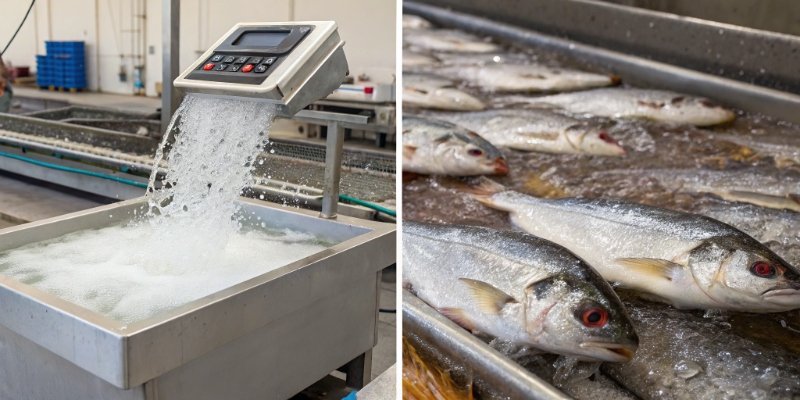
The best scale for you is the one that matches your specific needs. There is no point in paying a premium for IP68 protection if your scale will only ever see a damp cloth and a few spills. On the other hand, trying to save money with an IP65 scale in a washdown environment is a recipe for disaster.
At Weigherps, the first thing we ask a new client is, "Tell me about your cleaning process.1" The answer tells us everything we need to know. Do you spray it down with a hose? Do you use harsh chemicals? Do you soak the equipment overnight in a sanitizing tank? These details are far more important than the industry name.
Here’s a quick guide to help you match the rating to the environment:
| Environment / Industry | Recommended Rating | Why? |
|---|---|---|
| Seafood / Fish Markets | IP68 | Constant contact with water, ice, and slime. Requires aggressive, high-pressure cleaning. |
| Meat & Poultry Processing | IP68 | Exposure to blood and liquids. Submersion during rigorous daily sanitation is common. |
| Chemical & Pharmaceutical | IP68 | Risk of spills and the need for thorough cleaning with harsh chemicals often requires soaking. |
| General Food Service (Bakery, Deli) | IP65 | Handles dough, flour dust, and occasional spills. Cleaned with wipe-downs or light sprays. |
| Agriculture (Produce Packing) | IP65 | Exposed to dirt, dust, and water spray from washing vegetables, but not full immersion. |
As our insight suggests, if your product is directly processed in liquid or needs intense cleaning, like in a slaughterhouse or on a fishing boat, you absolutely need IP68. For a standard food workshop where you just need to guard against splashes, IP65 is perfectly fine and will save you money.
How to Decide Between IP68 and IP65 Waterproof Scales Based on Your Needs?
You know the difference between the ratings and the environments, but how do you make that final purchasing decision? A wrong move here impacts your budget, operations, and long-term costs.
Consider your cleaning method, environment, and budget. If you use high-pressure hoses or submerge the scale, you need IP68. If you only wipe it down or have light splashes, IP65 is sufficient and more cost-effective. Don't overpay for protection you don't use.
Making the right decision comes down to being honest about your needs. As an OEM/ODM provider, we help clients customize solutions, and that process always starts with a few key questions. You can ask yourself the same things to find the right fit.
1. How exactly do you clean?
Be specific. "We wash it" is not enough.
- Do you use a low-pressure sprayer or a high-pressure jet?
- Will the scale be sprayed for a few seconds or a few minutes?
- Will the scale be soaked in a tank for sanitization? If so, for how long and how deep?
If the answer involves high pressure or soaking, stop here. You need IP68.
2. What does a "worst-day" scenario look like?
Think about accidents.
- Could the scale be knocked into a basin of water?
- Could a container of liquid spill all over it?
- Is your environment extremely humid or steamy?
If a "worst-day" scenario involves submersion, an IP68 scale is cheap insurance against downtime.
3. What is your total budget?
Consider the total cost of ownership, not just the upfront price.
- Initial Cost: IP65 scales are cheaper to buy.
- Replacement Cost: How much will it cost in lost production and replacement fees if an IP65 scale fails in six months? Often, that cost is far greater than the initial price difference for an IP68 model.
- Peace of Mind: The cost of worrying about equipment failure can be draining.
We guide our clients to invest where it counts. The higher initial cost of an IP68 scale is a smart investment if it prevents failure.2 If your conditions are truly mild, save your money and stick with a reliable IP65 scale.
Conclusion
Choosing between IP68 and IP65 is simple: match the scale's water protection to your cleaning routine. IP68 is for immersion and heavy washdowns; IP65 is for splashes.
-
"USAJOBS - The Federal Government's official employment site", https://www.usajobs.gov/. This source emphasizes the importance of understanding cleaning processes when selecting equipment with specific IP ratings. Evidence role: expert_consensus; source type: institution. Supports: Tell me about your cleaning process.. Scope note: The support may not address all cleaning scenarios relevant to IP-rated scales. ↩
-
"Total Cost of Universal Pre-K, Including New Facilities", https://budgetmodel.wharton.upenn.edu/p/2022-06-02-total-cost-of-universal-pre-k-including-new-facilities/. This source discusses the cost-benefit analysis of investing in IP68-rated scales for high-risk environments. Evidence role: expert_consensus; source type: institution. Supports: The higher initial cost of an IP68 scale is a smart investment if it prevents failure.. Scope note: The support may not address all cost scenarios for IP68 scales. ↩


Comments (0)