
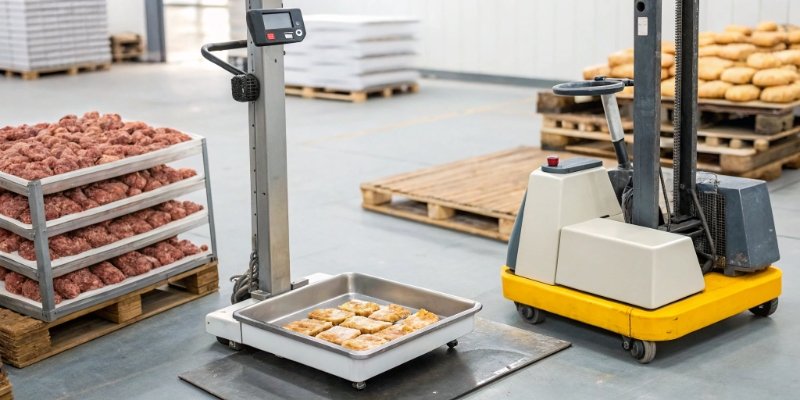
Are you setting up a new food factory or upgrading an existing one and feeling lost in the world of weighing scales? The wrong choice can lead to inaccurate recipes, compliance failures, and lost profits. Getting it right from the start is crucial for efficiency.
A food factory requires several types of scales to ensure accuracy and efficiency across the production line. This typically includes waterproof table scales for precise ingredient mixing, larger platform scales for receiving bulk goods, and forklift scales for logistics. The ideal setup depends entirely on your specific processes.
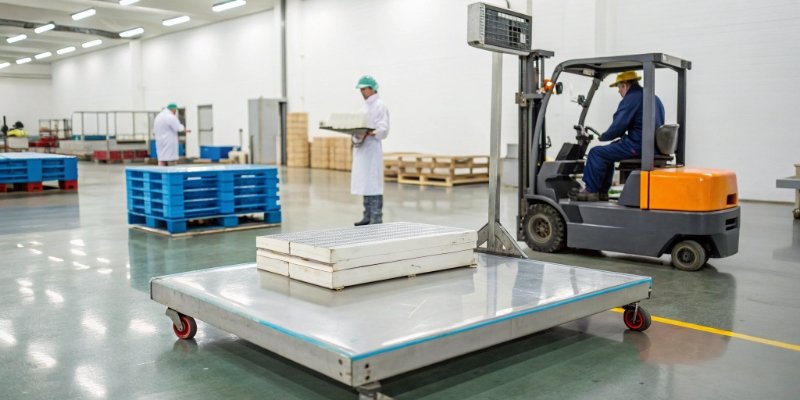
I've been in the industrial scale business for nearly 20 years, and I've seen firsthand how the right weighing equipment can transform a food processing facility. It's not just about having a scale; it's about having the right scale for each specific task. Many factory managers are surprised to learn that a small error in one area can have a huge ripple effect on their entire operation. Let's dive deeper into how to equip your factory for success and avoid common pitfalls.
How Many Types of Scales Does a Food Factory Typically Need?
Are you worried about figuring out the exact number and types of scales for your facility? This uncertainty can be overwhelming, as making a poor choice is a costly error. Let's simplify the process by looking at the common scales most factories use.
Most food factories require at least three to five different types of scales. The essential lineup often includes bench or table scales for precision, floor or platform scales for bulk materials, and checkweighers for quality control on the packaging line. The final count depends on your factory's specific workflow.
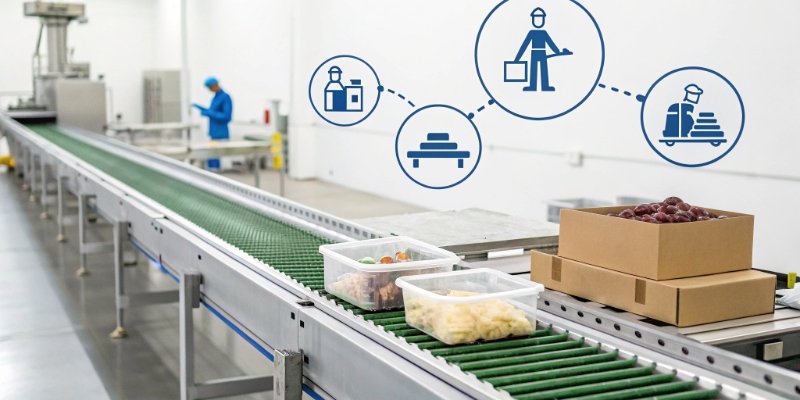
In my experience, thinking about your factory's workflow is the best way to determine your needs. A typical food production process can be broken down into four key stages, each with its own weighing requirements.
- 1. Receiving: When raw ingredients arrive, you need to verify the shipment weight. This is your first quality and inventory control checkpoint. A large-capacity floor or platform scale is perfect for weighing incoming pallets, drums, or large containers.
- 2. Processing and Batching: This is where precision is king. To maintain product consistency, you must accurately measure ingredients for each batch. This is the job for waterproof, stainless steel bench or table scales. Their high accuracy ensures every batch tastes the same.
- 3. Quality Control & Packaging: During and after packaging, you need to ensure each product meets the stated weight. Checkweighers are automated scales that can weigh products in motion on a conveyor line, rejecting any that are over or under the target weight. For smaller operations, a static printing scale can serve this purpose.
- 4. Shipping: Before products leave your factory, you need to weigh the final packed boxes or pallets to calculate shipping costs. A durable floor scale or even a forklift scale can handle this final step efficiently.
What Are the Roles of Table Scales, Platform Scales, and Forklift Scales in a Food Factory?
Do you know the specific job for each type of scale in your plant? Using a large platform scale for a small, precise task wastes time and accuracy. Understanding the distinct roles of these workhorse scales is key to operational efficiency.
Table scales provide precision for tasks like weighing spices or additives. Platform scales handle heavy, bulk items like ingredient drums in receiving or production zones. Forklift scales streamline warehouse logistics by weighing pallets on the move, saving time and eliminating extra steps.
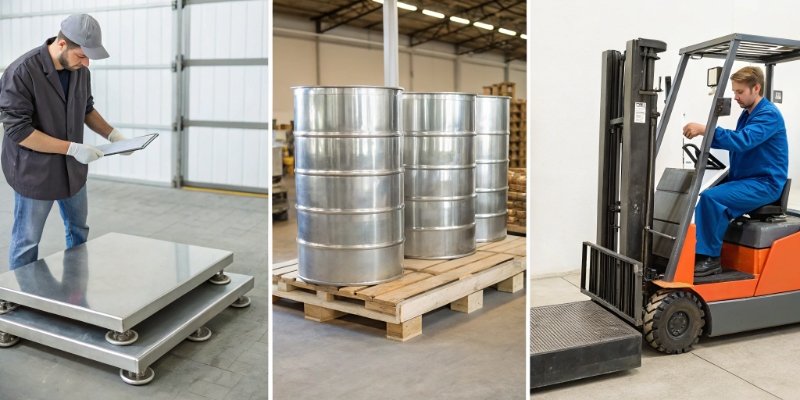
Let's break down the specific functions of these three essential scale types. Each is designed for a different environment and task, and using them correctly is fundamental to a smooth-running operation. As a manufacturer, we design these tools with very specific applications in mind.
Table Scales: The Heart of Precision
Table scales, also known as bench scales, are critical for ingredient formulation and portion control. They offer high readability for measuring small quantities where a tiny error could ruin an entire batch. In food processing, these scales must be hygienic and easy to clean. Look for models made from food-grade stainless steel with a high IP rating, like IP67 or IP68. This means they are "washdown" ready and can withstand frequent, high-pressure cleaning without damage to the electronics. They are the unsung heroes that ensure your product quality and consistency.
Platform Scales: The Bulk Material Mover
Platform scales, or floor scales, are the workhorses of the receiving dock and production floor. They are designed to weigh large, heavy items like pallets of ingredients, large bins of product, or drums. Their capacity can range from hundreds to thousands of kilograms. Key features to look for include a large, durable platform, sometimes with ramps for easy loading, and a remote display that can be mounted at eye level for safety and convenience. These scales are your first defense against being short-changed by suppliers and are essential for managing bulk inventory.
Forklift Scales: The Efficiency Experts
For busy warehouses and large-scale operations, forklift scales are a game-changer. These are integrated directly into a forklift's carriage, allowing an operator to lift, weigh, and move a pallet in a single motion. This eliminates the need to transport a pallet to a separate floor scale, saving an enormous amount of time and labor. Modern forklift scales often feature wireless data transmission, sending weight data directly to your inventory management system in real-time. This improves accuracy by reducing manual data entry errors and gives you a live look at your stock movements.
How to Determine the Optimal Number and Types of Scales for a Food Processing Facility?
Are you ready to purchase scales but worried about getting it wrong or overspending? A poor investment in weighing equipment can hinder your operations for years. Follow this simple framework to ensure you make the right choice for your factory's future.
To find the right scales, start by mapping your production workflow from start to finish. At each step, analyze what is being weighed, its size, and the required accuracy. Also, consider the environment (wet or dry) and if you need data connectivity. This audit reveals your exact needs.
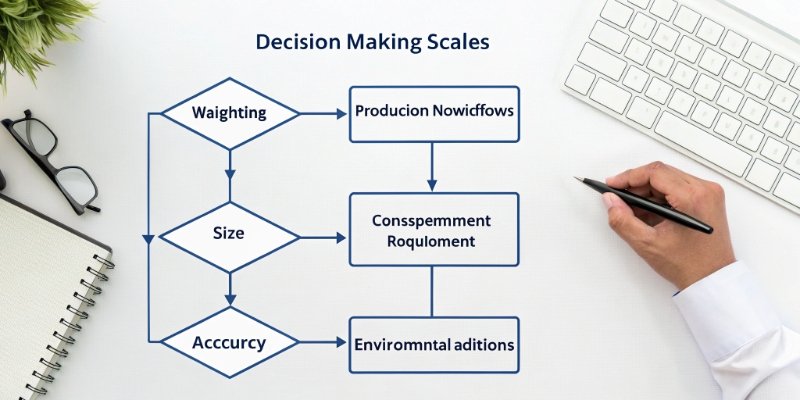
Over my 19 years in this industry, I've developed a straightforward process to help clients audit their needs. It removes the guesswork and ensures you get a solution tailored to your facility. This is the exact approach we take at Weigherps when designing a custom weighing solution for our customers.
Step 1: Map Your Entire Workflow
The first step is always to walk through your entire production process, from the moment raw materials enter your receiving dock to the moment finished goods are shipped out. Identify every single point where a weight measurement is, or should be, taken. This creates a "weighing map" of your facility.
Step 2: Analyze Each Weighing Point
For each point on your map, ask these critical questions:
- What is being weighed? (e.g., a bag of spice, a drum of oil, a pallet of boxes)
- What is the minimum and maximum weight? This determines the scale's required capacity.
- What level of precision is needed? This determines the required readability.
- What is the environment like? Is it wet, dry, dusty, or subject to corrosive cleaning agents? This will determine the necessary material (like stainless steel) and IP rating.
Step 3: Consider Connectivity and Data Needs
Think about what happens to the weight data. Do you need to print a simple label? Or do you need the weight to be sent automatically to an ERP or inventory management system? This will determine if you need a basic scale or a "smart" IoT-enabled scale with more advanced connectivity options.
Step 4: Consult a One-Stop Expert
This is where our insight comes in. Once you've mapped your needs, partnering with a comprehensive supplier is the most efficient path forward. Instead of dealing with multiple vendors for different scales, a one-stop-shop like Weigherps can provide every scale you need—from waterproof table scales for the processing line to platform and forklift scales for the warehouse. This drastically reduces your communication costs, ensures all your equipment works together seamlessly, and gives you a single point of contact for all after-sales service and support. It's the most worry-free way to equip your factory.
Which Types of Scales Are Essential for Efficient Operations in a Food Factory?
Are you working with a tight budget and need to know where to focus your investment? Compromising on essential equipment can bring your entire production line to a standstill. Let's focus on the absolute must-have scales for any efficient food factory.
For maximum efficiency, three types of scales are non-negotiable. First, a waterproof table scale for accurate batching. Second, a sturdy platform scale for bulk receiving. And third, a printing or checkweighing scale for final packaging and quality control.
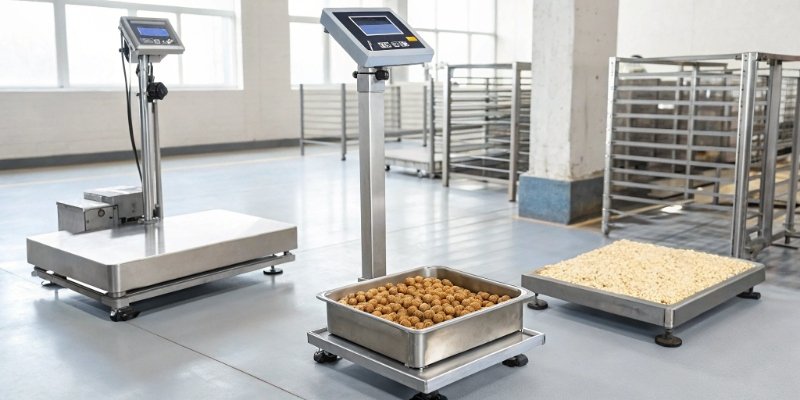
While a complete setup is ideal, I always tell clients on a budget to start with the "big three." These three scales form the backbone of your factory's quality, efficiency, and cost-control systems. Without them, you are operating blindly. I have seen many companies try to cut corners here, only to face much bigger costs down the line from wasted product, customer complaints, or even regulatory fines.
The Precision Engine: Waterproof Table Scale
This scale is fundamental to product quality. In food production, recipes must be followed exactly to ensure consistency from batch to batch. A highly accurate and reliable table scale is essential for measuring ingredients precisely. In the food industry, this scale must be able to handle wet and messy environments, which is why a waterproof, washdown-rated model (IP67 or higher) made of stainless steel is essential for hygiene and durability.
The Logistics Hub: Platform Scale
This scale is your primary tool for inventory and cost control at the macro level. When a shipment of raw materials arrives, a platform scale verifies you received the quantity you paid for. It is also used for weighing large batches of mixed product or waste, helping you track yields and reduce loss. Platform scales are built for heavy-duty use and are indispensable for managing the flow of bulk goods in and out of your facility.
The Gatekeeper: Printing or Checkweighing Scale
This scale protects both your customers and your profits. Located at the end of your production line, it ensures every package that leaves your factory is within its specified weight range. This is critical for complying with weights and measures regulations. An inline checkweigher does this automatically, while a static printing scale can be used to weigh, verify, and label each box manually. This scale prevents you from giving away free product (over-filling) and protects your brand from customer complaints (under-filling).
Conclusion
Choosing the right scales for each step in your food factory is critical for success. By partnering with a one-stop expert like us, you get a cost-effective, efficient, and worry-free weighing solution.



Comments (0)