
Are you struggling with complex slaughterhouse costs? The messy numbers make it hard to see your real profit. Let's simplify it and find your financial clarity.
The most effective way is a combined approach. Use the "Step-by-Step Method" for the slaughtering and cutting stages. Then, use the "Product-Based Method" to assign costs to main products, by-products, and cuts based on their value. This gives you a clear and accurate cost picture.
That's the short answer. But getting this right can transform your business. I've seen it happen over my 19 years in the industrial weighing industry. Understanding these methods is the first step to controlling your costs and boosting your profits. It seems complicated, but I'll walk you through it. Let's dig into the details and make sense of it all.
What Are the Key Steps for Performing Cost Accounting in a Slaughterhouse?
Feeling overwhelmed by the numbers in your slaughterhouse operation? It's tough to track costs accurately from the live animal to the final product. Let's outline a clear, simple path forward.
The key steps are: first, track initial costs like live animal purchase and transport. Second, calculate costs for the slaughtering step. Third, calculate costs for the cutting step. Finally, allocate these combined costs to all the finished products and by-products.
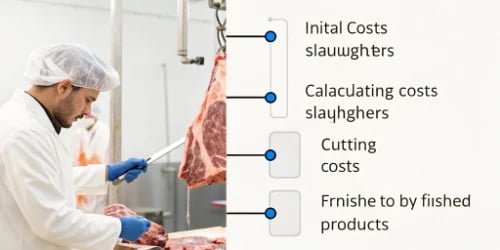
Based on my experience helping businesses get their data right, breaking a big problem into small pieces is always the best way. Cost accounting is no different. Think of it as a production line for your finances. Here are the core stages you need to track.
1. Initial Cost Collection
This stage covers all expenses before the main process begins. You need to be meticulous here. It includes the purchase price of the live animals, transportation costs to get them to your facility, and any holding or feeding costs incurred before processing. Labor for receiving and handling also belongs here. Getting this number right is the foundation for everything else.
2. Slaughtering Stage Costing
This is your first major production step. It transforms the live animal into a carcass. You need to gather all the direct and indirect costs for this specific stage. This includes direct labor for the slaughtering line, utilities like water and electricity, and the depreciation on your slaughtering equipment.1 The output is a "semi-finished product"—the carcass—and you now know exactly what it cost to produce.
3. Cutting & Deboning Stage Costing
This is the second production step, where you add a lot of value. The carcass from the previous stage becomes the main input material here. You then add all the new costs from this stage. This includes the labor for your butchers and cutters, packaging materials for the different cuts, and depreciation on saws, tables, and other cutting tools.2
How Does the Product-Based Cost Accounting Method Work in Slaughterhouses?
You have one animal but end up with dozens of different products. How do you assign costs fairly? Incorrect allocation can hide losses on some cuts and kill your overall profit.
The Product-Based Method treats each final product, like a steak or ground meat, as a separate item. We take the total shared costs from the process and divide them among these products. This division is usually based on each product's weight or market value.
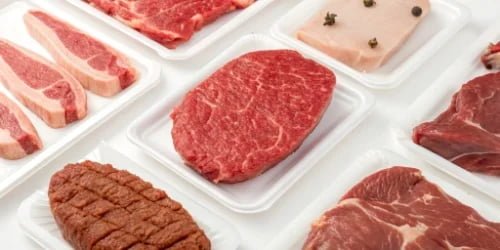
This method is all about focusing on your final products. In China, we call this "品种法" (pǐnzhǒng fǎ), which translates to "product type method". It’s an intuitive way to look at your business. The most useful way to apply this is through what we call the "Value Allocation Method". It's simple and makes perfect business sense. High-value products should carry a larger share of the costs. This prevents you from mistakenly thinking low-value items are more profitable than they are.
Example of Value-Based Allocation
Let's say your total cost to process an animal into final cuts is $2,000. Here’s how you can use their sales value to allocate that cost.
| Product | Selling Price/kg | Production (kg) | Total Sale Value | % of Total Value | Allocated Cost |
|---|---|---|---|---|---|
| Prime Cuts | $20 | 100 | $2,000 | 50% | $1,000 |
| Ground Meat | $8 | 200 | $1,600 | 40% | $800 |
| By-products | $2 | 200 | $400 | 10% | $200 |
| Total | $4,000 | 100% | $2,000 |
As you can see, the prime cuts, which generate the most revenue, are assigned the largest portion of the cost.3 This gives you a much truer picture of each product's profitability.
What Is the Step-by-Step Method for Cost Accounting in Slaughterhouse Operations?
Is your total production cost just one big, confusing number? It's impossible to improve what you can't measure accurately. Let's break down your operation into clear steps to find hidden costs.
The Step-by-Step Method, or "分步法" (fēnbù fǎ), calculates costs for each major stage of production separately. For a slaughterhouse, this usually means two steps: first, the 'Slaughtering' step, and second, the 'Cutting/Deboning' step. This shows you the cost buildup at each stage.
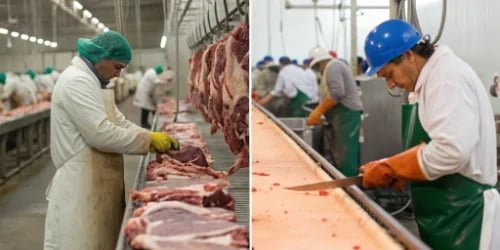
This approach is powerful because it gives you visibility inside your operation. It turns a financial "black box" into a clear, understandable process. Essentially, you run two mini-factories, and you need to know the cost and efficiency of each one.
Step 1: Slaughtering Production
This is where the live animal is turned into a carcass. For accounting purposes, you need to collect all the costs that happen only in this step.
- Inputs: Live animal, direct labor, water, electricity, equipment use.
- Process: Slaughtering, initial cleaning, and dressing.
- Output: A "semi-finished product" – the carcass.
The cost of the carcass is the sum of the live animal's cost plus all the processing costs from this step. For example, if the animal cost $1,500 and slaughtering costs were $200, the carcass now has a book value of $1,700 as it moves to the next stage.
Step 2: Cutting & Deboning Production
This step takes the carcass and creates the final products you sell.
- Inputs: The carcass (at its calculated cost of $1,700), cutting labor, packaging materials.
- Process: Breaking down the carcass into various cuts, grinding, and packaging.
- Output: Finished goods (e.g., steaks, roasts, ground meat, etc.).
The cost of the carcass ($1,700) is the main material cost for this stage. You add the new costs, like $300 for labor and packaging. Now, the total cost to be allocated to the final products is $2,000. This is the number you use with the Product-Based method we discussed earlier.
How Can Slaughterhouses Optimize Cost Accounting Practices for Better Profitability?
Are you just tracking costs, or are you using the data to make more money? Many businesses collect numbers but don't act on them. Let's turn your accounting into a profit-generating tool.
Optimize by using a flexible system that combines the step-by-step and product-based methods. This lets you configure cost allocation for by-products and special cuts. It helps you analyze data to identify and reduce costs in specific production stages, directly boosting profitability.

Good cost accounting isn't just about filing taxes. It is a roadmap to a healthier, more profitable business. After nearly 20 years of providing weighing solutions, I’ve seen that the most successful companies are obsessed with knowing their numbers inside and out. Accurate data is everything.
Embrace a Flexible System
Your business reality is complex. One day you might sell by-products fresh; the next, you might process them further. Your accounting system must be able to handle this complexity. You need the ability to choose how to allocate costs.4 For example, should the hide bear some of the animal's cost, or should its sale be treated as pure profit, with all costs assigned to the meat? A good system, whether it's software or a well-designed spreadsheet, lets you adapt and configure these rules based on your specific business needs.
Use Data to Make Decisions
This is where the magic happens. With a Step-by-Step method, you can compare the costs of your slaughtering department this month versus last month.5 Is electricity usage per animal going up? Is your labor cost per kilogram of meat increasing in the cutting room? You can pinpoint the exact source of the problem and fix it.6 With a good Product-Based method, you can run "what-if" scenarios.7 What happens to the profitability of T-bone steaks if the market price for ground beef drops? This data-driven approach allows you to make pricing and operational decisions based on facts, not just gut feelings.
Conclusion
In short, combining the step-by-step and product-based methods provides clarity. This accurate cost data is essential for smart pricing, process optimization, and ultimately, boosting your slaughterhouse's profitability.
- "[PDF] AND BEEF FABRICATION COSTS - Open Research Oklahoma", https://openresearch.okstate.edu/bitstreams/42261255-d972-4008-abae-3e815c573c30/download. This source outlines the typical cost components in the slaughtering stage, including labor, utilities, and equipment depreciation. Evidence role: general_support; source type: education. Supports: The slaughtering stage involves costs such as direct labor, utilities, and equipment depreciation.. Scope note: The source may provide examples from industries similar to slaughterhouses rather than specific data. ↩
- "eTool : Poultry Processing Industry - Tasks - Cutting & Deboning", http://www.osha.gov/etools/poultry-processing/tasks/cutting-deboning/deboning. This source identifies common cost elements in the cutting and deboning stage, such as packaging materials and equipment depreciation. Evidence role: general_support; source type: education. Supports: The cutting and deboning stage includes costs like packaging materials and equipment depreciation.. Scope note: The source may not focus exclusively on slaughterhouses but discusses similar production processes. ↩
- "How Much Should You Charge? Pricing Your Meat Cuts", https://extension.psu.edu/how-much-should-you-charge-pricing-your-meat-cuts/. This source discusses the principle of assigning higher costs to high-revenue products in cost accounting. Evidence role: mechanism; source type: education. Supports: High-revenue products like prime cuts are assigned a larger portion of the cost in cost accounting.. Scope note: The source may provide general principles rather than specific examples from slaughterhouses. ↩
- "Flexibility Pricing in Distribution Systems: A Direct Method Aligned ...", https://arxiv.org/html/2404.14386v1. This source discusses the flexibility required in cost accounting systems to allocate costs based on business needs. Evidence role: mechanism; source type: education. Supports: Flexible cost accounting systems allow businesses to choose how to allocate costs based on their needs.. Scope note: The source may provide general principles rather than specific examples from slaughterhouses. ↩
- "[PDF] Cost structures of pork slaughter and processing firms", https://dr.lib.iastate.edu/server/api/core/bitstreams/fa5e664f-a4a1-4d60-bb6d-1e65d92e40fa/content. This source explains how cost accounting can be used to track and compare departmental costs over time. Evidence role: mechanism; source type: education. Supports: Cost accounting allows for tracking and comparing costs in the slaughtering department over time.. Scope note: The source may not specifically address slaughterhouses but discusses general cost tracking practices. ↩
- "Demystifying Cost Accounting: Beyond the Numbers – Part 2", https://fpa-trends.com/article/demystifying-cost-accounting-2. This source discusses how cost accounting can help identify inefficiencies and areas for improvement in production processes. Evidence role: mechanism; source type: education. Supports: Cost accounting helps identify inefficiencies and areas for improvement in production processes.. Scope note: The source may provide general insights rather than specific examples from slaughterhouses. ↩
- "What-If Analysis in Financial Modeling - Corporate Finance Institute", https://corporatefinanceinstitute.com/resources/financial-modeling/what-if-analysis/. This source explains how cost accounting enables businesses to perform 'what-if' analyses for decision-making. Evidence role: mechanism; source type: education. Supports: Cost accounting enables businesses to run 'what-if' scenarios for decision-making.. Scope note: The source may not specifically address slaughterhouses but discusses general applications of cost accounting. ↩

Comments (0)