
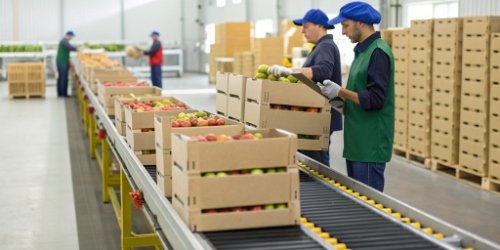
Losing track of produce shipments creates risk and damages your brand. This leads to costly food safety recalls and erodes customer trust. Integrating IoT weighing systems ensures end-to-end data tracking.
To guarantee full traceability, you need a system that captures data at every touchpoint. By integrating IoT smart weighing scales directly with your existing software, you create a seamless, real-time data trail for every single box, from the farm to the store shelf.
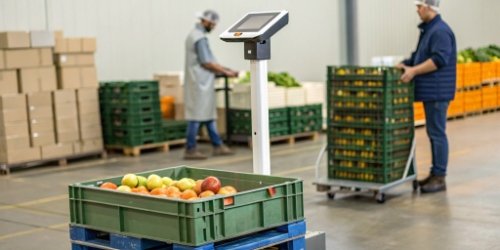
This sounds simple, but the magic is in the details. Achieving this level of precision requires a combination of the right hardware, intelligent software, and a clear strategy. As a manufacturer of industrial scales for nearly two decades, we've seen firsthand how a properly integrated system can completely transform a supply chain. It's not just about compliance; it's about building a more resilient, transparent, and profitable business. Let's explore how to make this a reality for you.
What Systems Ensure Complete Traceability of Shipped Produce?
Juggling separate systems for weighing and tracking is deeply inefficient. This creates frustrating data silos and opens the door for costly manual entry errors. A unified system that syncs weighing hardware with your ERP ensures seamless data flow.
The most effective systems integrate hardware like IoT scales directly with software such as Warehouse Management Systems (WMS) or Enterprise Resource Planning (ERP). This creates a single, reliable source of information, eliminating errors and providing complete end-to-end visibility.
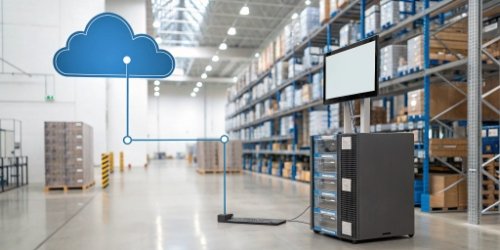
An integrated system is the backbone of modern traceability. When we design our IoT weighing systems1, we build them with a core philosophy: they must be able to talk to other systems. Your company already has software in place, whether it's a large-scale ERP or a custom-built management platform. Our job is to make sure our hardware feeds data into your software flawlessly.
I remember working with a client who manages premium specialty fruits. Their products fetch a high price specifically because they come from a unique origin. To protect that premium, they needed to prove the source of every single box. Their old system was manual and couldn't provide the proof their high-end buyers demanded. By integrating our IoT scales into their existing packing line software, we empowered them to capture origin, weight, and time data automatically. This data became an inseparable part of their product's value, boosting their market position.
Breaking Down the Integration
An integrated traceability system has a few key components that work together:
- Data Capture Hardware: This is where we come in. An IoT-enabled industrial scale captures a precise weight and other critical data points.
- Identification: A printer connected to the system generates a unique identifier2 (like a QR code3 or barcode) for each box, embedding the captured data.
- Central Software: This is your ERP, WMS, or custom software. It acts as the central brain, receiving and storing the data from the scales.
- Scanning Network: Handheld or fixed scanners at various checkpoints (e.g., warehouse entry, loading dock) read the unique ID and update the product's status in your central software.
| Data Point | Captured By | Purpose |
|---|---|---|
| Weight | IoT Scale | Accurate billing, logistics planning |
| Timestamp | IoT Scale/System | Tracks freshness, proves handling times |
| Product ID | System | Identifies the type of produce |
| Origin/Lot | System (User Input) | Pinpoints the source for recalls or proof |
| Unique Box ID | System/Printer | The master key that links all other data |
This creates a digital history for every box, accessible at any time.
How Can Technology Guarantee Traceability in Produce Shipping?
Relying on paper-based records is slow, clumsy, and prone to error. This outdated method makes it nearly impossible to conduct a quick and accurate recall. IoT technology automates data capture, providing instant and precise traceability.
Technology guarantees traceability by automating data collection at every critical point. IoT-enabled scales, sensors, and scanners work together to record weight, timestamps, and location data automatically, linking it to a unique ID for each box without human intervention.
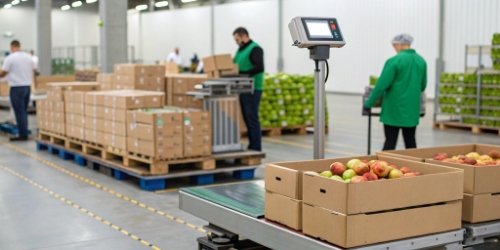
The term "IoT" (Internet of Things) might sound complex, but the concept is simple. We've turned a traditional industrial scale into a smart, connected data-gathering device. It's no longer just a tool for measuring weight; it's the first node in your traceability network. When a box is placed on one of our IoT scales, it does more than just display a number. It securely transmits that weight, along with a timestamp and device ID, to your central system via Wi-Fi or a cellular network. This happens instantly and without anyone needing to write anything down.
This capability is a game-changer, especially for high-value goods. We partnered with a software provider whose client was a major seafood exporter. They needed to track boxes of a rare, high-value fish. The problem was proving to international buyers that the product was authentic and had been handled correctly. By implementing our IoT scales at their packing stations, every box was weighed and given a digital certificate of origin. This data, accessible via a QR code on the box, allowed their clients to verify the product's journey instantly. This technological guarantee not only met food safety standards but also solidified the product's premium status and increased its market value.
The Technology Stack for Traceability
A modern traceability solution is built on several layers of technology:
- Smart Hardware: This is the foundation. Our IoT scales are equipped with processing power and communication modules to collect and send data.
- Connectivity: Reliable communication protocols like Wi-Fi, Ethernet, or 4G LTE ensure that the data from the scale reaches your central database without interruption.
- Cloud or On-Premise Platform: The data needs a place to live. This can be a cloud service or your own company's server, where the information is stored, processed, and made available for analysis and reporting.
- Software APIs: The Application Programming Interface (API) is the "translator" that allows the hardware (our scale) and your software (your ERP) to speak the same language and exchange information seamlessly.
This stack transforms a physical-world action—weighing a box—into a permanent, verifiable digital record.
What Strategies Ensure Tracking for Each Box of Produce?
Simply slapping a label on a box isn't enough for true tracking. Labels can get damaged, fall off, or be misread, creating a gap in your data chain. A multi-layered strategy that combines unique IDs with automated checkpoints is the only way to ensure success.
A robust tracking strategy involves assigning a unique digital identity, like a QR code or RFID tag, to each box at the initial weighing point. This identity is then scanned and updated at every key checkpoint, creating a comprehensive digital journey record.
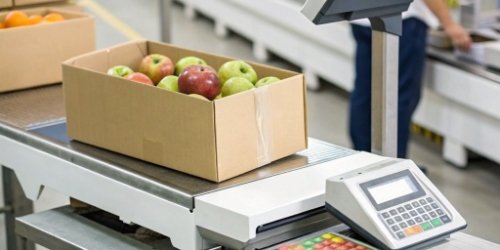
The core of a successful strategy is creating a "digital twin4" for every physical box that moves through your supply chain. This digital twin is born the moment the box is packed and weighed, and it follows the box everywhere it goes. We've helped hundreds of clients implement this, and the process is logical and repeatable. It’s not about adding more work for your team; it’s about using technology to make the existing workflow smarter and more transparent. You're already packing and weighing boxes, so we just add a layer of automated data capture5 to that process. The result is a powerful new level of insight and control with minimal disruption to your operations.
The Three-Step Tracking Strategy
We typically guide our partners through a simple but powerful three-step process.
1. Initial Data Capture and ID Generation
The process starts at the packing station. A worker places a freshly packed box of produce onto one of our IoT-enabled scales. The scale instantly captures the exact weight. Simultaneously, our system communicates with your software to generate a unique ID (often in the form of a QR code or barcode). This code contains the essential data: weight, product type, farm of origin, packing date, and time. An attached printer immediately produces a durable label with this code, which is applied to the box.
2. Automated Checkpoint Verification
As the box moves through the supply chain, it passes through several key checkpoints. This is where the unique ID does its work.
| Checkpoint | Action | Data Logged |
|---|---|---|
| Warehouse Entry | A fixed or handheld scanner reads the code. | Box received, location in warehouse, time. |
| Cold Storage | Scanned upon entry and exit. | Duration in storage, confirms temperature control. |
| Loading for Shipment | Scanned as it's loaded onto the truck. | Truck ID, destination, time of departure. |
| Retailer Receiving | Scanned upon arrival at the distribution center. | Confirms delivery, time of arrival. |
Each scan updates the box’s status in your central system in real-time.
3. Full Visibility and Reporting
With this data stream, your software platform now has a complete, minute-by-minute history of every box. You can run reports to track inventory, optimize logistics, or, in the event of an issue, perform a surgical recall by isolating a specific lot or shipment in minutes, not days.
How Do You Implement Reliable Traceability for Produce Shipments?
Implementing a completely new system can seem disruptive and overwhelming. You worry about compatibility with your existing software and the time it will take to train your team. A phased approach with a flexible hardware partner makes it manageable and low-risk.
Reliable implementation begins with choosing a hardware partner who truly understands software integration. Our IoT scales are designed with open APIs to seamlessly connect with your existing systems, and we provide full technical support to ensure a smooth transition.

As a hardware manufacturer serving software vendors and system integrators, we know our job doesn't end when the scale is delivered. In fact, that's where our real value begins. For 19 years, our vision has been to be more than a supplier; we aim to be your professional weighing expert and a reliable partner. We understand that our hardware is a critical component within a larger solution—your solution. That's why we've built our company, from our R&D department to our after-sales support team, around the principle of seamless partnership. We succeed when you succeed in delivering a robust, reliable, and cost-effective solution to your end customers.
A Partnership Approach to Implementation
Here's how we ensure a successful and reliable implementation with our software partners.
1. Seamless Integration by Design
We don't build closed systems. We know you've invested heavily in your own software platform. Our IoT scales are built with flexible and well-documented APIs (Application Programming Interfaces). Our technical team's primary goal is to work with your developers. We provide the documentation, code samples, and direct support needed to make sure our scales feed data into your software perfectly. It becomes a plug-and-play component of your larger ecosystem.
2. Pilot Programs and Phased Rollouts
You don't have to overhaul your entire operation or a client's operation overnight. We strongly advocate for a phased approach6. Let's start with a pilot program on a single packing line. This allows you to test the hardware, perfect the integration with your software, and demonstrate clear value with minimal risk. Once the concept is proven and the benefits are obvious, you can confidently scale the solution across the entire facility.
3. Long-Term Reliability and Support
Your reputation depends on the reliability of every component in your solution. We take this seriously. Every product that leaves our facility has passed rigorous quality control tests7 for weight accuracy, battery life, and software stability. All our products comply with international standards like CE. Furthermore, we back our hardware with a 12-month after-sales service guarantee and a responsive technical support8 team. When you choose Weigherps, you're choosing a partner committed to your long-term success.
Conclusion
Full produce traceability is achieved by integrating smart IoT weighing hardware with your software. This creates a single, reliable data stream for every box, ensuring safety and adding value.
-
Discover how IoT weighing systems can revolutionize your supply chain efficiency. ↩
-
Understand how unique identifiers improve tracking and traceability in supply chains. ↩
-
Explore the role of QR codes in improving product traceability and customer trust. ↩
-
Learn about the concept of digital twins and their applications in supply chain management. ↩
-
Discover how automated data capture can enhance accuracy and efficiency in logistics. ↩
-
Understand the benefits of a phased approach for smoother system implementation. ↩
-
Explore the essential elements of quality control tests to ensure equipment reliability. ↩
-
Learn how technical support can ensure successful hardware integration and operation. ↩



[…] don't believe in a one-size-fits-all solution. For one client in the spice industry, we developed custom software4 to handle micro-dosing with extreme precision. For another in seafood processing, the software was […]