
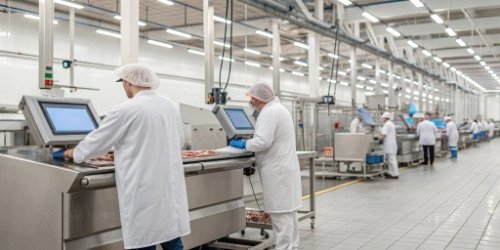
Standard software often fails to meet the unique demands of your slaughterhouse. This leads to inefficiency and frustration. Custom software development can provide a solution that perfectly fits.
The best way to get slaughterhouse software that fits your needs is through custom development. This involves a developer analyzing your specific business model, management processes, and unique workflows to build a targeted solution. This ensures the final product is a perfect match for your operations.
Off-the-shelf software promises a quick fix, but we've seen it cause more problems than it solves for specialized industries like meat processing. Every slaughterhouse operates differently, from intake and processing to packaging and shipping.1 A standardized system forces you to change your proven methods to fit its rigid structure. This is not just inconvenient; it's a barrier to growth and efficiency. We believe technology should serve your business, not the other way around.2 Let's explore how a personalized approach can truly transform your operations and why it's a worthwhile investment.
How to customize software for slaughterhouses to meet specific business needs?
Your business process is unique, but generic software treats it as standard. This creates data gaps and requires manual workarounds, costing you time and money.
To customize software for specific needs, you must start with a deep analysis of your current workflow. We work with you to identify bottlenecks, unique processing steps, and specific data tracking requirements. This forms the blueprint for a truly personalized software solution that supports your business.

Every slaughterhouse is different. I remember a client who specialized in organic, free-range poultry. Their compliance and tracking needs were far more detailed than those of a large-scale beef processor.3 A standard software package couldn't handle their specific traceability requirements from farm to fork. This is where customization becomes essential.4 We believe the first step is always listening. We don't come in with a pre-packaged solution; we come with questions. We want to understand your business model, whether you handle different species, have special sorting criteria, or adhere to specific certifications like Halal or Kosher. This deep dive allows us to map out every single process. Only then can we design a software system that mirrors your reality, instead of forcing you into a box.5 It’s about building a tool that feels like a natural extension of your team.
What are the key features to include in tailored software development for slaughterhouses?
Without the right features, even custom software can fall short. You might end up with a system that looks good but doesn’t handle your core operational tasks effectively.
Key features for tailored slaughterhouse software include real-time carcass tracking, yield management, integration with IoT weighing scales, quality control modules, and automated compliance reporting. These tools provide the control and visibility necessary for a modern processing plant.
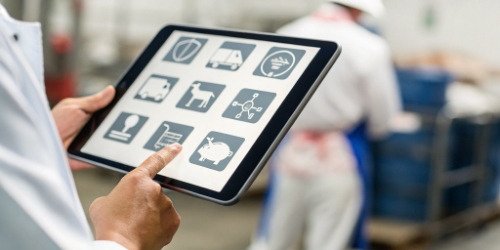
When we develop custom software, we focus on features that deliver a tangible return on investment. It's not about adding bells and whistles; it's about solving real-world problems. For instance, our deep integration with industrial weighing scales is a game-changer. As a manufacturer of these scales for 19 years, we know how to capture weight data accurately and instantly at every stage. This live data feeds directly into the system, providing a clear picture of yields and waste in real-time. This allows managers to make immediate adjustments. Below are some of the core features we prioritize in our custom solutions.
| Feature Area | Specific Functionality | Benefit to Your Operation |
|---|---|---|
| Tracking & Traceability | Real-time tracking from live animal to final product. | Full transparency for compliance and quality assurance. |
| Weighing Integration | Seamless connection with floor scales, rail scales, and bench scales. | Eliminates manual data entry, reducing human error. |
| Yield Management | Calculates yield percentages for different cuts and processes. | Optimizes production and maximizes profitability. |
| Quality Control | Digital checklists and photo capture for inspections. | Standardizes quality checks and creates a digital audit trail. |
| Reporting & Analytics | Customizable dashboards for production, sales, and inventory. | Provides actionable insights for better decision-making. |
How can personalized software solutions improve slaughterhouse operations?
Sticking with inefficient systems or manual processes directly hurts your bottom line. It leads to product loss, compliance risks, and an inability to scale your operations effectively.
Personalized software streamlines operations by automating data collection, reducing human error, and providing real-time visibility into production. This leads to improved efficiency, better cost control, enhanced traceability, and simplified compliance, ultimately boosting profitability.
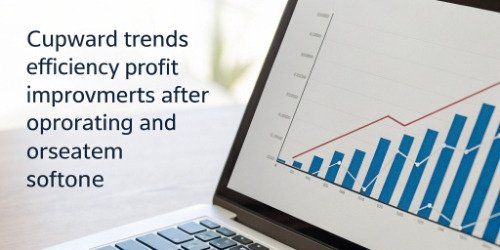
The impact of a truly personalized system is immediate and significant. We worked with a mid-sized pork processor who was struggling with paper-based tracking.6 Their daily reconciliation was a nightmare, and they often faced discrepancies in inventory. After we implemented a custom solution with integrated weigh-in/weigh-out stations and barcode tracking, their whole operation changed. They cut down their administrative work by hours each day. More importantly, their yield tracking became incredibly accurate. They identified which suppliers provided better quality animals and which cutting techniques were most profitable. Within six months, they reported a 5% reduction in product loss, which translated directly to their bottom line. This is the power of a system built for you. It stops being a cost center and becomes a profit driver by giving you precise control over every aspect of your production floor.7
What are the steps for developing custom software to address unique slaughterhouse requirements?
Starting a custom software project can feel overwhelming. Many clients worry about long timelines, high costs, and whether the final product will even work as promised.
The development process is a structured, five-step journey: It begins with needs analysis and solution design, followed by development and implementation. The final steps are rigorous testing and acceptance, followed by go-live support and ongoing maintenance.
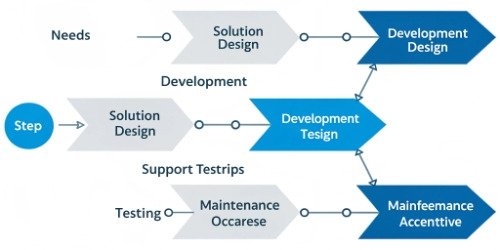
We've refined our development process over nearly two decades to be as transparent and predictable as possible. It’s a partnership from start to finish. We always tell our clients to first evaluate if a standard solution can meet 80% of their needs. If not, then customization is the right path.
Here is how our process works:
- Requirement Analysis: We conduct workshops with your team—from managers to floor workers—to understand every detail of your operation. We document your workflow, pain points, and goals.
- Solution Design: Our experts design a complete software blueprint. This includes the user interface, database structure, and integration points with hardware like your scales. You review and approve this design before any code is written.
- Development & Implementation: Our in-house development team gets to work building the software. We provide regular updates so you can see the progress.
- Testing & Acceptance: We rigorously test every function. Then, you perform User Acceptance Testing (UAT) in a simulated environment to ensure it meets all your requirements.
- Go-Live & Support: After your approval, we deploy the software and provide on-site support to ensure a smooth transition. Our 12-month service guarantee ensures we're there to help long after launch.
While the cycle is longer and the initial cost is higher than off-the-shelf software, the result is a system that provides a lasting competitive advantage.
Conclusion
Custom software development ensures your system perfectly matches your business. It boosts efficiency, improves accuracy, and provides a clear path for growth, making it a valuable long-term investment.
-
"Slaughterhouse - Wikipedia", https://en.wikipedia.org/wiki/Slaughterhouse. Slaughterhouses vary significantly in their operational processes, influenced by factors such as scale, species processed, and regulatory requirements. Evidence role: definition; source type: encyclopedia. Supports: Slaughterhouses have diverse operational processes that standard software may struggle to accommodate.. Scope note: The variability described may not apply universally to all slaughterhouses. ↩
-
"Top Trends in Technology: What Are They and How Do I Adapt?", https://business.cornell.edu/news/2025/04/23/top-trends-technology-what-are-they-how-do-i-adapt/. The principle that technology should adapt to business needs rather than forcing businesses to adapt is widely recognized in software development. Evidence role: expert_consensus; source type: education. Supports: Technology should adapt to business needs rather than forcing businesses to conform to its limitations.. Scope note: The principle may not apply universally, as some businesses adapt to standardized technologies successfully. ↩
-
"Standards for organic livestock and poultry production | UMN Extension", https://extension.umn.edu/livestock-operations/standards-organic-livestock-and-poultry-production. Compliance and tracking requirements in slaughterhouses can vary significantly based on the type of operation and regulatory standards. Evidence role: definition; source type: government. Supports: Compliance and tracking needs in slaughterhouses differ based on operational scale and type of meat processed.. Scope note: The comparison may not apply universally across all types of meat processors. ↩
-
"Meat Processing Software Comparison: Top Vendors", https://www.carlisletechnology.com/blog/meat-processing-software-comparison-top-vendors. Customization in software development is often necessary to meet specific operational and regulatory requirements in specialized industries. Evidence role: expert_consensus; source type: education. Supports: Customization is essential for software to meet the unique needs of specialized industries like slaughterhouses.. Scope note: The necessity of customization may depend on the complexity of the operation and existing software solutions. ↩
-
"How Custom Software Can Streamline Business Operations", https://www.mutuallyhuman.com/how-custom-software-can-streamline-business-operations/. Custom software design aims to align closely with specific operational realities, avoiding the limitations of standardized solutions. Evidence role: mechanism; source type: education. Supports: Custom software design ensures alignment with operational realities, avoiding the constraints of standardized systems.. Scope note: The effectiveness of alignment depends on the accuracy of the initial analysis and design process. ↩
-
"A review of robotic and automated systems in meat processing - PMC", https://pmc.ncbi.nlm.nih.gov/articles/PMC12141337/. Case studies often highlight the transition from manual to automated systems in improving operational efficiency. Evidence role: case_reference; source type: institution. Supports: Transitioning from manual to automated systems can significantly improve operational efficiency in slaughterhouses.. Scope note: The example provided is anecdotal and may not represent broader industry trends. ↩
-
"Symphony Slaughterhouse Software: Advanced Solution ...", https://www.carlisletechnology.com/blog/symphony-slaughterhouse-software-solution. Custom software can transform operational management, turning cost centers into profit drivers through enhanced control and efficiency. Evidence role: general_support; source type: research. Supports: Custom software can shift operational management from being a cost center to a profit driver in slaughterhouses.. Scope note: The profitability impact may vary depending on the specific implementation and operational scale. ↩



Comments (0)