

Struggling to choose slaughterhouse software? A wrong decision can disrupt operations and hurt profits. Let's find the right fit for your business and give you a clear path forward.
Generally, local brands are better for customized needs, faster support, and cost-effectiveness. International brands offer high standardization but can be rigid and costly. Assess your budget, customization needs, and desired support level to decide which is best for you.

Choosing the right software partner is one of the most critical decisions you'll make. It affects everything from daily efficiency to long-term profitability. The debate between a local specialist and a global giant is at the heart of this choice. To make the best decision, you need to understand what truly matters for your operation. Let's break down the key factors, compare the solutions, weigh the pros and cons, and create a clear path for you to make a confident choice that will benefit your business for years to come.
What Factors Should Be Considered When Choosing Software for a Slaughterhouse: Local or International?
Are you feeling overwhelmed by all the software options available? Choosing without a clear plan is a big risk. Let's look at the key factors to consider for a smart choice.
Focus on functionality, total cost, support, and customization. Local providers often excel in customization and responsive support, while international ones may offer broader but less flexible features. Evaluate these factors against your operational needs.
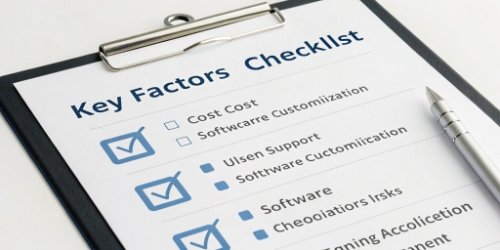
When I talk with purchasing managers, they're often focused on the initial price. But the best choice goes deeper than that. From my 19 years of experience at Weigherps, I've seen that the right software solution must be a perfect fit for your unique operations. You need to consider the whole picture. Let’s explore the critical details.
Total Cost of Ownership (TCO)
Don't just look at the purchase price. You must calculate the TCO. This includes the initial cost, plus fees for training, setup, maintenance, and future upgrades. Local providers often offer a much lower TCO because their support and service costs are more reasonable.1
Functionality and Customization
Does the software understand your specific business? International software is often built as a one-size-fits-all solution.2 A local partner, on the other hand, understands local regulations and business practices. We, for example, build solutions that integrate directly with your existing hardware and workflows, because we know the local market.
Technical Support and Response Time
When your system is down, you're losing money. How quickly can you get help? With international brands, you might face delays due to time zone differences and language barriers.3 A local provider is in your time zone and can offer faster, more effective support.
How Do Local and International Slaughterhouse Software Solutions Compare?
Does comparing local and global software feel like comparing apples and oranges? You might fear missing out on key features. Let's directly compare the two options for you.
Local solutions offer tailored features, agile support, and better cost-effectiveness. International solutions provide robust, standardized platforms but often lack flexibility and come with higher long-term costs. The main difference is customization versus standardization.
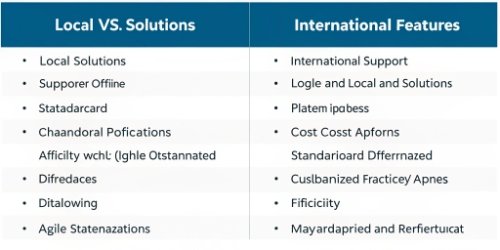
The differences between local and international providers are quite clear once you know what to look for. My clients often tell me they are surprised by the hidden costs and inflexibility of large international brands. On the other hand, working with a local expert like us provides them with a partner who is invested in their success. Here is a simple breakdown to make it even clearer.
| Feature | Local Provider (like Weigherps) | International Provider |
|---|---|---|
| Business Logic | Deeply understands your industry | General, standardized approach |
| Customization | Highly flexible, tailored development | Limited, often very expensive |
| Support | Fast, same time zone, local language | Can be slow, different time zones |
| Cost | Lower total cost of ownership | Higher initial and long-term costs |
| Implementation | Shorter, more agile process | Longer, complex, and rigid process |
| Partnership | A true partner in your growth | A vendor selling a product |
This table shows that the choice is about more than just features. It’s about finding a partner who aligns with your business goals.
What Are the Pros and Cons of Using Local vs. International Brands for Slaughterhouse Management Software?
Are you worried you will make the wrong choice and regret it later? The pros and cons can seem endless and confusing. We've simplified the decision for you with a clear breakdown.
Local brands offer pros like high customization and lower costs, with potential cons like smaller scale. International brands have pros like reputation and standardization, but cons include high cost and poor flexibility. Your priorities determine the best fit.
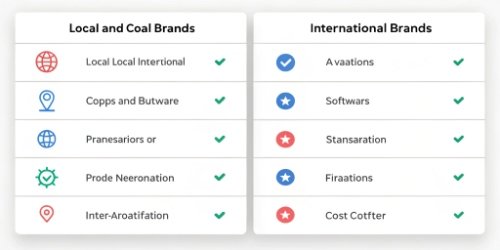
Every choice has its trade-offs. The key is to pick the option where the advantages matter most to you and the disadvantages matter least. Over the years, I've helped countless businesses navigate this decision. Here’s a straightforward look at the pros and cons I've observed in the industry.
Advantages of Local Providers
A local provider is more than a vendor; they are a partner. They understand your market's unique challenges and can build a solution that fits perfectly. Because their operations are lean and focused, you get faster service and a much more affordable solution, both upfront and in the long run. At Weigherps, we pride ourselves on being able to create custom solutions quickly because we are experts in this field.
Disadvantages of International Providers
The biggest problem with large international brands is their rigidity. Their software is built for a global audience, so it often doesn't fit the specific needs of your business without expensive and slow customizations. Their support is often frustrating, forcing you to deal with call centers in different time zones. The high costs for everything from licensing to maintenance can also eat into your profits.
How Can Slaughterhouses Decide Between Local and Global Software Providers?
Are you feeling stuck in your decision-making process? Indecision can be costly and frustrating. Here is a simple framework to guide your final choice with confidence.
First, clearly define your key needs, your total budget, and your long-term goals. Then, request demos and pilot projects from your top local and international vendors. Compare their real-world performance, support response time, and total cost.

Making the final decision doesn't have to be a gamble. You can make a smart, evidence-based choice by following a structured process. As a provider, I appreciate it when clients do their homework because it leads to a better partnership for both of us. Here is the step-by-step guide I recommend to all our potential clients.
Step 1: Define Your Core Requirements
Before you look at any software, make a list of your must-have features. Think about daily tasks. Do you need advanced traceability, real-time reporting, or seamless integration with your weighing equipment? Be specific. This list will be your guide.
Step 2: Set a Realistic Budget
Look beyond the sticker price. Calculate the Total Cost of Ownership (TCO) for at least three years.4 Include the software license, implementation fees, training for your staff, and annual maintenance or support contracts. A cheaper initial price might hide expensive long-term costs.
Step 3: Evaluate Vendor Expertise
Don't just buy a product; invest in expertise. Ask potential providers about their experience in the slaughterhouse industry. Ask for case studies or references. A true expert will understand your challenges without you having to explain everything.
Step 4: Run a Pilot Project
Never buy software blind. The best way to know if it works is to test it. Ask for a trial or a small-scale pilot project. This lets you see how the software performs in your environment and how responsive the provider's support team really is.
Conclusion
Ultimately, choosing a local partner who understands your needs offers superior flexibility, support, and value. Make the smart choice for your business's growth and future success.
-
"What Is Total Cost of Ownership (TCO)? - IBM", https://www.ibm.com/think/topics/total-cost-of-ownership. This source discusses how local software providers can reduce total cost of ownership through lower support and service costs. Evidence role: statistic; source type: research. Supports: Local providers often offer a lower total cost of ownership due to reasonable support and service costs.. Scope note: The source may not provide specific cost comparisons for slaughterhouse software. ↩
-
"A Vision for International Standardization in Software and Systems ...", https://www.computer.org/csdl/proceedings-article/quatic/2007/29480003/12OmNzYNNjg. This source explains the standardized approach of international software providers and its implications for customization. Evidence role: mechanism; source type: institution. Supports: International software is often built as a one-size-fits-all solution.. Scope note: The source may not address slaughterhouse-specific software. ↩
-
"Strategic priorities and challenges in research software funding - PMC", https://pmc.ncbi.nlm.nih.gov/articles/PMC11799755/. This source highlights challenges such as time zone differences and language barriers in international software support. Evidence role: expert_consensus; source type: research. Supports: International brands may cause delays in support due to time zone differences and language barriers.. Scope note: The source may not specifically address slaughterhouse software support. ↩
-
"Total Cost of Ownership: Why It's Important for Businesses | Spanning", https://www.spanning.com/blog/total-cost-of-ownership-why-its-important-for-businesses/. This source explains the importance of calculating TCO over multiple years for software investments. Evidence role: statistic; source type: research. Supports: Calculating TCO for at least three years is crucial for software investments.. Scope note: The source may not provide specific examples for slaughterhouse software. ↩



Comments (0)