
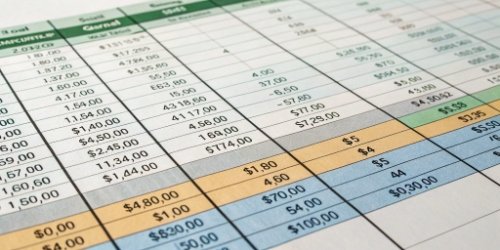
Struggling to see your true slaughterhouse profits? Inaccurate data might be causing hidden losses, making it hard to grow your business. A detailed analysis is your solution.
To create a gross profit analysis table for a slaughterhouse, you must collect and categorize all revenue and cost data. This includes sales, livestock purchases, processing costs like labor and utilities, and waste. A dedicated system can then calculate true gross profit for each product and customer.

This process sounds simple on the surface. However, the real challenge is gathering accurate, comprehensive data from different parts of your operation. Many businesses get stuck here, using messy spreadsheets that lead to costly mistakes. Let's break down how you can avoid these problems and build a powerful analysis that actually drives your business forward. We will look at the key steps, the most important numbers to track, and how to use this information to make smarter sales decisions.
What Are the Key Steps to Analyze Gross Profit Margins in Slaughterhouse Product Sales?
Are you unsure where your profits truly come from? You might be missing key steps in your analysis, leaving money on the table. We have a clear process.
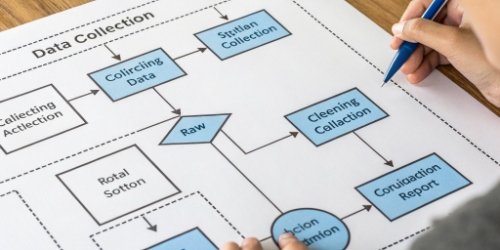
The main steps are: 1. Collect all raw data, including sales, purchase costs, and processing costs. 2. Integrate and clean the data in one place. 3. Use specialized software to calculate margins by product and customer. 4. Review the reports and act on the insights.
Let's dive deeper into these steps. At Weigherps, we have seen over and over that a systematic approach is the only way to get reliable results. I remember visiting a client who thought their new sausage line was a huge success because sales were high. They were only tracking the cost of meat and the final sales price. After we helped them implement a proper system, they were shocked.
Step 1: Comprehensive Data Collection
You must collect more than just sales figures. You need to gather all the costs associated with getting a product to the customer. This includes the purchase cost of livestock, but also processing costs like labor hours, electricity and water usage, packaging materials, and even equipment depreciation. Don't forget to account for loss and waste, which is a direct hit to your bottom line.
Step 2: Data Integration and Cleaning
All this data lives in different places. Sales data may be in your accounting software, while production data is on the factory floor. The key is to bring it all together. A system like our WeigherPS is designed for this. It integrates with your scales and other business systems to create a single source of truth. Manual entry into spreadsheets is a recipe for errors and delays.1
Step 3: Calculation and Analysis
Once the data is centralized, the software can automatically calculate the true gross profit for every single product, customer, and even sales channel. Instead of a single, blended profit margin for the whole company, you get a detailed breakdown. You can see at a glance which products are your winners and which are dragging down your profitability.
Which Metrics Should Be Included in a Gross Profit Analysis Table for Slaughterhouses?
Is your current profit report telling you the whole story? If your analysis table is missing key numbers, your profit picture is incomplete and you could be making bad decisions.
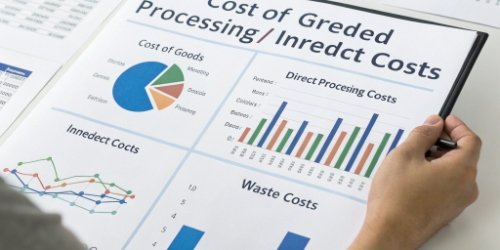
A complete analysis must include: sales revenue, cost of goods sold (livestock), direct processing costs (labor, water), indirect costs (equipment depreciation), and loss/waste. Tracking these individually is the only way to calculate a true Gross Profit and Gross Profit Margin.
We have a saying at our company: "What gets measured gets managed." If you aren't tracking a specific cost, you have no way to control it. For a slaughterhouse, costs like water and energy can be huge. By tracking them as distinct metrics tied to production lines, you can spot inefficiencies you never knew you had. We designed our IoT weighing systems not just to weigh things, but to be part of a larger data ecosystem that captures these critical metrics for your analysis. A good table will break everything down clearly.
A Deeper Look at the Metrics
To make it practical, your table should have columns for each key metric. This structure helps you see exactly where the money is going for each product you sell.
| Metric | Description | Why It's Crucial |
|---|---|---|
| Sales Revenue | The total income you get from selling a product. | This is the starting point for your calculation. |
| Cost of Goods Sold (COGS) | The direct cost of purchasing the livestock. | This is usually the largest single cost in your business. |
| Direct Processing Costs | Costs like labor, water, energy, and packaging. | These variable costs can quickly eat into your margins if not controlled. |
| Allocated Indirect Costs | A portion of costs like equipment depreciation and maintenance. | Often forgotten, but they are real costs needed for true profit calculation. |
| Loss & Waste Costs | The value of any product that is spoiled or cannot be sold. | This is a direct loss of profit that must be tracked and minimized. |
| True Gross Profit | Revenue minus all the costs listed above. | This is the number that tells you if a product is actually making you money. |
How Can Slaughterhouses Use Gross Profit Analysis to Enhance Sales Strategies?
Is your sales team working hard, but profits are flat? They could be focusing on high-revenue, low-profit deals. Gross profit analysis gives them a map to better sales strategies.
Use the analysis to pinpoint your most profitable products, customers, and sales channels. Then, focus your sales team's efforts on these high-margin areas. This data also helps you create smarter pricing strategies and manage unprofitable customer relationships effectively.

This is where your data starts making you money. I'll share a story from one of our partners. They run a large beef processing plant. Their analysis, powered by our WeigherPS system, revealed something incredible. Their biggest customer by sales volume was actually one of their least profitable. They were offering huge volume discounts, but the specific cuts and packaging that customer required were very labor-intensive, driving up processing costs. The "great" customer was barely breaking even for them. Armed with this data, they changed everything.
Focus on High-Profit Segments
Your sales team should not be chasing revenue; they should be chasing profit.2 Your analysis will clearly identify which customers and products deliver the highest margin. You can then redesign your sales commissions to reward profit, not just volume. This aligns your sales team's goals with the company's financial health.
Make Data-Driven Pricing adjustments
When you know your exact costs for a low-profit customer, you can have a very different conversation. Instead of guessing, you can show them the data.3 You can say, "To provide you with this specific product mix, our costs are X. To continue this partnership, we need to adjust the price to Y." It's a fact-based discussion that removes emotion and leads to better outcomes, whether that's a price increase or a decision to part ways.
Optimize Your Product and Customer Mix
The analysis might tell you to promote Product B more and phase out Product A. Or it might show you that small-order customers are more profitable than you thought. Our WeigherPS system gives you these insights in easy-to-understand reports. You can review them weekly and make quick adjustments. This agility is a massive advantage in a competitive market.4
Conclusion
By accurately tracking all costs and using a dedicated system for analysis, you can uncover your true profitability. This data empowers you to optimize sales, pricing, and overall business strategy.
-
"Error Rates of Data Processing Methods in Clinical Research - PMC", https://pmc.ncbi.nlm.nih.gov/articles/PMC10775420/. Studies highlight the risks of manual data entry, including increased error rates and inefficiencies. Evidence role: expert_consensus; source type: research. Supports: Manual data entry leads to errors and delays in business operations.. Scope note: The evidence may not specifically address slaughterhouse operations. ↩
-
"Understanding Revenue vs. Sales: Key Differences Explained", https://www.pnc.com/insights/small-business/running-your-business/understanding-revenue-vs-sales-key-differences-explained.html. Business literature emphasizes the importance of focusing on profit over revenue for sustainable growth. Evidence role: expert_consensus; source type: education. Supports: Sales teams should prioritize profit over revenue for better business outcomes.. Scope note: The advice may not be tailored to slaughterhouse sales strategies. ↩
-
"How Business Analytics Drives Data-Driven Decision-Making", https://www.tuw.edu/business/business-analytics-and-decision-making/. This source discusses how data-driven decision-making improves business negotiations and outcomes. Evidence role: mechanism; source type: research. Supports: Data-driven decision-making improves business negotiations.. Scope note: The source may not specifically address slaughterhouse customer negotiations. ↩
-
"How to Improve Business Agility | Marymount University", https://online.marymount.edu/blog/business-agility-how-to-improve. Research highlights the competitive advantages of agile business practices in dynamic markets. Evidence role: expert_consensus; source type: research. Supports: Agility provides competitive advantages in dynamic markets.. Scope note: The evidence may not specifically address slaughterhouse operations. ↩



Comments (0)