
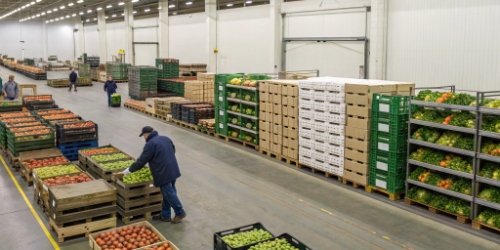
Struggling with slow, error-prone manual intake for fresh products? This can lead to costly mistakes and inventory chaos. Our automated solution eliminates these problems, boosting your efficiency instantly.
An automatic conveyor and scanning system streamlines warehousing by replacing manual tasks. It uses conveyors to move products and scanners to read barcodes. This automates data entry, increases speed, and provides real-time inventory updates, which greatly improves efficiency and accuracy in your cutting workshop.
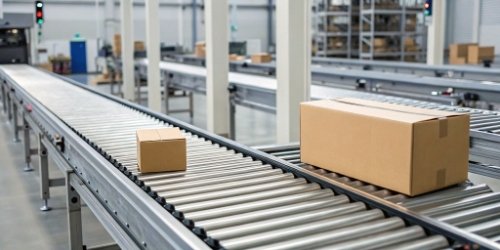
This all sounds great, but you might wonder how it really works in practice. Many of our clients, especially software vendors looking to integrate with robust hardware, are curious about the real-world benefits and implementation process. Let's break down how this technology can transform your fresh product warehousing from a manual bottleneck into a streamlined, automated powerhouse. We will look at how it works, what steps to take, and how to integrate it perfectly.
How Does an Automated Conveyor and Barcode Scanning System Streamline Fresh Product Storage?
Are bottlenecks in your storage process causing delays? These hold-ups can lead to product spoilage and financial loss. Automation removes these bottlenecks, creating a much smoother workflow.
An automated system streamlines storage by automating both data capture and physical movement. It cuts down handling time and gets rid of manual entry errors. It also gives you instant visibility into your inventory, making the whole process faster and more reliable from start to finish.
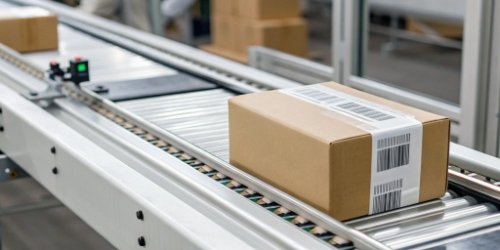
Going deeper, this system changes three key areas of your operation. I remember visiting a client's facility where they processed thousands of fresh poultry packs a day. Before automation, their team used handheld scanners and clipboards. It was organized chaos. After we installed our system, the change was incredible. The entire process became quieter, faster, and far more accurate. Here is how it works.
Real-Time Data Synchronization
When a fresh product with a barcode label passes along the conveyor, it automatically triggers a fixed scanner. The scanner reads the label information, like product ID, weight, and production date. Our WeigherPS software instantly sends this data to your Warehouse Management System (WMS) or ERP.1 There is no manual typing. The data in your system is always live and accurate, reflecting what is happening on the floor right now.
Reduced Labor and Increased Accuracy
This system works without anyone needing to touch it. You don't need staff to manually scan each item or type data into a computer. This frees up your team for more important jobs.2 More importantly, machines don't make typos. The accuracy of automated scanning is nearly 100%.3 This stops the small errors that can lead to big inventory problems and incorrect shipments later on.
| Feature | Manual Process | Automated System |
|---|---|---|
| Data Entry | Manual typing, prone to errors | Automatic scanning, highly accurate |
| Speed | Limited by human pace | Continuous, high-speed flow |
| Labor Need | High | Low |
| Inventory Data | Updated periodically | Updated in real-time |
What Are the Steps for Implementing an Automatic Fresh Product Cutting and Scanning Solution for Warehousing?
Does implementing new technology seem like a huge project? The fear of complex installations and disrupting your operations can stop you from making beneficial changes. A clear, step-by-step process makes it much more manageable.
The key steps are assessing your current workflow and then designing the system layout. Next comes selecting the right hardware, like conveyors and scanners. Then, we integrate the software with your existing systems and train your staff to use it effectively.
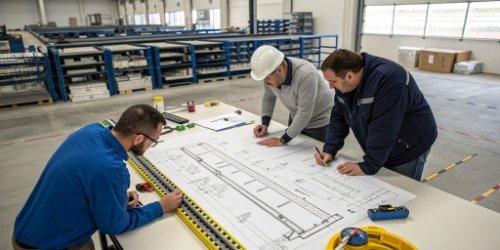
Bringing a new system online requires a solid plan. As a company with 19 years of experience, we have refined this process to be as smooth as possible for our clients. We act as your partner, guiding you through each phase to make sure the final solution fits your needs perfectly. Whether you are a large retailer or a specialized food processor, the core steps are consistent. The goal is always to deliver a system that works for you, not one that you have to work around.
Phase 1: Assessment and Planning
First, our experts come to you. We study your current process in your cutting workshop. We look at your facility's layout, how products move, your production volume, and what data you need to capture. Based on this, we design a custom solution. We map out the best path for the conveyors, determine the ideal placement for scanners, and define how our WeigherPS software will connect with your existing infrastructure. This plan becomes our roadmap for the project.
Phase 2: Hardware and Software Integration
With the plan approved, we begin the installation. Our team installs the physical conveyors and high-speed scanners. Then, our technical experts get to work on the software side. The heart of the system is our WeigherPS platform, which we integrate seamlessly with your WMS or ERP. This ensures that the data from the scanners flows directly into the systems you already use to manage your business. We handle all the technical details to ensure smooth communication between all components.
Phase 3: Testing, Training, and Support
After installation, we run the entire system through extensive tests. We use test products to simulate your daily operations, making sure every scan is captured and every piece of data is correct. Once we are confident it's running perfectly, we train your team. We show them how the system works and how to manage it. And our support doesn't end there. All our products come with a 12-month after-sales service guarantee, so you can be sure we are here to help.
How Can Barcode Scanning and Automated Transmission Improve the Fresh Product Storage Process?
Do you lack clear visibility into your inventory? This makes it hard to track products, which can lead to waste, compliance failures, and lost profits. Barcodes and automation provide the complete traceability you need.
Barcodes give each item a unique digital identity. Automated conveyors move these items efficiently and update their status in real-time. This combination creates a transparent, fast, and traceable workflow from the cutting line to warehouse storage, dramatically improving inventory and quality control.
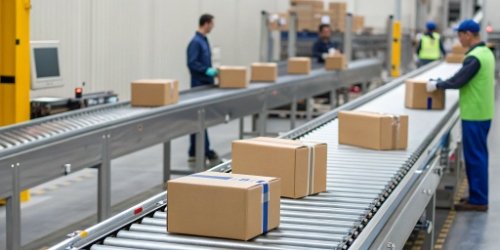
The improvements go beyond just speed. For our clients, the real value lies in the quality and accessibility of the data this system generates. By giving every single product a digital footprint, you unlock new levels of control and insight. For companies that handle fresh goods, where shelf life is everything, this level of control is not just a nice-to-have; it's a competitive necessity. It transforms your storage process from a simple holding area into an intelligent, data-rich hub of your operation.
End-to-End Traceability
From the moment a piece of fresh product is cut, weighed, and labeled, its entire journey is recorded. The system knows which batch it came from, its exact weight, the time it was processed, and when it entered the warehouse. This detailed tracking is critical for quality control.4 In the event of a product recall, you can instantly identify and locate every affected item, protecting your customers and your brand. This is a level of food safety that manual processes simply cannot match.5
Enhanced Inventory Management
Because the system provides real-time data, you always know exactly what you have in stock and where it is. This eliminates guesswork. It helps you manage your First-In, First-Out (FIFO) or First-Expire, First-Out (FEFO) policies automatically, ensuring older products are used first to reduce spoilage. This precise inventory control prevents overstocking, which ties up capital, and under-stocking, which leads to missed sales opportunities.6
| Data Point Collected | How It Improves Your Business |
|---|---|
| Product ID & Batch | Enables full traceability for safety and recalls. |
| Weight | Ensures accurate inventory and fair pricing. |
| Timestamp (Scan Time) | Helps manage FIFO/FEFO and monitors efficiency. |
| Location Data | Speeds up picking and order fulfillment. |
What Is the Best Way to Integrate Automatic Conveyor Systems and Scanners for Warehouse Management?
Is the thought of integrating different technologies from different vendors giving you a headache? Incompatible hardware and software can cause system crashes, data loss, and endless frustration. A unified, single-source solution avoids these problems.
The best approach is a holistic one. Choose a provider, like us at WeigherPS, who offers a complete, integrated solution. This includes the hardware, the software, and the integration expertise. This ensures all components are designed to work together perfectly from day one.

From our experience, trying to piece together a system from multiple vendors is a common point of failure. One vendor might blame the other when issues arise, leaving you stuck in the middle. Our vision is to be your most reliable and professional weighing expert. That is why we provide a complete package. We take full responsibility for making sure your automated system works flawlessly. We provide the hardware, the software, and the technical skill to connect it all together.
The Importance of a Centralized Software Hub
The core of a successful integration is a powerful software hub. Our WeigherPS system acts as the brain of the entire operation. It receives signals from the scanners, can control the speed of the conveyors, and communicates directly with your main business software, like your WMS or ERP. This central point of control simplifies everything. You have one interface to monitor the system and one source of truth for your data. It makes management and troubleshooting much easier.
Choosing Compatible Hardware for Your Environment
Not all conveyors and scanners are built for the harsh conditions of a fresh product facility.7 These environments are often cold and wet, which can destroy standard electronic equipment. We help you select hardware that is specifically designed for these challenges. We ensure the scanners have the speed to keep up with your production line and that the conveyors can handle the weight of your products. Most importantly, we guarantee that the hardware we recommend integrates perfectly with our software.
Flexibility Through APIs and Customization
We understand that every business is unique. You may have a custom-built ERP or other legacy software that is critical to your operations. That is not a problem. We design our systems with flexibility in mind. We use modern Application Programming Interfaces (APIs) and middleware to build bridges between our WeigherPS system and yours.8 Our team of experts specializes in creating these custom connections, ensuring our automation solution fits into your existing technology landscape seamlessly.
Conclusion
Automating your fresh product intake with conveyors and scanners boosts efficiency, cuts errors, and provides vital data. This gives you a powerful advantage in a very competitive market.
-
"Understanding the Importance of Real-Time Data in WMS - Generix", https://www.generixgroup.com/en/blog/understanding-the-importance-of-real-time-data-in-wms. This source explains how software like WeigherPS integrates with WMS and ERP systems for real-time data updates. Evidence role: mechanism; source type: education. Supports: WeigherPS software integrates with WMS and ERP systems for real-time data updates.. Scope note: The source may focus on general software integration rather than WeigherPS specifically. ↩
-
"A new look at how automation changes the value of labor - MIT Sloan", https://mitsloan.mit.edu/ideas-made-to-matter/a-new-look-how-automation-changes-value-labor. This source discusses how automation reduces manual labor, allowing staff to focus on higher-value tasks. Evidence role: mechanism; source type: education. Supports: Automation frees up teams to focus on more important jobs by reducing manual labor.. ↩
-
"Barcode Scanners | Industrial, Handheld & Fixed - Cognex", https://www.cognex.com/en/products/barcode-readers-and-scanners. This source provides data on the accuracy rates of automated barcode scanning systems in industrial settings. Evidence role: statistic; source type: institution. Supports: Automated scanning systems achieve nearly 100% accuracy.. Scope note: Accuracy rates may vary depending on the specific hardware and environmental conditions. ↩
-
"Monitoring Quality Control: Can We Get Better Data? - PMC", https://pmc.ncbi.nlm.nih.gov/articles/PMC2625303/. This source explains how detailed tracking systems improve quality control in food processing and storage. Evidence role: mechanism; source type: research. Supports: Detailed tracking systems are critical for quality control in food processing and storage.. ↩
-
"New Era of Smarter Food Safety - FDA", https://www.fda.gov/food/new-era-smarter-food-safety. This source explains how automated tracking systems enhance food safety compared to manual processes. Evidence role: expert_consensus; source type: research. Supports: Automated tracking systems provide superior food safety compared to manual processes.. ↩
-
"Warehouse Inventory Management Best Practices 2026 - Modula USA", https://modula.us/blog/warehouse-inventory-management/. This source discusses how precise inventory control systems help prevent overstocking and under-stocking in warehouses. Evidence role: mechanism; source type: education. Supports: Precise inventory control prevents overstocking and under-stocking, optimizing warehouse operations.. ↩
-
"Warehousing - Hazards and Solutions - OSHA", http://www.osha.gov/warehousing/hazards-solutions. This source explains the importance of selecting specialized hardware for harsh environments like fresh product facilities. Evidence role: expert_consensus; source type: research. Supports: Specialized hardware is necessary for harsh environments in fresh product facilities.. ↩
-
"APIs and Warehouse Management Software | Peoplevox WMS", https://www.peoplevox.com/blog/how-apis-work-with-warehouse-management-software/. This source discusses the role of APIs and middleware in integrating warehouse automation systems with existing software. Evidence role: mechanism; source type: education. Supports: APIs and middleware are used to integrate WeigherPS systems with existing software.. ↩


Comments (0)