

Developing powerful traceability software is one thing, but finding the right hardware can be a major roadblock. A mismatch can stop your project cold. We design our hardware platforms to be the flexible foundation your custom software needs.
Our hardware supports custom traceability software through open communication protocols, flexible data interfaces, and a modular design. This adaptability allows seamless integration with your software, ensuring accurate data capture and smooth operation within your clients' existing systems.

This level of integration is the result of careful design. After spending 19 years in this industry, I've learned that hardware and software must work together perfectly for a solution to succeed. Your software's potential can only be fully unlocked when it's paired with hardware that can keep up. Let's look at the specific features that make this partnership work.
What Hardware Features Are Essential for Seamlessly Running Custom Traceability Software?
Choosing the wrong hardware can make your excellent software look unreliable. Constant glitches and performance issues force your team to troubleshoot instead of innovate. The right hardware features guarantee the stability and performance your software solution deserves.
Essential hardware features include multiple communication ports (like RS232, USB, Ethernet), open APIs/SDKs, sufficient processing power, and durable construction. These elements provide the connectivity, flexibility, and reliability needed for your software to function flawlessly in demanding environments.
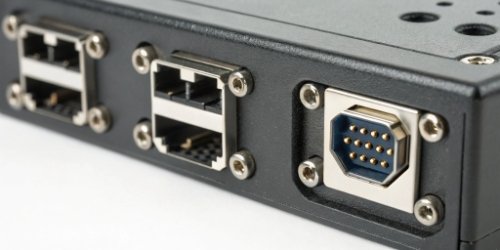
Let's dive deeper into why these features are so critical. They are not just items on a spec sheet; they are the building blocks of a reliable traceability system.
Why Communication Ports Matter More Than You Think
The ability for a scale to talk to other systems is fundamental. In my experience, having a variety of ports offers the widest range of compatibility1. An older factory might still use RS232 for its legacy equipment, while a modern setup will require Ethernet for network integration. USB offers a simple plug-and-play option for connecting to a local PC or terminal. By offering multiple ports, we ensure our hardware can fit into nearly any existing IT infrastructure, saving you the headache of needing custom cables or converters.
| Port Type | Primary Use Case | Key Advantage |
|---|---|---|
| RS232 | Connecting to older industrial machinery and PLCs | High reliability in noisy electrical environments |
| USB | Direct connection to a local computer or tablet | Simple, universal, and powers some devices |
| Ethernet | Integration into a local area network (LAN) | Enables remote access, monitoring, and data collection |
| Wi-Fi/Bluetooth | Wireless connectivity for mobile or remote setups | Offers flexibility and reduces cable clutter |
The Power of an Open API
An open API, or Application Programming Interface, gives your developers direct control over the scale's functions2. It allows your software to do more than just read a weight value. You can write code to trigger a tare, zero the scale, send print commands, or retrieve diagnostic information. This is what true integration looks like. It transforms our hardware from a simple measuring device into an active, intelligent component of your traceability system.
How Can Your Hardware Platform Be Adapted to Support Tailored Traceability Solutions?
Off-the-shelf hardware rarely fits the unique needs of a specialized project. This forces you to compromise your software's potential with clunky workarounds. A truly adaptable hardware platform can be configured to meet your exact project requirements perfectly.
Our hardware platforms are adapted through a modular design. You can select specific components like displays, communication modules, and sensors. We also offer firmware customization to enable unique functions required by your solution, making the hardware a true extension of your software.
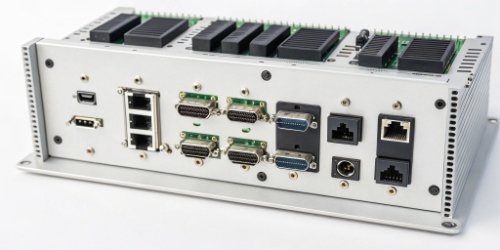
Adaptability isn't just about having options; it's about building the exact tool for the job. This approach saves money, improves efficiency, and results in a better final product for your client.
The Modular Design Advantage
Think of our hardware as a set of building blocks rather than a finished product. This modular approach provides incredible flexibility. If your client's operators need a large, bright display for easy reading in a dim warehouse, we can integrate one. If the project requires communication over a 4G network for remote locations, we can add the appropriate wireless module. You get a piece of hardware that fits the physical environment and the technical requirements without any unnecessary features. This means you aren't paying for components you don't need, making the entire solution more cost-effective and streamlined. I've seen projects succeed simply because the hardware could be physically adapted to fit into a tight space on a production line, something a standard product couldn't do.
Firmware Customization for Deeper Integration
Sometimes, software-level commands are not efficient enough3. For high-speed production lines, the workflow needs to be embedded directly into the scale's operating system, or firmware. We can work with your technical team to create custom firmware that executes a specific sequence of actions. For example, a common workflow is: detect a stable weight, automatically scan a barcode, combine the weight and barcode data, transmit it to your server, and then print a specific label format. By building this logic directly into the hardware, you reduce latency, minimize the chance of network errors, and simplify the process for the operator. This deep integration makes the whole system faster, more reliable, and much easier to use.
What Are the Key Considerations When Integrating Traceability Software with Hardware?
An integration project can seem simple at first, but hidden issues often cause delays and budget overruns. These problems can damage your relationship with your client. Understanding the key considerations upfront helps you avoid these common traps.
Key considerations include communication protocols, data format consistency, environmental factors, and future scalability. Addressing these early ensures a smooth integration process and a reliable, future-proof solution for your clients that can grow with their business.

Thinking about these factors is not just a technical exercise; it's a critical part of project planning that directly impacts the success of your deployment.
Aligning Communication Protocols and Data Formats
This is where most integrations fail. Your software might be designed to receive a JSON string over an Ethernet connection, but the hardware is sending a simple text string over an RS232 port. It's like two people trying to have a conversation in different languages. The data is there, but it's unusable. We solve this by making our hardware linguistically flexible. We support multiple protocols and can configure the output data format to match exactly what your software expects4. This eliminates the need for you to write complex parsers or use an extra piece of middleware to translate the data. It makes the connection direct, simple, and far more reliable.
Planning for the Environment and Future Growth
You must consider where the hardware will live. A food processing plant with daily washdowns requires a stainless steel, waterproof scale with an IP67 or IP68 rating. A dusty warehouse needs hardware with sealed enclosures to protect the electronics. Equally important is planning for the future. Your client might start with five scales but plan to expand to fifty. Our hardware is designed to be easily networked and managed at scale5. This ensures that the solution you provide today won't become a bottleneck for your client's growth tomorrow. We help you choose hardware that is not only right for today but also ready for the future.
How Does Your Hardware Ensure Compatibility with Custom Traceability Applications?
You cannot risk your software's reputation on hardware that might not work. Compatibility isn't just a feature; it is an absolute necessity. A single flaw can render your application useless and lead to very difficult conversations with your clients.
We ensure compatibility by providing comprehensive Software Development Kits (SDKs), clear documentation, and direct access to our technical support team. We also facilitate proof-of-concept (POC) testing to validate the integration and guarantee our hardware works perfectly with your application.

Our process is built on a foundation of partnership. We don't just sell you a product; we provide the tools and support needed to ensure your project's success.
The Role of SDKs and Clear Documentation
A Software Development Kit (SDK) is a powerful tool for your developers. It contains the code libraries, sample applications, and commands needed to communicate with our hardware efficiently. Instead of your team spending weeks trying to figure out communication protocols from scratch, they can use our SDK to get a working prototype running in just a few days. I've personally seen this save clients hundreds of development hours. We back up our SDKs with documentation that is clear, concise, and complete. Your developers will have a clear roadmap for accessing every feature of our hardware, making the integration process smooth and predictable.
The Importance of Proof-of-Concept (POC) Testing
No matter how good documentation is, nothing beats real-world testing. We actively encourage and support a proof-of-concept phase6. We will provide you with a sample unit of the hardware so your team can connect it to your software in your own lab. This allows you to test every aspect of the integration, identify any potential issues, and demonstrate a fully working solution to your client before they commit to a large order. This step removes almost all the risk from the project. It builds confidence for you, your client, and us. We see this as a crucial part of building a long-term, successful partnership.
Conclusion
The right hardware is more than just a device; it is a partner in your solution. Our adaptable, well-supported weighing hardware ensures your custom traceability software performs flawlessly, delivering real value.
-
"Common Hardware Ports | Technology Support Services - NMU", https://it.nmu.edu/docs/common-hardware-ports. This source discusses how multiple communication ports enhance compatibility with diverse industrial systems. Evidence role: mechanism; source type: research. Supports: Having a variety of ports offers the widest range of compatibility.. ↩
-
"What is an Open API? Benefits, Challenges, and Strategic ...", https://www.moesif.com/blog/technical/api-development/What-Is-Open-API/. This source explains how open APIs provide developers with control over hardware functions, enabling deeper software integration. Evidence role: mechanism; source type: education. Supports: An open API, or Application Programming Interface, gives your developers direct control over the scale's functions.. ↩
-
"Safety tips for custom firmware on commercial hardware : r/embedded", https://www.reddit.com/r/embedded/comments/1lx9kl1/safety_tips_for_custom_firmware_on_commercial/. This source discusses scenarios where firmware customization is necessary for high-speed industrial processes. Evidence role: mechanism; source type: research. Supports: Sometimes, software-level commands are not efficient enough.. ↩
-
"Configurable - Glossary - NIST CSRC", https://csrc.nist.gov/glossary/term/configurable. This source explains how supporting multiple protocols and configurable data formats enhances hardware-software compatibility. Evidence role: mechanism; source type: research. Supports: We support multiple protocols and can configure the output data format to match exactly what your software expects.. ↩
-
"[PDF] Network Topology Scalability", http://cva.stanford.edu/classes/ee382c/ee482b/research/tjleong.pdf. This source discusses how hardware designed for networking and scalability supports business growth. Evidence role: mechanism; source type: education. Supports: Our hardware is designed to be easily networked and managed at scale.. ↩
-
"[PDF] Validating the Integrity of Computing Devices", https://nvlpubs.nist.gov/nistpubs/SpecialPublications/NIST.SP.1800-34.pdf. This source explains the importance of proof-of-concept testing in validating hardware-software integration before full deployment. Evidence role: mechanism; source type: education. Supports: We actively encourage and support a proof-of-concept phase.. ↩



Comments (0)