
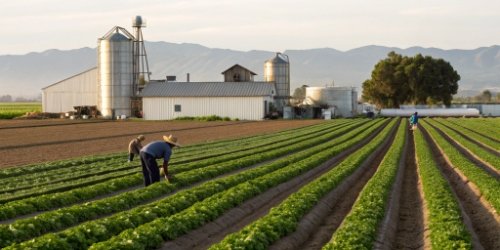
Struggling with farm-to-fork data gaps? A broken traceability chain risks consumer trust and profits. Smart scales are the essential tool for capturing and integrating critical data seamlessly.
Absolutely. Smart scales equipped with processors, specialized software, and connectivity options like WiFi are foundational for traceability. They accurately capture weight, timestamps, and product IDs, then process and upload this data. This ensures a complete and transparent data trail from the farm to the consumer's table.
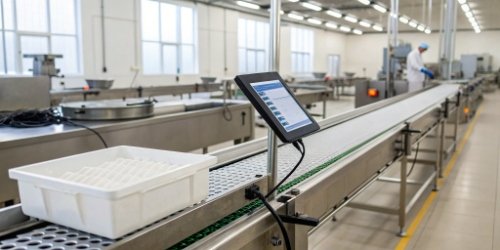
It's clear that the right hardware is crucial, but how exactly do these scales fit into your existing software and processes? Let's break down the specific ways these scales become the backbone of a reliable traceability system. Understanding the details will show you the true potential.
How Can Scales Support Data Collection for Farm-to-Fork Traceability?
Is manual data entry creating errors and slowing down your supply chain? These mistakes can lead to compliance failures. Smart scales automate data capture, ensuring accuracy at every weighing point.
Scales act as primary data collection points. By integrating barcode scanners and connectivity, they automatically link precise weight data with product IDs and timestamps. This package of information is then instantly sent to your central traceability system, eliminating manual entry and ensuring data integrity from the start.
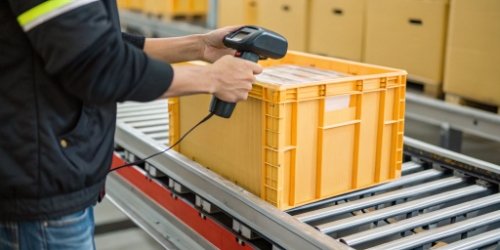
Modern traceability isn't just about having data; it's about having reliable data. As a manufacturer with 19 years of experience, I've seen how smart scales have become the source of that reliability.
Automating the First Point of Contact
At every step—from receiving raw materials to packaging finished goods—a weighing event occurs. Instead of a worker writing down a weight on a clipboard, a smart scale integrates a scanner. The worker scans a barcode or RFID tag, places the item on the scale, and the scale automatically records the product ID, batch number, weight, and timestamp. This single action eliminates transcription errors and saves valuable time.
Creating an Indisputable Digital Record
This automated process creates a digital footprint for every item.1 This data is then instantly transmitted via Wi-Fi or Bluetooth to your central management system. This ensures that the information your software relies on is accurate and captured in real-time, building a foundation of trust throughout the supply chain.
| Data Point | How It's Captured by the Scale | Importance for Traceability |
|---|---|---|
| Product ID | Integrated Barcode/RFID Scanner | Links weight to a specific item/batch. |
| Net Weight | High-precision Load Cell | Essential for inventory and compliance. |
| Timestamp | Internal Clock (synced) | Establishes when the event occurred. |
| Location ID | Pre-configured in the scale's software | Shows where the item was in the chain. |
This structured data is the lifeblood of any traceability software.
What Features Should a Scale Have to Enable Comprehensive Traceability Reporting?
Is your current scale just a number display? This lack of intelligence means incomplete reports and audit risks. You need a scale with specific features built for comprehensive data integration.
For comprehensive reporting, a scale needs robust connectivity (Wi-Fi, Ethernet), an onboard processor with customizable software, and ports for peripherals like scanners and printers. An intuitive user interface is also crucial to guide operators, and internal memory ensures no data is lost during network outages.
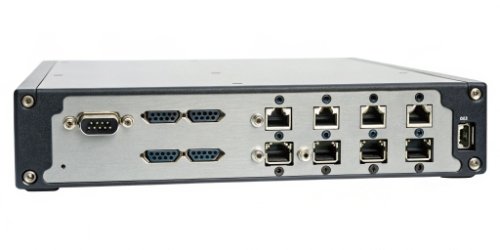
A scale is no longer just for weighing; it's a critical data terminal. To power comprehensive traceability reports for your clients, it must have a specific set of modern features.
Connectivity is Non-Negotiable
The ability to communicate is paramount. A traceability scale must offer multiple connectivity options to fit any environment.
- Wi-Fi: Allows for flexible placement throughout a facility without running cables.
- Ethernet: Provides a stable, high-speed connection for fixed stations where reliability is key.
- Bluetooth: Useful for connecting directly to nearby devices like handheld scanners or mobile printers.
Onboard Processing and Software
Modern industrial scales run on operating systems, much like a smartphone.2 This "onboard intelligence" allows us to install custom applications directly on the scale. This means the scale can validate data at the point of entry, format it correctly for your system, and even perform basic calculations, reducing the processing burden on your backend software.
A Hub for Peripherals
A truly effective scale acts as a central workstation. It needs ports (like USB or RS-232) to seamlessly connect to:
- Barcode Scanners: To instantly identify products.
- Label Printers: To print tracking labels on the spot.
- External Displays: For better visibility for the operator.
This turns a simple weighing step into a complete data capture and processing event.
How Do Scales Contribute to Building a Transparent Farm-to-Fork Supply Chain?
Is your supply chain a black box? This opacity erodes consumer trust and makes you vulnerable during recalls. Smart scales illuminate every step by creating trusted, automated data points.
Scales build transparency by creating indisputable, timestamped data points at every critical handover in the supply chain. From receiving raw goods to shipping finished products, each weighing event becomes a verifiable link in the product's journey. This unbroken chain of data makes the entire process visible and trustworthy.
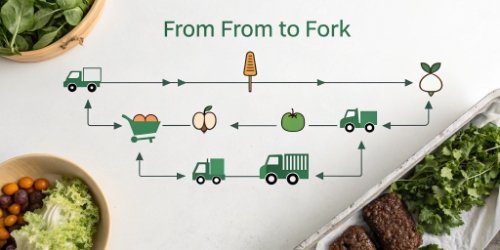
Transparency isn't a buzzword; it's a business requirement built on trust. In my experience, smart scales are the building blocks of that trust.
Creating Verifiable Checkpoints
Think of the food supply chain as a series of handoffs. A smart scale at each handoff point acts as a digital notary.
- At the Farm/Receiving Dock: The scale records the initial weight of the raw materials, linking it to a specific supplier and batch.
- During Processing: As ingredients are portioned, scales track the exact amounts used, ensuring recipe integrity and creating a precise record for the new batch number.
- At Packaging and Shipping: The final weight of the packaged product is recorded before it's shipped to distributors, creating the final link in the production chain.
The Power of an Unbroken Data Chain
Each of these weighing events generates a secure, timestamped record.3 When you string these records together, you get an unbroken, verifiable history of the product. If a problem arises, you can instantly trace the issue back to its precise origin. This speed is critical for managing recalls and protecting public health.4 For a software provider like you, this means your system can offer powerful, real-time recall management features, powered by the reliable data from our scales. This verifiable journey is what regulators demand and what builds lasting consumer confidence.
What Type of Data Should Scales Capture to Meet Farm-to-Fork Traceability Standards?
Worried you're not capturing the right data for compliance? Incomplete data can lead to failed audits and market access issues. Smart scales are designed to capture the essential data points required.
Beyond just weight, scales must capture a core set of traceability data. This includes the product identifier (SKU), the batch or lot number, a precise timestamp, the scale's location or ID, and the operator's ID. This data packet creates the comprehensive record needed for regulatory compliance.
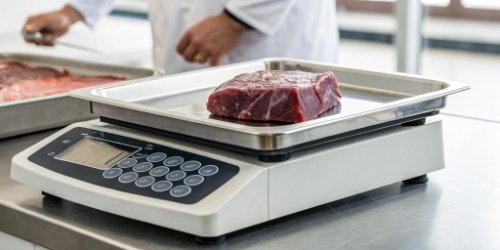
Compliance with standards like the FDA's Food Safety Modernization Act (FSMA) or the EU's General Food Law Regulation requires specific data.5 Your system needs to ingest this data, and our scales are designed to provide it consistently. The key is to capture what regulators call Key Data Elements (KDEs) at Critical Tracking Events (CTEs).
The Essential Data Packet
A smart scale is programmed to collect a complete "data packet" for every weighing event. This isn't just a feature; it's a necessity for modern compliance.
- Identifier Data: This connects the physical product to its digital record. This includes the SKU and, most importantly, the Lot or Batch Number.
- Event Data: This provides context for the weighing action. It includes the precise weight, a non-editable timestamp, and the ID of the specific scale or location.
- Personnel Data: Capturing the Operator ID adds another layer of accountability, showing who performed the action.
The following table breaks down what a compliant scale should capture:
| Data Category | Specific Data Point | Why It's Critical for Compliance |
|---|---|---|
| What | Product ID / SKU | Identifies the specific item being weighed. |
| Net Weight | The fundamental measurement for inventory and processing control. | |
| Which Batch | Lot / Batch Number | The single most important element for targeted recalls. |
| When | Timestamp | Provides an irrefutable record of when the event happened. |
| Where | Scale ID / Location | Pinpoints where the product was in the supply chain. |
| Who | Operator ID | Adds accountability and helps in tracking down process errors. |
By capturing this complete packet, our scales ensure the data feeding your software is compliant from the very beginning.
Conclusion
Ultimately, smart scales are not just measurement tools. They are the foundational data capture devices that enable a transparent, compliant, and trustworthy farm-to-fork traceability system for your clients.
-
"System for automated analysis of user digital footprint in ...", https://www.researchgate.net/publication/399158256_System_for_automated_analysis_of_user_digital_footprint_in_social_media_using_osint. This source describes how automated processes in scales create digital footprints for traceability. Evidence role: mechanism; source type: research. Supports: Automated processes in scales create digital footprints for traceability.. ↩
-
"[PDF] Operating system support for warehouse-scale computing - Brown CS", https://cs.brown.edu/people/malte/pub/dissertations/phd-final.pdf. This source provides an overview of modern industrial scales and their operating systems, comparing them to smartphones. Evidence role: general_support; source type: encyclopedia. Supports: Modern industrial scales run on operating systems, enabling advanced functionalities.. Scope note: The comparison to smartphones may be illustrative rather than technical. ↩
-
"Evaluating tamper resistance of digital forensic artifacts during event ...", https://arxiv.org/html/2412.12814v1. This source discusses how weighing events generate secure, timestamped records for traceability. Evidence role: mechanism; source type: research. Supports: Weighing events generate secure, timestamped records for traceability.. ↩
-
"Combining Gait Speed and Recall Memory to Predict Survival ... - PMC", https://pmc.ncbi.nlm.nih.gov/articles/PMC5682559/. This source discusses the importance of speed in managing recalls and its impact on public health. Evidence role: mechanism; source type: research. Supports: Speed in managing recalls is critical for protecting public health.. Scope note: The source may focus on general recall management rather than specific applications to scales. ↩
-
"Food Traceability List - FDA", https://www.fda.gov/food/food-safety-modernization-act-fsma/food-traceability-list. This source outlines the data requirements for compliance with FSMA and the EU's General Food Law Regulation. Evidence role: definition; source type: government. Supports: Compliance with FSMA and EU regulations requires capturing specific data points.. Scope note: The source may focus on general compliance requirements rather than specific applications to scales. ↩



Comments (0)