
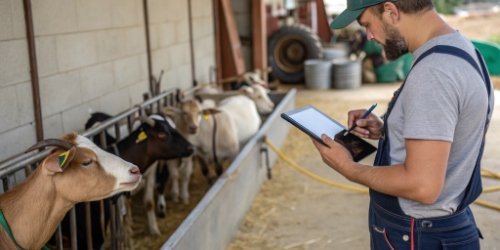
Losing track of carcass data? This mix-up compromises traceability and costs you money. Real-time linking with smart scales and IDs is the simple solution to this expensive problem.
To link carcass weight to an animal ID in real-time, you must use a system that combines an Electronic Identification (EID) tag on the animal with an integrated smart scale. The scale's software automatically reads the tag and records the weight against that ID, ensuring instant, error-free traceability.
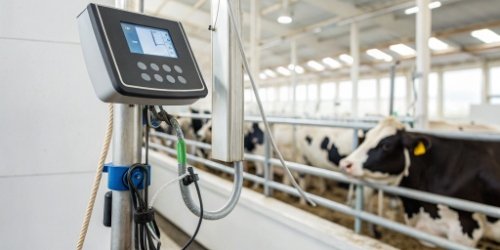
Having spent 19 years manufacturing industrial scales, I've seen firsthand how crucial data accuracy is. Many processors, especially in large-scale livestock operations, still struggle with matching the final carcass weight to the individual animal it came from.1 This isn't just a record-keeping issue; it's a fundamental challenge for traceability, quality control, and payment processing2. The good news is that modern technology has made this process much simpler and more reliable. Integrating the right tools eliminates the guesswork and manual errors that plague traditional methods.3 It creates a seamless flow of information from the kill floor to your a central database, giving you clear, actionable data at every step. This move towards smart, connected weighing is no longer a luxury—it’s a necessity for any competitive operation.
What Are the Best Tools for Linking Carcass Weight to Animal ID in Real-Time?
Struggling to choose the right tech? The wrong tools mean inaccurate data and wasted time. The right combination ensures seamless, error-free tracking from the initial weigh-in to final processing.
The best tools are a combination of Electronic Identification (EID) tags, RFID readers, and an intelligent weighing system, like a smart PC scale. This trio automates data capture, eliminating manual entry and ensuring each carcass weight is instantly and accurately linked to its unique animal ID.
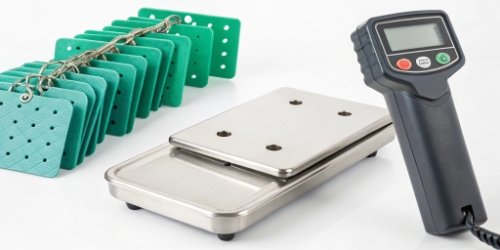
To build a reliable real-time tracking system, you need components that work together flawlessly. It's not about having the most expensive gadget, but about creating an ecosystem where data flows automatically and accurately. Based on my experience helping clients build these systems, the focus should always be on reliability and ease of integration. The entire process hinges on these core tools communicating with each other without any manual intervention, which is where the real value lies.
Key System Components
The foundation of any successful system rests on three pillars: identification, reading, and recording. Each one must be robust enough for a demanding industrial environment.
- Electronic Identification (EID) Tags: These are small tags, usually attached to an animal's ear, that contain a unique identification number. They use RFID technology, which means they can be read wirelessly.
- RFID Readers: These devices scan the EID tags. They can be handheld scanners or fixed readers installed at the weighing station. When a carcass passes the reader, it instantly captures the animal's unique ID.
- Smart Weighing Systems: This is the heart of the operation. It's more than just a scale; it's a data hub. Our smart PC scales, for instance, have built-in software that receives the ID from the RFID reader and simultaneously records the weight, linking the two pieces of data together in a single record.
Here is a simple breakdown of how these tools compare to older methods:
| Feature | Modern System (EID + Smart Scale) | Traditional System (Ear Tag + Manual Log) |
|---|---|---|
| Speed | Instantaneous | Slow, requires manual reading |
| Accuracy | Extremely high, no human error4 | Prone to transcription errors |
| Traceability | Seamless, complete digital trail | Fragmented, relies on paper records |
| Integration | Easily connects to management software | Requires manual data entry into software |
How Can You Integrate Carcass Weight Tracking with Livestock Identification Systems?
Is your weight data stuck on the scale, separate from your animal records? This silo creates huge inefficiencies and dangerous traceability gaps. Integrating them creates a single, powerful source of truth.
Integration is achieved using software with robust API (Application Programming Interface) capabilities. Your smart scale's software must connect directly to your farm management or livestock identification system, allowing weight data to automatically populate the correct animal's record without manual data transfer.
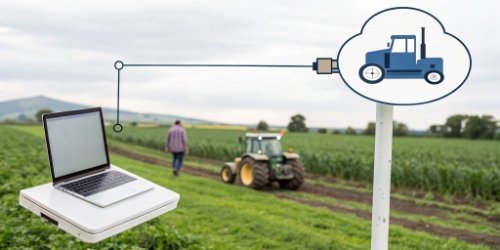
Integration sounds technical, but the concept is simple: you're making two different systems talk to each other. In my years of developing custom weighing solutions, I've found that the biggest hurdle for clients is often the fear of software complexity. However, a well-designed system should feel invisible. The goal is for a worker to simply weigh a carcass, and the data—both the weight and the ID—appears in the main livestock database moments later without anyone touching a keyboard. This a automation is what transforms a simple weighing process into a powerful data collection strategy.
The Integration Pathway
Achieving a seamless data flow requires a clear strategy that focuses on software compatibility and communication protocols.
The Role of APIs
An API is like a translator that allows different software programs to communicate. A smart scale with an open API can be configured to send data in a format that your existing livestock management software understands. When we design our systems, we prioritize flexible APIs because we know our clients, especially software vendors, need our hardware to play nicely with their existing platforms.
Choosing the Right Software
Your choice of weighing software is as important as the scale itself. Look for software that is:
- Compatible: Ensures it can communicate with your current systems.
- Customizable: Allows you to define what data is captured and where it's sent.
- Secure: Protects your valuable data during transmission.
A Simple Integration Process
- Identify Data Points: Determine what information needs to be shared (e.g., Animal ID, Weight, Time, Date).
- Configure the API: Your technical team or ours sets up the connection between the scale's software and your database.
- Test the Connection: Run several test weights to ensure data is transferred instantly and accurately.
- Deploy: Once validated, the system goes live, automating your data collection.
What Technologies Enable Real-Time Data Collection for Carcass Weight and Animal ID?
Are you still using a clipboard and pen to record critical data? This method is slow, riddled with errors, and simply outdated. Modern technology offers instant, accurate data collection for better decisions.
Real-time data collection relies on RFID (Radio-Frequency Identification) and IoT (Internet of Things) technologies. RFID tags on animals are read by scanners integrated with IoT-enabled scales, which then instantly transmit the ID and weight data to a central cloud-based database.
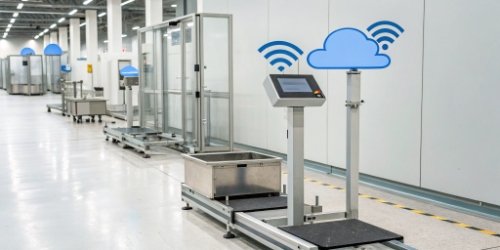
The shift to real-time data is all about speed and connectivity. When I started in this industry, collecting data meant writing it down and entering it into a spreadsheet later. Now, technology allows us to capture that data the moment it's created and send it anywhere in the world. As a manufacturer specializing in IoT electronic scales, we've built our systems around this principle. An IoT-enabled scale isn't just a weighing device; it's a smart, connected sensor on your production floor, constantly feeding you valuable information.
The Core Technologies Explained
Understanding how these technologies work helps in designing a system that is both efficient and scalable for your specific needs.
The Power of RFID
RFID technology uses radio waves to read information from a tag.5 In a slaughterhouse, a fixed reader at the weighing station can automatically detect the EID tag on a carcass as it moves into position. This hands-free process is much faster and more reliable than manual scanning or visual tag reading6. It forms the first critical link in the data chain: positively identifying the animal without slowing down the line.
IoT-Enabled Smart Scales
This is where the magic happens. An IoT scale is equipped with a processor and network connectivity (like Wi-Fi or Ethernet). Here's how it works:
- The RFID reader captures the animal's ID and sends it to the scale's processor.
- The scale's load cells capture the precise weight.7
- The scale's software bundles the ID, weight, timestamp, and other data into a single packet.
- This packet is instantly sent over the network to your cloud server or local database.
This process eliminates the need for a local PC to manage data, streamlining the hardware footprint and reducing potential points of failure.
How Do You Ensure Accurate Real-Time Linking of Carcass Weight to Individual Animal Records?
Worried about data mix-ups even with modern tech? A single mismatched ID and weight can corrupt your entire traceability effort. Ensuring accuracy requires a well-designed system and strict operational protocols.
To ensure accuracy, you need a combination of system validation, clear workflows, and regular equipment calibration. The system should prevent weighing without a valid ID scan, staff must follow a strict "scan-then-weigh" protocol, and scales must be frequently calibrated to guarantee precision.
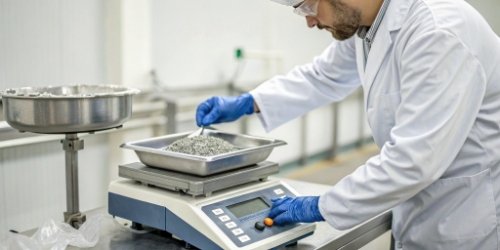
In my role overseeing quality control, I know that even the best technology is only as good as the process guiding it. We can build the most advanced scale, but if it's used improperly or isn’t maintained, the data it produces can't be trusted. Accuracy in real-time linking comes from a holistic approach. It’s about creating a system where technology, people, and maintenance work together seamlessly. A small investment in setting up these protocols pays huge dividends in data integrity and operational reliability.
The Three Pillars of Accuracy
Building a trustworthy system requires focusing on more than just the hardware. You must address the software logic, the human element, and the physical maintenance of the equipment.
1. System-Level Validation
The software itself should be your first line of defense against errors. We design our weighing systems with simple but effective logic checks:
- No ID, No Weight: The system can be configured to not record a weight unless an ID has been successfully scanned first.
- Duplicate ID Alert: If the same ID is scanned twice in a row, the system can flag it for review, preventing accidental double entries.
- Data Format Checks: The software ensures that the data being sent to your database is in the correct format, preventing database corruption.
2. Standard Operating Procedures (SOPs)
Your team needs a clear, simple process to follow. A well-defined SOP eliminates confusion and reduces the chance of human error. The workflow should be straightforward:
- Move carcass onto the scale.
- Confirm the system has captured the EID tag (e.g., a green light appears).
- Wait for the weight to stabilize and be automatically recorded.
- Move the carcass off the scale.
3. Equipment Calibration and Maintenance
An uncalibrated scale is a liability. Regular maintenance is non-negotiable for data accuracy.
| Maintenance Task | Frequency | Why It's Important |
|---|---|---|
| Daily Check | Daily | Ensure the scale zeros out properly and is clean. |
| Routine Calibration | Monthly/Quarterly | Use certified test weights to verify and adjust the scale's accuracy. |
| Annual Inspection | Annually | A professional technician should inspect all components for wear and tear. |
As a manufacturer, we provide all our clients with detailed maintenance guides and offer after-sales service to ensure their equipment remains accurate for its entire lifespan.
Conclusion
Linking carcass weight to an animal ID in real-time is vital for modern traceability. Using integrated EID/RFID tags and smart scales makes this process accurate, efficient, and essential for any operation.
-
"Recent advancements in meat traceability, authenticity verification ...", https://pmc.ncbi.nlm.nih.gov/articles/PMC11788888/. Studies and institutional reports on meat supply-chain traceability identify the association of carcass or product data with individual animal identity as a recurring challenge in livestock processing systems. Evidence role: general_support; source type: paper. Supports: Processors can face operational challenges when matching carcass data, including final weight, back to individual animal identity.. Scope note: The source may describe traceability challenges generally rather than quantify how many processors experience this specific problem. ↩
-
"Animal Disease Traceability - USDA-Aphis", https://www.aphis.usda.gov/livestock-poultry-disease/traceability. Livestock traceability guidance links animal identification and production records to food-safety trace-back, quality assurance, and market or transaction documentation functions. Evidence role: general_support; source type: government. Supports: Accurate carcass-to-animal records support traceability, quality control, and payment-related documentation.. Scope note: The evidence is likely to support these functions broadly, not necessarily the payment practices of every processor. ↩
-
"Technical note: validation of an automated feeding system for ... - PMC", https://pmc.ncbi.nlm.nih.gov/articles/PMC7200410/. Automated identification and electronic data capture literature shows that replacing handwritten or manually keyed records can reduce transcription errors and improve data consistency. Evidence role: expert_consensus; source type: paper. Supports: Integrated electronic identification and weighing tools reduce guesswork and manual recording errors compared with traditional methods.. Scope note: The evidence supports reduction of manual errors, not complete elimination under all operating conditions. ↩
-
"Piloting a livestock identification and traceability system in the ... - PMC", https://pmc.ncbi.nlm.nih.gov/articles/PMC5780531/. Evidence on RFID and automated data capture supports that electronic recording can achieve high read and recording accuracy by reducing human transcription steps. Evidence role: general_support; source type: paper. Supports: Modern EID and smart-scale systems can provide higher accuracy than manual logs by reducing human transcription errors.. Scope note: This does not substantiate a literal absence of human error; errors can still arise from tag loss, reader failure, workflow design, or database configuration. ↩
-
"Radio-frequency identification - Simple English Wikipedia, the free ...", https://simple.wikipedia.org/wiki/Radio-frequency_identification. Reference sources define radio-frequency identification as a technology that uses electromagnetic or radio-frequency signals to identify and read data stored on tags. Evidence role: definition; source type: encyclopedia. Supports: RFID uses radio waves to read information from tags.. ↩
-
"Comparison of visual and electronic devices for individual ... - PMC", https://pmc.ncbi.nlm.nih.gov/articles/PMC7199663/. Studies comparing electronic identification with visual or manual animal-recording methods report that RFID can speed identification and reduce reading or transcription errors in livestock handling contexts. Evidence role: expert_consensus; source type: paper. Supports: RFID-based identification can be faster and more reliable than manual or visual tag reading in livestock workflows.. Scope note: Reported speed and reliability gains vary by tag type, reader placement, animal flow, and facility conditions. ↩
-
"[PDF] Force Measurement Services at NIST", https://www.nist.gov/system/files/documents/calibrations/97ncs4b.pdf. Metrology and engineering references describe load cells as transducers that convert applied force into electrical signals used by electronic weighing instruments to determine mass or weight. Evidence role: mechanism; source type: education. Supports: Electronic scales use load cells to measure weight by converting force into an electrical signal.. Scope note: This explains the measurement mechanism but does not verify the precision of a specific scale without calibration and performance data. ↩



Comments (0)