
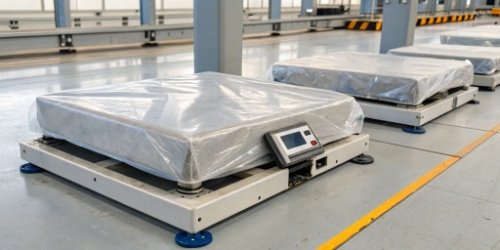
Your weighing terminals keep failing from water and dust exposure. This causes costly downtime and inaccurate data. Properly sealed terminals are the solution for long-term operational reliability.
Yes, our weighing terminals are designed and sealed to prevent water and dust ingress. We use specific IP-rated enclosures and high-quality materials to ensure they operate reliably in harsh industrial environments. This protects your investment and guarantees accurate measurements every single time.
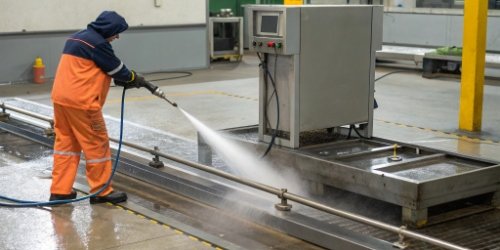
Protecting your weighing equipment is more than just a good idea; it's essential for your business's bottom line. But how can you be sure you're making the right choice for your specific needs? Let's explore the key factors that guarantee your terminals can withstand even the toughest conditions. We will look at what makes a terminal truly protected and how to select the best one for your work.
How Can You Ensure Your Weighing Terminals Are Protected Against Water and Dust?
Worried your weighing terminals won't survive your work environment? A wrong choice can lead to immediate failure and major operational disruption. Verifying key design features and certifications is how you ensure protection.
To ensure protection, check the terminal's IP (Ingress Protection) rating, which defines its sealing effectiveness. Also, examine the materials used, like stainless steel, and look for design features like seamless enclosures and protected cable entries that prevent contaminant buildup.
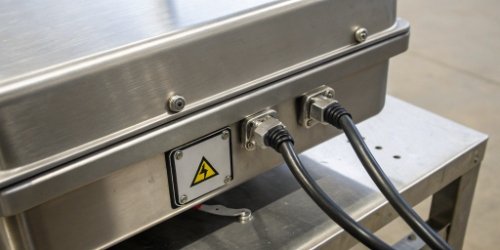
Ensuring a weighing terminal is truly protected involves looking at three key areas. It's not just about one feature, but how several elements work together to create a durable and reliable device. As a manufacturer with 19 years of OEM/ODM experience, we focus on a complete protection strategy for our clients.
Understanding Ingress Protection (IP) Ratings
The first thing to check is the IP rating. This is an international standard1 that tells you exactly how well the enclosure protects against solids, like dust, and liquids, like water. A higher number means better protection. You must match the IP rating to the specific risks in your environment. An outdoor terminal needs a different level of protection than one used in a dry warehouse.
Material Matters: Beyond the Rating
An IP rating is important, but the material of the terminal's housing is just as crucial. For environments with moisture or chemical exposure, we recommend stainless steel, usually grade 304 or 316. This material resists rust and corrosion2, which could compromise the seals over time. A plastic enclosure might have a high IP rating initially, but it may not withstand harsh cleaning chemicals or physical impacts in the long run3.
Design Details for Maximum Defense
Finally, look at the physical design. We design our terminals with minimal gaps and seams where dust or water could collect. We use waterproof cable glands to seal the entry points for wires, which are often the weakest link4. Sloped surfaces can also help water run off easily.5 These small details make a big difference in the terminal's long-term durability and reliability.
What Are the Best Practices for Selecting Sealed Weighing Terminals?
Selecting the right sealed terminal can feel overwhelming with all the options available. Choosing the wrong one is a costly mistake that can lead to premature failure and operational headaches. Following a few best practices will guide you to a perfect, long-lasting solution.
The best practice is to first assess your specific environment's hazards, like high-pressure water jets or fine dust. Then, match these needs with the appropriate IP rating and material. Finally, request product datasheets and, if possible, a sample for evaluation.

Making the right choice comes down to a clear, simple process. It’s not about finding the terminal with the highest specifications, but about finding the one that perfectly fits your operational needs and budget. We guide our clients through this process every day.
Step 1: Analyze Your Operating Environment
Before you look at any products, look at your own facility. What are the real daily challenges?
- Will the terminal be exposed to fine powders or large debris?
- Is it a dry environment, or will it be sprayed with water for cleaning?
- Are there corrosive chemicals or extreme temperatures present?
Answering these questions creates a clear profile of your needs. This is the most important step.
| Environment Type | Key Hazard | Recommended Feature |
|---|---|---|
| Dry & Dusty | Airborne particles | IP65 or higher |
| Wet Washdown | Low-pressure water jets | IP65 / IP67, Stainless Steel |
| Harsh Washdown | High-pressure, hot water | IP68 / IP69K, 316 Stainless Steel |
| Chemical Exposure | Corrosive agents | 316 Stainless Steel, verified seals |
Step 2: Match Specifications to Your Needs
With your environmental profile, you can now look at product specifications. Match the IP rating, material, and any necessary certifications (like CE) to your requirements. Don't overpay for an IP69K-rated terminal if your facility is completely dry. Likewise, don't try to save money on a lower-spec model that will fail in your wet environment.
Step 3: Evaluate the Total Cost of Ownership
The initial purchase price is only part of the story. A cheaper terminal that fails often will cost you more in downtime, repairs, and replacement than a slightly more expensive but durable one. Consider the terminal’s expected lifespan, warranty, and the availability of technical support. A reliable product from a trusted supplier offers a lower total cost of ownership and greater peace of mind.
Which IP Ratings Are Essential for Water and Dust Protection in Weighing Terminals?
The numbers in IP ratings, like IP67 and IP68, can be confusing. Misinterpreting them means you could buy a terminal that isn't protected enough for your needs, leading to early failure. Understanding a few key IP ratings makes the choice simple.
For most industrial weighing, IP65 is the minimum, protecting against dust and low-pressure water jets. For harsh washdown environments, IP67 (immersion up to 1m) or IP68 (continuous immersion) are essential. Some might even require IP69K for high-pressure steam cleaning.
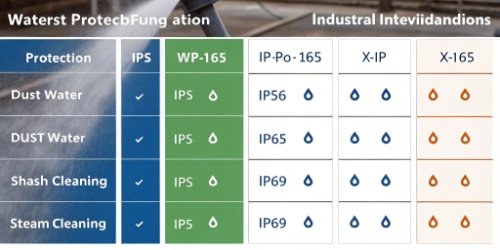
The IP rating standard gives you a clear and simple way to compare the sealing performance of different enclosures. Let’s break down what the numbers mean and which ones are most relevant for industrial scales and terminals.
Decoding the IP Rating System
An IP rating consists of two digits.
- The First Digit (Solids Protection): This number ranges from 0 to 6. It indicates the level of protection against solid objects, from large body parts down to microscopic dust. For industrial terminals, you should almost always look for a '6', which means the unit is completely "dust tight."
- The Second Digit (Liquids Protection): This number ranges from 0 to 9K. It shows how well the enclosure protects against water ingress, from simple drips to high-pressure steam jets. This is often the most critical number for industrial environments.
Common IP Ratings for Industrial Use
You don't need to know every rating. For weighing terminals, a few are very common because they cover most industrial needs.
| IP Rating | First Digit: Solids | Second Digit: Liquids | Common Application |
|---|---|---|---|
| IP65 | 6: Dust Tight | 5: Protected against water jets | General warehouse, light washdown |
| IP67 | 6: Dust Tight | 7: Protected against immersion (up to 1m) | Heavy washdown, food preparation |
| IP68 | 6: Dust Tight | 8: Protected against continuous immersion | Harsh environments, food processing |
| IP69K | 6: Dust Tight | 9K: Protected against high-pressure steam jets | Food/beverage processing, sanitation |
Beyond the Numbers: Real-World Application
Remember, these tests are done in controlled lab conditions6. An IP67 rating means the device survived 30 minutes in 1 meter of water. In your facility, it will face cleaning agents, temperature changes, and daily use. That’s why the rating must be combined with good materials and robust design to ensure true, long-term protection in the real world.
How Do You Maintain Hygiene and Durability with Sealed Weighing Terminals?
A sealed terminal is great for protection, but some designs can be a challenge to clean. If dirt and bacteria build up in seams or crevices, it compromises hygiene and can damage the unit. A proper design and the right materials make maintenance simple and effective.
To maintain hygiene and durability, choose terminals made from high-grade stainless steel with smooth, sloped surfaces. These designs prevent contaminant buildup and allow for easy, thorough cleaning, which is critical in industries like food processing and pharmaceuticals.
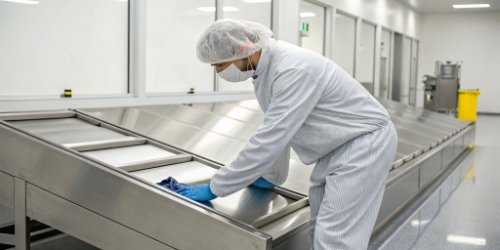
For many of our clients, especially in the food, pharmaceutical, and chemical industries, protection is not just about keeping water out. It's about ensuring the terminal can be cleaned effectively to meet strict hygiene standards. Durability and hygiene are directly connected.
The Importance of Hygienic Design
A truly hygienic design goes beyond a simple box shape. We focus on creating enclosures with rounded corners and smooth, polished surfaces7. This eliminates corners and crevices where bacteria and contaminants can hide. A sloped top allows water and cleaning solutions to run off completely, preventing pooling. Every design choice is made to make cleaning faster, easier, and more effective, ensuring that your operations remain compliant with health and safety regulations.
Custom Designs for Specific Industries
Sometimes, a standard design isn't enough. We once worked with a client in the meat processing industry. They found that even with IP68-rated terminals, tiny meat particles could get trapped in the smallest of gaps during high-pressure washdowns. This was a serious hygiene risk. In response, I worked with our R&D team to create a custom housing. We designed a terminal with a special curved shield to prevent meat splatter from reaching the seals and eliminated every possible external crevice. This is the kind of targeted solution we provide. We listen to our client's unique challenges and leverage our expertise to build exactly what they need.
Materials That Stand Up to Cleaning
Durability also depends on using materials that can handle repeated, aggressive cleaning. That is why we rely on high-grade stainless steel, typically 316 for environments with harsh chemicals. This material won't pit or corrode when exposed to strong sanitizers. The seals we use are also carefully selected to withstand these chemicals without degrading. This ensures the terminal's IP rating holds up for years, not just months.
Conclusion
Choosing the right sealed weighing terminal protects your investment. By understanding IP ratings, materials, and design, you ensure accuracy, hygiene, and long-term durability for your operations.
-
"Category:IEC 60529 - Wikipedia", https://en.wikipedia.org/wiki/Category:IEC_60529. IEC 60529 is an International Electrotechnical Commission standard that specifies the IP Code for classifying enclosure protection against solid objects and water ingress. Evidence role: definition; source type: institution. Supports: The IP rating system is based on an international standard.. ↩
-
"[PDF] The Role of Passive Film Growth - NIST Technical Series Publications", https://nvlpubs.nist.gov/nistpubs/Legacy/IR/nbsir74-583.pdf. Materials references from ASM International or similar metallurgical sources describe stainless steels, including common 304 and 316 grades, as corrosion-resistant alloys due primarily to chromium-rich passive films. Evidence role: mechanism; source type: research. Supports: Stainless steel housings resist rust and corrosion that could compromise seals over time.. Scope note: Corrosion resistance depends on environment, temperature, chloride concentration, surface finish, and maintenance; stainless steel is not corrosion-proof. ↩
-
"[PDF] CHEMICAL COMPATIBILITY CHART", https://www.wisconsin.edu/ehs/download/Fisher-Scientific-Chemical-Compatibility-Chart.pdf. Engineering materials references note that polymer and plastic enclosure materials vary widely in chemical compatibility and impact resistance, making material selection important for environments with aggressive cleaners or mechanical stress. Evidence role: general_support; source type: education. Supports: Plastic enclosures may be less suitable than stainless steel where harsh cleaning chemicals or impacts are expected.. Scope note: This supports the general need to evaluate plastics by formulation and exposure conditions; it does not show that all plastic enclosures fail in such environments. ↩
-
"[PDF] Maintaining Ingress Protection", https://hubbellcdn.com/literature/HHI-HKE-MAINTAINING-INGRESS-PROTECTION-TECHP-EN-2022-00357.pdf. Electrical enclosure guidance commonly identifies cable entries, glands, and other penetrations as points that require proper sealing to maintain an enclosure's ingress-protection rating. Evidence role: mechanism; source type: institution. Supports: Cable entry points can be vulnerable ingress paths unless properly sealed.. Scope note: The source may establish that penetrations require sealing, but it may not quantify how often cable entries are the dominant failure point in weighing terminals specifically. ↩
-
"Juice HACCP Hazards and Controls Guidance (First Edition) - FDA", https://www.fda.gov/regulatory-information/search-fda-guidance-documents/guidance-industry-juice-hazard-analysis-critical-control-point-hazards-and-controls-guidance-first. Hygienic design guidance from organizations such as EHEDG and 3-A SSI emphasizes self-draining or sloped surfaces to avoid liquid retention on equipment surfaces. Evidence role: mechanism; source type: institution. Supports: Sloped terminal surfaces help water run off and reduce pooling.. Scope note: The guidance is typically written for hygienic equipment broadly, not weighing terminals specifically. ↩
-
"Ingress Protection (IP) ratings", https://www.iec.ch/ip-ratings. IEC 60529 specifies standardized test methods for IP classifications, indicating that ratings are assigned under controlled test procedures rather than uncontrolled field conditions. Evidence role: mechanism; source type: institution. Supports: IP ratings are based on controlled laboratory tests.. Scope note: The standard establishes test conditions but does not directly predict every real-world exposure combination, such as chemicals, abrasion, or aging seals. ↩
-
"[PDF] Sanitary Design and Construction of Food Equipment1", https://ucfoodsafety.ucdavis.edu/sites/g/files/dgvnsk7366/files/inline-files/26502.pdf. Hygienic design standards and guidance, including EHEDG and 3-A SSI materials, recommend smooth, cleanable surfaces and radiused corners to reduce soil retention and facilitate cleaning of food-processing equipment. Evidence role: expert_consensus; source type: institution. Supports: Rounded corners and smooth, polished surfaces improve cleanability and reduce contamination risks.. Scope note: These hygienic design principles apply broadly to equipment used in sanitary environments; they are contextual support for weighing terminal enclosure design. ↩



Comments (0)