

Your software is brilliant, but clients want a complete solution. You risk losing deals to competitors who offer both software and hardware, leaving you frustrated and your potential untapped.
To truly position yourself as a food traceability expert, you need to bundle your software with reliable, seamlessly integrated hardware. This combination of smart software and robust hardware like industrial scales and IoT devices forms a complete, trustworthy solution that clients are actively looking for.

As a software provider, your expertise is in code, not in industrial equipment. That’s a gap many of your customers notice. They want a single point of contact, a turnkey solution that just works. They don't want the headache of finding hardware that might not even be compatible with your system. This is where you can change the game. By partnering with a hardware expert, you don't just sell software anymore. You start selling confidence, reliability, and a complete answer to your client's biggest traceability problems. This shift transforms you from a vendor into an indispensable expert in their eyes. Let's explore how you can make this happen.
What Essential Hardware Do You Need to Establish Yourself as a Food Traceability Expert?
Choosing hardware can feel overwhelming and risky. A wrong choice could damage your software's performance, your reputation, and your relationship with the client. So, what’s the answer?
You need three essential pieces of hardware: precision industrial scales for accurate weight data, label printers for clear tracking, and IoT modules to connect everything to your software. These form the unbreakable foundation of any professional food traceability system.
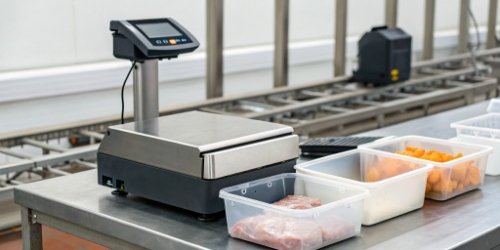
The Core Components for a Solid Start
Let's break down these essentials. It's not as complicated as it sounds, especially when you have the right partner. The goal is to get data from the physical world into your software accurately and reliably.
1. Industrial Scales: This is the starting point for most food traceability. You need to capture weight at multiple stages, from receiving raw ingredients to shipping finished products. Precision is key. A small error, multiplied over thousands of units, can lead to huge losses or compliance issues1 for your client. We provide a range of scales, from small bench scales for portioning to large floor scales for pallets. I remember working with a software company in the seafood industry. Their app was fantastic for tracking fishing vessels, but they couldn't get accurate weight data at the dock. We supplied them with our waterproof stainless steel scales with built-in IoT connectivity. Suddenly, they could offer a true "dock-to-dish" solution. Their sales grew because they were no longer just a software company; they were a complete traceability solution provider.
2. Label Printers: Once you have the weight, you need to label it. The label connects the physical item to the digital record in your software. Your system needs to generate barcodes or QR codes2 that are durable enough to survive the production environment. We help our software partners pair their systems with the right thermal transfer printers that can handle moisture and cold temperatures, ensuring the labels are scannable throughout the supply chain.
3. IoT Connectivity: This is the bridge that connects the hardware to your brilliant software3. Our hardware isn't a closed box. We design it with your needs in mind, offering simple APIs and SDKs. Your developers can easily pull data from our scales and sensors, making integration fast and painless.
Here's a simple look at the essential hardware:
| Hardware Component | Key Function | Why It's Essential for Your Software |
|---|---|---|
| Industrial Scale | Captures precise weight | Provides the core data point for inventory, batching, and shipping. |
| Label Printer | Creates physical identifiers | Links the physical product to its digital twin in your system. |
| IoT Module/Gateway | Transmits data | Seamlessly sends real-time information from the hardware to your software. |
How Can Advanced Equipment Enhance Your Role in Food Traceability?
Using basic hardware is a great start, but the market is competitive. Your competitors might be leveraging more advanced tech, making you look a step behind.
Advanced equipment like IoT weighing systems and automated checkweighers elevates your role. It helps you provide proactive insights and automation, turning you from a simple data recorder into a valuable supply chain strategist for your clients.
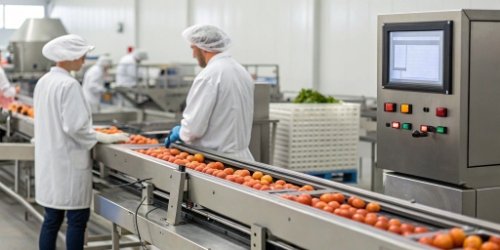
Moving from Data Collection to Data Intelligence
Offering an advanced hardware option allows you to create tiered service packages. You can serve clients with basic needs while also capturing high-value customers who want the best. This is about future-proofing your business and showcasing your expertise.
I recall a client of ours, a software vendor for the baking industry. They were successful, but their clients wanted more automation. We worked with them to integrate our automated checkweighers into their solution. Now, their software doesn't just track flour and sugar; it automatically ensures every bag of flour meets the exact weight specification on the production line, rejecting any that are out of tolerance. Their clients see fewer errors, less waste, and higher profits. This new capability allowed our partner to secure contracts with some of the largest bakeries in the region.
Advanced hardware does more than just collect data faster. It unlocks new capabilities for your software:
- IoT Weighing Systems: These are more than just scales; they are smart devices. They can be programmed to send alerts directly from the factory floor if a weight is out of specification or if a temperature threshold is breached, without even needing to go through your server first.
- Automated Checkweighers: For clients with production lines, these are a game-changer. They automatically weigh every single item, providing a 100% inspection rate4. Your software can use this data to generate detailed production reports and identify efficiency gains.
- Integrated Sensors: We can customize weighing platforms to include other sensors, like those for temperature and humidity5. For cold chain traceability, this is critical. Your software can then present a complete environmental history for a product, alongside its weight and location data. This is a premium feature that clients in the pharmaceutical and high-value food sectors will pay for.
What Steps Should You Take to Align Your Hardware with Food Traceability Standards?
Navigating food safety and trade standards is a nightmare. If the hardware you recommend isn't compliant, you and your client could face recalls, fines, and a damaged reputation.
To align with standards, you must choose hardware that is already internationally certified (like CE). Also, ensure it can generate the data logs required by regulations like the FDA's FSMA 204. Partnering with an experienced manufacturer handles this for you.
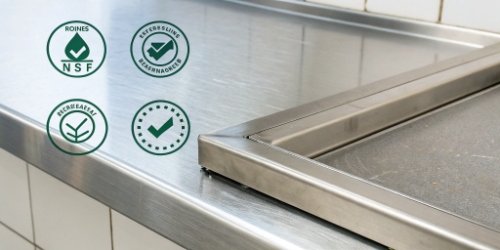
Building a Foundation of Trust and Compliance
You are a software expert, not a compliance lawyer. You shouldn't have to be. Your job is to provide a solution that works and keeps your clients safe. The easiest way to do that is to build your solution on a foundation of hardware that was designed from the ground up for the demanding food industry.
Before any product leaves our factory, our quality inspection department puts it through a comprehensive series of tests. We check everything—the accuracy of the weight measurement, the battery life, the software connectivity, and the durability of the casing. Only products that pass every single test are shipped. This is our promise to you.
Here are the key things we build into our hardware so you don't have to worry about them:
- International Certifications: Our products are designed to meet global standards. For example, our CE certification means you can confidently sell your combined solution into the European market6. For applications requiring a legal-for-trade scale, we can provide OIML-certified products7. This instantly adds credibility to your offering.
- Hygienic Design: Food processing plants are harsh environments. They involve water, cleaning chemicals, and strict hygiene rules. Our food-grade scales are made with materials like SUS304 stainless steel8 and are sealed to high IP ratings.
Here's what those IP ratings actually mean for your client:
| IP Rating | Environment | Example Use Case |
|---|---|---|
| IP65 | Dust-tight, protected from water jets | Dry processing areas, like bakeries or packaging zones. |
| IP67 | Dust-tight, can be submerged in 1m water | Wet environments like fish or vegetable processing. |
| IP68/IP69K9 | Dust-tight, protected from high-pressure, high-temp steam cleaning | Harsh washdown areas requiring deep sanitation. |
By choosing hardware with the right design and certifications, you're not just selling a product. You're selling peace of mind.
How Does Investing in the Right Tools Strengthen Your Expertise in Food Traceability?
You're a software expert, not a hardware engineer. Customers might doubt your ability to deliver a full, reliable system. How do you overcome this perception and win their trust?
Investing in quality hardware from a proven OEM/ODM partner strengthens your expertise by association. You gain instant credibility, a stable platform for your software, and access to deep manufacturing knowledge, letting you become the single-source solution provider clients prefer.

The Partnership Advantage: Your Software, Our Hardware
Think about it from your customer's perspective. When you present them with a seamless solution where the hardware and software work together perfectly out of the box, they don't see a software vendor struggling with hardware. They see a traceability expert who has everything figured out. The reliability of our hardware becomes a reflection of your brand's quality.
This is the model we have perfected. For over 19 years, we've been the silent but essential hardware partner for dozens of software solution providers in China and across Asia. They are experts in logistics, agriculture, or retail software. They come to us with a need. We provide them with robust, reliable, and often custom-branded hardware to bring their vision to life. This partnership allows them to go head-to-head with giant corporations, offering complete packages without the millions in overhead required to build a hardware division.
You don't need to become a hardware expert. You need a hardware partner. This lets you:
- Focus on Your Core Genius: Spend your time making your software even better, not troubleshooting device drivers or sourcing components. We handle the manufacturing, quality control, technical support, and logistics for the hardware.
- Increase Your Deal Value: You're no longer just selling a software license. You are selling a complete, integrated system. This means higher contract values and stickier customer relationships.
- Reduce Your Risk: With our 12-month warranty and dedicated after-sales support, you have a team standing behind the physical part of your solution. If there's an issue, we are here to help you resolve it. This is how you build a reputation for reliability.
Conclusion
Positioning yourself as a food traceability expert is simple. By partnering with a hardware specialist, you can offer the complete, reliable solutions your clients demand, letting your software shine.
-
"[PDF] 2023 NIST Handbook 133 Checking the Net Contents of Packaged ...", https://www.nist.gov/system/files/documents/2023/02/10/2023%20NIST%20Handbook%20133.pdf. Weights-and-measures guidance and packaged-goods regulations show that measurement errors can affect declared quantity, commercial settlement, and regulatory compliance, supporting the risk associated with repeated weighing inaccuracies. Evidence role: general_support; source type: government. Supports: Repeated weighing errors can create financial and compliance consequences in food production and trade.. Scope note: The source can substantiate compliance and transaction risk, but the magnitude of financial loss depends on product value, volume, and error rate. ↩
-
"GS1 Global Traceability Standard", https://www.gs1.org/standards/gs1-global-traceability-standard/current-standard. A GS1 or comparable standards source documents that barcodes and two-dimensional codes are used to encode product identifiers and support traceability by linking physical products to digital records. Evidence role: mechanism; source type: institution. Supports: Barcodes and QR codes help connect physical food products to digital traceability records.. Scope note: The source supports barcode and QR-code identification generally; durability in specific production environments depends on label material, printer type, and operating conditions. ↩
-
"Enhancing Food Safety in the Cold Chain Through Internet of Things ...", https://pmc.ncbi.nlm.nih.gov/articles/PMC12910151/. Research on IoT-enabled food supply chains describes connected sensors, scales, and gateways as mechanisms for collecting and transmitting real-time operational data to information systems. Evidence role: mechanism; source type: paper. Supports: IoT connectivity bridges physical hardware and traceability software by transmitting operational data.. Scope note: This supports the technical concept of IoT connectivity but does not verify the compatibility or ease of integration of any specific vendor hardware. ↩
-
"End of Line Checkweighing - Packaging Distributors Inc.", https://www.pdimachinery.com/products/checkweigher-end-of-line/. A technical or standards source on automatic checkweighers explains that in-line checkweighers weigh individual items moving through a production line, which can support full inspection when every unit passes through the device. Evidence role: mechanism; source type: institution. Supports: Automated checkweighers can inspect the weight of every item on a production line.. Scope note: The claim is valid only for production lines configured so that every item is routed through the checkweigher and the device is properly calibrated. ↩
-
"[PDF] Annex 9 Model guidance for the storage and transport of time", https://www.who.int/docs/default-source/medicines/norms-and-standards/guidelines/distribution/trs961-annex9-modelguidanceforstoragetransport.pdf?sfvrsn=b80e925f_2. Cold-chain and food-safety guidance identifies temperature monitoring, and in some applications humidity monitoring, as relevant to maintaining product quality and safety during storage and distribution. Evidence role: expert_consensus; source type: institution. Supports: Temperature and humidity sensors can add important environmental context to food traceability records, especially in cold-chain applications.. Scope note: Humidity is critical for some foods and storage conditions but is not equally important for every cold-chain product. ↩
-
"EU Legislation and CE Marking - International Trade Administration", https://www.trade.gov/country-commercial-guides/eu-eu-legislation-and-ce-marking. European Commission guidance states that CE marking indicates a product’s conformity with applicable EU requirements and allows covered products to circulate within the European Economic Area. Evidence role: definition; source type: government. Supports: CE marking supports market access for covered products in the European market by indicating conformity with applicable EU rules.. Scope note: CE marking applies only to products covered by relevant EU legislation and may not replace sector-specific food-contact, metrology, or national requirements. ↩
-
"International Legal Metrology FAQs | NIST", https://www.nist.gov/pml/owm/faqs/international-legal-metrology-faqs. OIML documentation explains that OIML recommendations and certificates support international acceptance of measuring instruments in legal metrology, including weighing instruments used for trade. Evidence role: definition; source type: institution. Supports: OIML-certified weighing products are relevant where legal-for-trade measurement compliance is required.. Scope note: OIML certification can support approval, but legal-for-trade use still depends on the importing country’s national or regional metrology authority. ↩
-
"[PDF] 3-A Accepted Practices for A Method of Producing Steam of Culinary ...", https://ris.dls.virginia.gov/uploads/2VAC5/dibr/609-03%20A%20Method%20of%20Producing%20Culinary%20Steam-20240315100524.pdf. Food-equipment hygienic design guidance identifies stainless steel as a commonly used food-contact material because of its corrosion resistance, cleanability, and suitability for sanitary equipment design. Evidence role: expert_consensus; source type: institution. Supports: SUS304 stainless steel is a relevant material choice for hygienic food-processing equipment.. Scope note: The source supports stainless steel generally; suitability of SUS304 for a specific application depends on chemicals, salinity, temperature, and cleaning regime. ↩
-
"IP code - Wikipedia", https://en.wikipedia.org/wiki/IP_code. Ingress-protection standards define IP ratings for resistance to dust and water ingress; IEC 60529 covers IP codes such as dust-tight and immersion ratings, while ISO 20653 defines IP69K for high-pressure, high-temperature water-jet cleaning. Evidence role: definition; source type: institution. Supports: IP68 and IP69K ratings indicate high levels of dust and water ingress protection relevant to harsh washdown environments.. Scope note: IP ratings describe enclosure protection under standardized test conditions and do not alone prove overall hygienic suitability or chemical resistance. ↩



Comments (0)