

Struggling to find scales that survive a slaughterhouse? Your clients are tired of breakdowns and cleaning nightmares. We've found the top three features they always ask for.
Slaughterhouse clients primarily demand three things: unwavering accuracy for fair trade, extreme durability to withstand harsh conditions, and impeccable hygiene for easy, thorough cleaning to meet food safety standards.

Over my 19 years in this business, I've spoken with hundreds of clients. The ones in the meat processing industry always have the toughest requirements. You can't just sell them any industrial scale. Their environment is one of the most demanding places for any piece of equipment. It’s wet, it’s corrosive1, and the workload is relentless. After all these conversations, a clear pattern emerged. It always comes down to the same core needs. Let’s break down exactly what your clients are looking for, and why these features are not just nice to have, but absolutely essential for their survival and success.
What Key Features Do Slaughterhouse Clients Prioritize When Choosing a Scale?
Choosing the wrong scale costs time and money. Constant repairs and inaccurate weights are frustrating for any operator. Prioritize these key features to make a lasting, valuable investment.
Clients focus on accuracy, durability, and hygiene above all else. A scale must provide precise weights, endure constant washing and heavy use, and be easy to sanitize to prevent contamination.

When we get an inquiry for a slaughterhouse scale, the conversation always starts with and comes back to three points. I once had a client in North America who was losing thousands a month because their old scales were off by just a small percentage on every carcass. For them, it's not a small detail; it's their bottom line.
The Need for Precision
Accuracy is about trust and money. An inaccurate scale can lead to overpaying for livestock or under-billing for finished products.2 In a high-volume business, these small errors add up to huge losses. Legal-for-trade certification is often a minimum requirement3, ensuring every transaction is fair and transparent.
Built to Last
The slaughterhouse environment is brutal. Scales are exposed to water, blood, cleaning chemicals, and constant heavy loads.4 Durability isn't just about surviving; it's about performing reliably day after day. This means heavy-duty stainless steel construction and protected internal components.
Hygiene is Non-Negotiable
In food processing, cleanliness is paramount. A scale must be designed for easy and thorough cleaning to prevent bacterial growth and cross-contamination5. Failing a hygiene audit can shut a plant down.6
| Feature | Why It's a Priority | Impact of Failure |
|---|---|---|
| Accuracy | Ensures fair trade, controls costs | Financial loss, legal disputes |
| Durability | Withstands harsh, wet environments | Frequent downtime, replacement costs |
| Hygiene | Meets food safety standards | Product contamination, failed audits |
How Can Scales Be Optimized to Meet the Specific Needs of Slaughterhouses?
A standard scale just won't cut it in a slaughterhouse. The constant moisture and heavy use cause breakdowns. You need a scale specifically designed for this tough environment.
Optimization involves a full stainless steel, waterproof, and anti-corrosion design. The structure must be simple for high-pressure washing and reinforced to resist impacts from heavy carcasses and equipment.
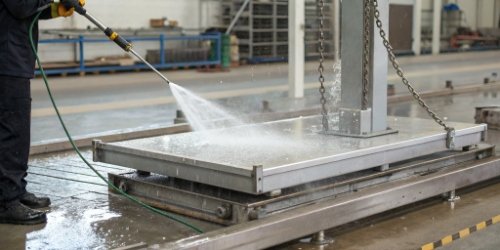
We don't just sell scales; we provide solutions. This often means optimizing a scale's very design. I remember working with a pork processor who was having trouble with their old scales. The issue was that small bits of tissue would get stuck in the gaps around the weighing platform, making cleaning a nightmare and posing a hygiene risk.
Waterproof and Anti-Corrosion by Design
True optimization starts with the material. We use 304 or even 316 stainless steel, which resists rust and corrosion from water and cleaning agents7. All components, including the load cells and indicators, must be sealed. We design our slaughterhouse scales to meet IP68 or IP69K ratings, meaning they can handle complete submersion and high-pressure, high-temperature washdowns8.
Simplified for Cleaning
A good design is a simple one. We aim for smooth surfaces with no crevices or exposed threads where bacteria can hide9. This is why we designed a scale with a completely smooth top platform and internal reinforcements. The simpler the structure, the faster and more effective the cleaning process, saving labor and ensuring safety.
Resisting Bumps and Knocks
In a busy slaughterhouse, equipment gets bumped. Carcasses are moved quickly, carts can collide with the scale, and tools can be dropped. Our scales are optimized with overload protection and reinforced frames to absorb these impacts without affecting the scale's accuracy or lifespan.
What Advanced Scale Functions Are Most Requested by Slaughterhouse Operators?
Is your team slowed down by complex equipment? Operators get frustrated with slow, hard-to-use scales. They are asking for simple functions that make their jobs faster and easier.
Operators want practical functions that boost efficiency. This includes rapid weight stabilization for quick throughput, anti-residue designs, and simple one-touch operations for tasks like taring or data logging.
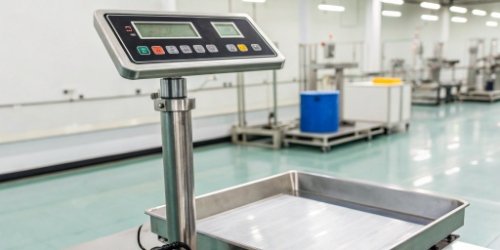
The people who use our scales every day are the operators on the floor. If the scale is hard to use, it slows down the entire production line. For your software company, this is a key insight: your interface needs to be as simple as the hardware functions we provide. Your software's value is maximized when it pairs with hardware that enables, not hinders, a fast workflow.
Speed is Everything
In a production line, seconds matter. Operators need a scale that can lock onto a stable weight instantly, even if the load is moving slightly, like a hanging carcass. This is where features like an "animal weighing" or "peak hold" function become incredibly valuable. The scale's software filters out the noise and displays a steady, accurate weight fast.
Simplicity in Operation
No one has time to read a manual on the processing floor. Operators request functions that can be executed with a single button press. Common requests include a large, easy-to-press "TARE" button to zero out the weight of hooks or containers, or a "PRINT/SEND" button that weighs the item and automatically sends the data to a connected computer or printer. This is where hardware and software integration shines, creating a seamless workflow.
| Operator Need | Corresponding Scale Function | Benefit |
|---|---|---|
| High Throughput | Fast weight stabilization | More items weighed per hour |
| Moving Loads | Animal weighing mode | Accurate weight for unstable items |
| Efficiency | One-touch Tare/Zero | Faster processing between items |
| Data Management | Single-button data export | Error-free record keeping, connectivity |
How Do Accuracy, Durability, and Hygiene Influence Slaughterhouse Scale Requirements?
Think these three features are just buzzwords? Ignoring them leads to profit loss, equipment failure, and health code violations. Understand why they are the foundation of slaughterhouse operations.
Accuracy ensures you don't lose money on shipments. Durability guarantees the scale survives the demanding environment. Hygiene is crucial for meeting strict food safety and quarantine regulations.
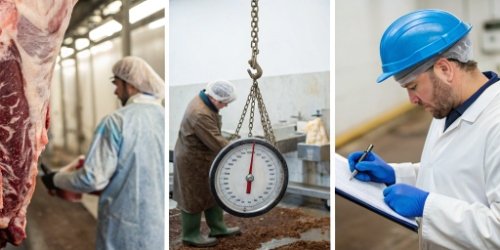
These three pillars—accuracy, durability, and hygiene—are not just features; they are the business case for a quality scale. They directly influence a slaughterhouse's profitability, operational efficiency, and legal standing. As a software provider, understanding these core drivers helps you position your solution as a tool that enhances these critical business outcomes, supported by our reliable hardware.
Accuracy Protects Your Profits
Let's do some simple math. If a plant processes 1,000 carcasses a day and the scale is off by just 0.5 kg per carcass, that's a 500 kg daily discrepancy. Over a year, this can amount to tens or even hundreds of thousands of dollars in lost revenue or overpayment. This is why certified accuracy is the single most important requirement. It’s a direct investment in financial security.
Durability Lowers Total Cost of Ownership
A cheap scale that fails after six months is far more expensive than a durable one that lasts for years. Downtime is a plant's biggest enemy. Every hour a scale is out of service, the production line stops, and money is lost. A durable scale means lower repair costs, less downtime, and a better return on investment over the life of the asset.
Hygiene is Your License to Operate
This one is simple. You can't run a food processing plant without meeting hygiene standards. A scale that cannot be properly sanitized is a liability that can lead to product recalls, brand damage, and even closure. Adhering to hygiene requirements is not optional; it's a fundamental part of the business.
Conclusion
Accuracy, durability, and hygiene are essential. We build scales with these in mind, empowering you to improve production and profits. We are your reliable weighing partner.
-
"Meatpacking - Hazards and Solutions | Occupational Safety ... - OSHA", http://www.osha.gov/meatpacking/hazards-solutions. Occupational and food-safety guidance for meat and poultry processing describes frequent cleaning, wet areas, and chemical sanitizers, supporting the characterization of slaughterhouse environments as wet and potentially corrosive for equipment. Evidence role: general_support; source type: government. Supports: Slaughterhouse operating environments are wet and potentially corrosive.. Scope note: The source may describe facility conditions generally rather than measuring corrosion rates on weighing equipment specifically. ↩
-
"[PDF] A Handbook for the Weights and Measures Administrator", https://www.nist.gov/system/files/documents/2017/04/28/hb-155-final.pdf. Legal metrology materials explain that weighing errors in commercial transactions can transfer value between buyer and seller, supporting the claim that inaccurate scales can cause overpayment or under-billing. Evidence role: mechanism; source type: government. Supports: Inaccurate commercial scales can create financial losses through incorrect payments or billing.. Scope note: The support is general to trade weighing and does not quantify losses for a specific slaughterhouse operation. ↩
-
"[PDF] NIST Handbook 44: Specifications, Tolerances, and Other Technical ...", https://www.nist.gov/system/files/documents/2022/11/30/2023%20NIST%20Handbook%2044.pdf. NIST Handbook 44 and state weights-and-measures programs define requirements for commercial weighing devices used to determine charges, supporting the need for legal-for-trade approval in transaction-based weighing. Evidence role: definition; source type: government. Supports: Legal-for-trade certification is required or commonly necessary when slaughterhouse scales are used for commercial transactions.. Scope note: The applicability depends on jurisdiction and whether the scale is used for direct commercial transactions. ↩
-
"[PDF] The Use of Water in Animal Production, Slaughter, and Processing", https://www.fsis.usda.gov/sites/default/files/media_file/2021-07/NACMCF_2018-2020_Water_Reuse.pdf. Meat-processing sanitation guidance documents the routine use of water and chemical cleaning in slaughter and processing areas, and slaughter operations involve handling heavy carcasses, supporting the environmental exposure described for equipment. Evidence role: general_support; source type: government. Supports: Slaughterhouse scales are exposed to water, biological materials, cleaning chemicals, and heavy loads.. Scope note: This is contextual support and may not enumerate every exposure for scales specifically. ↩
-
"[PDF] FDA Food Code 2017", https://www.fda.gov/media/110822/download. Food-safety authorities state that inadequate cleaning and sanitation of food-contact surfaces can allow pathogen survival and cross-contamination, supporting the need for cleanable scale designs in meat processing. Evidence role: mechanism; source type: government. Supports: Easy-to-clean food-processing equipment helps reduce bacterial growth and cross-contamination risk.. Scope note: The source supports the microbiological mechanism generally; contamination risk varies by surface contact, process layout, and sanitation program. ↩
-
"Insanitary Conditions - USDA Food Safety and Inspection Service", http://www.fsis.usda.gov/taxonomy/term/17. USDA FSIS enforcement materials show that meat and poultry establishments can face suspension or withholding of inspection when insanitary conditions or regulatory noncompliance prevent safe operations, supporting the possibility of operational shutdown after serious hygiene failures. Evidence role: case_reference; source type: government. Supports: Serious hygiene noncompliance can lead to suspension or shutdown of slaughterhouse operations.. Scope note: Enforcement outcomes depend on the severity of noncompliance and the applicable regulatory authority; not every failed audit leads to closure. ↩
-
"[PDF] Studies Related to Microbially Induced Corrosion of Stainless Steel ...", https://openprairie.sdstate.edu/cgi/viewcontent.cgi?article=2758&context=etd. Materials references from engineering or standards bodies describe austenitic stainless steels such as 304 and 316 as corrosion-resistant alloys, with 316 offering improved resistance in chloride-containing environments, supporting their use in wet cleaning conditions. Evidence role: definition; source type: education. Supports: 304 and 316 stainless steels resist rust and corrosion from water and cleaning agents.. Scope note: Actual corrosion performance depends on chemical concentration, temperature, surface finish, and maintenance practices. ↩
-
"IP code - Wikipedia", https://en.wikipedia.org/wiki/IP_code. IEC ingress-protection classifications define IP68 as protection against continuous immersion under specified conditions, while IP69K is used for high-pressure, high-temperature water-jet cleaning, supporting the stated meaning of these ratings. Evidence role: definition; source type: institution. Supports: IP68 and IP69K ratings indicate resistance to immersion and high-pressure, high-temperature washdown conditions.. Scope note: Exact test conditions vary by standard edition and manufacturer declaration, so a rating does not guarantee suitability for every washdown scenario. ↩
-
"[PDF] Sanitary Design and Construction of Food Equipment1", https://ucfoodsafety.ucdavis.edu/sites/g/files/dgvnsk7366/files/inline-files/26502.pdf. Hygienic design guidance for food equipment emphasizes smooth, cleanable surfaces and avoidance of niches, cracks, and crevices because they can retain soil and microorganisms, supporting this design requirement. Evidence role: expert_consensus; source type: institution. Supports: Food-processing equipment should avoid crevices and exposed threads because they can harbor bacteria and impede cleaning.. Scope note: Guidance is generally applicable to food equipment; the specific risk depends on whether the scale surface contacts exposed product and how it is cleaned. ↩


Comments (0)