
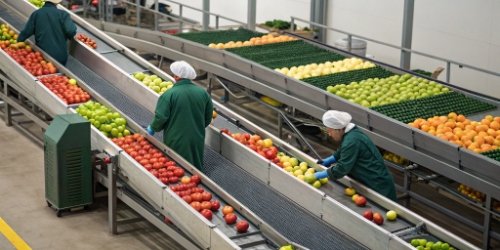
Your profits depend on accurate sorting, but manual checks are slow and inconsistent. Are you leaving money on the table by not capturing the right data at the right time?
The key data points captured during fruit and vegetable sorting include weight, size, color, firmness, and surface defects. Most importantly, weight data, captured by a checkweigher, is the foundational metric used for immediate quality assessment, price calculation, and direct integration with supplier payment systems.
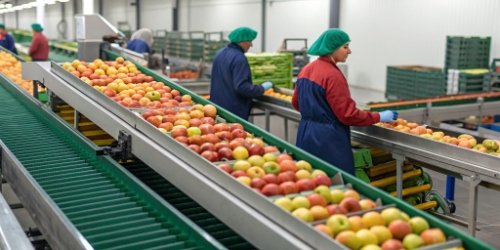
This data is the lifeblood of a modern produce operation. It transforms a simple sorting line into a powerful business intelligence tool. For any business looking to improve efficiency and profitability, understanding how this data is captured and used is the first step. It allows you to move from guessing to knowing, ensuring every piece of fruit is categorized and priced correctly. Let's explore the specifics of what data you can, and should, be collecting.
What Key Data Can Be Recorded During the Sorting of Fruits and Vegetables?
You are collecting sorting data, but it feels incomplete. Are you sure you are recording the key metrics that actually drive profit and ensure quality for your customers?
The most vital data recorded are weight and size, as these directly determine pricing categories. Following these are visual data like color for ripeness and blemishes for quality grading. We find weight is the first and most critical gatekeeper for assessing supplier quality upon arrival.
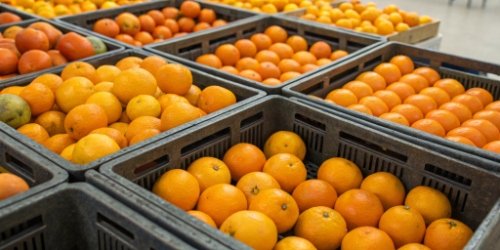
In my 19 years of experience helping businesses optimize their weighing processes, I've learned that not all data is created equal. While many factors contribute to the "quality" of fresh produce, a few core metrics provide the most business value. The goal is to turn a subjective concept like "good quality" into objective, actionable data. It starts with the most basic and commercially important attribute: weight. From there, we can build a more complete picture of each item passing through the line, but it all rests on a foundation of accurate measurement. Let’s break down these critical data types.
The Foundational Metrics: Weight and Size
Weight is the most objective and commercially significant data point.1 For produce sold by weight, this is a direct input for pricing. For produce sold by count in a package, consistent weight ensures consumer satisfaction and regulatory compliance. Our checkweighers are often the very first stop on a sorting line. They provide an immediate verdict on the supplier's shipment, identifying if the product meets the agreed-upon weight specifications. Size, often measured by diameter or length, is crucial for packaging and aesthetic grading.
The Quality Indicators: Color and Defects
Beyond physical measurements, visual data provides the next layer of quality assessment.
- Color: Advanced vision systems can analyze the color of each item, which is a strong indicator of ripeness (e.g., green vs. red tomatoes) or variety.2
- External Defects: Cameras can also identify and classify surface blemishes, bruises, cuts, or signs of decay. This data is used to sort produce into different grades, such as Grade A for retail, a lower grade for processing, or rejection.
| Data Type | Primary Use Case | How It's Captured |
|---|---|---|
| Weight | Pricing, Supplier Payment, Yield Calculation | High-speed dynamic checkweighers |
| Size | Packaging, Grade Classification | Vision systems, mechanical sizers |
| Color | Ripeness Assessment, Variety Sorting | Spectrometers, color cameras |
| Defects | Quality Grading, Waste Reduction | High-resolution cameras with AI |
How Is Data Captured and Utilized in the Fruit and Vegetable Sorting Process?
Knowing what data you need is one thing. But are your current methods for capturing it slow, manual, and prone to costly errors that hurt your bottom line?
Data is captured automatically using sensors like dynamic checkweighers for weight and vision systems for size and color. This real-time data is then used to physically sort the produce and is instantly transmitted to management software for inventory control, price setting, and supplier evaluation.
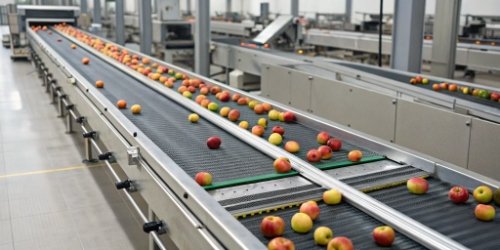
The magic of a modern sorting line isn't just in the sorting itself, but in the seamless flow of information. The process can be broken down into two simple phases: capture and utilization. In the past, this was a labor-intensive process. Today, we use a series of automated tools that work together. As a manufacturer of industrial scales, we focus on making the capture phase as accurate and efficient as possible, because we know that bad data in means bad business decisions out. Let's look at how these two phases work together to create a smarter sorting system.
The Capture Phase: Using Automated Sensors
This is where the physical measurement happens. The process is a high-speed, automated workflow.
- Weighing: As produce moves along a conveyor, it passes over an in-motion checkweigher. Our scales are designed to capture an accurate weight for each individual item in a fraction of a second without stopping the line. This is the first and most critical piece of data.
- Visual Inspection: Immediately after weighing, the produce typically passes through a tunnel equipped with cameras and lights. These vision systems take multiple images to measure dimensions (size), analyze color, and spot any surface defects like bruises or cuts.
The Utilization Phase: Turning Data into Action
Capturing data is useless if you don't act on it. The data from the sensors is fed into a central controller, which then utilizes it in several powerful ways.3
- Automated Sorting: The system uses the data to physically divert each piece of produce into the correct channel or bin based on pre-set parameters (e.g., "apples over 150g go to Bin A," "oranges with blemishes go to the juice bin").
- System Integration: This is a key area for our clients, especially software providers. The data from our scales can be exported in standard formats. We design our systems to easily connect with your platforms. This means weight and quality data can be automatically sent to a Supplier Management System to calculate payment, or to an ERP to update inventory levels in real time. This eliminates manual data entry and provides total visibility.
What Types of Sorting Metrics Are Typically Measured for Fresh Produce Quality?
Defining "quality" can be subjective and lead to disputes. Are your quality standards based on inconsistent opinions rather than objective metrics that ensure fairness and profitability?
Typical sorting metrics include weight classification (e.g., under 100g, 100-150g, over 150g), size grading by diameter, a color score for ripeness, and a defect rate. These objective metrics combine to create a final quality grade that dictates the product's value.
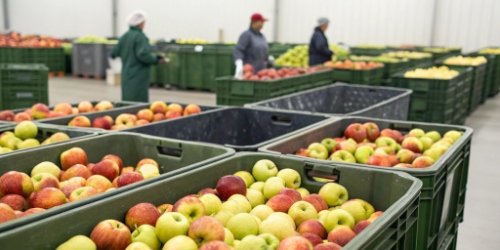
To run a successful produce business, you need to turn the abstract idea of "quality" into a concrete set of numbers. This removes subjectivity and ensures that everyone—from the supplier to the end customer—is on the same page. Standardized metrics are the foundation of fair pricing, efficient operations, and consistent product delivery. I always advise my clients to focus on metrics that are both easy to measure and directly linked to commercial value. The most effective sorting systems use a combination of quantitative measurements and quantified qualitative assessments to build a complete quality profile for every single item.
Quantitative Metrics: The Hard Numbers
These are direct, objective measurements that leave no room for interpretation. They form the backbone of any reliable sorting program. As a scale manufacturer, we see weight as the most important quantitative metric because it often ties directly to the price. For example, a batch of avocados can be sorted into distinct price tiers based on just a few grams of difference.
| Metric | Description | Business Impact |
|---|---|---|
| Weight Classification | Sorting items into predefined weight ranges. | Essential for price-per-kilogram sales and creating uniform packaged goods. |
| Size/Diameter | Measuring the physical dimensions of each item. | Determines if produce fits specific packaging and meets aesthetic standards for premium grades. |
| Firmness | A measure of the produce's texture. | Indicates ripeness, predicts shelf life, and ensures a good consumer experience. |
Quantified Qualitative Metrics
These metrics take subjective attributes like color or appearance and assign them a numerical value using technology. This allows for consistent and scalable quality control. For instance, a vision system doesn't just see a "red" apple; it measures the exact percentage of the surface that is red and assigns it a score, which can be correlated with ripeness and consumer appeal. Similarly, the system can count the number and size of blemishes to calculate a defect score, automatically downgrading an item if it exceeds a set threshold.
How Can Technology Enhance Data Collection in Fruit and Vegetable Sorting Systems?
Your current sorting methods feel outdated and disconnected. Are you worried that competitors are using technology to get ahead, making their operations faster, smarter, and more profitable than yours?
Technology enhances data collection through IoT-enabled scales and sensors that stream real-time data to cloud platforms. AI algorithms then analyze this data for smarter sorting decisions, predictive yield analysis, and seamless integration with other business management systems, revolutionizing operational efficiency.

Technology is the bridge between basic sorting and intelligent supply chain management. In my role, I've seen firsthand how integrating modern tech transforms an operation. It's no longer just about separating big apples from small ones. It's about creating a live, digital twin of your entire sorting process that you can monitor, analyze, and optimize from anywhere. The latest advancements in the Internet of Things (IoT) and Artificial Intelligence (AI) are not just for big tech companies; they are practical tools that we build into our weighing systems to give our clients a serious competitive advantage.4
The Role of IoT in Weighing and Sensing
The biggest change in recent years is connectivity. Our industrial scales are no longer isolated machines; they are smart, connected data points on your network.
- Real-Time Data Streaming: An IoT-enabled checkweigher doesn't just display the weight. It constantly sends a stream of data (weight, timestamp, item count) to a local server or a cloud platform. This provides managers with a live dashboard of their production line's performance.
- Remote Monitoring & Diagnostics: Because the devices are connected, we can help you monitor their performance remotely. You can receive alerts if a machine needs calibration or maintenance, reducing downtime and ensuring data accuracy is always maintained. This is a level of after-sales service that our customers truly value.
Leveraging AI and Cloud Computing for Smarter Decisions
Once the data is collected and centralized in the cloud, AI can unlock a new level of intelligence. This is where software providers can create incredible value. The data from our scales becomes the fuel for your advanced software.
- Dynamic Sorting: AI can adjust sorting parameters on the fly. If it detects a trend of smaller-than-average fruit coming from a certain supplier, it can alert the purchasing manager and adjust sorting criteria automatically.
- Predictive Analytics: By analyzing historical weight and quality data, AI models can forecast the final pack-out yield from a given batch with high accuracy.5 This helps with sales planning and logistics.
- Seamless Business Integration: The ultimate goal is to connect this operational data directly to financial and business outcomes. Our systems are designed with this in mind, providing simple APIs to feed data into your ERP, supplier portals, and quality management software. This creates a fully transparent and data-driven operation from farm to checkout.
Conclusion
Ultimately, capturing detailed data, especially weight, during fruit sorting is crucial. It drives quality control, ensures fair pricing, boosts efficiency, and empowers intelligent business decisions for a competitive edge.
-
"A novel method for vegetable and fruit classification based on using ...", https://pmc.ncbi.nlm.nih.gov/articles/PMC11046067/. This source supports the assertion that weight is a key metric in produce sorting due to its objectivity and commercial relevance. Evidence role: expert_consensus; source type: education. Supports: Weight is the most objective and commercially significant data point in produce sorting.. ↩
-
"Maturity Indicators - Cooperative Extension: Tree Fruits", https://extension.umaine.edu/fruit/harvest-and-storage-of-tree-fruits/maturity-indicators/. This source supports the use of advanced vision systems for analyzing color as an indicator of ripeness and variety in produce sorting. Evidence role: mechanism; source type: research. Supports: Advanced vision systems analyze color to determine ripeness and variety in produce sorting.. Scope note: The source may not specifically address all types of produce. ↩
-
"Chemical Sensors for Farm-to-Table Monitoring of Fruit Quality", https://pmc.ncbi.nlm.nih.gov/articles/PMC7956188/. This source supports the claim that sensor data in produce sorting is centralized and used for various operational purposes. Evidence role: mechanism; source type: research. Supports: Sensor data in produce sorting is centralized and used for operational purposes.. Scope note: The source may not detail all specific uses of the data. ↩
-
"Advancement in artificial intelligence for on-farm fruit sorting and ...", https://pmc.ncbi.nlm.nih.gov/articles/PMC10117807/. This source supports the claim that IoT and AI advancements are integrated into weighing systems for competitive advantages in produce sorting. Evidence role: general_support; source type: research. Supports: IoT and AI advancements are integrated into weighing systems for competitive advantages in produce sorting.. Scope note: The source may not address specific competitive advantages. ↩
-
"AI is transforming weather forecasting − and that could be a game ...", https://climate.uchicago.edu/insights/ai-is-transforming-weather-forecasting-and-that-could-be-a-game-changer-for-farmers-around-the-world/. This source supports the claim that AI models use historical data to forecast pack-out yields in produce sorting. Evidence role: mechanism; source type: research. Supports: AI models use historical data to forecast pack-out yields in produce sorting.. Scope note: The source may not specify the accuracy levels of such forecasts. ↩


Comments (0)