

Struggling with shrinking profit margins? Product giveaway in your fruit packing line could be silently eating away at your bottom line every single day.
Precision checkweighing ensures each package meets its target weight accurately. This technology stops over-packing, which is giving away free product, and under-packing, which risks non-compliance. This directly boosts your profitability and protects your brand's reputation.
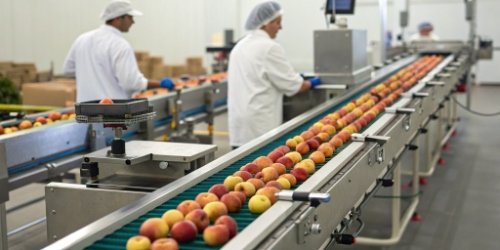
This simple change can have a massive ripple effect on your entire operation. It moves your quality control from a reactive, manual process to a proactive, automated one. But how exactly does this technology work to save you money and improve your process? Let's break down the key ways a checkweigher becomes one of the most valuable assets on your packing line.
What Role Does Precision Checkweighing Play in Minimizing Product Giveaway in Fruit Packing?
Giving away valuable fruit with every package? Inaccurate weighing is a common but very costly problem that directly cuts your revenue with each shipment.
A precision checkweigher acts as a final, unbiased gatekeeper on your production line. By weighing every single package with high accuracy, it identifies and flags any that are over the specified weight, preventing that valuable product from being given away for free.
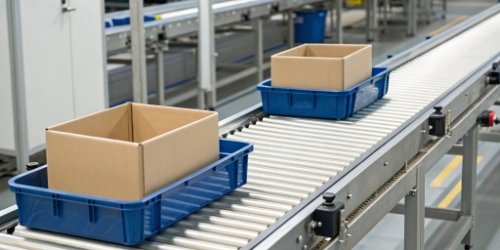
At our company, we've seen how even small inaccuracies add up to huge losses. A checkweigher provides the 100% inspection rate that manual spot-checking can never achieve. It works by establishing clear weight parameters for your products. This isn't just about catching mistakes; it's about creating a system of total weight control. You set a target weight, plus an acceptable upper and lower tolerance limit. Anything outside this range is automatically diverted, providing you with real-time control over your output. This ensures that every package leaving your facility is perfectly within specification, protecting both your profits and your B2B customers' trust in your consistency.
How Weight Tolerances Work
A checkweigher's main job is to measure products against pre-set weight zones.
- Underweight: Below the minimum acceptable limit. These are rejected to avoid legal issues and customer complaints.
- Acceptable Weight: Within the target range. These packages proceed down the line.
- Overweight: Above the maximum acceptable limit. These are also rejected to prevent product giveaway.
The Financial Impact of Overfilling
The table below shows a simple example of how costly giveaways can be without a checkweigher.
| Metric | Without Checkweigher | With Precision Checkweigher |
|---|---|---|
| Average Giveaway per Pack | 5 grams | 0 grams |
| Packs per Minute | 100 | 100 |
| Lost Product per Hour | 30 kg | 0 kg |
| Lost Product per Day (8h) | 240 kg | 0 kg |
| Annual Lost Revenue | Tens of thousands of dollars | $0 |
How Can Advanced Checkweighing Systems Improve Accuracy in Fruit Packaging Processes?
Relying on manual spot-checks is slow and often misses costly errors. This approach leads to inconsistent package weights and potential losses you might not even realize.
Advanced systems use dynamic weighing to weigh products while in motion on a conveyor. They also have automatic feedback loops that can adjust upstream filling equipment. This ensures sustained accuracy and greatly reduces human error and inconsistency.
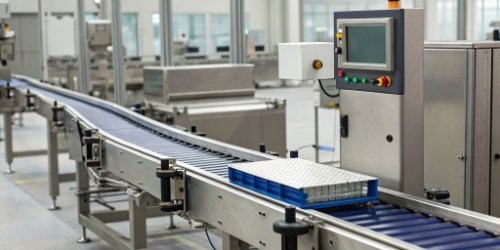
The biggest leap forward is the move from simply rejecting bad packages to preventing them in the first place. An advanced checkweigher doesn't just sit at the end of the line catching mistakes.1 As a manufacturer, we design systems that communicate with the machinery that fills the packages, such as a multi-head weigher or a volumetric filler. If the checkweigher notices a trend of packages becoming slightly heavier, it sends a signal to the filler to reduce the amount slightly. This self-correcting process is called a feedback loop, and it keeps your packaging process perfectly tuned without needing an operator to constantly make manual adjustments. This not only improves weighing accuracy but also gathers valuable production data to help you identify bigger operational issues.
The Power of Feedback Loops
An automated feedback system is a game-changer for consistency. It creates a closed-loop system where the process actively manages itself.
- Measure: The checkweigher weighs a series of packages.
- Analyze: The system's software calculates the average weight and detects any drift from the target.
- Correct: It sends an electronic signal to the filling machine to increase or decrease the fill amount.
- Repeat: This cycle happens continuously, ensuring the process stays centered on the target weight.
Data-Driven Process Improvement
Modern checkweighers are also data collection hubs.2 They track key metrics like:
- Total packs weighed
- Number of rejects (over and under)
- Average package weight
- Production throughput
This data can be analyzed to spot trends, compare the performance of different shifts, or identify a faulty filling station, turning your quality control device into a powerful process optimization tool.
What Are the Benefits of Using Precision Checkweighing to Reduce Packaging Waste?
Seeing rejected packages pile up is wasteful and frustrating. This waste is not just about the lost product; it's also about lost packaging, labor, and time.
By preventing underfills and overfills at the source, precision checkweighing drastically cuts the need for rework. This means fewer packages are opened, less delicate fruit is handled or damaged, and fewer packaging materials are wasted.
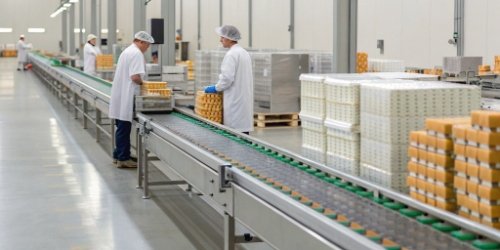
When a package is rejected for being overweight, what usually happens? An employee has to stop their work, take the package, open it, remove some fruit, and then send it back to be re-sealed. In this process, the delicate fruit can get bruised, the packaging might be damaged, and valuable labor time is lost. An underfilled package might need to be topped up, which causes the same issues. We build our systems to minimize this cycle of waste. By ensuring the fill is correct the first time, you not only save the product you were giving away but also the hidden costs associated with fixing mistakes. It streamlines your entire operation, leading to a cleaner, more efficient, and more sustainable packing floor.
Reducing Rework and Repacking
Rework is a hidden production killer.3 It disrupts the flow of your line and introduces multiple points where delicate products like fruit can be damaged.
- Product Damage: Every extra touch increases the chance of bruising or crushing.
- Labor Inefficiency: Operators are pulled away from productive tasks to fix errors.
- Line Stoppages: Rework can cause bottlenecks and slow down overall throughput.
Comparing Waste Streams
A checkweigher directly reduces waste across several categories. Here's how the two scenarios compare.
| Waste Stream | Without Checkweigher | With Precision Checkweigher |
|---|---|---|
| Product Giveaway | High; from consistent overfilling. | Eliminated or minimized. |
| Product Damage | Moderate to High; from rework. | Low; minimal rework needed. |
| Packaging Waste | High; damaged packaging from rework. | Low; fills are right the first time. |
| Labor Waste | High; time spent on manual checks and fixes. | Low; labor is focused on production. |
How Does Checkweighing Technology Help Optimize Yield and Profitability in Fruit Packing?
Are you getting the most profit from every harvest? Inaccurate sorting means you could be giving away premium fruit or selling it at a lower price point.
Checkweighing helps you pack to the minimum legal weight, not over it. This maximizes the number of sellable packages from any given batch of fruit, directly improving your overall yield and bottom-line profitability.
Your insight is spot-on: the price of fresh fruit is tied directly to weight. For 19 years, we've helped clients understand that the goal isn't just to pack a box of fruit; it's to create the maximum number of legally sellable units from a finite bulk supply. If the label says 500g, you cannot sell a 499g pack. To avoid this, many packers will aim for 505g or even 510g "just to be safe." A precision checkweigher gives you the confidence to aim for 501g instead. That 4-9 grams of giveaway per pack seems tiny. But when you multiply it by thousands of packs per hour, it adds up to tons of lost product and revenue every year. This technology transforms "giveaway" product back into sellable inventory, directly boosting your yield from the exact same harvest.
Calculating Your Return on Investment (ROI)
The financial case for a checkweigher is incredibly strong. Let's look at a quick calculation for a typical fruit packing line.
| Metric | Example Value |
|---|---|
| Average Giveaway per Pack (without checkweigher) | 5 grams |
| Packs per Hour | 6,000 |
| Giveaway per Hour | 30 kg |
| Daily Giveaway (8-hour shift) | 240 kg |
| Annual Giveaway (250 days) | 60,000 kg (60 metric tons) |
| Potential Annual Savings (at $2/kg fruit cost) | $120,000 |
The Power of "Just Enough"
The principle is simple: sell what you are paid for, and nothing more.4 Precision checkweighing allows you to operate confidently at the minimum net weight, a strategy known as "packing to the minimum." This ensures legal compliance while preventing the systematic loss of profit that comes from generous overfilling. This single shift in operational strategy, enabled by technology, is often the fastest way to increase profitability in a high-volume packing environment.
Conclusion
Ultimately, precision checkweighing stops product giveaway, reduces waste, and maximizes yield. We help you use this technology to turn small gram-level savings into significant boosts in your annual profitability.
-
"Optimizing Filling Processes with Checkweighing Equipment", https://www.mt.com/us/en/home/library/know-how/product-inspection/feedback-control.html. This source discusses how advanced checkweighers integrate with upstream equipment to prevent errors before they occur. Evidence role: mechanism; source type: education. Supports: An advanced checkweigher doesn't just sit at the end of the line catching mistakes but actively prevents them by adjusting upstream equipment.. ↩
-
"Real-Time Checkweigher Data Made Easy", https://www.youtube.com/watch?v=MQXL4z4S8E0. This source highlights how modern checkweighers collect and analyze production data for process optimization. Evidence role: mechanism; source type: education. Supports: Modern checkweighers collect and analyze production data, turning them into tools for process optimization.. ↩
-
"Reducing Rework In Your Manufacturing Process - MDI", https://www.mdi.org/blog/post/reducing-rework-in-your-manufacturing-process/. This source discusses the impact of rework on production efficiency and costs. Evidence role: general_support; source type: education. Supports: Rework is a hidden production killer that disrupts efficiency and increases costs.. ↩
-
"[PDF] Guide for Labeling Consumer Package by Weight, Volume, Count ...", https://nvlpubs.nist.gov/nistpubs/SpecialPublications/NIST.SP.1020.pdf. This source supports the principle of minimizing product giveaway by packing to the exact weight customers pay for. Evidence role: general_support; source type: education. Supports: The principle of minimizing product giveaway is to sell what you are paid for, and nothing more.. ↩



Comments (0)