
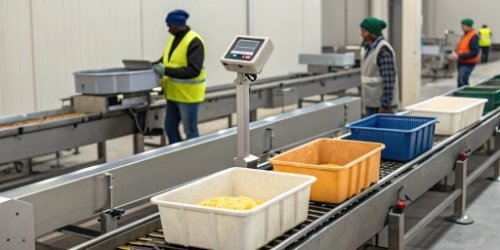
Struggling with cluttered, inefficient weighing areas? Juggling separate scales for bulk and case weighing costs space and money, slowing down your entire operation and creating endless production bottlenecks.
Yes, a single, modern weighing station can absolutely handle both bulk bins and individual cases. This is possible through smart design featuring adjustable hardware, wide-range load cells, and intelligent software that automatically adapts to different container sizes and weights, ensuring accuracy and efficiency.
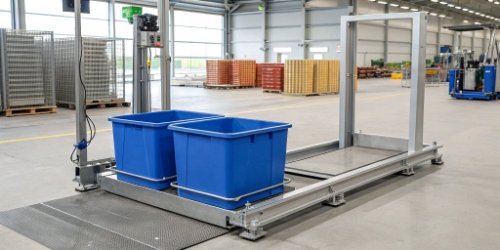
You might think that a machine so versatile must be complex or a compromise. In my 19 years of experience, I've seen how simplicity in action is the most powerful tool. For small and medium-sized producers who need flexibility, a single, intelligent workstation isn't a compromise; it's a competitive advantage. It's about making your process simpler, not your equipment more complicated. Let’s dive into how we design these systems to solve real-world production challenges.
How Can a Weighing Station Be Designed to Accommodate Both Bulk Bins and Individual Cases?
You need a flexible weighing solution, but custom designs seem complicated and expensive. This uncertainty can hold back your operational upgrades, leaving you with inefficient, dated processes that hurt your bottom line.
A versatile weighing station uses a modular platform, adjustable guides, and interchangeable or wide-range load cells. Smart software then recognizes container types, automatically adjusting settings for accurate measurements, whether it's a heavy bin or a light case. This creates a truly adaptive system.
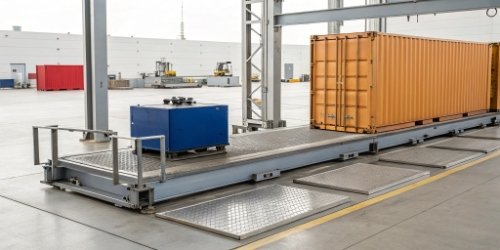
When we design these intelligent weighing platforms, our goal is to build for flexibility from the ground up. It starts with the physical construction. The weighing platform itself might be modular, allowing for extensions to handle oversized items. We build in adjustable guardrails1 that an operator can slide in seconds, creating a secure cradle for a large tote one moment and a narrow channel for quickly processing small boxes the next. The magic is in making these physical adjustments simple and tool-free. Below the surface, the technology works just as hard. This combination of smart physical design and intelligent software is what makes true versatility possible.
Key Design Features for Versatility
| Feature | Benefit for Bulk Bins | Benefit for Individual Cases |
|---|---|---|
| Wide, Stable Base | Provides a solid foundation for heavy, unstable loads. | Offers ample workspace for staging and packing. |
| Adjustable Guides | Secures large bins, preventing shifting during weighing. | Creates a channelled workflow for rapid case processing. |
| Smart Software | Automatically tares heavy container weight for net measurement. | Quickly captures unit weight for precise inventory control. |
What Are the Technical Requirements for a Weighing Station to Handle Multiple Packaging Types?
Are you worried about investing in new technology that doesn't meet all your diverse needs? Choosing the wrong weighing station can lead to inaccurate data, compliance headaches, and costly rework.
Key technical needs include a wide weighing range with high resolution, durable load cells with overload protection, and robust software with an open API. This delivers both heavy capacity and fine precision, plus easy integration with your existing systems.
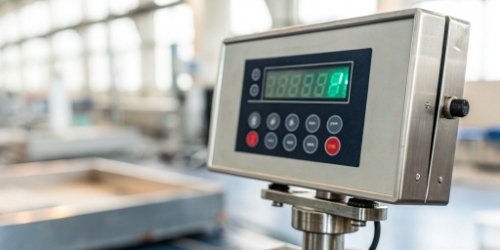
From a technical standpoint, creating a "one-size-fits-all" scale is a fascinating challenge. It’s not just about building a platform that can physically hold 300kg. The real task is ensuring that the same scale can also accurately measure a 500g item with precision. This is achieved through what we call multi-range weighing technology2. The scale's internal software intelligently switches its resolution based on the load. For software companies looking to integrate, the most crucial part is connectivity. We build our systems with open APIs and standard communication protocols like TCP/IP3. This means you can easily pull weight data into your WMS, ERP, or custom application, allowing our hardware to become a seamless part of the smart solution you provide to your customers.
Core Technical Specifications
| Technical Spec | Importance for Versatility | Real-World Example |
|---|---|---|
| Wide Weighing Range | Handles both heavy bulk and light cases accurately on one device. | A single scale measures from 0.1kg up to 500kg. |
| High Resolution | Ensures precision for smaller, high-value items or parts. | 1-gram readability for items under 10kg. |
| Open API/SDK | Allows for simple integration with your own software. | A RESTful API for sending weight data to the cloud. |
| Overload Protection | Prevents damage from accidental drops or overweight items. | A load cell rated for 150% of its maximum capacity. |
Is It Efficient to Use One Weighing Station for Both Bulk and Case-Level Weighing?
You have limited floor space and a tight budget for new equipment. Buying separate stations for different tasks feels wasteful, but you worry a single station will create bottlenecks and slow everything down.
Yes, it is highly efficient for many businesses, especially small to mid-sized operations. A single, versatile station reduces equipment costs, saves valuable floor space, and simplifies operator training, streamlining your entire workflow. The key is in a fast, flexible system.
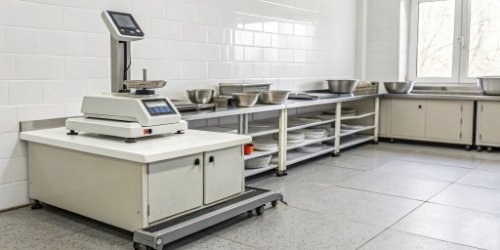
I've visited hundreds of production floors, and I can tell you that for most small to medium enterprises, efficiency is about flow and flexibility, not massive, specialized lines. While a giant corporation might have a dedicated line for every single task, that model is incredibly costly and rigid. For a business that needs to adapt, a single, smart workstation is far more efficient. Think about it: you have one piece of equipment to buy and maintain. You have one workflow for operators to learn. You free up floor space that can be used for storage or other value-added activities. The potential bottleneck concern is valid, but it's solved with good software that allows for instant switching between weighing modes, eliminating manual setup time and keeping the product moving.
Analyzing the Efficiency Gains
The argument isn't just about saving money upfront. It's about optimizing your entire process.
- Capital Expense: One purchase instead of two or three.
- Operating Expense: Lower maintenance and calibration costs for one device.
- Spatial Efficiency: The floor space saved is often more valuable than the cost of the equipment itself.
- Human Efficiency: A single, intuitive workflow reduces training time and minimizes the chance of human error. Operators aren't walking back and forth between different stations, wasting precious seconds with every item.
How Do Weighing Systems Adapt to Different Container Sizes and Weights?
Manually changing settings for every different box or bin is slow and prone to errors. This constant adjustment disrupts your workflow and risks collecting inaccurate data, costing you valuable time and money.
Modern weighing systems adapt using a combination of smart software, sensors, and barcode scanners. The system can automatically recall tare weights for known containers or use smart algorithms to provide a stable, accurate reading for different load types and sizes.
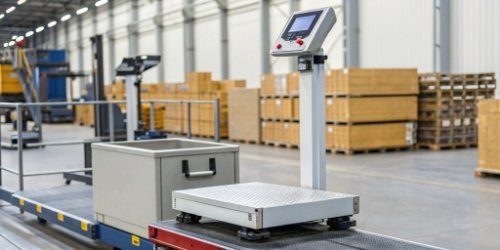
This is where our intelligent weighing platforms truly shine, and it's what separates a "scale" from a "weighing solution." The adaptation is all about removing manual steps for the operator. The simplest method is a tare memory function in the software. The operator can select "Large Blue Bin" from a menu, and the system instantly subtracts that bin's known weight. We take it a step further by integrating barcode scanners. The operator scans a barcode on the container, and our system does the rest. It communicates with your database, pulls the correct tare weight, and logs the net weight, all in less than a second. For unstable loads, like liquids, the scale's software uses an averaging algorithm to give a rock-solid reading. It's all designed to make the final weight fast, accurate, and completely foolproof.
The Technology of Adaptation
| Adaptation Method | How It Works | Main Benefit |
|---|---|---|
| Preset Tare Memory | The operator selects a pre-saved container profile from a list. | Fast, simple, and greatly reduces manual entry errors. |
| Barcode Scanning | Scanning a barcode on the item instantly pulls all container data. | Fully automated and error-proof, ideal for high-volume workflows. |
| Stabilization Algorithm | Software averages readings over a second to calm a "bouncing" load. | Provides accurate net weights for liquids or shifting contents. |
| Sensor Integration | Optional sensors can detect package presence to automate workflow. | Triggers the weighing process automatically for a hands-free operation. |
Conclusion
A single smart weighing station is a powerful, efficient, and cost-effective solution. It is perfect for handling diverse packaging, especially for businesses that require a flexible, adaptable production environment.
-
"1918.85 - Containerized cargo operations. - OSHA", http://www.osha.gov/laws-regs/regulations/standardnumber/1918/1918.85. This source discusses the use of adjustable guardrails in weighing stations to secure various container sizes during operation. Evidence role: mechanism; source type: education. Supports: Adjustable guardrails in weighing stations secure various container sizes during operation, enhancing versatility.. ↩
-
"[PDF] February 2004 Tests for Multi-interval and Multiple Range Weighing ...", https://www.nist.gov/document/005pdf. This source explains the concept of multi-range weighing technology and its application in scales that handle diverse weight ranges. Evidence role: mechanism; source type: education. Supports: Multi-range weighing technology allows a single scale to measure both heavy and light items accurately by switching resolution based on the load.. ↩
-
"REST API interface in weighing technology", https://www.systecnet.com/en/products/software/rest-api.html. This source discusses the role of open APIs and standard communication protocols like TCP/IP in integrating weighing systems with other software. Evidence role: mechanism; source type: education. Supports: Open APIs and standard communication protocols like TCP/IP enable easy integration of weighing systems with existing software.. ↩



Comments (0)