
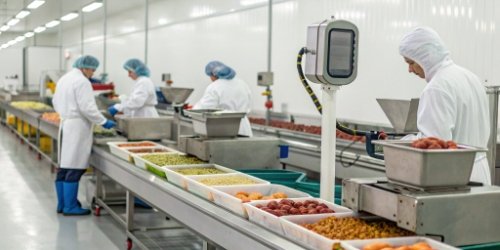
Struggling to find a stable, high-demand market for your solutions? You might be overlooking a massive, recession-proof sector. The food processing industry offers incredible, consistent opportunities for growth.
The food processing market is huge, stable, and constantly growing. Strict regulations for food safety and consistency require precise weighing solutions. This creates a high, ongoing demand for both reliable hardware and the integrated software that makes it smart, presenting a perfect opportunity for distributors.
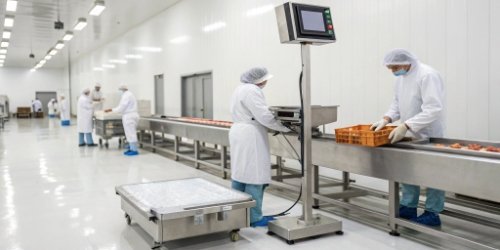
I've been in the industrial scale business for 19 years, and I've seen industries rise and fall. But one sector remains a constant source of opportunity: food processing. You see its potential, but you might be wondering just how deep this opportunity goes for a software vendor like yourself. It's not just about selling scales; it's about providing complete solutions that solve critical business problems. Let's break down why this market isn't just big—it's a perfect fit for advanced solution providers who can partner with hardware experts like us.
What Makes the Food Processing Industry a High-Potential Market for Weighing Solution Providers?
Worried about market volatility and inconsistent demand? Tying your business to fluctuating trends is risky. The food industry provides a foundation of constant, non-negotiable need that you can build upon.
This is a massive, recession-resistant industry. Everyone needs to eat, creating a stable client base. Plus, as the global population grows, the demand for processed food will only increase. This stability is ideal for long-term business planning and creates lasting partnerships between hardware and software providers.

The simplest truths are often the most powerful. In business, the fact that people will always need to eat makes the food industry one of the most reliable markets you can enter. As a software provider, this stability means you aren't just selling to a customer for a one-off project; you're building a relationship with a business that will have ongoing needs for years to come.
Unmatched Scale and Stability
Unlike niche markets that can disappear overnight, the food industry is enormous and foundational to every economy. We're talking about a global network that ranges from massive multinational corporations to local producers. This scale means there are endless entry points for your software solutions, especially when paired with our certified, reliable weighing hardware. The demand doesn't dip dramatically during economic downturns, providing a dependable revenue stream.
Global Reach, Local Needs
Our products are available to clients worldwide, and we see firsthand that while the need for food is universal, the operational challenges can be very local. This is where a partnership shines. We provide the customizable, internationally-certified hardware, and you provide the software tailored to specific market regulations or business processes. Together, we can offer a complete, targeted solution that a hardware-only or software-only company cannot.
How Do Weighing Solutions Address Critical Needs in the Food Processing Sector?
Food processors face immense pressure for safety and consistency. Even tiny errors can lead to product recalls, huge financial losses, and permanent damage to their brand's reputation. Our weighing solutions are the first line of defense.
Weighing solutions ensure product consistency, control costs through precise ingredient usage, and enable traceability for food safety. They are essential for meeting regulatory standards and preventing costly mistakes, making them a critical operational tool, not just a piece of equipment.

In China, there's an old saying, "民以食为天" which means "Food is heaven for the people." This idea is at the core of why precision is so important in this industry. A small mistake in a recipe can ruin a batch, but a mistake in safety can ruin lives and businesses. Our scales are designed to prevent both. For example, we're currently partnering with software providers to help schools across China implement a full food safety system. It combines our receiving scales, sample retention scales, and a management software platform. This directly addresses the critical need for food safety for children, creating a clear, traceable path from kitchen delivery to the child's plate. It's a powerful example of how weighing technology, powered by smart software, solves a major public concern.
| Critical Need | The Problem without Precise Weighing | How Our Solutions Help |
|---|---|---|
| Cost Control | Overfilling packages or using excess expensive ingredients directly eats into profits. Inconsistent portions lead to waste. | Our scales ensure every ingredient and final product is weighed accurately, minimizing giveaway and maximizing yield from raw materials. |
| Quality Consistency | Inconsistent ingredient ratios lead to variations in taste, texture, and appearance. This damages brand reputation and customer loyalty. | Automated batching systems and recipe formulation scales guarantee that recipes are followed perfectly every single time, ensuring uniformity. |
| Food Safety & Traceability | In case of a contamination event, a lack of data makes it impossible to quickly trace the source, leading to massive, costly recalls. | Our scales record the weight, time, and batch number of every ingredient. This data, fed into your software, creates an unbroken chain of traceability. |
Why Are Advanced Weighing Systems in High Demand in Food Manufacturing?
Basic scales that only show a number are not enough for modern food plants. They are disconnected islands of data, unable to communicate with the smart factory systems that drive efficiency. Advanced, connected weighing systems are the solution.
Advanced systems offer more than just weight. They connect to factory networks, ERPs, and management software like yours. This enables automation, real-time monitoring, and deep data analysis, which are essential for improving efficiency, reducing waste, and gaining a competitive edge.
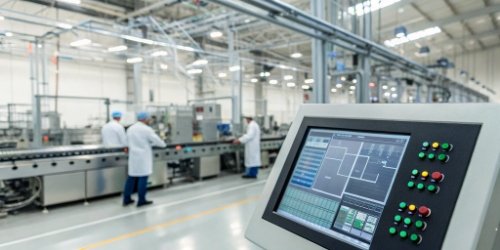
As a technical director or purchasing manager, you know that the value is in the data. A simple scale gives you a number, but an IoT-enabled scale from us gives your software a continuous stream of actionable information. This is where the real transformation happens. We provide the reliable, certified hardware that captures the data; your software turns that data into intelligence, efficiency, and profit for the end-user. Our vision is to empower customers with this technology, and we see software providers as essential partners in that mission.
The Need for Data Integration
Modern food processors run on data.1 They need to connect their production floor directly to their business management software (ERP). Our advanced weighing systems come with communication protocols that allow them to speak directly to your software.2 This means no more manual data entry, which eliminates human error and provides real-time visibility into production, inventory, and yield.
Enabling Automation and Efficiency
Imagine a batching process where our scale tells your software that the correct amount of an ingredient has been added, and your software automatically triggers the next step in the process.3 This is the power of automation. Our checkweighers, floor scales, and batching controllers are built to be part of an automated workflow, reducing labor costs, speeding up production, and ensuring perfect consistency.
What Key Trends in Food Processing Are Driving the Growth of the Weighing Solutions Market?
Are you worried the market might stagnate? The food industry is actually evolving rapidly with new demands from both regulators and consumers. These trends are creating brand-new opportunities for advanced weighing solutions.
Key trends like stricter food safety regulations, the business push for sustainability by reducing waste, and the rise of smart factories (Industry 4.0) are driving demand. Consumers also want more transparency, which requires better data and traceability from farm to fork.
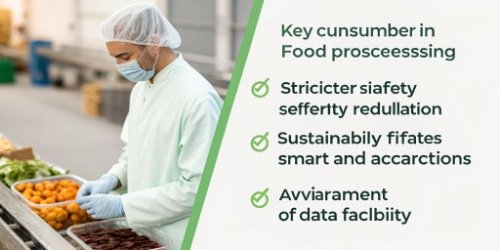
The future of food processing is digital, and weighing is at the heart of this transformation.4 Every trend points toward more data, more connectivity, and more intelligence on the factory floor. This is fantastic news for software providers because these trends make your solutions more critical than ever. As a hardware manufacturer, we are building our products to meet these future needs, ensuring they are ready to integrate with the innovative software platforms you create.
Stricter Regulations and Traceability
Governments worldwide are implementing tougher rules around food safety and traceability. The ability to track a product from its raw ingredients to the final package is becoming a legal requirement, not just a best practice.5 Our weighing systems create the data points needed for this traceability, and your software can organize and present this data for compliance audits.
The Push for Sustainability
Wasting ingredients is not just bad for profits; it's bad for the planet.6 Companies are under pressure to improve their sustainability, and reducing waste is a top priority. Precise weighing is the easiest way to combat this. By ensuring exact measurements, our scales help companies reduce ingredient waste, minimize product giveaway, and accurately report on their material usage for sustainability reports. This is a strong selling point for environmentally conscious companies.
Conclusion
The food industry presents a huge, stable opportunity. Partnering with us provides the reliable weighing hardware your software needs to capture this lucrative and expanding market together.
-
"Big data analytics in food industry: a state-of-the-art literature review", https://pmc.ncbi.nlm.nih.gov/articles/PMC11928524/. This source explains the role of data in modern food processing, including its impact on efficiency and decision-making. Evidence role: mechanism; source type: research. Supports: Data plays a central role in modern food processing, driving efficiency and informed decision-making.. Scope note: The reliance on data may vary depending on the size and technological adoption of the food processor. ↩
-
"How can industrial scales be integrated with my existing ...", https://weigherps.com/how-can-industrial-scales-be-integrated-with-my-existing-production-line-or-management-systems-such-as-erp/. This source details how communication protocols in advanced weighing systems enable integration with software platforms. Evidence role: mechanism; source type: research. Supports: Advanced weighing systems use communication protocols to integrate seamlessly with software platforms.. Scope note: The specific protocols and compatibility may vary by manufacturer. ↩
-
"Automated Weight Monitoring Systems | Agricultural Marketing Service", https://www.ams.usda.gov/resources/automated-weight-monitoring-systems. This source provides examples of automation in food processing, including batching processes enabled by integrated weighing systems. Evidence role: case_reference; source type: research. Supports: Integrated weighing systems can automate batching processes in food production.. Scope note: The example may not represent all types of food processing automation. ↩
-
"The Future of Food Tech: Cutting-Edge Technologies in the Culinary ...", https://online.jwu.edu/blog/the-future-of-food-tech-in-the-culinary-landscape/. This source discusses the digital transformation of the food processing industry and the role of weighing systems in this shift. Evidence role: expert_consensus; source type: institution. Supports: Digital transformation in food processing places weighing systems as a central component of operational efficiency.. Scope note: The role of weighing systems may vary depending on the specific digital transformation strategy. ↩
-
"FSMA Final Rule on Requirements for Additional Traceability Records", https://www.fda.gov/food/food-safety-modernization-act-fsma/fsma-final-rule-requirements-additional-traceability-records-certain-foods. This source outlines legal requirements for traceability in food processing, emphasizing its growing importance. Evidence role: statistic; source type: government. Supports: Traceability in food processing is increasingly becoming a legal requirement in many jurisdictions.. Scope note: Regulations may differ significantly between countries and regions. ↩
-
"International Efforts on Wasted Food Recovery", https://www.epa.gov/international-cooperation/international-efforts-wasted-food-recovery. This source discusses the environmental and economic impacts of food waste, supporting the claim about its dual consequences. Evidence role: general_support; source type: education. Supports: Food waste has both economic and environmental consequences, making it a critical issue for sustainability.. Scope note: The focus may vary between economic and environmental aspects depending on the source. ↩


Comments (0)