
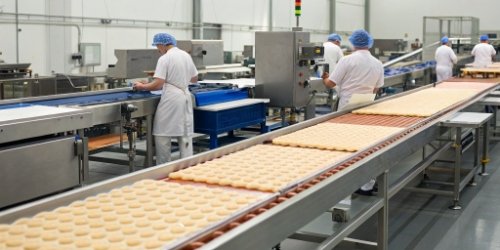
Struggling with production inefficiency? Different order types demand different processes, causing errors and waste. A flexible system with multiple modes is the key to streamlining your operations.
The three main modes for cutting and weighing are Standard, Custom, and Fixed-Weight Batch Printing. Standard is for regular production, Custom is for specific client orders, and Fixed-Weight is for creating high-volume, uniform-weight packs for retail or wholesale, significantly boosting production flexibility.

Understanding that these three modes exist is the first step toward a more efficient production line. Many businesses are held back by systems that force a one-size-fits-all approach, leading to product giveaway, slower fulfillment, and missed opportunities. It's not just about having technology; it's about having the right technology that adapts to your unique needs. Let's take a closer look at how each of these modes actually works and what that means for your daily operations and your bottom line.
How Do Standard, Custom, and Fixed-Weight Batch Printing Modes Work in Cutting and Weighing Processes?
Are you wondering how these different modes practically function on the factory floor? Without a clear picture, the benefits can seem abstract and it's hard to see how they apply to you.
Each mode follows a specific logic. Standard mode follows a predefined, repeatable workflow. Custom mode adapts the process for specific client requirements. Fixed-Weight Batch Printing mode intelligently groups items to hit a precise target weight for mass production, minimizing manual sorting and speeding up packing.
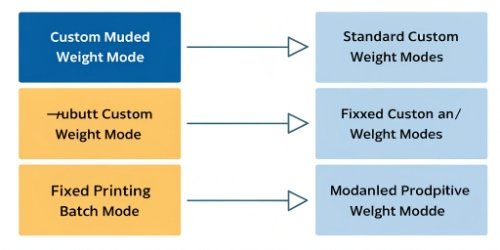
Let's dive deeper into the mechanics of each mode. At WeigherPS, we designed our system to be intuitive, but the power is in the details of how each mode directs the workflow. Seeing how they operate will make it obvious which one you need for any given task.
Standard Production Mode
This is your workhorse mode for everyday, consistent production runs. You set up a product with predefined parameters, and the system executes the same process every time. It’s built for efficiency and predictability, ideal for products you make day in and day out for general stock.
Custom Production Mode
This mode is designed for flexibility when handling specific customer orders. A client might need a product with a slight variation or a very specific order quantity. Here, our system allows you to manage these special requests without disrupting your standard workflow. A key feature I’m proud of is the ability to control order quantity deviations. If a customer orders 100kg, you can ensure the total production doesn’t accidentally run to 110kg, saving you from producing goods you can't sell to them.
Fixed-Weight Batch Printing Mode
This is a game-changer for anyone supplying to retailers. This mode is for creating large batches of standardized products, like fixed-weight packs of meat or cheese. The system weighs each piece and then allows an operator to group items to hit a precise target weight with a defined tolerance (e.g., 500g +/- 5g). It's far more efficient than manually trying to combine pieces to hit the right weight.
| Mode | How It Works | Key Control Feature |
|---|---|---|
| Standard | Follows a pre-set, repeatable process for a product. | Consistency and speed. |
| Custom | Adapts the workflow for a specific, one-off customer order. | Order quantity deviation control. |
| Fixed-Weight | Groups individual items to create batches with a target weight. | Positive/negative weight deviation control. |
What Are the Advantages of Using Various Cutting and Weighing Modes in Meat Processing?
You might think a single, streamlined process is best, but is it really? Using one rigid system for all your meat processing orders could be costing you more than you think in product giveaway and lost time.
The main advantages are massive flexibility, reduced product waste, and increased throughput. You can switch from a large retail batch to a custom restaurant order seamlessly, ensuring every order is handled in the most efficient and profitable way possible.
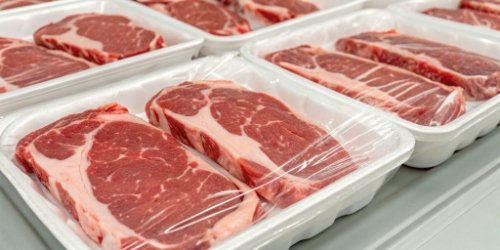
The ability to choose the right mode for the job translates directly into tangible business benefits. It’s about more than just convenience; it’s a strategic advantage. Let's break down exactly what you gain when your system is agile enough to handle the real-world demands of meat processing, where no two orders are exactly alike. For over 19 years, we've seen clients transform their operations by embracing this flexibility.
Dramatically Reduced Giveaway
The biggest advantage I see with our clients is the reduction in product giveaway. Using the Fixed-Weight Batch Printing mode for retail packs is a perfect example. Instead of over-packing to meet the minimum weight, the system helps you create packs that are exactly on target.1 Over thousands of packs, this saves a significant amount of money.
Unmatched Production Flexibility
The modern market requires agility. One moment you are fulfilling a massive order for a supermarket chain (Fixed-Weight Mode), and the next you are preparing a highly specific custom cut for a high-end restaurant (Custom Mode). A multi-mode system lets you do both without reconfiguring your entire production line.2 I once worked with a processor who used to run separate lines for retail and food service. We showed them how a single line with our system could switch modes, and it completely changed their business.
Simplified Multi-Channel Sales
Here's a feature we built based on direct feedback. Often, your internal product name is different from what your customer calls it.3 Our system allows you to map your internal name to various customer-facing names. So, your "Internal Code: Prime_Ribeye_250g" can be printed as "Butcher's Choice Ribeye" for one retailer and "Chef's Cut Steak" for another, all from the same production run. This removes a huge headache for businesses selling through multiple channels. This simple feature makes your operation look more professional to your clients and reduces labeling errors.
How to Choose Between Standard, Custom, and Fixed-Weight Batch Printing Modes for Cutting and Weighing?
Now you know the modes and their benefits, but how do you make the right choice in the heat of production? Choosing the wrong mode can negate all the benefits, leading to confusion and inefficiency on the floor.
The choice is driven by your order type. Use Standard for your regular stock, Custom for unique client requests with special requirements, and Fixed-Weight Batch Printing for high-volume retail packs where a specific package weight is the main goal.

Making the right decision should be quick and easy. It shouldn't require a committee meeting. The goal is to empower your team on the ground to choose the most efficient path for every single order that comes through. We've designed our system with this in mind. Based on thousands of conversations with production managers, we've found that the decision process can be simplified by answering one or two simple questions about the order. Let's create a simple framework to help you and your team choose correctly every time.
When to Use Standard Mode
Ask yourself: "Is this for our general inventory?" or "Are we making a product we sell to many different customers without changes?" If the answer is yes, use Standard Mode. This is your baseline, high-efficiency mode for predictable runs where the goal is to produce a large quantity of a single, uniform product for your stock.
When to Use Custom Mode
Ask yourself: "Does this order have special instructions from one specific customer?" This could be a unique trim, a specific number of items, or a total order weight that cannot be exceeded. If the order is unique, Custom Mode is the perfect choice. It gives you the control to hit special targets without creating waste or over-producing.
When to Use Fixed-Weight Batch Printing Mode
Ask yourself: "Is the goal to create many packs that all have the same sale weight?"4 This is the go-to mode for preparing products for retail shelves. The system's intelligence in helping operators group items to hit the target weight is its key benefit, dramatically increasing the speed and accuracy of the packing process.
Here is a simple decision matrix:
| If your goal is to... | And the key factor is... | Then choose this mode... |
|---|---|---|
| Build General Inventory | Speed and consistency | Standard |
| Fulfill a Specific Client Order | Meeting unique requirements | Custom |
| Prepare Fixed-Weight Retail Packs | Package weight accuracy and speed | Fixed-Weight Batch Printing |
Conclusion
Choosing the right cutting and weighing mode boosts efficiency, cuts waste, and increases profit. A flexible system is essential to meeting modern production challenges and achieving step-by-step growth.
-
"Volume- vs. Weight-Based Programs | Pay-As-You-Throw | US EPA", https://archive.epa.gov/wastes/conserve/tools/payt/web/html/top20.html. This source explains how fixed-weight systems minimize over-packing by ensuring precise weight targets. Evidence role: mechanism; source type: research. Supports: Fixed-weight systems minimize over-packing by ensuring precise weight targets.. ↩
-
"A unified control systems framework for enabling multi-mode inverters", https://www.ideals.illinois.edu/items/136691. This source discusses how multi-mode systems enable seamless transitions between different production tasks without reconfiguration. Evidence role: mechanism; source type: education. Supports: Multi-mode systems allow seamless transitions between tasks without requiring production line reconfiguration.. Scope note: The source may focus on specific types of production systems. ↩
-
"Effectiveness of Laboratory Practices to Reducing Patient ... - PMC", https://pmc.ncbi.nlm.nih.gov/articles/PMC5701285/. This source explains how mapping internal product names to customer-facing names can reduce labeling errors and improve client satisfaction. Evidence role: mechanism; source type: institution. Supports: Mapping internal product names to customer-facing names reduces labeling errors and improves client satisfaction.. Scope note: The source may focus on specific industries like retail or food processing. ↩
-
"Effect of free-weight vs. machine-based strength training on maximal ...", https://pmc.ncbi.nlm.nih.gov/articles/PMC10426227/. This source explains how fixed-weight systems are optimized for creating uniform sale-weight packs efficiently. Evidence role: mechanism; source type: research. Supports: Fixed-weight systems are optimized for creating uniform sale-weight packs efficiently.. Scope note: The source may focus on specific industries like food processing. ↩


Comments (0)