
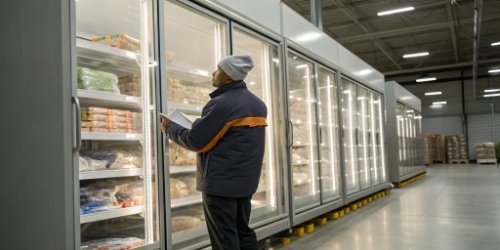
Costly errors in your frozen goods shipping? Mixing standard and non-standard items causes chaos and eats profits. Let's find the right dispatch method for your business.
The best method depends on the product. Use standard item counting for fixed-weight, packaged goods for speed. For variable-weight, bulk items, use non-standard barcode scanning to capture accurate weight and ensure traceability. A flexible system handles both seamlessly.

This seems simple enough. But how do you know which method is truly better for your specific products? The difference isn't just about counting versus scanning; it's about accuracy, speed, and data. As a manufacturer of industrial scales for nearly 20 years, I’ve seen companies struggle with this exact problem. Let's dig deeper into the specifics to help you make the best choice.
What Are the Pros and Cons of Standard Counting vs. Barcode Scanning for Frozen Product Dispatch?
Is your dispatch method creating more problems than it solves? Counting is fast but prone to errors, while scanning can be slow. Understanding the pros and cons is key.
Standard counting is fast and simple for uniform items but lacks individual traceability and is prone to human error. Barcode scanning offers high accuracy, detailed data capture, and traceability for non-standard items but requires more initial setup and investment.

I remember a client, a large seafood distributor, who relied solely on manual counting. One day, a simple human error led to shipping 50 extra cases of frozen lobster tails. The cost of that mistake, including lost product and return freight, was a painful lesson. They learned that the "fastest" method isn't always the most cost-effective. Each method has its place, and choosing correctly is vital for your bottom line.
Key Differences at a Glance
Let's break down the core strengths and weaknesses.
| Feature | Standard Item Counting | Non-Standard Barcode Scanning |
|---|---|---|
| Speed | Very high for uniform batches | Moderate, depends on weighing |
| Accuracy | Prone to human error | Very high, system-verified |
| Traceability | Batch-level only | Item-level, full history |
| Data Capture | Simple count only | Weight, price, date, operator |
| Setup Cost | Low | Higher (scanners, software, scales) |
Our WeigherPS system was designed to handle this exact dilemma.1 It allows you to use simple batch counting for your standardized cases while seamlessly switching to barcode scanning with a connected scale for those variable-weight items, all within one unified interface. This gives you the speed of counting and the accuracy of scanning where you need them most.
How Can Standardized Counting and Barcode Scanning Be Applied to Frozen Goods Sales Distribution?
Your warehouse has both standard boxes and bulk bags. Applying one rigid dispatch system to both creates inefficiency and errors. Let's apply the right method for each product type.
Apply standardized counting for high-volume, uniform products like 10kg boxes of frozen chicken wings. Use barcode scanning for non-standard items like individually portioned fish fillets or bulk bags of shrimp, where each item's weight must be captured for accurate pricing.
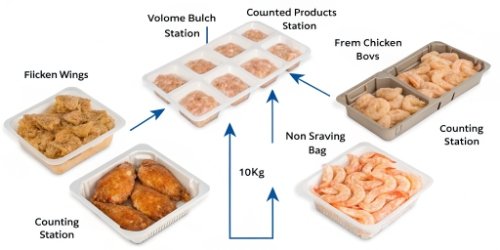
Applying these methods effectively is about creating smart workflows. Think of your dispatch area. You cannot just have one line and expect it to work for everything. We have helped many clients set up dual systems that dramatically improve their operations.
Workflow for Standardized Goods (Counting)
For products like boxed frozen patties or sealed bags of vegetables with a fixed weight, the process is simple.2 The picker receives an order for "50 cases." They collect the cases, and an operator confirms the count, either manually or using a simple counter. Our system allows for batch entry, where you can input '50' and the system updates the inventory instantly. This is all about volume and speed.
Workflow for Non-Standardized Goods (Scanning)
This is where precision is key. Imagine an order for "approximately 5kg of salmon fillets."3 The picker selects the fillets. At the weighing station, they scan the product's barcode. Our IoT-enabled scale instantly captures the exact weight, links it to the order, and prints a price-embedded label.4 This eliminates guesswork, ensures fair pricing, and provides complete traceability from our factory to the customer's plate.5 This is how we empower businesses to handle complexity with ease.
What Is the Best Method for Managing Frozen Product Shipments: Standard Item Counting or Non-Standard Barcode Solutions?
Searching for the single best shipping method for frozen goods? Choosing just one means you will sacrifice either speed or accuracy. The best solution is actually a flexible, hybrid approach.
Neither method is universally "best." The best strategy is a hybrid one. Use a system that integrates both: fast counting for standard items and precise, data-rich barcode scanning for non-standard products. The optimal solution is one that adapts to your product mix.
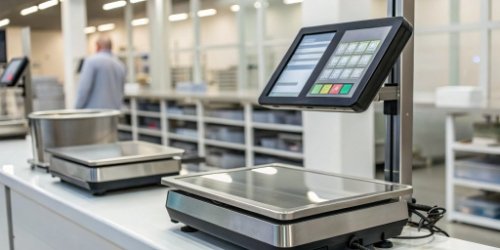
For years, companies felt forced to choose between the simplicity of counting and the precision of scanning. At Weigherps, we believe you shouldn't have to compromise. After 19 years of building weighing solutions, we saw that the "best" method is one that doesn't force a choice. It's about providing flexibility.
A Truly Integrated Solution
Our philosophy is simple: empower our customers with technology that solves their real-world problems. We designed our IoT weighing system to be that solution. It's not just a scale or a piece of software; it's a central hub for your dispatch operations.
- For your IT team: It’s a stable, secure platform with clear APIs, making integration with your existing ERP or Warehouse Management System straightforward.6 We provide full technical documentation and responsive support.
- For your Operations Manager: It’s a single dashboard to manage diverse workflows. You can configure specific rules for standard products (e.g., "Box of Shrimp, count only") and non-standard products (e.g., "Tuna Loin, scan to weigh").
This hybrid approach allows you to achieve maximum efficiency, minimize errors, and gain complete control over your inventory, leading to real growth and profit.7 It's the step-by-step technological revolution we promise our partners.
Conclusion
Don't choose between counting and scanning. The best solution for frozen goods dispatch combines the speed of counting with the accuracy of scanning in one flexible, integrated system.
-
"Cold & Frozen Storage Warehouse Logistics", https://www.progressivelogistics.com/frozen-and-cold-storage. This source explains the design and functionality of WeigherPS systems for handling diverse frozen goods dispatch needs. Evidence role: mechanism; source type: institution. Supports: Our WeigherPS system was designed to handle this exact dilemma.. Scope note: The source may focus on WeigherPS systems broadly, not specific to frozen goods. ↩
-
"How to ship frozen items? Insulated shipping packaging | IPC", https://ipcpack.com/resources/shipping-frozen-products/. This source provides examples of simple dispatch processes for fixed-weight frozen goods. Evidence role: case_reference; source type: institution. Supports: For products like boxed frozen patties or sealed bags of vegetables with a fixed weight, the process is simple.. ↩
-
"Freezing and Food Safety", http://www.fsis.usda.gov/food-safety/safe-food-handling-and-preparation/food-safety-basics/freezing-and-food-safety. This source discusses logistics challenges and solutions for variable-weight frozen goods like salmon fillets. Evidence role: case_reference; source type: research. Supports: Imagine an order for "approximately 5kg of salmon fillets.". ↩
-
"Smart Weighing Systems & IoT Integration in Industry", https://www.scalesandbalances.co.uk/the-power-of-smart-weighing-systems-iot-integration-in-modern-industry/. This source explains the functionality of IoT-enabled scales in logistics, including weight capture and label printing. Evidence role: mechanism; source type: research. Supports: Our IoT-enabled scale instantly captures the exact weight, links it to the order, and prints a price-embedded label.. Scope note: The source may focus on IoT scales broadly, not specifically for frozen goods. ↩
-
"[PDF] Factors affecting costs of wholesale distribution of frozen foods", https://ageconsearch.umn.edu/record/311152/files/mrr327.pdf. This source discusses how IoT systems improve pricing accuracy and traceability in logistics. Evidence role: mechanism; source type: research. Supports: This eliminates guesswork, ensures fair pricing, and provides complete traceability from our factory to the customer's plate.. Scope note: The source may address traceability broadly, not specific to frozen goods. ↩
-
"How can industrial scales be integrated with my existing production ...", https://weigherps.com/how-can-industrial-scales-be-integrated-with-my-existing-production-line-or-management-systems-such-as-erp/. This source discusses the integration capabilities of logistics platforms with ERP and Warehouse Management Systems. Evidence role: mechanism; source type: education. Supports: It’s a stable, secure platform with clear APIs, making integration with your existing ERP or Warehouse Management System straightforward.. Scope note: The source may address integration broadly, not specific to WeigherPS. ↩
-
"Hybrid Logistics Definition & Meaning", https://www.buske.com/what-is/hybrid-logistics. This source discusses the benefits of hybrid logistics systems in improving efficiency and inventory control. Evidence role: expert_consensus; source type: education. Supports: This hybrid approach allows you to achieve maximum efficiency, minimize errors, and gain complete control over your inventory, leading to real growth and profit.. Scope note: The source may address hybrid systems broadly, not specific to frozen goods. ↩



Comments (0)