

Your clients are struggling with production bottlenecks. The slow, manual process of weighing, labeling, and sorting is costing them time and money, and your software is caught in the middle.
Yes, your software can leverage on-scale processing for incredible speed gains. By embedding your application logic directly onto the weighing scale's hardware, it can trigger labeling or sorting actions instantly. This unified process eliminates delays, boosts throughput, and cuts operational costs for your clients.
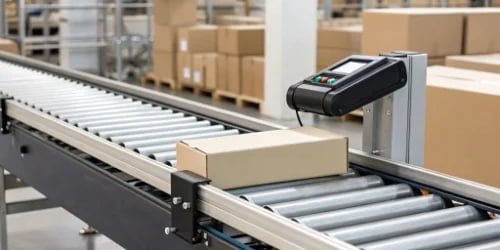
As a manufacturer of industrial scales1 for nearly 20 years, we've seen the evolution of weighing technology2 firsthand. For software vendors3, the biggest opportunity isn't just connecting to a scale, but running on the scale. The gap between your digital instructions and the physical action on the factory floor is where inefficiency lives. Closing that gap is the key to unlocking major performance improvements for your customers. Let's explore how this integration works and the powerful benefits it brings to your software solution.
How Does On-Scale Processing Improve Labeling and Sorting Efficiency?
Data entry from a scale to a separate computer is a huge time-waster. Every second an operator spends typing a weight is a second of lost productivity.
On-scale processing boosts efficiency by making the weighing and the resulting action a single, instant event. The scale's own processor runs your software's logic, immediately printing a label or signaling a sorter the moment a stable weight is captured. This removes the human delay.

The core idea here is unifying the physical space (the scale) and the timeline of the operation. In my experience, when you separate the weighing event from the action event, you invite delays and errors. On-scale processing merges them into one seamless step. This simple change has a massive impact on the factory floor. It fundamentally redesigns the workflow from a series of disconnected tasks into a single, efficient process. We can break down the difference easily.
The Old Way: A Disconnected Process
The traditional method involves multiple steps, each a potential point of failure or delay. The operator places an item, reads the weight, turns to a computer, types it in, waits for the system to respond, and then waits for a label to print.
The New Way: A Unified Workflow
With on-scale processing4, the workflow is incredibly simple. The operator places the item on the scale. That's it. The scale's integrated software instantly weighs the item, processes the data according to your rules, and prints the correct label.
| Feature | Traditional Process | On-Scale Processing |
|---|---|---|
| Step 1 | Place item on scale. | Place item on scale. |
| Step 2 | Read weight on display. | Scale's CPU captures stable weight. |
| Step 3 | Manually enter weight into PC. | Software on scale processes weight. |
| Step 4 | PC software processes data. | Software triggers action (e.g., print). |
| Step 5 | PC sends command to printer/sorter. | Label is printed / sorter is activated. |
| Typical Time | 10-20 Seconds | 1-2 Seconds |
What Are the Benefits of Using On-Scale Processing for Quick Labeling and Sorting?
High operational costs are a constant pressure. Inefficient workflows mean you need more people to do the same amount of work, which directly impacts the bottom line.
The main benefits are a dramatic increase in speed, a sharp reduction in errors, and lower labor costs. By removing data transfer delays and manual entry, you create a faster, more accurate operation. This allows your clients to achieve higher throughput with their existing staff.
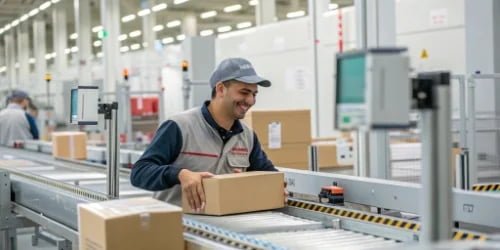
For a software vendor, offering these benefits makes your product incredibly valuable. You are no longer just selling a piece of software; you are selling a complete solution that delivers a clear and immediate return on investment. I talked to a purchasing manager at a logistics5 company recently. He said his biggest challenge was the cost of labor for mundane, repetitive tasks. He wasn't looking for software; he was looking for a way to make his people more productive. On-scale processing is the answer.
Drastic Reduction in Labor Costs
When one operator can process packages five or ten times faster, the need for additional staff on the line decreases significantly. The system automates the most time-consuming part of the job, freeing up employees for more valuable tasks.
Significant Boost in Throughput
Throughput is a critical KPI6 in any production or logistics environment. Faster processing per item means more items can be handled per hour, per shift. This directly increases the facility's overall capacity without needing to expand the physical footprint.
| Benefit | Description | Impact on Your Software's Value |
|---|---|---|
| Speed | Eliminates PC communication latency. Actions are instantaneous. | Your software becomes a high-performance solution. |
| Accuracy | Removes human data entry7, the primary source of errors. | Guarantees reliable data for your customers. |
| Cost Savings | Reduces the need for dedicated data entry staff. Increases operator efficiency. | Offers a clear and compelling ROI to your clients. |
| Simplicity | Fewer hardware components (no separate PC at every station). | Easier for your clients to install and maintain. |
How Can Software Utilize On-Scale Processing to Enhance Operational Speed?
The thought of integrating your software with new hardware can be intimidating. You might worry about difficult development cycles, compatibility issues, and a lack of support.
Your software can use on-scale processing through our well-documented APIs and Software Development Kits (SDKs). We provide the tools for you to embed your application's logic directly onto the scale's operating system. This gives your code real-time access to weight data and peripheral controls.

As a company with a dedicated R&D department, we understand the needs of technical directors and developers. Our goal is to make this process as smooth as possible. We don't just sell you a piece of hardware; we partner with you to ensure your software and our scale work together perfectly. This collaboration is key. We have helped software vendors integrate solutions for everything from simple checkweighing to complex, multi-stage sorting applications. The flexibility is built into our platform.
Leveraging APIs and SDKs
Our technical team provides you with all the necessary tools and documentation. You can use familiar programming environments to write your code. This lowers the learning curve and speeds up your development time.
Custom Application Logic
Your software's unique rules and business logic are what make it valuable. On-scale processing allows you to run that same logic, but faster and more efficiently. Whether it's for sorting products by weight class or printing dynamic labels with barcodes and batch numbers, your application is in full control.
Real-Time Peripheral Control
Your software on the scale can directly command connected devices like label printers8, barcode scanners, and conveyor belt actuators. This real-time control9 is what makes the whole system so fast and responsive.
What Is the Impact of On-Scale Processing on Labeling and Sorting Accuracy?
A single mistake in labeling can cause a shipment to be lost or an entire batch to be recalled. These errors are not just costly; they erode your client's trust.
The impact on accuracy is nothing short of transformative. By automating data capture, on-scale processing gets rid of human error10. The raw, digital weight from the sensor is the exact value your software uses to make a decision, ensuring perfect consistency every single time.

This is another area where unifying the process makes all the difference. When an operator has to look at a number, remember it, and type it, there are three chances for a mistake. When the machine does it all in one step, the chance of error drops to virtually zero. This level of reliability is critical for industries with strict compliance and traceability requirements. It also builds a foundation of trust. Your clients can be confident that the data in their system perfectly matches the physical product that was weighed.
Eliminating Human Error
Automation removes the weak link in the process: manual data entry. No more typos, misreadings, or accidental transpositions. The system is programmatic and repeatable.
Ensuring Data Consistency
The weight data is captured and acted upon within a single, closed system. This guarantees that the label printed or the sorting action taken is based on the correct, real-time weight of that specific item, building a reliable audit trail for every action.
| Source of Error | Traditional Method Risk | On-Scale Processing Solution |
|---|---|---|
| Misreading Display | Operator sees '6.8kg' instead of '8.6kg'. | The system reads the digital value directly from the sensor. |
| Typing Error | Operator types '520g' instead of '250g'. | No manual typing is required. The process is automated. |
| Process Lag | Operator weighs one item, gets distracted, then labels it with the wrong data. | The weigh-and-label action is a single, indivisible event. |
| Data Mismatch | Data from the scale doesn't match the record in the PC database. | Data is captured and acted upon in one system, ensuring integrity. |
Conclusion
By leveraging on-scale processing, your software becomes faster, more accurate, and more cost-effective. It's a win-win that provides immense value to your clients and strengthens your own product offering.
-
Explore the various types of industrial scales to find the best fit for your needs. ↩
-
Explore the latest innovations in weighing technology to stay ahead in the industry. ↩
-
Gain insights into what software vendors need to focus on for successful solutions. ↩
-
Understanding on-scale processing can help you optimize workflows and improve efficiency in production. ↩
-
Understanding logistics trends can help you adapt and thrive in a changing market. ↩
-
Learn about key performance indicators to measure and improve production success. ↩
-
Find effective methods to reduce data entry errors and improve accuracy. ↩
-
Stay updated on the latest label printing technologies to enhance your operations. ↩
-
Discover the benefits of real-time control in improving operational efficiency. ↩
-
Explore strategies to minimize human error and enhance process reliability. ↩



Comments (0)