
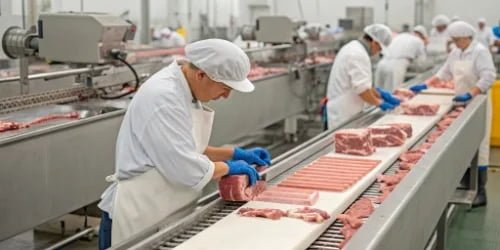
Data is everywhere, but connecting it in a wet, busy meat-cutting room is a constant headache. Important information gets lost, causing errors and slowing down your entire operation.
The best way to handle data integration in a wet meat-cutting environment is by using specialized, waterproof weighing scales with built-in software. These scales are designed to capture, process, and transmit data seamlessly, even during high-pressure washdowns, connecting your cutting floor directly to your management systems.
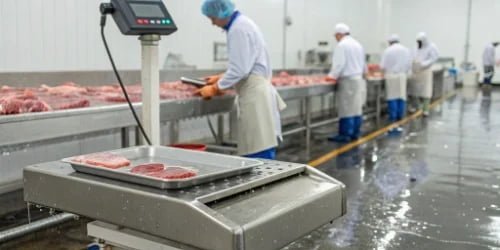
Managing data in this industry is a unique puzzle. On one hand, you need precise information for inventory, traceability, and payroll. On the other hand, the environment itself seems designed to destroy any standard electronic equipment. It's wet, it's cold, and the cleaning process is intense. I've seen countless businesses struggle with this, using manual entry or equipment that just wasn't built for the job. This constant battle leads to frustration and costly mistakes. But what if the solution was built right into the tools your team uses every single day? Let's explore how to make that happen.
What Are Effective Strategies for Data Integration in Wet Meat-Cutting Environments?
You're trying to track yields and worker performance, but your methods are manual and error-prone. The wet conditions make using standard tech impossible, leaving you with inaccurate, delayed data.
Effective strategies involve using IP68-rated waterproof scales, wireless data transmission like Wi-Fi or Bluetooth, and user-friendly software. This combination ensures hardware survival and automates data capture, eliminating manual entry and connecting the cutting floor to your office in real-time.
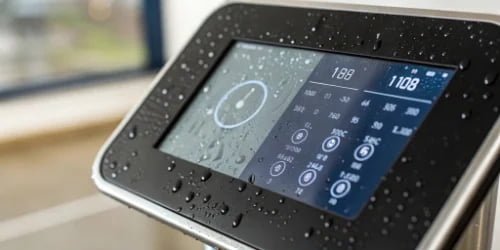
To truly succeed, you need to go deeper than just buying a "waterproof" scale. It's about creating a complete system. In my 19 years of experience, I've learned that a piecemeal approach just doesn't work. You need a strategy that covers hardware, software, and connectivity.
Building a Robust Data Ecosystem
First, the hardware must be tough. We design our meat-cutting scales to handle not just splashes, but direct high-pressure, high-temperature washdowns. This is what an IP68 or higher rating really means in practice. Second, data needs to move without wires. Wires are a weak point; they get damaged and create safety hazards. We integrate reliable Wi-Fi modules so data flows from the scale directly to your server or cloud platform. Finally, the software on the scale must simplify the worker's job, not complicate it. It should manage tasks, track employee performance, and print labels, all from one central station.
| Integration Strategy | Pros | Cons | Our Solution |
|---|---|---|---|
| Manual Entry | Low initial cost | High error rate, slow, no real-time data | Eliminates manual entry with automated data capture1. |
| Wired Scales | Reliable connection | Wires get damaged, safety risk, hard to clean | Uses secure Wi-Fi for a cable-free environment. |
| Specialized System | Seamless, accurate, real-time | Higher initial investment | An all-in-one solution that pays for itself through efficiency and accuracy gains. |
By combining these elements, you create a powerful, one-stop solution. It solves the issue right at the source—the cutting station.
How Can Data Integration Enhance Operations in Fast-Paced Meat-Cutting Facilities?
Your production floor is chaotic. You struggle to know your exact yields, track individual worker output, or trace a product batch quickly. This lack of visibility costs you money and time.
Data integration provides real-time visibility into yields, worker productivity, and inventory. It automates traceability, reduces product giveaway, and simplifies payroll calculations, turning your chaotic cutting floor into a highly efficient, data-driven operation that boosts profitability.
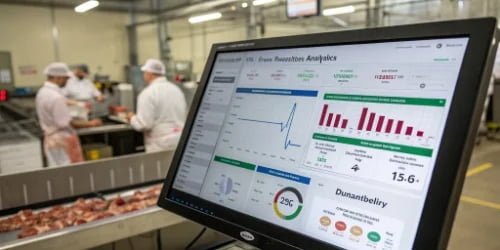
The impact of good data integration2 is massive. It transforms how you see and manage your business. I remember a client who was struggling with profit margins. They thought their cuts were standardized, but they had no real way of knowing. After implementing our integrated scales, they discovered a huge variance in yields between shifts. The data showed them exactly where the problem was. It wasn't about blaming workers; it was about identifying a training gap. They adjusted their training, and within a month, their yield consistency improved dramatically, adding thousands to their bottom line.
Turning Data into Profit
This is what happens when you have clear, immediate information. Let's break down the key operational enhancements.
- Yield Management: You can see the exact weight of primal cuts versus the finished product in real-time. This helps you optimize cutting techniques and reduce waste.
- Labor Management: The scales can be assigned to individual workers. This lets you track performance accurately and fairly. It simplifies performance-based pay and helps you identify your top performers and those who need more support.
- Traceability and Compliance: In case of a recall, you can instantly trace a batch back to the source, the time it was cut, and the person who handled it. This is crucial for food safety and regulatory compliance.
- Inventory Control: With every cut logged automatically, your inventory records are always up-to-date. This prevents over-ordering, reduces spoilage, and ensures you always have the right product on hand.
This isn't just about efficiency; it's about making smarter business decisions every single day.
What Challenges Arise in Data Integration for Wet Meat-Cutting Settings?
You know you need better data, but the environment is your biggest enemy. Water, cleaning chemicals, and cold temperatures destroy electronics. Plus, your team is focused on speed, not tech.
The main challenges are hardware failure due to moisture and harsh cleaning, unreliable network connectivity in industrial settings, and employee resistance to new technology. These hurdles can make any data integration project fail before it even starts.

I've seen these challenges derail many projects. A company might buy a great piece of software, but they try to run it on a standard tablet that fails within weeks. Or they install new scales, but the Wi-Fi signal is too weak in their concrete-walled facility, so the data never gets through. And perhaps most importantly, if the system is complicated, your team will find ways to work around it, defeating the whole purpose. The key is to anticipate these challenges from the very beginning. You can't just apply a standard IT solution to a meat plant; you need something purpose-built.
Overcoming the Hurdles
We built our company by focusing on these specific problems. Our scales are not just waterproof; they are built with materials that resist corrosion from harsh cleaning agents. We pay attention to every detail, right down to the seals and connectors.
| Challenge | Impact on Operations | Our Solution |
|---|---|---|
| Harsh Environment | Equipment failure, data loss, safety hazards. | IP68-rated stainless steel scales designed for high-pressure washdowns. |
| Network Issues | Intermittent data transfer, information gaps. | Industrial-grade Wi-Fi modules with strong signal reception, plus options for offline data storage. |
| Employee Training | Low adoption rate, incorrect data entry, frustration. | Intuitive, simple touchscreen interface with minimal training required. We focus on a process that's faster than their old method. |
| System Integration | Incompatibility with existing ERP or accounting software. | Flexible software that can export data in common formats (like CSV) or integrate via API for seamless connection. |
You have to think of the entire workflow. The solution must be tougher than the environment and simpler than the old way of doing things.
How Do You Ensure Seamless Data Integration in Busy Meat-Cutting Areas?
You're ready to make a change, but how do you get it right? Picking the wrong partner or technology can lead to a costly mess that disrupts production and offers zero return.
To ensure seamless integration, you must choose a unified hardware and software solution designed specifically for meat processing. Work with a provider who understands the environment, offers robust installation support, and provides simple, effective training for your team.
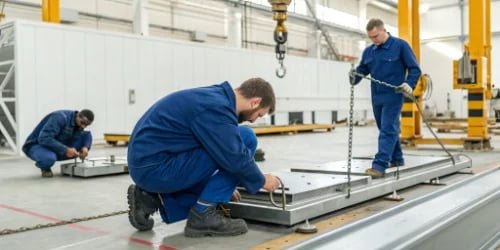
A seamless integration3 is all about planning and partnership. It’s not just a transaction where you buy a product. Based on our projects worldwide, success comes from a step-by-step approach. It starts with understanding your unique workflow. Where are the bottlenecks? What data matters most to you? We spend time on this discovery phase before recommending any hardware. One client in Europe needed to connect scales across three separate cutting rooms to a central server. We conducted a wireless site survey first to map out the network and ensure a perfect signal everywhere. This prevented headaches later.
A Blueprint for Success
The implementation itself should be methodical. The goal is to minimize disruption to your operations.
- System Design: We first map out your process. We then configure the scale's software to match your exact needs: custom label formats, specific data fields for your ERP, and employee login methods.
- Hardware & Network Setup: We provide scales built for the job and advise on the best network setup. This ensures the hardware can survive and the data can flow reliably. True seamless integration means the technology just works in the background without constant attention.
- Hands-On Training: The system is only as good as the people using it. We focus on training that is simple and task-oriented. We show the team how the new system makes their job easier and faster. When they see they can weigh, label, and log a piece of meat with a few simple taps, they buy in quickly.
Choosing a partner who provides an all-in-one solution—hardware, software, and expertise—is the most reliable way to guarantee a smooth transition and a successful outcome.
Conclusion
By using specialized, waterproof scales with integrated software, you can solve data challenges, enhance operations, and boost profits in your wet meat-cutting environment. This is your path forward.
-
Explore the advantages of automating data collection to reduce errors and save time. ↩
-
Learn about the transformative effects of data integration on productivity and profitability in meat-cutting operations. ↩
-
Understand the concept of seamless integration and its benefits for operational efficiency. ↩


Comments (0)