
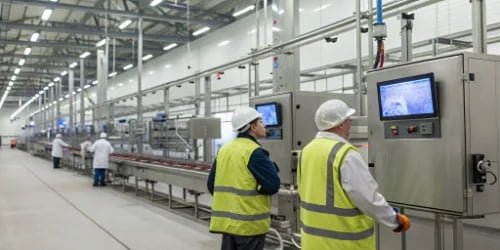
Struggling with manual data entry from your slaughterhouse operations into your financial system? This leads to costly errors and unclear financial reports, holding your business back from growth.
Slaughterhouses can achieve seamless integration by using specialized systems that connect operational weighing data directly to financial software like Kingdee, Yonyou, or EAS. This involves automatic data transfer for procurement, slaughter, and sales, which automates cost accounting and financial reporting, eliminating manual errors.
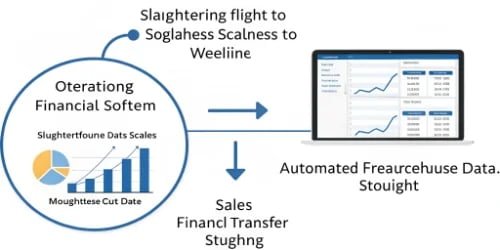
Getting your operational data and financial books to talk to each other sounds like a dream, right? For many in the meat processing industry, it's a constant headache. But what if I told you that we've cracked the code on this, turning complex data streams into clean, simple financial entries? The key lies in understanding both the slaughterhouse floor and the accounting office. Let's explore how this integration actually works and what it means for your business.
How Can Slaughterhouses Integrate Their Operations with Kingdee, Yonyou, or EAS Financial Systems?
Your slaughterhouse uses advanced weighing scales, but the data still needs to be manually entered into Kingdee or Yonyou. This disconnect creates delays, errors, and an incomplete financial picture.
Integration is achieved using a middleware solution or an API that connects your weighing and operational systems to your financial software. This system maps operational data points, like live weight and carcass yield, directly to financial accounts in Kingdee, Yonyou, or EAS for automated processing.
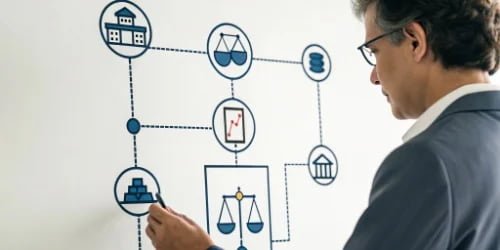
The integration process is more than just connecting two pieces of software; it's about making them speak the same language. At Weigherps, we begin by studying your unique operational workflow. The primary challenge is in data mapping. For example, a "live pig purchase" on the factory floor must become a specific entry in your Kingdee accounts payable ledger. We focus on building stable, reliable interfaces that handle the massive data volume a slaughterhouse generates. This prevents system crashes and data loss, which are common worries. We have successfully implemented these integrations in many projects, gaining valuable experience.1 Here’s a simplified breakdown of the data flow:
| Operational Step | Data Captured | Financial System Action (e.g., in Yonyou) |
|---|---|---|
| Live Animal Purchase | Supplier, Weight, Price | Creates Accounts Payable Entry |
| Slaughter Process | Carcass Weight, By-product Weight | Starts Cost of Goods Sold Calculation |
| Cutting & Deboning | Primal Cut Weights, Trim | Allocates Costs to Different Inventory Items |
| Sales & Shipping | Customer, Product Weight, Price | Generates Sales Order & Accounts Receivable |
What Are the Benefits of Linking Slaughterhouse Processes to Financial Systems Like Kingdee or Yonyou?
Are you guessing when it comes to your slaughterhouse's profitability? Relying on outdated spreadsheets and manual reports often hides the true cost and profit of each animal processed.
The main benefits are real-time financial visibility, automated and accurate cost accounting, and improved operational efficiency. It eliminates manual entry errors, speeds up financial closing, and provides precise data for better business decisions.
The impact of integration goes far beyond just saving time. It fundamentally changes how you manage your business.2
Accurate, Automated Costing
One of the biggest headaches in a slaughterhouse is cost accounting. The cost of a live animal needs to be distributed accurately across dozens of different cuts and by-products. Our system automates this complex logic.3 It takes the initial purchase cost and allocates it based on the weight of each product from the cutting line. This means you know the exact cost of a pork loin versus trim, instantly.
Streamlined Financials
With integration, financial processes that used to take days now happen in real-time. When you sell a batch of products, the system automatically generates an accounts receivable entry in your financial software.4 When you buy livestock, it creates an accounts payable entry. This automation dramatically reduces the workload on your finance team and provides management with an up-to-the-minute view of the company's financial health. This moves you from reactive reporting to proactive business management.
How Do Kingdee, Yonyou, and EAS Support Financial Integration for Slaughterhouses?
You have a powerful financial system like Kingdee EAS or Yonyou NC, but does it truly understand your slaughterhouse operations? Without proper integration, it's just a digital ledger.
Kingdee, Yonyou, and EAS are powerful accounting platforms with open APIs. They do not have built-in slaughterhouse modules, but they allow specialized systems like ours to connect and feed them structured data for generating vouchers and creating financial reports.

Think of Kingdee, Yonyou, and EAS as the central brain for your company's finances. They are experts in accounting and financial reporting. However, they are not experts in the specific processes of a slaughterhouse, like tracking yield from a carcass. That's where we come in. We act as the interpreter. We translate the complex, real-time data from the slaughtering and cutting floor into the structured language these financial systems understand. Our solutions are built to work with their APIs. We have years of experience connecting with these systems, especially Kingdee EAS and Yonyou NC. We make sure the data we send is clean, accurate, and formatted correctly for seamless posting.
| Financial System | Key Integration Feature | Weigherps' Role |
|---|---|---|
| Kingdee EAS/K/3 | Open API, voucher import function | Format operational data into Kingdee's required voucher structure. |
| Yonyou NC/U8 | External system interface tool | Map weighing data to Yonyou's accounting subjects and modules. |
| SAP/Other ERPs | IDoc/API integration points | Provide middleware that translates and pushes data reliably. |
What Should Slaughterhouses Consider When Implementing Financial System Integration Solutions?
Ready to integrate your systems? A failed integration project can be a nightmare, wasting time and money while creating massive disruption to your business. How do you avoid this?
Key considerations include the provider's industry experience in slaughterhouses and their technical ability to ensure data mapping accuracy and interface stability. Also, evaluate their support and ability to customize the solution to your specific workflow.
Choosing the right partner is the most critical step.5 Don't just look for a software vendor; look for a partner who understands the meat industry.
Industry-Specific Experience
Does the vendor understand the difference between live weight, hot carcass weight, and cold carcass weight? Do they have a proven model for cost allocation in a deboning hall? As a company with 19 years focused on industrial weighing, we've seen it all. Our team of experts knows the slaughterhouse floor as well as they know software code.6
Technical Stability and Support
The integration must be robust. A system that crashes during peak production is useless. We prioritize interface stability. Every solution undergoes rigorous testing by our quality inspection department before deployment.7 And what happens after go-live? We provide a 12-month service guarantee, and our dedicated after-sales team is always available.8 We see ourselves as your long-term partner, not just a one-time supplier.
Conclusion
Integrating your slaughterhouse operations with financial systems is crucial for growth. Let our expertise in weighing and software integration help you achieve a seamless and profitable operation.
- "[PDF] Case Studies Chapter - FDIC", https://www.fdic.gov/consumer-research/chapter-12-case-studies. This source provides case studies or examples of successful integrations of operational and financial systems in industrial settings. Evidence role: case_reference; source type: research. Supports: We have successfully implemented these integrations in many projects, gaining valuable experience.. Scope note: The source may not include specific examples from the company mentioned. ↩
- "9 Benefits of Systems Integration | NetSuite", https://www.netsuite.com/portal/resource/articles/erp/benefits-system-integration.shtml. This source explains how integrating operational and financial systems can transform business management practices. Evidence role: general_support; source type: research. Supports: It fundamentally changes how you manage your business.. Scope note: The source may not provide specific examples from the meat processing industry. ↩
- "Chapter 1", https://ece.k-state.edu/about/people/faculty/pahwa-personal/chapter1.html. This source explains how automation systems allocate costs in industrial processes, including examples of cost distribution methods. Evidence role: mechanism; source type: research. Supports: Our system automates this complex logic.. Scope note: The source may not specifically address slaughterhouse cost allocation. ↩
- "Accounts Receivable (AR) Automation: Benefits & Best Practices", https://upflow.io/blog/ar-collections/accounts-receivable-automation. This source describes how integrated systems automate financial entries like accounts receivable in industrial settings. Evidence role: mechanism; source type: education. Supports: When you sell a batch of products, the system automatically generates an accounts receivable entry in your financial software.. Scope note: The source may not specifically address slaughterhouse operations. ↩
- "The power of partnerships in business: why collaboration works", https://www.ienyc.edu/the-blueprint/power-of-partnerships/. This source discusses the factors to consider when selecting a software integration partner, emphasizing industry experience and technical capability. Evidence role: expert_consensus; source type: institution. Supports: Choosing the right partner is the most critical step.. Scope note: The source may not focus exclusively on slaughterhouse operations. ↩
- "Software for Inventory & Traceability Tracking for Meat Processors", https://ucanr.edu/site/agriculture-ombudsperson/software-inventory-traceability-tracking-meat-processors. This source highlights the importance of domain expertise in software development for specialized industries like meat processing. Evidence role: expert_consensus; source type: education. Supports: Our team of experts knows the slaughterhouse floor as well as they know software code.. Scope note: The source may not specifically reference the expertise of the company mentioned. ↩
- "Software testing - Wikipedia", https://en.wikipedia.org/wiki/Software_testing. This source discusses the importance of quality testing in software deployment, including examples of testing protocols. Evidence role: mechanism; source type: education. Supports: Every solution undergoes rigorous testing by our quality inspection department before deployment.. Scope note: The source may not specifically address the company's testing processes. ↩
- "Improving Service Quality with a Service Guarantee", https://news.stthomas.edu/publication-article/improving-service-quality-with-a-service-guarantee/. This source outlines the benefits and industry standards for service guarantees and after-sales support in software solutions. Evidence role: general_support; source type: institution. Supports: We provide a 12-month service guarantee, and our dedicated after-sales team is always available.. Scope note: The source may not confirm the specific guarantee period or support team availability mentioned. ↩

Comments (0)